

What if the lush, emerald-green pastures of New Zealand are actually the very thing standing between your horse and optimal health? It's a common paradox; we see plenty of grass, yet we still struggle with unpredictable behaviour during the spring flush and poor hoof quality that won't improve. You aren't alone in feeling frustrated by complex mineral ratios or the hidden impact of high iron levels on nutrient absorption. Understanding how to supplement a grazing horse in NZ is about moving past quick fixes and embracing a foundation of nutritional science. This guide promises to simplify your routine by focusing on the specific deficiencies found in our local soils, such as low selenium and zinc levels. By the end of this 2026 guide, you'll have a clear, evidence-based plan to transform your horse's well-being from the inside out. We'll detail how to achieve a level-headed temperament, strong hooves, and a gleaming coat through intentional, targeted support that works in harmony with the New Zealand environment.
Key Takeaways
- Understand the New Zealand "grazing paradox" where high-energy pastures often lack the essential micronutrient density required for optimal systemic health.
- Learn how to supplement a grazing horse in NZ by addressing chronic deficiencies in Selenium, Copper, and Zinc that are common in our geologically young soils.
- Identify the hidden impact of mycotoxins and ryegrass endophytes, which can lead to neurological sensitivity and metabolic instability during seasonal grass flushes.
- Discover a methodical, two-step framework for assessing your horse’s condition and selecting a mineral base that balances complex nutrient ratios effectively.
- Shift from reactive symptom management to a proactive, "inside out" approach that prioritises foundational biology for long-term vitality and peace of mind.
The Unique Challenges of the New Zealand Grazing Environment
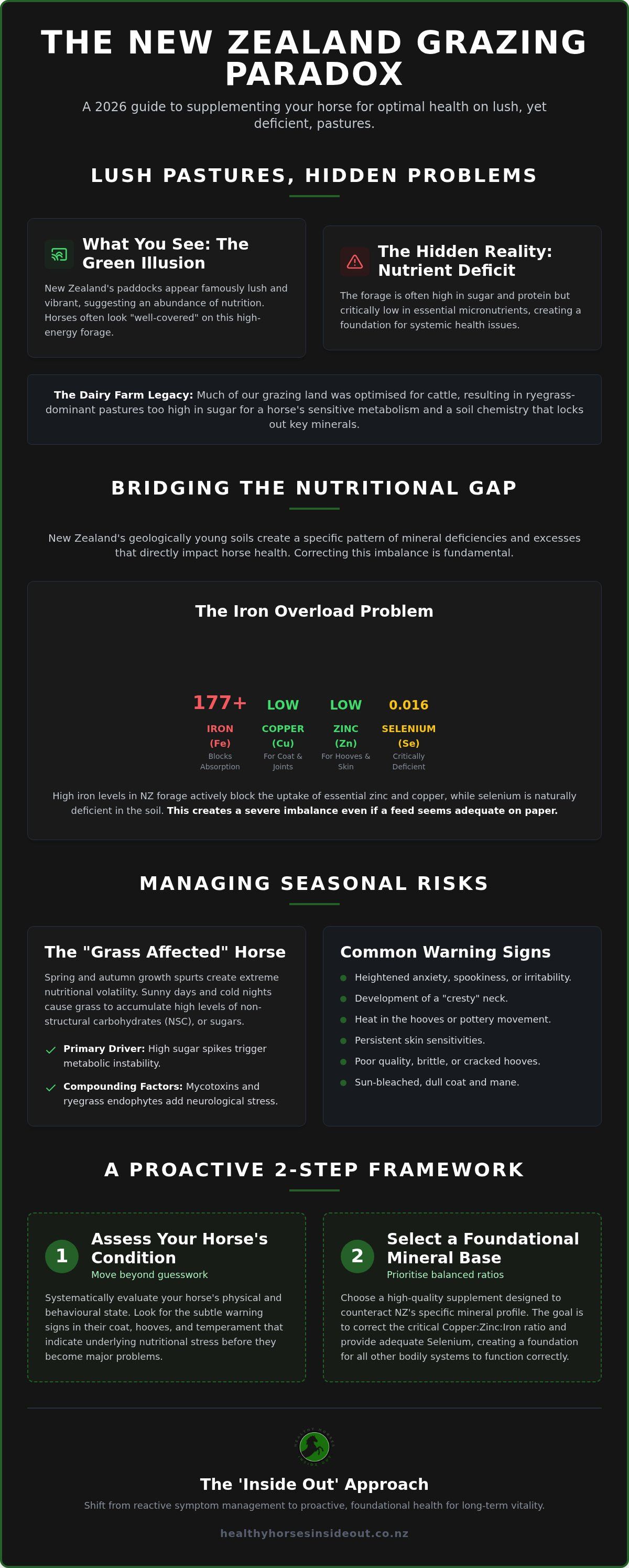
New Zealand's landscape presents a striking visual contradiction for horse owners. Our paddocks are famously lush and vibrant, yet they often fail to meet the foundational principles of equine nutrition required for systemic health. This is the "NZ Grazing Paradox": forage that is exceptionally high in energy and protein but remarkably low in critical micronutrient density. While a horse may look "well-covered" on the outside, their internal biological systems are often starving for trace minerals that our young, volcanic soils simply don't provide in sufficient quantities.
Much of the land used for equine grazing today carries a heavy dairy farm legacy. For decades, New Zealand's agricultural sector focused on high-intensity milk production, which prioritised rapid grass growth through heavy fertilisation, particularly with superphosphates. This historical practice has led to a modern environment where ryegrass and clover dominate. These species are engineered for ruminants like cows, who possess a different digestive physiology than horses. For the equine owner, understanding how to supplement a grazing horse in NZ begins with recognising that dairy-grade grass is often too high in sugar and starch for the horse's sensitive metabolism.
The Legacy of High-Intensity Farming
Historical fertilisation has altered soil pH and created mineral lock-outs, where high levels of certain elements like iron interfere with the uptake of essential copper and zinc. These "improved" pastures are designed to be consumed and processed quickly by cattle, yet they pose significant risks to horses. High-protein and high-sugar forage often triggers systemic inflammation, manifesting as poor hoof quality or skin sensitivities. Specifically, dairy-grade grass creates a rapid fermentation environment that fundamentally disrupts the microbial balance of the equine hindgut.
Seasonal Fluctuations and the 'Grass Affected' Horse
New Zealand's temperate climate creates distinct growth cycles that challenge equine health. The spring flush and autumn growth spurts represent periods of extreme nutritional volatility. During these times, sunny days followed by frosty nights cause plants to accumulate high levels of non-structural carbohydrates (NSC). This sugar spike is a primary driver behind the "grass affected" horse. Owners may notice sudden psychological shifts, such as heightened anxiety or spookiness, alongside physical symptoms like "cresty" necks or heat in the hooves. Learning how to supplement a grazing horse in NZ requires a methodical approach to buffering these seasonal spikes, ensuring the horse remains calm and metabolically stable throughout the year.
Core Mineral Deficiencies: Bridging the Gap Between Soil and System
True vitality is not a cosmetic mask; it is the biological result of cellular balance. This "Inside Out" philosophy is the foundation of understanding how to supplement a grazing horse in NZ. While our paddocks appear lush, the chemistry beneath the surface tells a different story. New Zealand’s geologically young, volcanic soils are notoriously deficient in selenium, an essential trace element for immune function and muscle recovery. A 2005 study of Thoroughbred yearlings on local pasture recorded selenium levels as low as 0.016 mg/kg of dry matter. This is significantly below the threshold required for a horse to thrive, especially those in regular work or under environmental stress.
The challenge is compounded by high iron levels, which often reach 177 mg/kg in NZ forage. This abundance of iron is problematic because it actively blocks the absorption of zinc and copper. When iron dominates the system, even a diet that seems adequate on paper can leave a horse deficient. Zinc and copper must exist in a specific ratio to support the enzymatic processes responsible for skin health and hoof wall strength. Without this balance, the horse's internal systems struggle to maintain the structural integrity of external tissues. Correcting these soil-based gaps is a critical step in any evidence-based feeding routine.
The Big Three: Selenium, Copper, and Zinc
These three minerals are the pillars of equine wellness in the New Zealand environment. Selenium acts as a potent antioxidant, protecting cells from oxidative damage during exercise. Copper and zinc are the architects of the body, directly influencing the production of keratin and collagen. When these are lacking, horses often display visible "red flags" such as sun-bleached manes, persistent skin sensitivities, or brittle, cracked hooves. Adhering to SPCA feeding guidelines provides the necessary forage foundation, but targeted supplementation is required to bridge the specific trace mineral chasm left by our local soil profile.
Balancing the Calcium-Phosphorus Ratio
Macro-mineral balance is equally vital for long-term skeletal health. Some New Zealand pastures contain high levels of oxalates, compounds that bind to calcium and prevent its absorption in the small intestine. This can lead to a metabolic imbalance if the 2:1 calcium-to-phosphorus ratio isn't strictly maintained. Ensuring this ratio remains stable protects the horse from bone demineralisation and supports healthy nerve conduction. If you are currently evaluating what supplements does my horse need NZ, the answer always begins with these foundational soil-to-system corrections. For those seeking a simplified routine, exploring Everyday Horse Supplements designed for NZ conditions can provide the peace of mind that comes from scientifically backed nutrition.
Mycotoxins and Metabolic Support: Managing the Grass Flush
The visual appeal of a lush spring paddock often masks a complex biological battlefield. In New Zealand, mycotoxicoses represent some of the most significant health challenges for grazing livestock, particularly given our humid climate. Mycotoxins are toxic secondary metabolites produced by fungi that thrive in these conditions. These fungi, such as those responsible for facial eczema or ryegrass staggers, don't just exist on the surface. They often live within the plant tissue itself as endophytes. Identifying these invisible threats is a strategic part of how to supplement a grazing horse in NZ, as it allows for proactive intervention before neurological or metabolic symptoms take hold.
The Role of Mycotoxin Binders in Behavioural Stability
Mycotoxin binders work through a process of adsorption, essentially "trapping" harmful fungal metabolites within the digestive tract to prevent them from entering the bloodstream. This is particularly vital when dealing with endophytes in ryegrass, which produce toxins like lolitrem B. These toxins can cross the blood-brain barrier, leading to heightened anxiety and physical tremors. It's important to differentiate between a naturally "spooky" horse and one suffering from grass-induced neurological sensitivity. While a binder addresses the toxins directly, maintaining a robust microbiome is equally critical. This is why prebiotics for horses NZ are essential for toxin resilience; they support the gut's natural barrier function and enhance the horse's ability to process environmental stressors.
Equine Metabolic Support on Grazing
Managing the "easy doer" in a high-sugar environment requires a meticulous approach to insulin sensitivity. During the grass flush, non-structural carbohydrates (NSC) can spike to levels that trigger systemic inflammation and laminitis. Research into NZ sport horse feeding practices confirms that many owners rely heavily on pasture, which necessitates a low-NSC carrier for any supplementary minerals. Using a fibre-based pellet as a base ensures the horse receives essential nutrients without adding to the glycemic load. Implementing track systems or using grazing muzzles during high-risk periods, such as the 17-week facial eczema window typically spanning from January to May, helps control intake while maintaining movement. This dual focus on toxin mitigation and sugar management is fundamental to how to supplement a grazing horse in NZ effectively, providing the systemic balance required for long-term health.
Designing a Practical Supplementation Strategy for Your Horse
Transitioning from nutritional theory to daily practice requires a methodical framework. Understanding how to supplement a grazing horse in NZ is not about adding more ingredients, but about adding the right ones in a sequence that respects equine physiology. A successful strategy follows a logical progression:
- Step 1: Assess the horse's current body condition, coat quality, and the available forage.
- Step 2: Select a high-quality mineral base designed to fill the specific soil gaps identified in our local environment.
- Step 3: Add targeted support for individual requirements, such as joint longevity or gut resilience.
- Step 4: Organise a consistent feeding rhythm to maintain stable blood-mineral levels.
- Step 5: Monitor and adjust the plan as seasonal grass flushes alter the nutritional landscape.
Consistency is the primary driver of results. A haphazard approach to feeding often leads to internal fluctuations that prevent the horse from achieving true systemic balance. By establishing a repeatable routine, you provide the foundational stability your horse needs to thrive despite the volatility of New Zealand's "improved" pastures.
Choosing the Right Medium: Pellets vs. Powders
The delivery method of your nutrients is just as important as the ingredients themselves. Many owners struggle with "sift-out," where expensive powdered minerals settle at the bottom of the feed bin and are left behind. Utilising everyday horse supplements in a pelletised form eliminates this waste and is particularly effective for fussy eaters. Pellets ensure your horse actually consumes their full daily dose, providing the peace of mind that your investment is reaching the horse's system rather than being lost in the wind or the bucket.
The Methodical Approach to Hoof and Joint Care
Visible improvements in structural tissues don't happen overnight. When introducing a horse joint supplement NZ, it's vital to ensure the horse already has a mineral-balanced foundation to support the repair of connective tissues. The hoof-growth timeline serves as a twelve-month biological record of nutritional success, as new, stronger horn gradually replaces old, compromised tissue. You should look for a distinct "change line" in the hoof wall within three months, followed by improved coat depth at six months and enhanced joint mobility by the one-year mark. To simplify this complex process, consider starting with HHIO Horse Supplement Bundles to streamline your horse's foundational nutrition.
The HHIO Approach: Systemic Health Through Targeted Nutrition
Mastering how to supplement a grazing horse in NZ requires moving beyond generic retail options toward formulations that reflect our unique soil chemistry. At HHIO, our philosophy is rooted in the "Inside Out" principle, which prioritises foundational biology over the reactive treatment of symptoms. We believe that external markers of health, such as a gleaming coat or a calm temperament, are the natural results of a balanced internal system. By focusing on the biological mechanisms that drive wellness, we offer a steady, trust-based partnership in your horse’s long-term health. Our approach is meticulous and evidence-based, providing the scientific clarity needed to navigate the complexities of New Zealand’s grazing environment with complete confidence.
HHIO Pellets: The All-in-One Nutritional Foundation
The cornerstone of a successful feeding routine is a high-specification mineral base that accounts for the specific deficiencies found in New Zealand pastures. HHIO Pellets are designed as a "grab and go" nutritional solution, offering a scientifically balanced profile that fills the gaps in local forage without the need for multiple separate ingredients. These pellets provide essential trace minerals like selenium, zinc, and copper in precise ratios, ensuring your horse receives optimal support for immune function and structural integrity. Because we avoid unnecessary fillers and low-quality carriers, every gram of the pellet serves a biological purpose. This intentionality ensures that your horse’s systemic health is supported from the ground up, providing a reliable foundation that remains stable throughout seasonal grass changes.
Streamlining Care with Supplement Bundles
Managing a horse’s health often involves addressing multifaceted issues simultaneously, from gut sensitivity to metabolic stability. To simplify the feed room and reduce the risk of mineral imbalances, we have curated specific Horse Supplement Bundles that streamline complex nutrition into logical, easy-to-follow stacks. These bundles are designed to provide peace of mind by ensuring that all components work in synergy rather than competing for absorption. For example, during colder months, our stacks address the specific stressors of the season, much like our guide on winter horse care supplements NZ explains. This methodical approach allows you to focus on the joy of horse ownership while we provide the expert-led nutritional framework. We invite you to explore the HHIO range to find your horse's perfect nutritional match and experience the difference of intentional, integrity-led wellness.
Cultivating Long-Term Vitality Through Evidence-Based Nutrition
Achieving systemic balance in a grazing environment requires more than just reactive fixes; it demands a deep understanding of our local soil chemistry and its biological impact. By addressing the chronic mineral gaps in New Zealand pastures and proactively managing seasonal grass flushes, you move your horse toward a state of genuine internal wellness. This methodical approach ensures that visible results, such as hoof strength and behavioural stability, are built on a foundation of scientific integrity rather than guesswork. Learning how to supplement a grazing horse in NZ is the first step toward reclaiming your peace of mind as a horse owner. Our specialised HHIO Pellets and expert-curated bundles are designed to simplify this journey, providing the clinical authority you need with the compassionate care your horse deserves. We invite you to optimise your horse's health with HHIO's evidence-based supplements and witness the transformation that occurs when you prioritise foundational biology. Your horse’s potential for health is vast, and with the right support, you can unlock a lifetime of vitality together.
Frequently Asked Questions
Can I just use a generic multi-vitamin for my horse in NZ?
Generic multi-vitamins often lack the high concentrations of Zinc and Copper required to balance the high Iron levels found in New Zealand pastures. Because these products are designed for global markets, they don't account for the specific "Big Three" deficiencies (Selenium, Copper, Zinc) unique to our volcanic soils. Choosing a targeted approach ensures you aren't paying for fillers that don't address the biological needs of a horse grazing on New Zealand land.
How do I know if my horse is 'grass affected' or just naughty?
Identifying a "grass affected" horse involves observing sudden psychological or physical changes that align with seasonal growth flushes. Unlike consistent "naughty" behaviour, grass-induced sensitivity often manifests as heightened anxiety, spookiness, or physical symptoms like a tight back and heat in the hooves. If the behaviour intensifies during the spring flush or after a frost, it is likely a metabolic or neurological response to high sugar levels or mycotoxins rather than a training issue.
Is it safe to feed Selenium supplements to horses in New Zealand?
Supplementing Selenium is safe and often essential in New Zealand, provided you follow measured dosage guidelines. Our soils are naturally deficient, with a 2005 study showing levels as low as 0.016 mg/kg in some areas, which is insufficient for muscle and immune health. However, because Selenium has a narrow safety margin, it is important to use a high-specification supplement that provides a precise daily amount rather than guessing with unmeasured, loose sources.
Do I need to supplement my horse if they are in good condition?
Visual body condition is a measure of caloric intake, not internal micronutrient balance. A horse can look "fat and shiny" while still suffering from the NZ grazing paradox, where high-energy grass lacks the trace minerals required for systemic health. Targeted supplementation ensures that while your horse has enough energy for work, their internal biological systems, such as bone density and immune function, have the foundational minerals they need to function optimally throughout the year.
What is the best way to feed supplements to a horse on a grass-only diet?
The most effective way to manage how to supplement a grazing horse in NZ is to use a small amount of low-sugar, low-starch carrier. A handful of damp chaff or fibre pellets provides a consistent medium for minerals without adding an excessive glycemic load. This method ensures that even horses on a grass-only diet receive their daily nutrients in a controlled, repeatable manner that does not disrupt their metabolic stability or trigger insulin spikes.
How long does it take to see results from horse supplements?
The timeline for visible results varies depending on the biological system being supported. You may notice improvements in temperament and focus within a few weeks as gut health and toxin levels stabilise. Skin and coat depth typically show changes after six weeks of consistent mineral balance. However, structural changes like hoof wall integrity follow the hoof-growth timeline, meaning it can take six to twelve months to see the full impact of a new nutritional regime.
Can I over-supplement my horse with minerals?
Over-supplementation is possible and can be just as detrimental as a deficiency. Excessive levels of certain minerals can block the absorption of others; for example, high iron intake frequently interferes with the uptake of zinc and copper. Selenium also requires careful management due to its toxicity at very high levels. This is why a methodical, evidence-based approach is superior to adding multiple individual ingredients that may conflict with one another in the horse's sensitive system.
Why should I choose HHIO Pellets over loose mineral licks?
HHIO Pellets offer a significant advantage over loose mineral licks by ensuring a precise, controlled daily intake. Mineral licks rely on the horse’s voluntary interest, which often leads to either over-consumption or complete neglect, resulting in inconsistent nutrient levels. Pellets eliminate this guesswork and prevent the "sift-out" waste common with powders. By choosing a pelletised form, you gain the peace of mind that your horse is actually consuming the full, scientifically balanced dose every day.


