

What if the secret to your horse's stable behaviour and glossy coat isn't found in a new bag of feed, but in the microscopic environment of their hindgut? For many owners across the country, managing recurring loose droppings or seasonal "grass madness" feels like an uphill struggle against our notoriously lush, ryegrass-dominant pastures. Mastering the application of prebiotics for horses NZ is the foundational step toward moving away from reactive troubleshooting and toward a methodical, science-led health programme.
It's exhausting to watch your horse's condition slip or their temperament change with every pasture flush, especially when you've invested in premium nutrition. We recognise the confusion surrounding gut health, particularly as the 2026 Animal Products Amendment Regulations bring new standards to the supplement industry. This guide will help you discover the science behind equine digestion and how to choose the right gut health supplements to support your horse’s vitality on New Zealand pastures. We will preview the critical differences between prebiotics and probiotics, explain the mechanics of hindgut fermentation, and provide a clear framework for achieving a resilient digestive system that thrives regardless of the season.
Key Takeaways
- Understand why the hindgut is the engine room of your horse's health and how microbial balance influences everything from immunity to energy levels.
- Learn the technical differences between probiotics and prebiotics for horses NZ to ensure you're selecting the most effective supplements for your horse's specific digestive needs.
- Discover how New Zealand's unique ryegrass and clover pastures can lead to hindgut acidosis and why seasonal grass flushes require a proactive nutritional strategy.
- Identify the subtle red flags of gut dysbiosis, such as bloating or poor coat condition, before they develop into chronic health or behavioural issues.
- Implement a foundational approach to digestive resilience by pairing high-quality mineral support with targeted gut health supplements to achieve long-term systemic stability.
The Foundation of Vitality: Understanding Equine Gut Health in New Zealand
The internal health of a horse is not merely a reflection of what they eat, but how effectively they process those nutrients. We view the equine digestive system as a complex, biological "inside out" mechanism where the state of the gut directly dictates the quality of the coat, the strength of the hooves, and the stability of the horse's temperament. At the heart of this system lies a sophisticated fermentation factory that relies on a delicate equilibrium of trillions of microorganisms. When this balance is optimised, your horse thrives; when it's disrupted, the external symptoms are often just the tip of the iceberg.
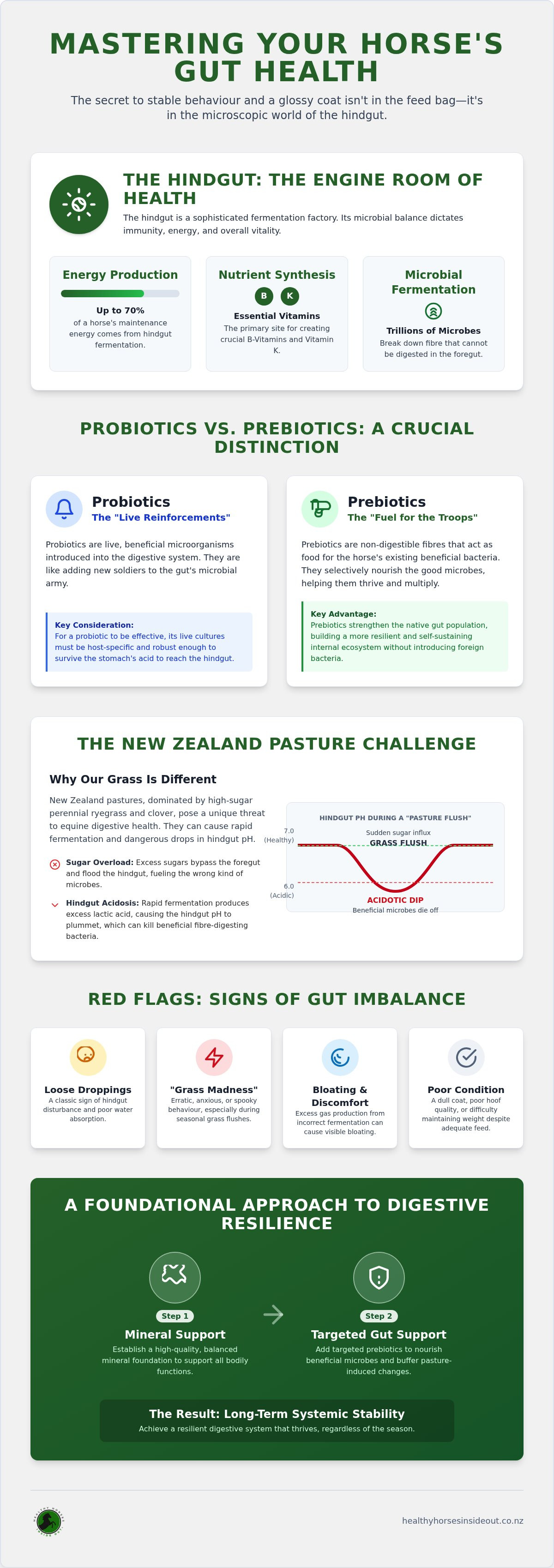
The microbiome serves as the engine room for both immunity and energy production. Beneficial bacteria break down fibrous plant material into volatile fatty acids, providing up to 70% of the horse's maintenance energy. This environment is fragile. Pathogenic bacteria can quickly overpopulate when the hindgut pH drops, leading to systemic inflammation and metabolic distress. Supporting this microbial community with targeted prebiotics for horses NZ is often the difference between a horse that merely survives on pasture and one that radiates vitality.
The Foregut vs. The Hindgut: Why the Distinction Matters
Understanding the distinction between these two regions is critical for effective management. The foregut, comprising the stomach and small intestine, is the site of enzymatic digestion where proteins, fats, and simple sugars are broken down. In contrast, the hindgut, which includes the caecum and large colon, relies entirely on microbial fermentation to process structural carbohydrates. The hindgut is the primary site for the synthesis of essential B-vitamins and Vitamin K, making its stability vital for metabolic health.
Why NZ Horses Have Unique Digestive Requirements
New Zealand's agricultural landscape presents specific challenges that differ significantly from traditional European meadows. Our pastures are predominantly high-sugar perennial ryegrass and white clover, which can cause rapid fluctuations in hindgut acidity. This "pasture flush" often overwhelms the foregut's capacity to digest sugars, pushing excess carbohydrates into the hindgut where they ferment too quickly. Achieving digestive efficiency in this environment requires more than just a "quick fix" supplement. It demands a methodical approach to mineral balancing and foundational support, as discussed in our guide on Holistic Horse Health NZ: Debunking the Myths of Foundational Nutrition. Ensuring equine gut health in NZ means acknowledging that our soil and grass conditions require specific, intentional nutritional interventions. Using high-quality prebiotics for horses NZ helps buffer these pasture-induced changes, maintaining the resilient internal environment necessary for long-term wellness.
Probiotics vs Prebiotics: Navigating Equine Digestive Supplements NZ
Choosing the right support for your horse's hindgut requires a clear understanding of the biological roles each supplement plays. The market is often flooded with products making broad claims, yet the distinction between probiotics, prebiotics, and postbiotics is fundamental to achieving lasting results. Probiotics are live, beneficial microorganisms introduced into the digestive tract, while prebiotics serve as the "food" or substrate that nourishes the horse's existing microbial population. Postbiotics represent the newest frontier in nutritional science; these are the bioactive compounds produced during fermentation that provide direct benefits to the host's immune system and gut lining.
It's a common misconception that a supplement containing a higher number of bacterial strains is inherently superior. For horses, the efficacy of equine digestive supplements depends on using host-specific strains that can survive the highly acidic environment of the stomach to reach the hindgut. Stability is paramount. If a live culture perishes on the shelf or during transit through the foregut, it cannot fulfil its biological purpose. When evaluating prebiotics for horses NZ, owners should prioritise evidence-based ingredients over hyperbolic marketing jargon to ensure they're providing genuine physiological support.
The Role of Live Probiotics in Acute Support
Live cultures are most effective during periods of acute physiological stress or after a course of antibiotics has depleted the natural flora. Strains such as Saccharomyces cerevisiae and various Lactobacillus species are frequently utilised to provide immediate microbial reinforcement. Live yeast is particularly valuable because it helps stabilise hindgut pH by competing with lactic acid-producing bacteria, thereby reducing the risk of sub-clinical acidosis. While these provide a necessary "boost" during recovery, they are often transient and require a stable environment to truly flourish.
Prebiotics and Postbiotics for Long-Term Maintenance
For sustainable, daily support, prebiotics for horses NZ offer a more foundational solution. Ingredients like Mannan-oligosaccharides (MOS) and Fructo-oligosaccharides (FOS) act as targeted fertilisers for beneficial microbes, ensuring the horse's natural population remains robust against pasture changes. Postbiotics further enhance this by supporting gut wall integrity and modulating the immune response, which is crucial for horses prone to systemic sensitivity. Combining these elements creates a comprehensive internal shield that aligns with a methodical health strategy. If you're looking to build this kind of resilience from the ground up, exploring targeted horse supplements can provide the scientific edge your horse needs to maintain equilibrium on New Zealand pastures.
The NZ Pasture Challenge: How Ryegrass and Clover Affect the Hindgut
New Zealand's temperate climate allows for exceptional grass growth, but this abundance comes with a physiological cost for our horses. The "Spring Flush" isn't just a growth spurt; it's a surge in water-soluble carbohydrates (WSC) that can quickly overwhelm a horse's digestive capacity. When these sugars aren't fully absorbed in the small intestine, they spill over into the hindgut. Here, they undergo rapid, volatile fermentation. This process produces lactic acid, causing the pH levels to plummet. This state of hindgut acidosis is catastrophic for the beneficial, fibre-digesting microbial population we discussed earlier. As these microbes die off, they release endotoxins into the bloodstream, often manifesting as systemic inflammation and the "spooky" or reactive behaviour many Kiwi owners know all too well.
This metabolic discomfort is frequently misinterpreted as a training issue, but it's actually a physiological response to internal acidity. When the hindgut is in distress, the horse's entire system is on high alert. Using targeted prebiotics for horses NZ helps to mitigate this risk by providing the necessary support to maintain a stable environment, even when pasture conditions are less than ideal. It's a methodical way to protect the "engine room" of your horse's health from the inevitable surges in grass sugars.
The Ryegrass and Clover Connection
Most New Zealand paddocks are dominated by perennial ryegrass and white clover, species bred for high-production dairy farming rather than equine metabolic health. Research into how ryegrass and clover affect the animal shows that these plants are often high in sugars and low in the structural fibre horses need for steady fermentation. Additionally, high levels of potassium and nitrogen in these pastures can interfere with the uptake of essential minerals. This chemical imbalance often necessitates a broader nutritional strategy, such as that outlined in The Essential Guide to Horse Magnesium Supplements in NZ, to help stabilise the horse's nervous system and gut environment simultaneously.
Seasonal Shifts and Gut Sensitivity
Managing the transition from the dry, stalky feed of summer to the lush, nitrogen-heavy growth of an autumn flush is a high-risk period for gut dysbiosis. Wet and cold conditions further complicate this by potentially slowing down digestive transit time, allowing more time for pathogenic bacteria to thrive. Implementing prebiotics for horses NZ during these seasonal shifts provides a critical buffer. By supporting the beneficial bacteria before they're overwhelmed by a sugar surge, you help maintain a stable hindgut pH and prevent the behavioural and physical fallout of a "grass-affected" horse. It's about being proactive rather than waiting for the cow-pats to appear.
Identifying Gut Dysbiosis: Signs Your Horse Needs Support
Recognising the internal distress of your horse requires a keen eye for subtle shifts in their physical appearance and demeanour. While we've discussed the biological mechanisms of hindgut acidosis, the outward manifestations are what most owners encounter first. Gut dysbiosis, or the imbalance of microbial flora, often presents as a cluster of symptoms rather than a single ailment. When the delicate ecosystem of the hindgut is disrupted, the horse's ability to maintain homeostasis is compromised, leading to visible signs of decline.
The most immediate red flags include recurring loose droppings, audible bloating, and watery stools. These are not merely digestive inconveniences; they indicate that the fermentation process is failing. For "poor doers" who struggle to maintain weight despite high-calorie diets, the issue is frequently malabsorption. If the gut environment is too acidic, the horse cannot effectively harvest nutrients from their feed. This internal discomfort also has a profound behavioural impact. A horse with a sore, inflamed gut is naturally more reactive and anxious, as their body is constantly in a state of low-grade metabolic stress. Using prebiotics for horses NZ helps to settle this internal turmoil by supporting the beneficial bacteria that keep the gut environment calm and functional.
Visual Cues: The Coat and Hoof Connection
A compromised gut environment severely hinders the absorption of essential trace minerals, particularly Zinc and Copper. These minerals are the fundamental building blocks of keratin and melanin. Without them, coats become dull and sun-bleached, while hooves become brittle and prone to cracking. A truly radiant coat starts with microbial balance rather than simply adding oil to the bucket. We also look for "hunger bones" or a persistent lack of topline as indicators that the horse's system is prioritising survival over muscle development due to chronic digestive inefficiency.
Faecal Consistency and Digestive Transit
The consistency of your horse's manure provides a daily window into their hindgut health. Ideally, droppings should be well-formed, moist balls that break apart upon hitting the ground. Faecal water syndrome, where liquid is passed before, during, or after otherwise normal droppings, is a specific concern for many New Zealand horses on lush pasture. Recurring loose stools are a signal of hindgut lactic acid build-up and microbial die-off. Addressing these signals with prebiotics for horses NZ helps to restore the structural integrity of the gut and stabilise the fermentation process. If you've noticed these red flags in your own horse, it's time to move beyond quick fixes and provide foundational support with targeted horse supplements designed for New Zealand conditions.
The Healthy Horses Inside Out Approach to Digestive Resilience
At Healthy Horses Inside Out (HHIO), we believe that true vitality is never the result of a "quick fix" or a single magic ingredient. Our philosophy is rooted in the principle of foundational nutrition, where the digestive system is treated as a holistic entity rather than a series of isolated problems. By focusing on the internal environment first, we allow the horse's natural biological processes to optimise, leading to the external results every owner desires. This methodical approach ensures that the support we provide is both sustainable and scientifically sound, moving away from reactive troubleshooting toward long-term systemic health.
The cornerstone of this resilience is established through our HHIO Pellets, which provide the essential mineral base required for a stable gut environment. When a horse's mineral requirements are met with precision, their entire metabolic system functions more efficiently. This foundational balance supports the enzymatic breakdown of nutrients in the foregut, which in turn reduces the risk of undigested starches reaching the hindgut. By creating this stable baseline, prebiotics for horses NZ can perform their role more effectively, nourishing beneficial microbes in an environment that is already primed for success.
Building a Methodical Nutrition Plan
Integrating gut support into a daily routine requires an understanding of the horse's evolutionary need for constant, low-sugar forage. We encourage owners to prioritise high-quality, fibre-rich hay alongside their targeted supplements to maintain steady fermentation and physical gut fill. This combination prevents the "peaks and troughs" in acidity that are so common on New Zealand pastures. To help you navigate these complexities, we have developed a comprehensive resource on How to Build a Horse Supplement Plan for New Zealand Conditions: A Step-by-Step Guide. This step-by-step framework ensures that every element of the diet, from forage to prebiotics for horses NZ, works in harmony to support your horse's unique requirements.
The HHIO Difference: Integrity and Intentionality
Our commitment to animal welfare drives us to prioritise science-led formulas over hyperbolic marketing trends. We select every ingredient with intentionality, focusing on those that actively support the structural integrity of the gut lining and the diversity of the microbiome. This dedication to integrity means we don't just sell products; we act as a methodical mentor for owners who are serious about their horse's internal health. We invite you to move beyond the confusion of the supplement aisle and embrace a more principled approach to wellness. If you're ready to achieve genuine peace of mind regarding your horse's digestive resilience, we encourage you to consult with the HHIO team for personalised guidance tailored to your specific New Zealand conditions.
Cultivating Long-Term Digestive Resilience
Achieving a resilient digestive system requires a shift from reactive troubleshooting to a methodical, evidence-based nutrition plan. We have explored how New Zealand's unique pasture conditions drive hindgut instability and why maintaining a balanced microbiome is the primary engine room for your horse's vitality. By understanding the distinction between live cultures and prebiotics for horses NZ, you can make informed choices that provide the substrate needed for beneficial bacteria to flourish. True health is a systemic process that begins with foundational mineral balance and a commitment to internal equilibrium.
Healthy Horses Inside Out provides methodical, science-based nutritional formulas tailored specifically for New Zealand pasture conditions. Our approach is trusted by owners who seek genuine "Inside Out" results rather than temporary fixes. You can optimise your horse’s digestive health with HHIO’s science-led supplements and gain the peace of mind that comes from evidence-based wellness. Your horse's journey toward stable behaviour and radiant health is a path we are proud to guide you through with integrity and expertise.
Frequently Asked Questions
Do all horses in NZ need gut health supplements?
Not every horse requires a supplement, but those grazing on high-sugar, ryegrass-dominant pastures often benefit from the added stability. Horses with access to diverse, low-sugar forage and optimal mineral balance may maintain a healthy microbiome naturally. However, if your horse shows signs of "grass madness" or loose droppings, introducing prebiotics for horses NZ provides a methodical way to buffer these pasture-induced challenges.
How long does it take to see results from a horse prebiotic?
You should expect to see initial improvements in faecal consistency within two to four weeks of consistent use. While microbial shifts begin within days of administration, visible results like coat shine or weight gain take longer as the body's systemic health improves. Consistency is vital. A methodical approach ensures the hindgut environment remains stable enough for these long-term physiological changes to manifest.
Can I give my horse prebiotics while they are on antibiotics?
Yes, providing prebiotics during a course of antibiotics is a proactive way to support the beneficial bacteria that may be collateral damage. Antibiotics often disrupt the delicate microbial balance, leading to secondary digestive issues. Using prebiotics for horses NZ helps maintain a substrate for the remaining good bacteria, encouraging a faster recovery of the microbiome once the medication course is finished.
What is the difference between a gut balancer and a prebiotic?
A gut balancer is typically a broad-spectrum supplement containing minerals, vitamins, and yeast, whereas a prebiotic is specifically a non-digestible fibre that feeds beneficial bacteria. Many owners use the terms interchangeably, but they serve different roles. A prebiotic provides the targeted "fuel" for the microbiome, while a balancer addresses wider nutritional gaps in New Zealand’s soil and pasture conditions.
Will gut supplements help my horse with grass-affected behaviour?
Gut supplements can significantly improve grass-affected behaviour by stabilising the hindgut pH and preventing the release of endotoxins into the bloodstream. When a horse's hindgut becomes too acidic due to high sugar intake, the resulting discomfort often manifests as spookiness or reactivity. By supporting microbial balance, you reduce this metabolic stress, leading to a calmer and more focused horse.
Can foals and senior horses safely take digestive supplements?
Digestive supplements are generally safe and highly beneficial for both growing foals and senior horses. Foals require a robust microbiome to support their developing immune system, while seniors often experience reduced digestive efficiency as they age. Providing targeted support helps these vulnerable groups maximise nutrient absorption from their forage, ensuring they maintain condition and vitality throughout their lives.
How should I store horse probiotics to ensure they stay effective in NZ conditions?
You should store these supplements in a cool, dry environment away from direct sunlight and the high humidity often found in New Zealand tack rooms. Heat and moisture are the primary enemies of supplement stability. Keeping the container tightly sealed and off the floor prevents the degradation of active ingredients, ensuring the formula remains effective until the very last dose is fed.
Is it better to feed a liquid tonic or a powdered gut supplement?
The choice between a liquid or powder depends on the specific ingredients, but powders or pellets generally offer superior shelf stability for prebiotic fibres. Liquids can be easier to mix with feed, yet they are often more susceptible to temperature fluctuations and spoilage. For long-term maintenance, a concentrated powder or pellet ensures your horse receives a consistent and potent dose of support every day.


