

What if the expensive collection of half-empty supplement tubs in your feed room is actually working against your horse's health rather than for it? If you are currently asking yourself "what supplements does my horse need NZ" to fix a dull coat or "grass-affected" behaviour, you aren't alone in your frustration. Most owners feel pressured to "pot-mix" various products, yet they remain worried about over-supplementing or missing a critical nutrient. We agree that equine nutrition should be about precision and peace of mind, not expensive guesswork that leaves you questioning your routine every time you open a new bag of feed.
This 2026 guide promises to simplify your approach by identifying the specific mineral gaps found in New Zealand pastures, such as the common deficiencies in copper, zinc, and selenium. We will examine how high levels of iron and manganese in our soil can interfere with nutrient absorption, creating the very health issues you are trying to solve. You will learn how to balance your horse’s diet from the inside out, moving toward a streamlined feeding plan that supports systemic health and produces a visible, healthy shine without the unnecessary clutter in your feed room.
Key Takeaways
- Understand why New Zealand's unique volcanic soils create specific mineral imbalances that lush, green grass alone cannot resolve.
- Learn how to answer the question "what supplements does my horse need NZ" by identifying the critical roles of copper, zinc, and selenium in equine vitality.
- Master a practical audit to assess your horse’s condition and forage quality, helping you spot telltale signs of deficiency before they impact performance.
- Discover the strategic difference between foundational mineral balancers and targeted support to avoid the "pot-mixing" habits that lead to over-supplementation.
- Explore how HHIO Pellets and specialised supplement bundles offer a methodical, science-backed way to support your horse’s health from the inside out.
Understanding the NZ Equine Diet: Why Grass Isn’t Always Enough
New Zealand's reputation for lush, green pastures often creates a false sense of security for horse owners. While our landscapes appear ideal, the volcanic history of our soil means that many essential minerals are either missing or biologically unavailable to the grazing animal. This geological reality is what makes "horse supplements NZ" a highly specific category of nutritional science. If you are asking yourself "what supplements does my horse need NZ", the answer begins with acknowledging that grass alone is rarely a complete meal.
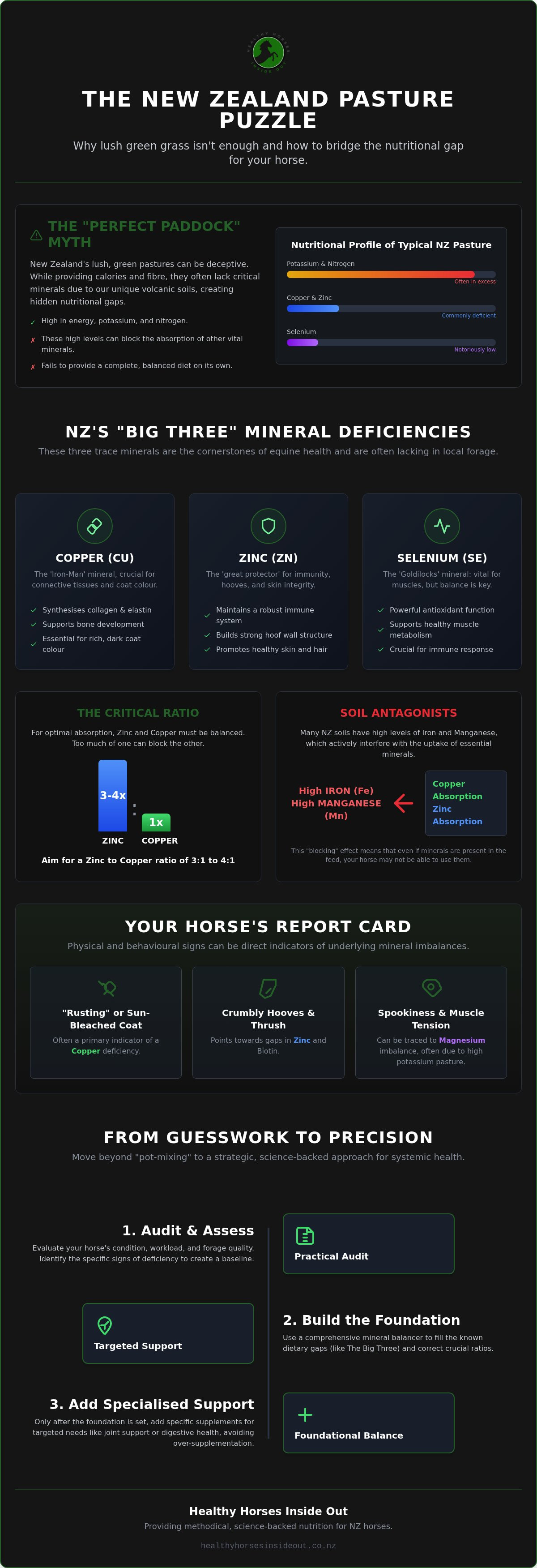
The "perfect paddock" myth is one of the most persistent challenges in equine care. Green grass provides calories and bulk, but it can be nutritionally deceptive. Many New Zealand pastures, particularly those dominated by rye and clover, are high in potassium and nitrogen. These elements can interfere with the absorption of critical minerals, creating a "blocking" effect that leaves the horse deficient even when they are standing in belly-deep forage. Achieving a balanced ration is a foundational requirement for every horse, regardless of whether they are a high-level athlete or a retired paddock mate. For those seeking a comprehensive overview of horse nutrition, it is clear that internal health depends on a precise ratio of nutrients that grass alone cannot provide.
The Role of Forage in New Zealand
Forage is undoubtedly the centre of any horse's diet. It keeps the digestive system moving and satisfies the psychological need to chew. However, there is a significant difference between simply filling the belly and truly nourishing the cells. In New Zealand, seasonal flushes in grass growth can cause rapid changes in mineral availability. During these periods, the high water and sugar content in the grass can dilute the concentration of trace minerals, making targeted supplementation even more vital to maintain internal stability.
Signs Your Current Diet is Lacking
Your horse's physical appearance is often a direct reflection of their internal chemistry. If you notice a "rusting" coat or sun-bleached manes on a dark horse, this is frequently a sign of copper deficiency rather than just sun damage. Similarly, crumbly hoof walls that struggle to hold a shoe, or persistent thrush despite good hygiene, often point toward gaps in zinc and biotin. Behavioural changes are also common indicators. Spookiness, muscle tension, or a general lack of focus can often be traced back to magnesium imbalances caused by the high potassium levels in our local pastures. Identifying these telltale signs is the first step in moving from guesswork to a methodical, evidence-based feeding routine.
The Big Three: Addressing New Zealand’s Primary Mineral Deficiencies
Deciding what supplements does my horse need NZ requires an understanding of the "Big Three" minerals: copper, zinc, and selenium. These elements are the cornerstones of systemic health, yet they are notoriously deficient in New Zealand soils. As noted in the SPCA's guide to feeding horses, a forage-based diet is the gold standard for welfare, yet forage alone often fails to meet the specific trace mineral requirements of the modern horse. Without targeted intervention, these deficiencies manifest as visible health issues that no amount of grooming or training can resolve.
Copper is essential for more than just a shiny coat. It plays a critical role in the synthesis of collagen and elastin, which are vital for bone development and connective tissue integrity. Zinc works alongside copper to support the immune system and maintain the structural proteins of the hoof wall, a necessity during our wet NZ winters. Finally, selenium acts as a powerful antioxidant. It's often called the "Goldilocks" mineral because while New Zealand horses desperately need it for muscle function, toxicity is a real risk. Achieving the right balance is about more than just hitting a daily target. It's about maintaining the correct ratio, typically aiming for a zinc-to-copper ratio of 3:1 or 4:1 to ensure one doesn't outcompete the other for absorption.
Why Soil Testing Matters for NZ Owners
Regional differences across the North and South Islands significantly impact what ends up in your horse's bucket. Many New Zealand soils are naturally high in iron and manganese, both of which act as antagonists to essential trace minerals. Mineral antagonism is the process where an excess of one mineral blocks the absorption of another. By understanding your specific soil profile, you can move away from "blind" feeding and toward a more methodical, science-backed routine. A methodical approach starts with choosing balanced mineral support that is specifically formulated for our local environment.
Iodine and Vitamin E: The Often Forgotten Extras
While the Big Three take centre stage, iodine and Vitamin E are equally vital for long-term vitality. Iodine is a primary component of thyroid hormones, which regulate metabolism. Horses in inland regions often face greater iodine challenges than those on the coast. Similarly, Vitamin E is a crucial antioxidant that degrades rapidly in hay and stored forage. If your horse doesn't have 24/7 access to fresh, growing pasture, they likely require a boost to support their neurological and muscular health. A high-quality range of everyday horse supplements provides this necessary baseline, ensuring no nutritional gaps are left to chance.
Targeted Support vs. Everyday Balance: Deciphering Your Horse’s Requirements
Establishing a successful feeding plan requires a clear distinction between foundational nutrition and targeted intervention. When people ask "what supplements does my horse need NZ", they are often looking for a solution to a specific problem, such as crumbly hooves or "grass-affected" behaviour. However, effective nutrition follows a hierarchy. An everyday mineral balancer acts as the insurance policy, filling the consistent gaps in New Zealand’s volcanic soils that we discussed previously. Only once this baseline is met should you consider adding targeted support for specific physiological demands.
Most horses thrive on a high-quality balancer, but certain life stages or workloads demand more from the diet. High-performance athletes, breeding stock, and horses recovering from clinical issues often require higher concentrations of specific nutrients to support tissue repair and metabolic function. In New Zealand, the "grass-affected" horse is a common phenomenon where the seasonal surge of potassium and nitrogen in rye/clover pastures triggers anxiety or physical sensitivity. These horses often benefit from temporary additions of toxin binders or high-purity magnesium to help stabilise their system during growth flushes.
A significant risk for many owners is the habit of "pot-mixing", which often leads to doubling up on ingredients. If your balancer already contains adequate selenium, adding a separate hoof supplement with more selenium can lead to dangerous toxicity levels. It is vital to read labels with a methodical eye, ensuring that each product serves a unique purpose without creating an accidental overdose of trace minerals. This calculated approach saves money and protects your horse’s internal organs from the stress of processing excess nutrients.
When to Use Specific Horse Supplements
Targeted intervention is necessary when a horse faces a challenge that goes beyond standard maintenance. For example, managing metabolic issues like EMS or Laminitis requires a diet that supports insulin sensitivity and reduces systemic inflammation. In these cases, using specific horse supplements can provide the concentrated support needed for resilience. Similarly, ageing veterans often need joint support to maintain mobility, while performance horses may require digestive conditioners to protect the gut lining from the stress of travel and competition.
The "Inside Out" Philosophy
External symptoms like a dull coat or brittle hooves are rarely isolated problems. They are typically the final indicators of a long-term internal deficiency or a compromised gut microbiome. When the gut is healthy, nutrient absorption is optimised, meaning the minerals you feed actually reach the cells where they are needed. By understanding horse supplement ingredients NZ, you can distinguish between high-quality chelated minerals and cheap fillers that provide little biological value. This philosophy ensures you are treating the cause of the issue, not just masking the symptoms with temporary fixes.
A Step-by-Step Checklist to Audit Your Horse’s Nutritional Gaps
Performing a structured audit of your current feeding regime is the most effective way to determine what supplements does my horse need NZ. Rather than reacting to symptoms as they appear, a methodical review allows you to identify systemic gaps before they manifest as poor performance or ill health. This process moves you away from the "pot-mixing" habit and toward a streamlined, cost-effective routine that prioritises foundational wellness.
- Step 1: Visual Assessment. Conduct a thorough condition score and look for subtle indicators of mineral imbalance. Check for "orange" tips on dark manes, a lack of muscle definition despite work, or a "pot-bellied" appearance that may suggest protein or mineral deficiencies.
- Step 2: Forage Analysis. Evaluate the primary source of your horse's calories. A horse on 24/7 rye-clover pasture has vastly different requirements to one on a hay-only diet or high-sugar baleage. Understanding the base forage helps you choose a supplement that balances those specific sugar and mineral levels.
- Step 3: Workload Review. Be honest about your horse's energy expenditure. A paddock ornament requires a high-concentration, low-calorie mineral base, whereas an athlete needs additional support for electrolyte replacement and muscle recovery.
- Step 4: Label Comparison. Examine your "hard feed" bag. Many pre-mixed feeds only provide the full spectrum of vitamins and minerals if fed at the maximum recommended rate, which is often far more than the average NZ horse requires without becoming overweight.
Evaluating the Feed Room
Learning to read a supplement label like a professional is a vital skill for any savvy owner. Look beyond the marketing claims on the front of the tub and scrutinise the ingredients list for common fillers like molasses, soy hulls, or excessive grain by-products that add bulk without nutritional value. When comparing products, always calculate the "per day" cost rather than the "per bag" price. A cheaper bag with a high daily dose often proves more expensive and less effective than a concentrated, high-quality mineral pellet that lasts for months.
Seasonal Adjustments for NZ Conditions
Equine requirements are not static; they shift with the New Zealand seasons. Our winter horse care supplements NZ guide highlights how the lack of fresh grass increases the need for Vitamin E and specific trace minerals. Conversely, the spring flush brings a surge in potassium and nitrogen, necessitating a temporary increase in magnesium and toxin binders to manage "grass-affected" behaviour. Broodmares and growing foals also require seasonal adjustments to support rapid bone development and lactation, ensuring the next generation starts with a solid nutritional foundation.
If your audit reveals gaps in your current routine, you can explore our range of NZ-formulated supplements to find a targeted solution for your horse.
Streamlining Equine Nutrition: Why HHIO Pellets and Bundles are the Smart Choice
Solving the puzzle of what supplements does my horse need NZ often leads to a cluttered feed room filled with half-used tubs and confusing labels. This "multi-pot" approach is not only expensive but also increases the risk of accidental mineral imbalances. HHIO Pellets provide a methodical alternative, serving as a foundational base that ensures every horse receives their daily required minerals in a single, dust-free serving. By consolidating essential nutrients into one high-quality pellet, you can move away from the mess of traditional powders and embrace a simplified, evidence-based routine.
Our "less is more" philosophy is built on the principle of nutritional intentionality. When you use ingredients with high biological value, you don't need to feed massive quantities of bulk fillers. This precision helps you avoid the common habit of over-supplementing, which can place unnecessary stress on a horse's metabolic pathways. Choosing a scientifically balanced solution provides the peace of mind that you are meeting New Zealand-specific mineral requirements without the waste or the worry of "doubling up" on ingredients.
The HHIO Difference: Formulated for NZ
Being a New Zealand-owned and operated business allows us to apply deep regional expertise to every formulation. We understand that a horse in the Waikato faces different pasture challenges than one in Central Otago, yet certain volcanic soil deficiencies remain a constant across the country. We prioritise high-bioavailability ingredients, such as chelated minerals, which are more easily absorbed and utilised by the horse's body compared to cheaper inorganic alternatives. This focus on quality over quantity supports the "Methodical Mentor" owner who values transparency and wants to understand the biological logic behind their horse’s diet.
Getting Started with a Simplified Routine
Transitioning your horse onto a streamlined programme is a straightforward process. We recommend introducing HHIO Pellets gradually over seven to ten days to allow the digestive system and the horse's palate to adjust. For those dealing with specific issues identified during a nutritional audit, our curated Horse Supplement Bundles, such as the Hoof & Coat bundle, offer a targeted way to solve local problems. These bundles are designed to work in harmony with our pellets, providing a cohesive system that supports your horse from the inside out. You can view our range of specialised NZ horse supplements to find the right foundational support for your horse’s current life stage and workload.
Empowering Your Horse’s Foundational Health
Moving away from a cluttered feed room and toward a science-backed routine is the most impactful change you can make for your horse’s long-term vitality. By identifying the specific mineral deficiencies inherent in our volcanic soils and auditing your horse’s unique workload, you replace expensive guesswork with nutritional precision. Transitioning to a plan that prioritises high-bioavailability chelated minerals ensures your horse actually absorbs the foundational elements required for systemic resilience.
Determining what supplements does my horse need NZ shouldn’t feel like a constant battle against confusing labels or visible health issues like "grass-affected" behaviour. Our formulations are created specifically for New Zealand conditions, providing the correct ratios of copper, zinc, and selenium used by top performance riders and breeders nationwide. You have the power to simplify your feeding routine while gaining the peace of mind that comes from evidence-based wellness.
Browse our science-backed NZ horse supplement bundles and begin supporting your horse’s health from the inside out today. Your horse’s best performance starts with a balanced internal foundation.
Frequently Asked Questions
Do all horses in New Zealand need a Selenium supplement?
Most horses in New Zealand require selenium supplementation because our volcanic soils are naturally deficient in this trace mineral. However, you must be cautious as the margin between a healthy dose and toxicity is narrow. It's best to consult local soil data or perform a blood test before adding high doses. Starting with a balanced daily mineral base is a safer approach than isolated high-dose selenium for those wondering what supplements does my horse need NZ.
How long does it take to see results after starting a new supplement?
Visible improvements typically appear in stages depending on the biological system involved. You might notice behavioural changes or improved focus within two to three weeks of addressing a magnesium imbalance. Physical changes, such as a deeper coat colour or stronger hoof growth, usually take three to six months to become apparent. This timeline reflects the natural rate of cellular turnover and hair growth cycles, requiring patience and consistent feeding for long-term results.
Can I over-supplement my horse if I use both pellets and a multi-vitamin?
Yes, over-supplementation is a significant risk when you combine multiple products without scrutinising the labels for overlapping ingredients. Feeding a comprehensive mineral pellet alongside a standard multi-vitamin often results in excessive levels of selenium or iodine, which can lead to metabolic stress. A methodical approach involves choosing one foundational balancer and only adding targeted support if a specific clinical need arises. This strategy prevents nutrient competition and ensures internal systems remain balanced.
What is the best supplement for a horse that is "grass-affected" or spooky?
The most effective support for a grass-affected horse involves a combination of high-purity magnesium and a quality toxin binder. These horses are often reacting to the high potassium and nitrogen levels found in NZ rye and clover pastures. By stabilising the nervous system and binding fungal toxins, you can reduce spookiness and physical sensitivity. This targeted approach addresses the underlying cause of the behaviour rather than simply masking the symptoms with temporary fixes.
Does my horse need a joint supplement if they are not in heavy work?
Joint support is not exclusively for athletes; it's often beneficial for ageing horses or those with poor conformation even in light work. While a horse in heavy work faces more mechanical wear, a retired veteran may need support to maintain mobility and comfort during seasonal changes. Assessing the individual horse’s movement and history is more important than simply looking at their exercise schedule. Foundational mineral balance also supports the connective tissues that protect joints.
How do I know if my horse has a Copper or Zinc deficiency?
Visual indicators are the most common way to identify these deficiencies in the paddock. A copper deficiency often manifests as a "rusty" or sun-bleached appearance in dark coats, while zinc gaps frequently lead to crumbly hoof walls and persistent skin issues. Because these minerals are critical for enzyme function and tissue integrity, these external signs suggest a long-term internal imbalance. Soil and forage testing provide the most accurate data for a precise feeding plan.
Are HHIO Pellets suitable for horses with metabolic issues or laminitis?
HHIO Pellets are specifically formulated to be safe for horses with metabolic issues, including EMS and laminitis. They provide essential minerals without the high sugar and starch content found in many traditional hard feeds. This makes them an ideal foundational base for "good doers" who need nutrient density without excess calories. Supporting the metabolism through correct mineral ratios is a vital part of managing these sensitive horses from the inside out.
Is it better to buy individual minerals or a complete supplement bundle?
Buying a complete supplement bundle is generally more effective and economical than trying to balance individual minerals yourself. Bundles are curated to ensure that specific ratios, such as the zinc-to-copper balance, are scientifically correct for New Zealand conditions. This methodical organisation removes the guesswork and prevents the "pot-mixing" habits that lead to waste. A bundle offers a streamlined solution that addresses multiple health objectives simultaneously while simplifying your daily routine.


