

Could your horse’s coat be hiding a change in body condition? A thick coat, individual conformation and well-developed muscle can all make visual estimates misleading. That’s why assessing horse body condition score shouldn’t rely on appearance alone: a consistent assessment includes looking at and feeling six key areas.
If you find it difficult to distinguish body fat from muscle, or you’re unsure what a score means for your horse, you’re not alone. Body condition score is a useful way to estimate fat cover, but it can’t diagnose a health problem or show whether your horse’s diet meets every nutritional need. It’s one part of a broader picture.
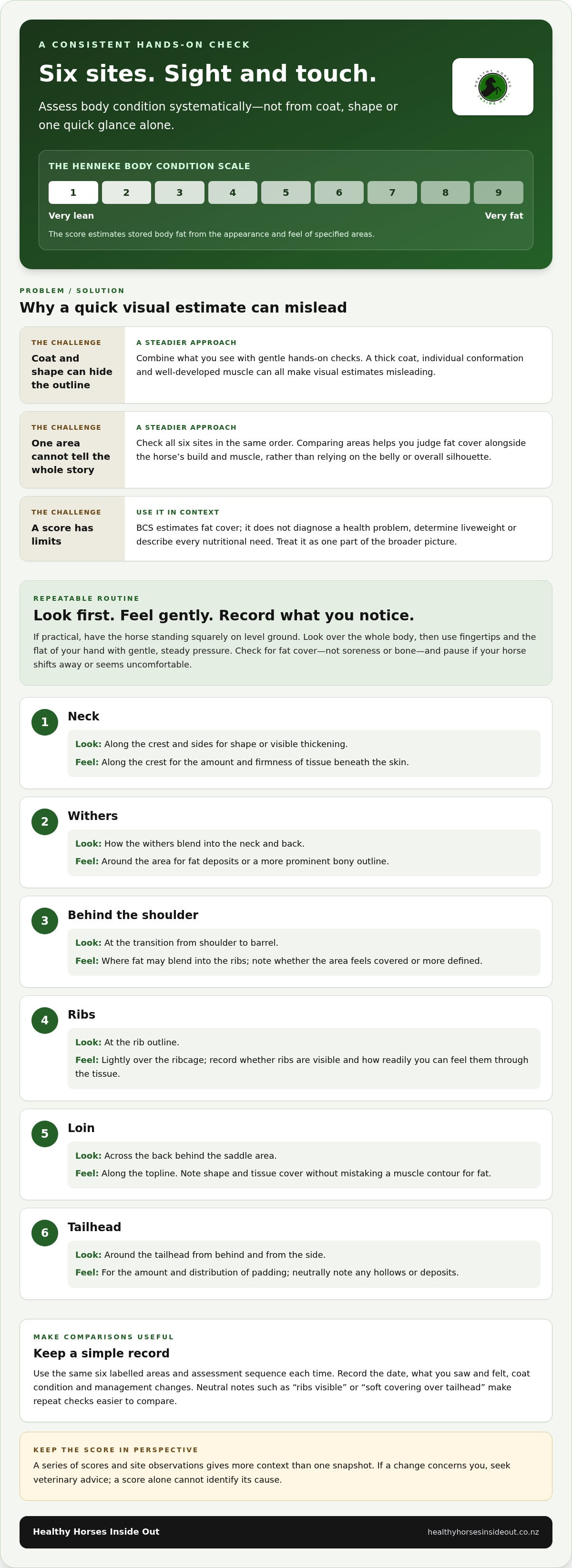
This guide explains how to use the Henneke 1-to-9 scale and assess the neck, withers, ribs, loin, tailhead and behind the shoulder using a consistent hands-on method. You’ll also learn what a score can and can’t tell you, how to track changes over time, and when to seek professional advice. Regular, careful checks can help you make more informed decisions about your horse’s care.
Key Takeaways
- When assessing horse body condition score, combine what you see with hands-on checks at all six Henneke sites.
- Use the score to estimate body fat, not to diagnose a health issue or determine liveweight.
- Compare several body areas to help distinguish fat cover from muscle and conformation.
- Record the date, observations, coat condition and management changes to make repeat assessments easier to compare.
- Use your notes to guide thoughtful next steps, and seek veterinary advice if changes concern you.
What assessing a horse’s body condition score can, and cannot, tell you
Body condition assessment is more consistent when you use your eyes and hands together. A horse’s outline offers clues, but feeling the areas where fat is commonly deposited helps you judge what lies beneath the coat. This combination is central to assessing horse body condition score systematically, rather than relying on a single impression.
Body condition score (BCS) estimates a horse’s stored body fat from the appearance and feel of specified areas. The Henneke system uses a scale from 1 to 9, ranging from very lean to very fat. It assesses fat cover, not a diagnosis, liveweight or overall health. The Henneke horse body condition scoring system outlines the scale and its background.
Routine scoring gives you a structured way to spot gradual changes that may be hard to notice from day to day. For example, a change in how the ribs or tailhead feel may stand out when you compare it with earlier notes. A score is most useful as part of ongoing observation, not as a verdict on whether a horse is healthy.
Body condition score is not the same as body weight
A BCS describes the amount and distribution of fat cover. A weighing scale measures total mass, including bone, muscle, organs and other body tissues. Two horses with similar scores can therefore have different weights: a larger-framed horse may weigh more than a smaller one while carrying a similar degree of fat cover.
This distinction matters when monitoring change. A score can describe condition, but it can’t tell you a horse’s precise weight or replace weighing when an accurate weight is needed. Nor can it explain why condition has changed. Interpret the score alongside other observations, and seek veterinary assessment if a change concerns you.
Why a horse’s shape needs context
Age, breed, conformation, coat and workload all affect how a horse looks. A thick winter coat can soften the outline of the ribs, while a horse in regular work may have more developed muscles than one with a different workload. These factors make it important to assess multiple sites by sight and touch, rather than judging condition from the belly or overall silhouette alone.
Fat cover and topline muscle are different features. The topline refers to muscle along the back and hindquarters, and its appearance may vary with build and conditioning. A BCS focuses on fat, so it can’t fully describe muscle development or explain why a topline looks less developed.
One assessment is a snapshot. A series of scores and site observations, recorded under similar conditions, gives more useful context about the direction and pace of change. Consider each finding alongside the horse’s usual build, workload and management. If the pattern concerns you, a veterinarian can help assess possible causes; a score alone can’t identify them.
How to assess the six Henneke body condition sites by sight and touch
A repeatable routine makes assessing horse body condition score more reliable than a quick glance. If practical, start with the horse standing squarely on level ground. Look over the whole body first, then check each site in the same order using gentle, steady pressure. Note what you see and feel, rather than deciding the overall score from one area.
Use your hands to assess fat cover
Visual checks show the outline; palpation helps you judge whether a contour reflects fat, muscle or build. Use your fingertips and the flat of your hand to feel gently. You’re checking for fat cover, not probing for bone or testing for soreness. If the coat makes contours difficult to see, touch can provide useful additional information.
- Neck: Look along the crest and sides for shape or visible thickening. Feel along the crest to assess the amount and firmness of tissue beneath the skin.
- Withers: Observe how the withers blend into the neck and back. Feel around the area for fat deposits or a more prominent bony outline.
- Shoulder: Look at the transition from shoulder to barrel. Feel behind the shoulder, where fat may blend into the ribs, and note whether the area feels covered or more defined.
- Ribs: Observe the rib outline, then run your hand lightly over the ribcage. Record whether the ribs are visible and how readily you can feel them through the tissue.
- Loin: Look across the back behind the saddle area, then feel along the topline. Note the shape and tissue cover without mistaking a muscle contour for fat.
- Tailhead: Observe the area around the tailhead from behind and from the side. Feel around it for the amount and distribution of padding, and neutrally record any hollows or deposits.
Check the topline, withers and tailhead
Fat doesn’t sit identically at every site. The neck crest may feel different from the area beside the withers, and the tailhead may have its own pattern of padding. The loin also needs careful assessment: note its shape and feel, but don’t treat a less-rounded topline as proof of a particular cause. Assess each site in context and avoid pressing hard to find an answer.
Use a simple outline or checklist with six labelled areas. For each one, record what you saw and felt in neutral terms, such as “ribs visible” or “soft covering over tailhead”. This makes it easier to compare one assessment with the next, rather than relying on memory. Following the same sequence also helps you notice when one site changes while others appear similar.
Calm handling matters. If your horse shifts away or seems uncomfortable, pause rather than forcing the examination. The aim is a calm, repeatable check, not an uncomfortable test. For broader feeding context alongside your observations, explore equine nutrition support. A body condition score alone can’t identify a specific nutritional need.
How to interpret a horse body condition score without overlooking muscle
The Henneke scale describes body fat from 1 to 9, ranging from very thin to extremely fat. A score of 5 is generally considered ideal for most healthy adult horses, with 4 to 6 often used as an acceptable range. The right target can vary with the individual horse and circumstances. Use a Henneke scoring chart to review the descriptions for each score, and don’t treat one number as a complete health assessment.
When assessing horse body condition score, interpret the pattern across the neck, withers, shoulder, ribs, loin and tailhead. The overall score reflects the combined evidence of fat cover at these sites, not the most noticeable feature in isolation. A prominent rib, thick crest or visible back contour should prompt you to check the other areas, not determine the score on its own.
Read the whole-body pattern, not one clue
Compare what you can see and feel at several sites before deciding where the horse sits on the scale. For example, visible ribs alongside padding at the tailhead create a mixed picture. Record both findings and consult the scoring chart rather than letting either one outweigh the rest. The table below offers a broad comparison, not a substitute for the detailed descriptions in a Henneke chart.
| General pattern | Ribs | Neck and shoulder | Loin and tailhead |
|---|---|---|---|
| Leaner | More visible or readily felt | Less soft covering; contours may be more defined | Less padding; contours may be more apparent |
| Moderate | Not prominent, but palpable | Blend smoothly into adjoining areas | Even covering without marked deposits |
| Fatter | Harder to feel beneath the covering | More visible or palpable fat deposits | More padding or deposits may be present |
Separate body fat from topline muscle
Fat cover and muscle condition both affect a horse’s appearance, but they aren’t interchangeable measures. The Henneke score estimates fat, while topline muscle contributes to the outline along the back and hindquarters. A change in muscle can alter that outline without representing the same change in fat cover. Note the two observations separately instead of adjusting the BCS based on topline alone.
Age, workload and individual conformation provide context, but they aren’t automatic explanations for a particular appearance. Compare the horse with its own previous records, and be cautious about interpreting one assessment. If condition or musculature changes markedly or without an obvious explanation, seek veterinary advice. A qualified professional can interpret the findings alongside the horse’s history and clarify whether further assessment is needed.
How to make horse body condition assessments more consistent
A useful record turns separate checks into a pattern you can interpret. To improve consistency, assess your horse under similar conditions each time: use the same handler where possible, follow the same site-checking sequence, and compare the horse in a similar stance on level ground. A routine every two to four weeks can help you notice gradual shifts while allowing time for changes to become apparent.
Coat condition matters too. Note whether the horse has a thick winter coat, has been clipped or is shedding, as these factors can affect how clearly body contours show. Photographs can support your notes, especially when taken from the same angles and at a similar distance, but they can’t show how fat cover feels under your hand. Keep hands-on assessment in the routine.
Build a practical record for each assessment
Use a notebook or digital log with the same fields each time. Brief, neutral descriptions are easier to compare than impressions such as “looks better”. A simple entry might include:
- Date and overall score: Record the assessment date and your Henneke score.
- Site observations: Note findings for the neck, withers, shoulder, ribs, loin and tailhead using consistent wording.
- Coat and photos: Describe coat condition and add dated photographs as supporting references.
- Management context: Record relevant changes to workload, turnout, forage or feed that may help explain a developing trend.
Keeping these details together helps you describe what changed, where you noticed it and over what period. If you speak with your veterinarian, a dated sequence of observations is more useful than trying to recall how the horse looked several weeks earlier.
A body condition score doesn’t measure nutrient adequacy. A horse may have a moderate score while still needing a separate review of its diet and nutrient intake. Healthy Horses Inside Out’s guide to everyday horse supplements discusses supplementation as part of broader feeding considerations, not as a conclusion to draw from a score alone.
Know when a change needs professional advice
Routine tracking helps you observe; it doesn’t diagnose disease or determine a feeding plan. Seek veterinary guidance if a change is unexplained, rapid or persistent, or if you’re concerned about your horse’s condition. Share your record and photographs, and note relevant management changes. A veterinarian can assess the horse in context and advise whether further investigation is needed.
If you’re considering nutrition, assess the whole ration and the horse’s circumstances rather than using BCS as a supplement selector. The guide to what supplements a horse needs can support that separate nutritional discussion. Explore horse supplement options as one part of broader care, not as a response to the score alone.
Turn your horse’s body condition score into a thoughtful care plan
A body condition score is a useful observation, not an instruction to change your horse’s feed. Use it to guide the next question: is this a one-off finding, a continuing trend or a change that needs professional input? A measured response helps you avoid treating the number as an explanation in itself.
Work through the findings in order:
- Record what you found. Note the overall score, observations at each site, date, coat condition and relevant changes in management.
- Consider the context. Look at the pattern over time alongside the horse’s age, workload, usual build, health history and current feeding routine.
- Seek veterinary advice if concerned. Unexplained, rapid or persistent changes warrant a conversation with your veterinarian, who can assess the horse more fully.
A score alone can’t identify why a horse has gained or lost condition. Changes may relate to several aspects of health or management, and a visual or hands-on assessment can’t diagnose the cause. Avoid creating a weight-loss, weight-gain or supplement plan based only on the score.
Use the score to guide a conversation, not self-diagnosis
Bring your notes and dated photographs to a veterinary discussion, particularly if you’ve noticed a clear shift between assessments. Explain when you first noticed it and mention relevant changes in workload, turnout or feeding. This gives your veterinarian a useful starting point. They can interpret the observations alongside the horse’s history and overall management, then advise whether further assessment is appropriate.
It can be tempting to respond to a higher or lower score by changing the ration straight away. Pause first. A score describes estimated fat cover, but it doesn’t identify a medical issue, establish the horse’s nutrient requirements or prescribe a suitable diet. Professional guidance is especially valuable when the change is unexpected or the picture is unclear.
Keep nutrition decisions connected to the whole horse
Body condition and nutrient balance are related parts of care, but they measure different things. A horse’s score doesn’t show whether its diet supplies the nutrients it needs, just as a nutrition product can’t explain or diagnose a change in condition. Feeding decisions should take account of the whole ration, the horse’s circumstances and any relevant veterinary advice.
For background on horse nutrition support, consider how nutritional products may fit within a broader care plan, rather than treating them as a guaranteed way to alter a score. Thoughtful feeding is one part of that plan, alongside appropriate monitoring and professional assessment when concerns arise.
Consistent observation gives you clearer information to act on. Keep recording what you see, compare changes over time and bring concerns to your veterinarian. For further educational context on exploring horse nutrition support, Healthy Horses Inside Out offers a place to continue learning, without treating nutrition products as a substitute for veterinary care.
Make your next step a considered one
Let your observations inform your next conversation rather than pressure you into an immediate change. If a result concerns you, share your records with your veterinarian and discuss what the pattern may mean for your horse. If there’s no immediate concern, keep your notes going and use them as a steady reference for future care.
Assessing horse body condition score is one useful part of looking after the whole horse. It doesn’t reveal, by itself, whether the diet is nutritionally adequate or identify a specific need. Ground feeding decisions in the horse’s full circumstances, and treat supplements as potential support within a considered plan, not as a fix for a score.
Healthy Horses Inside Out serves horse owners nationwide with everyday and specific horse supplements, HHIO Pellets and supplement bundles. Explore thoughtful horse nutrition support as you consider your horse’s broader care. Small, consistent observations can help you make informed decisions with greater confidence, one careful check at a time.
Frequently Asked Questions
How often should I assess my horse’s body condition score?
Choose a routine that suits your horse’s management and lets you compare checks fairly; there isn’t one interval that suits every horse. If pasture access, workload or feed changes, make a note and consider an additional assessment to see whether the pattern continues. Record the date and findings each time. If a change is unexplained, rapid or persistent, seek veterinary guidance. Scoring complements, but doesn’t replace, routine health care.
Can I assess my horse’s body condition score by looking at them?
Looking is a useful starting point, but assessing horse body condition score by sight alone can be misleading. A thick coat, natural build or developed muscles can alter the outline, so include gentle palpation at the recognised sites. For example, a rounded belly shouldn’t outweigh what you observe and feel elsewhere. Record the overall pattern rather than relying on one feature, and seek professional advice if you’re unsure or concerned.
What is the difference between body condition score and muscle condition?
Body condition scoring estimates fat cover; muscle condition describes the horse’s musculature. Both affect appearance, but they aren’t interchangeable. A change along the topline, for example, may alter the horse’s silhouette without showing the same change in fat cover. Note fat and muscle observations separately, and compare them over time. If a change in musculature is unexplained, persists or occurs with other health concerns, ask your veterinarian for advice.
Does a horse’s winter coat affect body condition scoring?
Yes. A thick winter coat can obscure contours, making a visual estimate less reliable. Don’t assume a rounded appearance means a particular level of fat cover; use gentle touch as well as observation, handling your horse calmly and safely. Record whether the horse is moulting, clipped or carrying a heavy coat, as this helps explain differences between checks. Coat appearance alone can’t establish body condition, so compare findings across assessment sites.
Can a horse have a healthy-looking body condition but still have a nutrition problem?
Yes. A body condition score estimates fat cover; it doesn’t show whether a horse’s diet supplies every nutrient it needs. A horse may look well covered while its overall ration still deserves review. Consider the complete diet, workload and health history rather than choosing a supplement based on appearance alone. If you’re concerned about nutrient balance or feeding, a veterinarian or qualified equine nutrition professional can help interpret the situation.
What should I do if my horse’s body condition score changes suddenly?
Document the change and seek veterinary guidance promptly, particularly if it’s unexplained or your horse shows other signs of illness. Note recent changes in feed, turnout, workload or routine, but don’t assume they explain what you’re seeing. A score can highlight a change, but it can’t diagnose its cause. Avoid using supplements as a substitute for assessment; your veterinarian can advise on appropriate next steps in context.


