

What if the feed your horse is refusing is only part of the story? Feeding a picky eater horse can be frustrating, but a sudden loss of appetite in a horse that normally eats well may signal pain or illness, not simple fussiness. Pause before changing the feed and consider whether your horse needs veterinary attention.
Even without an urgent health concern, refused feed, supplements or a changed routine can leave you unsure what to try next. Start with small, deliberate steps rather than adding several new ingredients at once. Gradual changes make it easier to tell what helps and reduce the risk of digestive upset.
This guide explains how to investigate possible causes, assess forage, feed and routine, and compare practical ways to encourage eating. You’ll also learn how to introduce changes gradually and keep any supplement choice aligned with your horse’s wider ration and nutritional needs. The aim isn’t a quick fix. It’s a calm, consistent plan that supports good feeding and helps you recognise when to involve a veterinarian.
Key Takeaways
- Treat picky eating as a pattern to investigate, not a diagnosis or proof of a particular deficiency.
- A sudden appetite change can signal a health or dental concern. Seek veterinary advice rather than trying to mask the cause with feed changes.
- When feeding a picky eater horse, assess the existing feed, forage and routine before considering a targeted change.
- Change one thing at a time and keep a simple feed diary to track refusals, appetite and routine changes.
- Choose supplements for a clear nutritional purpose within the whole ration, not as appetite treatments.
Feeding fussy horses: preference or warning sign?
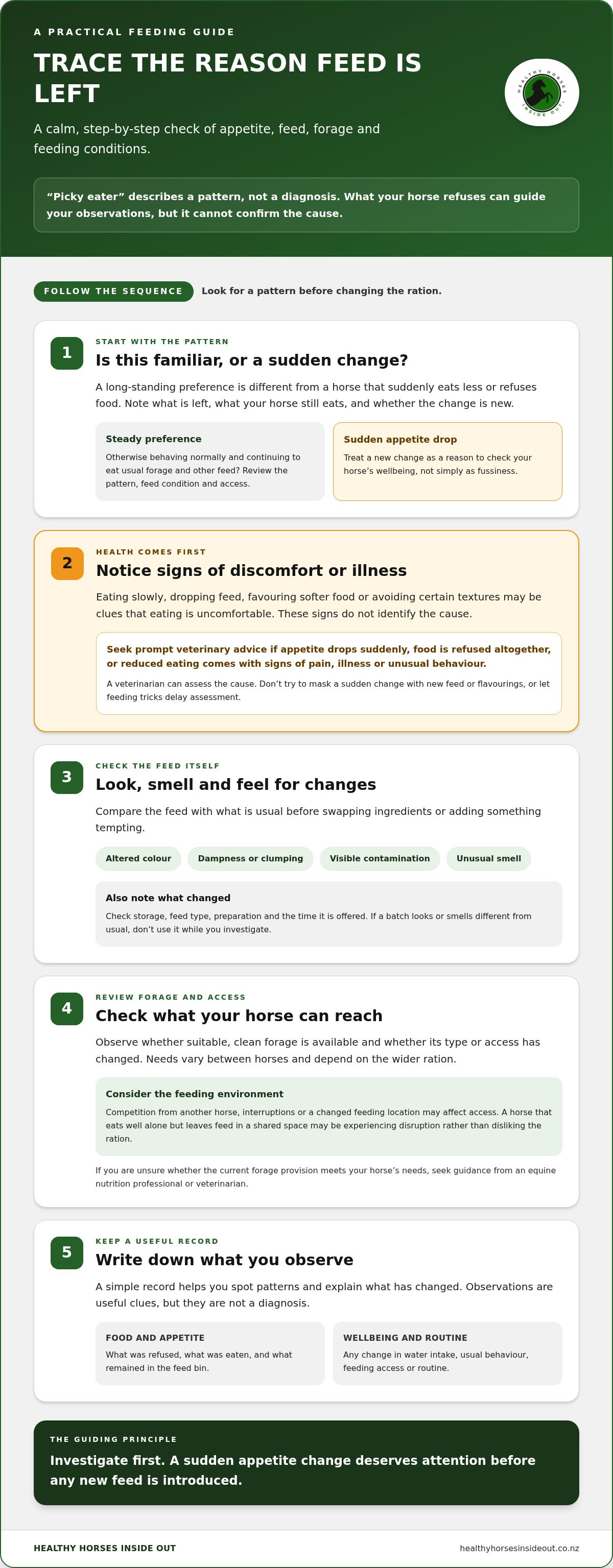
Finding feed left in the bin can be frustrating, especially when you’re trying to keep your horse’s diet consistent. Before swapping ingredients or adding something more tempting, consider what has changed. A horse that has always left one part of a meal is different from one that suddenly eats less or refuses food altogether. The pattern can guide your next step, but it can’t explain the cause on its own.
What counts as a picky eater horse?
“Picky eater” describes a pattern, not a diagnosis. A horse might sort through a mixed feed, leave a particular supplement, eat only part of a meal or show a long-standing preference for one texture over another. That behaviour doesn’t prove a specific nutrient is missing, and it doesn’t rule out discomfort or illness.
Look beyond a single uneaten meal. Note what your horse refuses, what they still eat and whether the change is new. Record what is left in the feed bin, whether water intake or usual behaviour seems different, and whether anything in the routine has shifted. Social dynamics can also affect access to feed. This overview of horse behaviour and feeding patterns provides broader context.
A steady preference in a horse that otherwise eats normally may call for a calm review of feed and routine. A sudden change deserves more attention. When feeding a picky eater horse, the first question isn’t “What can I add?” but “What changed, and is my horse well?”
Quick decision guide
- Review the routine: Selective eating has been consistent over time, your horse is otherwise behaving normally, and they continue to eat their usual forage and other feed. Track the pattern and review feed condition, access and recent changes.
- Seek prompt veterinary advice: Appetite drops suddenly, your horse refuses food altogether, or reduced eating occurs with signs of pain or illness. Don’t wait to see whether a new feed or flavouring helps.
When does reduced appetite need urgent attention?
A horse that normally eats well but suddenly stops may have a health problem, pain or dental discomfort. Only a veterinarian can assess the cause. Your observations are useful clues, not a diagnosis. If refusal is sudden or comes with a concerning change in behaviour or condition, contact your veterinarian promptly for advice.
Complete refusal warrants particular attention, even if you can’t identify another obvious sign. Don’t try to disguise the change with extra ingredients or repeatedly offer different feeds. Feeding tricks should never delay assessment when your horse seems unwell. Once immediate concerns have been addressed, you can consider whether a stable preference or management factor is contributing to what’s left in the feed bin.
Why horses reject feed: health, teeth, forage and feeding conditions
When you notice a change, look for a pattern rather than settling on the first explanation. A horse may leave feed because eating is uncomfortable, the feed itself has changed, forage access is different or the feeding environment has become unsettled. These factors can overlap. Your observations can help identify what needs attention, but they can’t confirm a medical cause.
Investigate a sudden appetite change before introducing a new feed. Adding something different may make it harder to identify what your horse is responding to and could delay assessment if discomfort or illness is involved.
Health and dental comfort can change eating behaviour
Difficulty chewing may show up as eating more slowly, dropping feed, favouring softer food or leaving particular textures. These clues can prompt a closer look, but they don’t identify the cause. Dental problems, ulcers and other medical conditions can’t be diagnosed from feeding behaviour alone, and similar signs can have different explanations.
If appetite changes suddenly, remains reduced or is accompanied by unusual behaviour, seek veterinary advice. A veterinary assessment is also appropriate when eating seems uncomfortable, even if your horse still accepts some feed. Don’t assume selective eating is simply a preference or try to treat a suspected condition by changing the ration yourself.
Feed quality, forage and the feeding environment
Check the feed before changing it. Look for altered colour, dampness, clumping, visible contamination or an unusual smell. Consider whether it has been stored to keep it clean and dry. If a batch looks or smells different from usual, don’t use it while you investigate. Note whether the feed type, preparation or time of offering has changed too.
Forage matters as well. Observe what your horse can access and whether it appears clean and suitable, without assuming one forage type or a fixed quantity suits every horse. Needs depend on the individual horse and the wider ration. If you’re unsure whether the current forage provision meets those needs, seek guidance from an equine nutrition professional or veterinarian.
- Health: Has appetite changed alongside behaviour, comfort or general condition?
- Dental comfort: Is your horse eating slowly, dropping feed or avoiding particular textures?
- Feed condition: Does the feed look, smell and feel as it normally does?
- Forage: Is suitable forage available, and has its type or access changed?
- Routine and space: Is another horse pushing in, or are interruptions, competition or a changed feeding location affecting access?
A horse that eats well alone but leaves feed in a shared space may be experiencing competition or disruption, rather than disliking the ration. If practical, observe a full feed period. This can reveal whether your horse has enough time and space to eat.
Once health concerns have been addressed, any supplement should have a clear role in the whole ration, not be treated as an appetite remedy. Explore equine supplement options as part of a considered nutritional plan.
Ways to encourage a fussy horse to eat
Once immediate health concerns have been considered, work through the simplest explanations first. Fresh, clean feed and a quiet chance to eat are better starting points than adding several new ingredients. Make one measured adjustment, observe the result and avoid changing the whole ration without knowing what made a difference.
Encouraging a horse to eat may support intake, but it doesn’t correct the underlying cause of refusal. If appetite has changed suddenly or your horse seems unwell, seek veterinary advice before trying these options.
| Option | Purpose and practical limits | When to seek guidance |
|---|---|---|
| Inspect current feed | Check freshness, cleanliness, storage and whether its smell or appearance has changed. Remove feed that looks or smells altered. This won’t resolve refusal caused by discomfort or illness. | Get advice if you’re unsure whether the feed is suitable, or refusal continues after checking its condition. |
| Review forage | Look at what forage is available, its condition and whether your horse can access it as usual. Needs vary, so don’t assume a particular forage or amount suits every horse. | Seek equine nutrition or veterinary guidance if you’re unsure how forage fits the horse’s overall ration. |
| Adjust routine | Offer feed in a calm, consistent setting. Observe whether competition, interruptions or a changed feeding place affects how much your horse eats. | Ask for help if another horse’s behaviour limits access or the feeding arrangement is difficult to manage safely. |
| Consider a targeted feed change | A different format may be worth assessing for acceptance and fit with the ration. A change alone can’t establish or treat the cause of poor appetite. | Discuss the whole ration with an appropriate equine nutrition professional or veterinarian, especially if health needs are involved. |
Start with feed condition, forage and routine
Begin with what’s already in the feed bin. Check the feed’s condition and storage, then compare forage access and the feeding environment with your horse’s usual pattern. Keep conditions calm and consistent, and observe actual intake rather than relying on a quick glance. If the feed is fresh but your horse’s appetite remains reduced, don’t keep changing the menu to see what sticks.
When might a different feed format or supplement fit?
A format change should complement a balanced ration, not replace one. Pellets, including HHIO Pellets, may be considered as a feed-format option, but acceptance varies and no format is a guaranteed answer for a fussy horse. Supplements should have a clear nutritional purpose and fit the horse’s wider diet. They aren’t appetite treatments. For help considering ingredients in that context, see the guide to horse supplement ingredients.
If a change is appropriate, introduce it gradually. Allow approximately 10 to 14 days for a dietary change, observing intake and response as you go. A consistent plan matters more than a tempting quick fix. If you’re reviewing feed options, explore equine feeding options with your horse’s nutritional needs in mind.
How to introduce feeding changes without losing track of what works
A clear record turns guesswork into useful observation. Before changing the ration, write down what your horse usually eats, what’s left behind and what else has changed. This gives you a baseline to compare against and makes it easier to explain the pattern if you need professional advice. When feeding a picky eater horse, a steady review is more informative than trying several tempting options at once.
A simple step-by-step feeding review
Work through the steps in order. If you notice a worrying change or suspect a health problem, pause the feeding experiment and seek veterinary advice rather than waiting for your notes to build up.
- Record baseline intake. Note the usual feed and forage, meal times, access to food and how much is typically left. Include any regular supplements and whether they’re eaten.
- Check immediate concerns. Look for a sudden drop in appetite or other signs your horse may be unwell. If you’re concerned, contact your veterinarian before making dietary adjustments.
- Review the feed and routine. Check the feed’s condition and storage, then note recent changes to forage, management, feeding location or access. These details can help identify what differs from your horse’s normal pattern.
- Choose one appropriate adjustment. Make a single, purposeful change, such as restoring a familiar routine or adjusting access to feed. Avoid changing the feed, supplement and feeding schedule together, as you won’t know which change affected intake.
- Monitor the response. Keep recording what’s offered and eaten, along with relevant behaviour and routine changes. Note whether the response continues, rather than treating one better meal as proof the issue is resolved.
Track response and know when to reassess
A simple feed diary can be a notebook or spreadsheet. Record the date, feed offered, amount left, forage access, appetite and anything different that day, such as a changed feeding time or disruption in the usual setting. Consistent notes help separate a repeated pattern from an isolated refusal and give your veterinarian or nutrition professional a clearer account of what you’ve observed.
Introduce dietary changes gradually where appropriate. Allow approximately 10 to 14 days for a change, while watching intake and response. Don’t make rapid swaps during that period unless professional advice indicates otherwise. Frequent changes make it difficult to judge acceptance and may upset the digestive system.
Stop and seek professional assessment if your horse’s condition worsens, appetite continues to fall or refusal persists. A diary supports assessment, but it doesn’t replace it. When reviewing the wider daily ration, the guide to everyday horse supplements can help you consider how supplements fit into an overall feeding plan.
For a considered look at feed-format and supplement options, explore horse feeding options in relation to your horse’s wider nutritional needs.
Building a considered feeding plan for a picky eater horse
A reliable feeding plan starts with the reason for changing something. First address any health concern with veterinary guidance. Then look at the horse’s whole ration and feeding routine, rather than treating each uneaten meal as a problem that needs a new ingredient. This gives you a clearer basis for deciding whether a change is needed and what it should achieve.
When feeding a picky eater horse, the goal isn’t simply to make one feed more tempting. It’s to support the horse’s nutritional needs while keeping the plan practical, consistent and observable. A supplement isn’t an appetite treatment, and adding one without a defined purpose can make it harder to understand what the overall ration provides.
Match nutritional support to the horse, not the label
Before adding a supplement, name the nutritional goal you’re trying to address. Then consider the horse’s forage, existing feed and any supplements together. Reviewing these components as one ration helps avoid a piecemeal approach, where overlapping products are added without a clear reason or view of the bigger picture.
A useful review asks: what does the horse currently receive, what need are you aiming to support, and how will the proposed addition fit alongside the rest of the diet? If you’re unsure how to assess those questions, involve an equine nutrition professional or veterinarian. The guide to choosing horse supplements can also help you think through the decision without assuming every horse needs the same support.
- Start with the whole ration: Include forage, feed and existing supplements in your review.
- Set a specific purpose: Choose a supplement only when you can explain the nutritional role it is intended to fill.
- Keep the plan measurable: Make changes deliberately and continue noting intake and acceptance.
Explore HHIO options as part of a measured plan
Healthy Horses Inside Out offers HHIO Pellets, everyday and specific horse supplements, and supplement bundles. Consider these within a feeding plan, not as a substitute for investigating pain, dental problems or illness. Don’t assume a particular format will suit every horse. Individual acceptance and nutritional fit matter.
If you’re considering a supplement or pellet, weigh its purpose against what the horse already receives and make any appropriate diet change gradually. Keep observing what’s eaten, and reassess if appetite worsens or refusal continues. A consistent plan makes it easier to see whether a chosen change is being accepted. Professional guidance can help determine whether it belongs in the ration at all.
Once you’ve reviewed the horse’s needs and have a clear reason for considering a change, explore horse supplements and HHIO Pellets as part of a measured approach. Let nutritional purpose, the whole ration and your horse’s response guide the decision, rather than the hope of a quick fix.
Make your next feeding decision with confidence
A horse’s acceptance of a feed can change, so aim for a plan you can review rather than a perfect menu you never need to adjust. Keep the reason for each change clear, and let your horse’s ongoing response guide the next decision. If appetite concerns persist, share your observations with your veterinarian before making further changes.
Healthy Horses Inside Out offers horse owners across New Zealand everyday and specific equine supplements, supplement bundles and HHIO Pellets. Consider these options in the context of the whole ration, not as a promised fix for picky eating. Review the range and decide whether anything aligns with your horse’s nutritional needs.
Explore horse supplements and HHIO Pellets, and keep feeding a picky eater horse guided by patience, observation and a clear nutritional purpose. A calm, thoughtful approach gives you a stronger foundation for the choices ahead.
Frequently Asked Questions
Is picky eating in horses a sign of illness?
It can be, but selective eating alone doesn’t confirm illness. A horse that has always left a particular feed may have a stable preference, while an abrupt change in appetite deserves closer attention. Note whether your horse is also eating forage, drinking and behaving as usual. If they stop eating, seem uncomfortable or show other changes in wellbeing, contact your veterinarian rather than assuming the cause is fussiness.
Can I change my horse’s feed suddenly if it refuses a meal?
Usually, avoid replacing the ration abruptly just because one meal is refused. First consider whether the feed was prepared or stored differently, or whether something interrupted the usual routine. For a planned diet change, allow a gradual transition over approximately 10 to 14 days. That gradual approach isn’t a reason to wait if your horse’s refusal is sudden or they seem unwell. Seek veterinary advice promptly.
How can I tell whether my horse is eating enough forage?
Track what you offer and what remains, and consider pasture access as well as hay or other forage. Forage intake can be difficult to estimate when a horse grazes freely, so record grazing time and any changes in access rather than relying on a guess. An equine nutrition professional or veterinarian can help assess your horse’s needs without assuming one amount suits every horse.
What happens if my horse eats forage but refuses its feed?
Eating forage is useful information, but it doesn’t rule out a health or dental issue, particularly if refusing the feed is new. Check whether the refusal is limited to one feed, batch or meal, and whether your horse eats it in a different setting. Don’t assume the horse is getting a balanced ration simply because forage is being eaten. If the change persists or other concerns appear, seek veterinary advice.
Can I mix a supplement into another feed to hide its taste?
Only do this if the supplement’s directions allow it and your horse will reliably eat the full portion. If they leave part of the meal, you can’t be sure they received the intended amount. Mixing it into a different feed may also change the ration or make it harder to identify what’s being refused. For a horse with a medical condition or prescribed diet, ask your veterinarian before altering how a supplement is given.
How long should I monitor a picky eater before seeking help?
There’s no set waiting period for a horse with a sudden appetite drop, complete refusal or signs of illness. Seek veterinary advice promptly. If your horse has a familiar pattern and is otherwise well, keep a record of meals and routine changes, but don’t let monitoring become a reason to ignore persistent refusal. If you’re concerned or the pattern worsens, contact your veterinarian and share your notes. When feeding a picky eater horse, the change from their normal behaviour matters.


