

That sudden, uncharacteristic explosion under saddle isn't necessarily a training failure. For many New Zealand equestrians, persistent foot soreness or unpredictable anxiety are actually physiological distress signals triggered by the unique mineral profiles of our local pastures. Identifying grass affected horse symptoms NZ owners encounter is the vital first step in moving beyond temporary fixes toward a state of systemic health. You've likely felt the exhaustion of navigating conflicting advice regarding ryegrass and clover while your horse struggles with unpredictable behaviour or chronic itch.
We understand that you want more than just a quiet ride; you want the peace of mind that comes from knowing your horse is comfortable from the inside out. This 2026 guide promises to help you distinguish between biology and behaviour by explaining the science-led nutritional principles that govern internal balance. By the end of this article, you'll have a clear understanding of the subtle physical markers of grass sensitivity and a practical, methodical framework for restoring homeostasis through targeted mineral support. We'll examine why traditional grazing often fails the modern horse and how you can implement foundational changes to ensure long-term vitality.
Key Takeaways
- Understand why the unique mineral profiles of New Zealand's volcanic soils and ryegrass pastures can overwhelm your horse's physiological system.
- Learn to identify common grass affected horse symptoms NZ owners experience, such as uncharacteristic anxiety or foot soreness, and how to track these patterns using a pasture diary.
- Discover the "electrolyte tug-of-war" between potassium and sodium and how this biological mechanism directly impacts your horse's behaviour and performance.
- Implement immediate triage steps, including the strategic use of dry lots and high-fibre forage, to help your horse's system reset and recover.
- Explore the "Inside Out" philosophy of nutritional support, focusing on HHIO Pellets as a foundational mineral base to maintain long-term systemic health.
What Does it Mean for a Horse to be 'Grass Affected' in NZ?
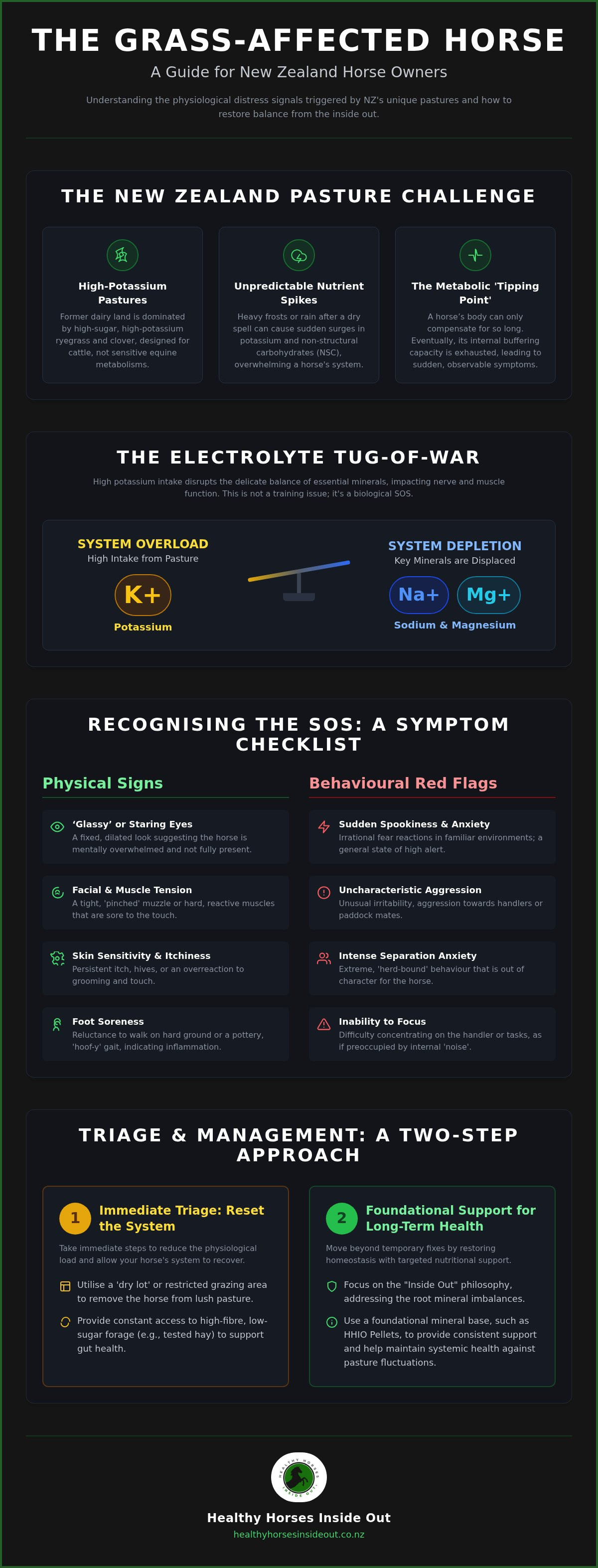
Being 'grass affected' describes a physiological state where a horse's internal systems become overwhelmed by specific nutrients or toxins present in their forage. In New Zealand, this often manifests as a collection of grass affected horse symptoms NZ owners find difficult to manage, ranging from sudden spookiness to physical discomfort. It isn't a personality trait or a lack of training; it's a biological SOS. Many owners experience a 'tipping point' where a horse that has been settled for years suddenly becomes reactive. This happens because the horse's metabolic system can only compensate for nutritional spikes for so long before its internal buffering capacity is exhausted.
Distinguishing between a naturally 'hot' horse and one exhibiting grass affected horse symptoms NZ requires clinical observation. A hot horse is often consistent in its energy, whereas a grass affected horse shows erratic shifts in behaviour that often correlate with weather changes or pasture growth flushes. Look for physical signs like skin sensitivity, tight muscles, or a 'glassy' look in the eye. These are biological markers of a system in distress, not a horse being intentionally difficult.
The Role of Homeostasis in Equine Health
A horse's body is constantly working to maintain homeostasis, which is a steady internal environment. This involves balancing minerals like magnesium, sodium, and potassium. However, New Zealand's climate creates frequent 'grass spikes'. For instance, rain following a dry spell or heavy spring frosts can cause a surge in potassium and sugars. When these spikes occur, the horse's system must work overtime to process the excess. If the intake exceeds the body's ability to excrete or neutralise these elements, the results manifest as the classic symptoms we observe in the paddock or under saddle. Green grass is a visual indicator of growth, but it doesn't always equate to nutritional safety for a sensitive equine system.
The NZ Pasture Challenge
Most New Zealand horse properties are established on former dairy land, which means they're dominated by high-sugar, high-potassium perennial ryegrass and clover. These species are bred for rapid milk production in cattle, not for the sensitive metabolism of a leisure or sport horse. High levels of Non-Structural Carbohydrates (NSC) in these grasses can lead to systemic inflammation and metabolic distress. This is a primary driver for serious conditions, and gaining a deeper perspective through Understanding Laminitis can help owners see the link between pasture and hoof health. Ultimately, being grass affected is a nutritional imbalance rather than a permanent condition.
Recognising the SOS: A Checklist of Grass Affected Horse Symptoms
Identifying grass affected horse symptoms NZ owners see daily requires more than a casual glance. It demands a methodical approach. We often observe 'canaries in the coal mine', which are horses that react to the slightest pasture flush while their paddock mates appear completely unaffected. This individual sensitivity often stems from a lower threshold for mineral fluctuations or mycotoxin exposure. Keeping a detailed 'pasture diary' is an invaluable tool for any owner. By tracking your horse’s reactions against specific weather events, such as heavy frosts or rain after a dry spell, you can pinpoint the exact triggers in your local environment.
Before a horse even moves, they often signal their distress through their physical expression. Look for facial tension, particularly a tight, 'pinched' muzzle or nostrils that remain flared even at rest. A hallmark sign is 'glassy eyes', which is a fixed, dilated look that suggests the horse is mentally overwhelmed. This expression often accompanies an inability to focus on the handler, as the horse's system is preoccupied with internal physiological noise.
Behavioural Red Flags
These symptoms are frequently mislabelled as training problems or 'naughty' streaks. However, when a normally quiet horse exhibits these behaviours, it is usually a sign of biological discomfort. Common red flags include:
- Sudden 'spookiness' or irrational anxiety in familiar environments.
- Uncharacteristic aggression toward paddock mates or handlers.
- Intense separation anxiety and 'herd bound' behaviour that seems to develop overnight.
- Reluctance to move forward or 'girthiness' during saddling, indicating sensitivity in the chest and barrel.
Physical and Physiological Signs
The horse's body reflects the internal chemical struggle for balance. Muscle tightness is a frequent indicator, especially across the topline and sacroiliac area. Some horses develop persistent skin conditions, such as 'mud fever' that resists topical treatment or an unexplained 'itch' during the spring and autumn growth flushes. Hoof sensitivity is the most critical marker to monitor. If your horse is 'walking on eggshells' on hard ground or showing increased digital pulses, consult expert insights on laminitis to understand the potential for systemic damage. Digestive upsets, including bloating and loose manure, also suggest the hindgut is struggling with the current pasture load. Supporting these horses with a targeted equine supplement can help provide the foundational minerals needed to process these fluctuations more effectively.
The Science of the Soil: Why NZ Pasture Challenges Homeostasis
New Zealand’s unique geology directly influences the health of the horses grazing upon it. Our volcanic soils are naturally rich in certain elements but critically deficient in others, such as selenium and iodine. These deficiencies create a fragile foundation, making horses more susceptible to the metabolic stress caused by lush pasture. When a horse grazes on high-potassium ryegrass, their internal chemistry undergoes a significant shift. This electrolyte imbalance is a primary driver of the grass affected horse symptoms NZ owners observe during seasonal growth flushes.
The relationship between potassium and sodium is a delicate tug-of-war. High levels of potassium in the diet force the horse’s kidneys to work harder to maintain balance, often leading to a depletion of sodium and magnesium. Without sufficient sodium, the horse cannot effectively regulate water balance or nerve impulses. This systemic strain often manifests as the "glassy-eyed" look or uncharacteristic spookiness discussed earlier. It is a physiological reaction to an internal environment that has lost its equilibrium.
The Potassium and Magnesium Connection
Magnesium is the body's natural "chiller," essential for both muscle relaxation and neurological stability. However, when potassium levels in the pasture spike, they physically block the absorption sites for magnesium in the horse's gut. This means even if there is magnesium present in the forage, the horse cannot access it. A high-quality horse magnesium supplement NZ supports the nervous system by providing a bioavailable source of this critical mineral regardless of pasture fluctuations. Without this support, muscles remain in a state of chronic tension, contributing to the "girthiness" and physical rigidity often seen in sensitive horses.
Mycotoxins and the 'Staggers' Effect
While mineral imbalances account for many issues, mycotoxins represent a different kind of threat. These invisible fungi, or endophytes, live within ryegrass and paspalum, producing toxins that can mimic neurological disorders. Humid New Zealand summers provide the perfect breeding ground for these fungi, which can cause grass affected horse symptoms NZ to escalate into physical instability. Mycotoxin poisoning, often referred to as 'staggers', presents with distinct signs:
- Uncoordinated movement or trembling, particularly when the horse is asked to turn or move quickly.
- Extreme sensitivity to light and sudden sounds that triggers an exaggerated flight response.
- A sudden loss of balance or "proprioceptive deficits" where the horse seems unsure of where its feet are.
Distinguishing between a simple mineral imbalance and mycotoxin exposure is vital for effective management. While mineral issues often cause "fizz" or anxiety, mycotoxins tend to cause physical instability and heightened sensory reactions. Addressing these soil-driven challenges is the first step toward achieving systemic resilience.
Triage and Management: Immediate Steps for the Sensitive Grazer
When the physiological tipping point is reached and grass affected horse symptoms NZ owners dread become evident, immediate intervention is required to restore systemic calm. The first and most critical step is removing the trigger. Moving your horse to a dry lot or sacrifice paddock stops the continuous intake of high-potassium, high-sugar forage. This allows the horse’s metabolic pathways to begin processing the accumulated nutritional load without further interference. A period of total removal from pasture is often the only way to break the cycle of reactivity and physical discomfort.
Once the horse is secure, the focus shifts to diluting the diet. Provide ad-libitum access to low-sugar, high-fibre forage, such as plain meadow or oaten hay. This "fibre buffer" is essential for maintaining hindgut health and slowing the rate of digestion. Simultaneously, you must address the electrolyte imbalance by providing plain, white salt. Sodium is the primary tool for assisting the kidneys in flushing excess potassium. Without adequate salt, the "electrolyte tug-of-war" mentioned previously will continue to keep the horse in a state of neurological and muscular tension. Finally, implementing targeted nutritional support through HHIO pellets provides the specific mineral base required to rebalance the system from the inside out.
Managing the Paddock Environment
Paddock management is a dynamic process that requires constant observation of weather patterns. The "Stress Flush" is a particularly dangerous period for sensitive horses. This occurs when rain follows a dry spell or after a heavy frost, causing the grass to rapidly accumulate sugars and potassium as it enters a growth spurt. During these times, grazing muzzles can be a useful tool to limit intake while still allowing for movement and socialisation. However, muzzles must be fitted correctly to prevent rubbing and checked frequently to ensure the horse can drink freely. Understanding horse nutrition for New Zealand conditions is vital during these seasonal shifts, as management strategies must evolve alongside the pasture’s changing chemical composition.
The Importance of Fibre and Forage
Maintaining a "full gut" of long-stemmed fibre is one of the best ways to protect a horse from the effects of volatile pasture. Fibre provides the necessary bulk to support a healthy microbiome, which in turn helps stabilise the horse's overall metabolic state. When choosing hay, be cautious with lucerne. While it is a high-quality feed, its naturally high potassium and protein content can sometimes exacerbate grass affected horse symptoms NZ in highly sensitive individuals. Safe meadow hay is generally the more reliable choice for triage. When transitioning a horse back to pasture after a "crash," do so with extreme caution. Start with just fifteen minutes of grazing per day and monitor for any return of facial tension or anxiety before gradually increasing their time on the grass.
Nutritional Foundations: How HHIO Supports the Grass-Fed Horse
Addressing grass affected horse symptoms NZ owners encounter requires a shift from reactive management to proactive nutritional support. Our "Inside Out" philosophy prioritises systemic health, focusing on the biological root causes of sensitivity rather than simply masking external behaviours. By fortifying the horse's internal environment, we can help them maintain homeostasis even when the pasture composition fluctuates. This foundational approach provides the resilience needed to process the mineral spikes common in New Zealand's unique growing conditions.
Managing a sensitive horse shouldn't feel like a constant battle against the paddock. By providing the body with the specific tools it needs to regulate itself, we move away from the "quick fix" mentality and toward a state of long-term wellness. This methodical strategy ensures that the horse remains balanced, focused, and physically comfortable, regardless of the season or the latest rain event.
Foundational Support with HHIO Pellets
HHIO Pellets serve as the essential mineral base for the grass-fed horse. They are formulated to address the specific deficiencies found in our local soils, providing a balanced profile that supports daily metabolic function. For owners managing multi-horse households, these pellets offer a convenient, all-in-one solution that ensures every horse receives its baseline requirements without the need for complex mixing. You can explore the best horse supplements New Zealand has to offer to see how these foundational pellets fit into a wider wellness programme. This baseline support is the first step in ensuring your horse's internal chemistry remains stable throughout the year.
Targeted Minerals for the Sensitive Horse
While foundational support is vital, acute grass affected horse symptoms NZ often require more targeted intervention. Specific horse supplements allow owners to address significant gaps, such as the critical Magnesium and Sodium levels discussed in previous sections. By providing these minerals in a highly bioavailable form, we can more effectively support the nervous system and muscle function during high-risk periods like the spring or autumn flush.
We also focus on Copper and Zinc, which are vital for maintaining the "first line of defence" in the skin and hooves. These minerals are often low in NZ pastures but are essential for preventing the persistent itch and hoof sensitivity that often accompany pasture sensitivity. For those seeking a tailored approach, you can organise a diet review with our team to ensure your horse's specific requirements are met. Simplifying these complex needs is often best achieved through horse supplement bundles, which combine foundational support with targeted minerals to offer a comprehensive, science-led solution for the busy owner.
Restoring Homeostasis for Long-Term Vitality
Navigating the complexities of pasture sensitivity requires a shift from managing isolated behaviours to supporting the horse's entire internal system. By recognising that grass affected horse symptoms NZ owners see are physiological distress signals, you can move toward evidence-based solutions that address the root cause. We've explored how New Zealand's unique soil profiles and high-sugar pastures create a metabolic "tipping point," and how a methodical approach to triage and mineral balancing can restore calm and physical comfort.
True wellness begins with foundational support. Our products are expertly formulated for New Zealand's unique soil profiles, ensuring high-integrity ingredients with no hidden fillers. We are proud to be trusted by owners across the country for science-led results that provide genuine peace of mind. Restore your horse's balance with HHIO's specialised equine supplements. Taking these methodical steps today creates a resilient internal environment, allowing your horse to thrive regardless of seasonal shifts. You now have the knowledge and the tools to guide them back to a state of natural health.
Frequently Asked Questions
Can a horse suddenly become grass affected after years of no symptoms?
Yes, a horse can certainly become grass affected after years of stability. This typically occurs when the horse reaches a physiological tipping point where its internal buffering systems are no longer able to compensate for mineral spikes. Changes in soil health, an unusually wet spring, or even the natural ageing process can lower a horse's resilience, causing grass affected horse symptoms NZ owners haven't seen before to surface quite suddenly.
Is clover more dangerous than ryegrass for grass-sensitive horses?
Both species present unique challenges, but clover is often more problematic due to its high potassium and protein levels. While ryegrass is notorious for high sugar content, clover's mineral profile can more rapidly disrupt the sodium-potassium balance in the horse's system. Managing a sensitive horse usually requires limiting both, as clover often thrives in the same dairy-style pastures that produce high-sugar ryegrass.
How long does it take for grass affected symptoms to disappear once the horse is off pasture?
You will often see a noticeable improvement in behaviour and facial tension within 48 hours of removing the horse from pasture. However, fully rebalancing the system from the inside out usually takes between fourteen and twenty-one days. This period allows the kidneys to flush excess minerals and the hindgut to stabilise on a consistent, high-fibre diet of hay and targeted supplements.
Can I still ride my horse if they are showing signs of being grass affected?
Riding is not recommended while a horse is exhibiting acute sensitivity. When a horse is grass affected, their proprioception and reaction times are often compromised, making their behaviour unpredictable and potentially dangerous. It is much more productive to prioritise nutritional triage. Once the horse’s muscles are soft and their mental focus has returned, you can safely resume your ridden programme with a much more reliable partner.
Does 'starving' a horse on a dirt patch help or hurt grass sensitivity?
Depriving a horse of all food on a dirt patch is actually counterproductive and harmful. While removal from the "trigger" grass is essential, the horse must have constant access to high-fibre forage like meadow hay. Starving a horse causes significant metabolic stress and can lead to gastric ulcers, which only further destabilises their internal health and makes them more reactive to future pasture changes.
What is the difference between grass staggers and being grass affected?
Grass staggers is a specific neurological condition caused by endophytes or fungi living within the grass, whereas being "grass affected" is a general term for various pasture-related imbalances. Staggers usually manifests as physical trembling and a loss of balance. In contrast, being grass affected can include wider grass affected horse symptoms NZ like skin itch, foot soreness, or general anxiety without the specific "staggering" gait.
How much salt should I actually be feeding my horse in NZ?
Most New Zealand horses require one to two tablespoons of plain, white salt added to their daily feed. Sodium is the vital tool the body uses to manage potassium levels, and salt licks alone are rarely enough to meet this requirement. Providing a consistent, measured amount ensures the horse has the necessary electrolytes to maintain homeostasis and support healthy nerve and muscle function throughout the year.
Are certain breeds more prone to grass sensitivity in New Zealand?
Native pony breeds and "good doers," such as Quarter Horses and Morgans, are often more susceptible to pasture sensitivity. These breeds evolved to survive on coarse, low-quality forage, so the rich, high-sugar pastures found across New Zealand can easily overwhelm their metabolism. However, any horse can be affected if the mineral imbalance in the soil is significant enough to disrupt their internal systemic health.


