

That glossy coat you're chasing isn't actually the primary goal; it's merely the visible evidence of a horse whose internal inflammatory system is finally in balance. While many New Zealand riders assume a standard hard feed provides everything, the reality is that modern equine diets are often heavily skewed toward pro-inflammatory omega-6 fatty acids. If you've found yourself frustrated by persistent skin issues, joint stiffness, or a dull appearance despite "good" feeding, you aren't alone. It's a common struggle that often leads to wasted money on horse omega 3 supplements that don't address the underlying biological imbalance.
This science-led guide explores how targeted fatty acid supplementation can transform your horse's health from the inside out. We'll cut through the confusion surrounding plant versus marine oils and explain why certain sources are more effective at reaching the joints and lungs. By the end of this article, you'll understand how to use evidence-based nutritional strategies to reduce systemic inflammation and improve mobility. We'll also look at why a solid mineral foundation, such as HHIO Pellets, is the necessary starting point for any successful fatty acid protocol to truly produce results in 2026.
Key Takeaways
- Understand why horses cannot synthesise essential fatty acids independently and how these nutrients maintain cellular integrity and fluid balance.
- Learn to manage the critical ratio between omega-3 and omega-6 to counter systemic inflammation and resolve common issues like skin irritation and joint stiffness.
- Evaluate the biological efficacy of plant-based ALA versus marine-sourced EPA and DHA when choosing horse omega 3 supplements for your team.
- Discover how targeted fatty acid supplementation supports joint mobility by lubricating membranes and strengthens the skin’s lipid barrier against environmental challenges.
- Recognise why a foundational mineral base, provided by HHIO Pellets, is the metabolic prerequisite for the effective use of any supplementary oils.
What are Horse Omega 3 Supplements and Why Do They Matter?
Essential Fatty Acids (EFAs) are not merely dietary options; they are biological imperatives. Because a horse's body cannot synthesise these compounds independently, they must be sourced directly from the diet. Within the broader context of Equine nutrition, omega-3 fatty acids serve as the fundamental building blocks for cellular membrane integrity. They ensure that every cell in the body maintains proper fluid balance and structural strength. Without an adequate supply, the internal biological machinery begins to struggle, often manifesting as systemic inflammation or poor tissue repair.
It's vital to distinguish between feeding fats for caloric density and feeding horse omega 3 supplements for biological signalling. While many owners add oil to a bucket to help a horse gain weight, fatty acids like omega-3 act as sophisticated chemical messengers. They influence how the body responds to injury, stress, and environmental allergens. Feeding for "shine" is a surface-level approach; feeding for "signalling" targets the underlying mechanisms that prevent chronic disease and maintain long-term vitality.
The Difference Between Omega 3, 6, and 9
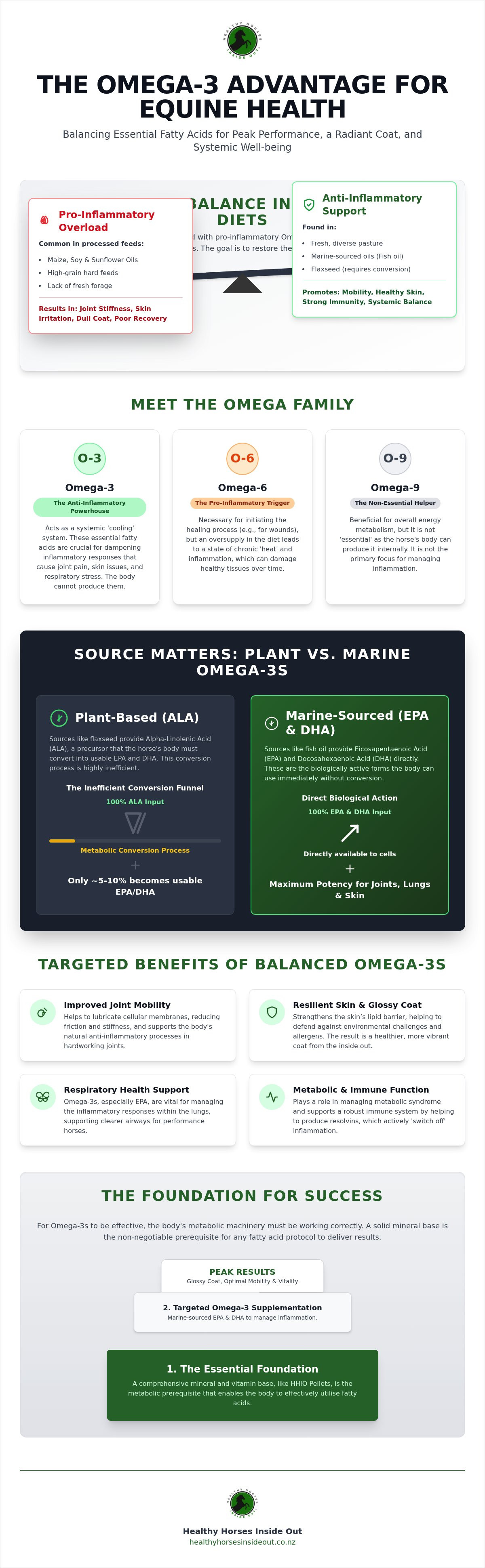
- Omega-3: These are the anti-inflammatory powerhouses. They act as a systemic "cooling" system for the body, dampening the inflammatory cascades that lead to joint pain and chronic skin irritation.
- Omega-6: These fatty acids are necessary for the initial inflammatory response, which is vital for healing wounds. However, when they dominate the diet, they create a state of chronic "heat" that eventually damages healthy tissue.
- Omega-9: Unlike the others, omega-9 is non-essential because the horse can produce it internally. It remains beneficial for overall energy metabolism but isn't the primary focus for managing inflammation.
Why Grazing Horses Need Supplementation
In a natural state, horses would consume a diverse range of fresh forages rich in omega-3. In New Zealand, our management systems often rely heavily on hay and processed feeds. The process of hay making and subsequent storage rapidly depletes natural omega-3 levels through oxidation. By the time a bale is fed out, the delicate fatty acids are often long gone. Seasonal pasture shifts also play a role. As grass matures or enters dormancy during winter, the ratio of beneficial fatty acids drops significantly. Even on seemingly "good" paddocks, the lack of botanical diversity means most horses aren't receiving the balanced profile they need to thrive without targeted support.
The Critical Ratio: Balancing Omega 3 and Omega 6 for Equine Health
In the delicate ecosystem of equine physiology, omega fatty acids function like a biological seesaw. Omega-6 fatty acids are essentially pro-inflammatory; they initiate the body's necessary response to injury or infection. Conversely, omega-3s are anti-inflammatory, acting as the vital counterbalance that resolves inflammation once its job is done. When a diet becomes top-heavy with omega-6, the horse remains in a state of chronic, systemic inflammation. This isn't just a nutritional theory; it's a physiological reality that dictates how your horse feels and performs every day.
Many New Zealand horse owners rely on commercial hard feeds formulated with maize, soy, or sunflower oils. While these ingredients provide cost-effective calories, they are naturally high in omega-6. Without the addition of specific horse omega 3 supplements, the resulting ratio becomes heavily skewed. A spelling horse on high-quality, fresh pasture might naturally maintain a balanced profile, but a performance horse under metabolic stress requires a much more robust anti-inflammatory intake to manage tissue repair. Achieving this balance is a core part of the Healthy Horses Inside Out philosophy, ensuring the internal environment is optimised before expecting external results.
Inflammation: The Silent Performance Killer
Chronic inflammation is often the hidden culprit behind poor performance and slow recovery. Recent research on omega-3 benefits suggests these fatty acids are vital for managing metabolic syndrome and respiratory health because they serve as precursors to resolvins. These specialised molecules actively "switch off" the inflammatory response. By modulating the fatty acid profile, we can significantly reduce recovery times after strenuous exercise and provide essential support for horses prone to laminitis or Equine Metabolic Syndrome (EMS).
Signs Your Horse’s Ratio is Out of Balance
Identifying a skewed ratio doesn't always require a blood test; the horse's body provides visible clues. If the "seesaw" is tipped too far toward omega-6, you'll likely notice a decline in overall resilience. Common indicators include:
- A dull, brittle coat that lacks depth of colour and feels coarse to the touch.
- Slow shedding patterns, where the winter coat lingers well into the spring months.
- Skin hypersensitivity, particularly an exaggerated response to insect bites, often referred to as "sweet itch."
- Generalised joint stiffness that persists even after a thorough warm-up or light work.
When these signs appear, it's a signal that the internal "fire" of inflammation is burning too hot. Shifting the ratio back in favour of omega-3 helps to dampen this response, leading to more comfortable movement and a more resilient immune system.
Evaluating Sources: Marine Oils vs Plant-Based Omega 3s
Selecting effective horse omega 3 supplements requires an understanding of the biochemical hierarchy of fatty acids. Not all sources deliver the same level of biological activity. Plant-derived oils, such as flaxseed and chia, provide Alpha-Linolenic Acid (ALA). While ALA is an essential precursor, it is not the form the body uses to resolve inflammation. To become useful, the horse must convert ALA into Eicosapentaenoic Acid (EPA) and Docosahexaenoic Acid (DHA). This leads to what many nutritionists call the efficiency myth. Research indicates that horses are remarkably poor at this conversion, often transforming less than 10 percent of ingested ALA into the active EPA and DHA forms. This metabolic bottleneck means that while plant oils provide basic support, they often fall short for horses with high inflammatory demands.
The choice between sources often comes down to the specific health objective. The Horse on Omega-3 Sources highlights that marine-derived options bypass the conversion process entirely. By providing EPA and DHA in their ready-to-use state, these supplements offer a more direct and potent anti-inflammatory effect. Sustainability and palatability are also practical factors for New Zealand owners. While fish oil is a traditional choice, algae-based supplements are becoming a popular, sustainable alternative that many horses find more palatable than fishy-smelling oils.
The Power of EPA and DHA
Marine-derived omegas provide a more immediate biological response because they are bio-available from the moment of ingestion. These active forms are essential for more than just cooling inflammation. DHA plays a sophisticated role in brain health and neurological development, making it a critical addition for broodmares to support foal cognitive growth. Marine-derived DHA is the superior choice for managing equine respiratory health due to its direct influence on lung tissue inflammation. These active fatty acids integrate into the cellular membranes of the vital organs, ensuring they function at peak efficiency during periods of stress or performance.
Flax and Chia: The Gentle Alternatives
Plant-based sources remain a sensible choice for maintenance horses or those in light work with no underlying health issues. Flax and chia provide secondary benefits that marine oils lack, such as high levels of mucilage and soluble fibre which support healthy digestive transit. These can be particularly useful for horses prone to sand colic or those requiring a small boost in coat condition. However, owners must be vigilant about storage. Ground flaxseed is highly susceptible to rancidity when exposed to light and oxygen. To maintain the integrity of the fatty acids, always store ground products in a cool, dark place and use them within a short timeframe to ensure your horse isn't consuming oxidised fats that could actually increase systemic stress.
Targeted Benefits: From Joint Support to Metabolic Health
The physiological impact of horse omega 3 supplements extends far beyond a shiny exterior. While a glossy coat is a welcome result, the true value lies in how these fatty acids modulate internal systems. In the synovial capsule of the joint, omega-3s work to reduce the production of degradative enzymes that break down cartilage. By maintaining the integrity of the synovial fluid, these nutrients help ensure smoother, more comfortable movement. This is particularly vital for horses in high-impact disciplines where joint longevity is a primary concern.
For horses prone to skin sensitivities, omega-3s are essential for building a robust, waterproof lipid barrier. In the damp New Zealand climate, this barrier is the first line of defence against common issues like rain scald and mud fever. Internally, these fatty acids also improve insulin sensitivity, making them a critical tool for managing horses prone to laminitis. By supporting a more efficient metabolic response, you can help your horse maintain a healthier weight and reduce the systemic stress associated with sugar-rich spring pastures.
Supporting the Performance Horse
Athletic performance places immense strain on the cardiovascular and respiratory systems. Research indicates that high levels of DHA can enhance cardiovascular efficiency by improving the flexibility of red blood cell membranes, which aids oxygen delivery during fast work. There is also significant evidence suggesting that DHA helps reduce the risk of exercise-induced pulmonary haemorrhage (EIPH) by supporting the elasticity of the delicate lung capillaries. For owners looking to optimise their athlete's longevity, incorporating performance horse supplements NZ provides a science-led approach to managing these high-level demands.
Metabolic and Senior Horse Care
Senior horses often suffer from "inflammaging," a state of chronic, low-grade systemic inflammation that accelerates tissue breakdown. Increasing anti-inflammatory support is vital for maintaining their comfort and mobility. In metabolic cases, balancing fatty acids helps manage the "cresty neck" and stubborn fat pads often seen in horses with EMS or Cushings. During the colder months, using winter horse care supplements NZ ensures your senior or metabolic horse has the foundational support required to maintain condition and internal warmth.
By addressing these specific health objectives through evidence-based nutrition, you provide your horse with the resilience needed to thrive in any season. To find the right balance for your horse's unique needs, explore the range of targeted solutions available at Healthy Horses Inside Out.
Optimising Your Horse’s Foundation with HHIO
The effectiveness of horse omega 3 supplements is fundamentally limited by the quality of the horse's underlying mineral foundation. In the Healthy Horses Inside Out philosophy, we view nutritional support as a hierarchical system where internal balance must be achieved before external results can manifest. Adding high-quality oils to a diet that is deficient in key trace minerals is akin to pouring premium fuel into an engine with a broken fuel pump. Without the correct co-factors, the horse's body cannot effectively metabolise these fatty acids or integrate them into cellular membranes.
HHIO Pellets are formulated to provide this essential groundwork, particularly by addressing common New Zealand pasture deficiencies in copper, zinc, and selenium. These minerals are not just bystanders; they are the catalytic components for the enzymatic pathways that utilise omega-3s. There is also a significant biological risk in "over-oiling" without adequate antioxidant support. As the intake of polyunsaturated fats increases, so does the requirement for Vitamin E to prevent oxidative stress. A bespoke feeding plan ensures that as you increase anti-inflammatory oils, you also provide the necessary cellular protection to maintain long-term vitality.
Starting with the Foundation: HHIO Pellets
For many owners, everyday horse supplements should be the first consideration before adding targeted oils. By ensuring a balanced mineral intake first, you create a metabolic environment where omega-3s can actually do their job. HHIO Pellets simplify this process by providing an all-in-one nutritional base that supports the structural integrity of the gut and the efficiency of the liver. This systemic readiness ensures that when you do introduce fatty acids, the horse's body is prepared to transport and utilise them for joint lubrication and skin health rather than simply excreting them as wasted energy.
A Methodical Approach to Supplementation
Success with fatty acid modulation requires patience and a steady hand. Start slow. Introduce oils over a fourteen-day period to allow the gut microbiome to adapt to the increased lipid load. This prevents the digestive upset or "loose" manure that can occur with sudden dietary shifts. Once established, monitor your horse's progress through a methodical lens:
- 30 Days: You may notice a subtle shift in coat depth and a reduction in skin dryness or minor irritations.
- 60 Days: Improvements in joint comfort and "looseness" during the initial phases of work often become apparent.
- 90 Days: This is where systemic resilience peaks, showing in resilient hooves, a robust immune response, and a clearly defined topline.
By following this structured progression, you move beyond the "quick fix" mentality and toward a state of genuine wellness. Discover how to improve horse health NZ with our science-led range and start building your horse's health from the inside out.
Optimising Vitality Through Evidence-Based Nutrition
Understanding the biological mechanisms behind fatty acid balance allows you to move beyond surface-level fixes. By prioritising the critical ratio of omega-3 to omega-6, you're not just improving coat shine but actively cooling the internal inflammatory response that affects joint mobility and metabolic health. As we've explored, the efficiency of horse omega 3 supplements depends heavily on the source and the presence of a robust mineral foundation. Without the correct co-factors found in HHIO Pellets, even the highest quality marine oils cannot reach their full potential within the equine body.
Our science-led formulations are specifically designed for New Zealand conditions, offering a methodical approach to equine nutrition that is trusted by performance and leisure owners nationwide. You can build your horse's health from the inside out with HHIO's range to ensure long-term resilience and comfort. Making these intentional adjustments today creates a foundation for a healthier, more vibrant tomorrow for your horse.
Frequently Asked Questions
Can I just feed my horse vegetable oil from the supermarket?
Feeding supermarket vegetable oils, such as soy or corn oil, is generally counterproductive because they are heavily skewed toward pro-inflammatory omega-6 fatty acids. While they provide cheap calories for weight gain, they lack the specific anti-inflammatory properties found in dedicated horse omega 3 supplements. Using these oils can actually worsen systemic inflammation, making them a poor choice for owners seeking to improve joint comfort or skin resilience.
How long does it take to see results from omega 3 supplements?
You should expect to see initial changes in coat quality within 30 days, but internal systemic benefits take longer. Joint mobility and immune response typically show measurable improvement between 60 and 90 days of consistent supplementation. This timeframe allows the fatty acids to integrate into the cellular membranes throughout the body. Consistency is vital, as the biological shift occurs gradually from the inside out.
Is there a risk of feeding too much omega 3 to my horse?
While toxicity is rare, excessive oil intake without proper balancing can lead to digestive upset or loose manure. High levels of polyunsaturated fats also increase the body’s requirement for antioxidants. Over-supplementing can potentially interfere with blood clotting mechanisms in extreme cases. It's best to follow a methodical feeding plan that introduces oils slowly and ensures the horse has a solid mineral foundation to support lipid metabolism.
Does my horse need extra Vitamin E when I add oil to the diet?
Yes, adding any oil to the diet significantly increases your horse's Vitamin E requirement. Vitamin E acts as a critical antioxidant that protects the delicate fatty acids from oxidation within the body. Without adequate Vitamin E, the increased lipid load can lead to oxidative stress and muscle soreness. Ensuring your horse receives a balanced mineral base, like HHIO Pellets, helps provide the necessary co-factors to manage this demand.
Can omega 3 supplements help a horse with itchy skin or QLD itch?
Targeted horse omega 3 supplements are highly effective for managing skin hypersensitivity and seasonal "itch." By providing the building blocks for a healthy lipid barrier, these fatty acids help the skin remain resilient against environmental allergens and insect saliva. This reduces the systemic inflammatory response that causes intense itching. For best results, start supplementation before the spring "itch" season begins to ensure the barrier is already robust.
What is the best way to store horse omega 3 oils to prevent them going off?
Proper storage is essential to prevent oils from becoming rancid and pro-inflammatory. Keep your supplements in a cool, dark place away from direct sunlight, which accelerates oxidation. Ensure lids are tightly sealed after every use to limit oxygen exposure. If you are using ground seeds like flax, only grind small amounts at a time or buy stabilised products to ensure the fatty acids remain biologically active.
Should I feed flaxseed oil or fish oil for joint inflammation?
Fish oil or algae-based sources are superior for active joint inflammation because they provide direct EPA and DHA. As discussed earlier, horses are inefficient at converting the ALA in flaxseed into these active anti-inflammatory forms. While flaxseed is excellent for general maintenance and coat shine, marine-derived oils offer a more potent and immediate response for horses struggling with stiffness or chronic joint conditions requiring targeted support.
Is it safe to give omega 3 supplements to a horse with ulcers?
It is generally safe and often beneficial to provide omega-3 supplements to horses with gastric ulcers. These fatty acids help maintain the integrity of the mucosal lining and support the body's natural healing processes. Unlike high-starch feeds, oils provide "cool" energy that doesn't trigger excessive acid production. However, always introduce any new supplement gradually to ensure it doesn't disrupt the horse's delicate digestive balance or appetite.


