
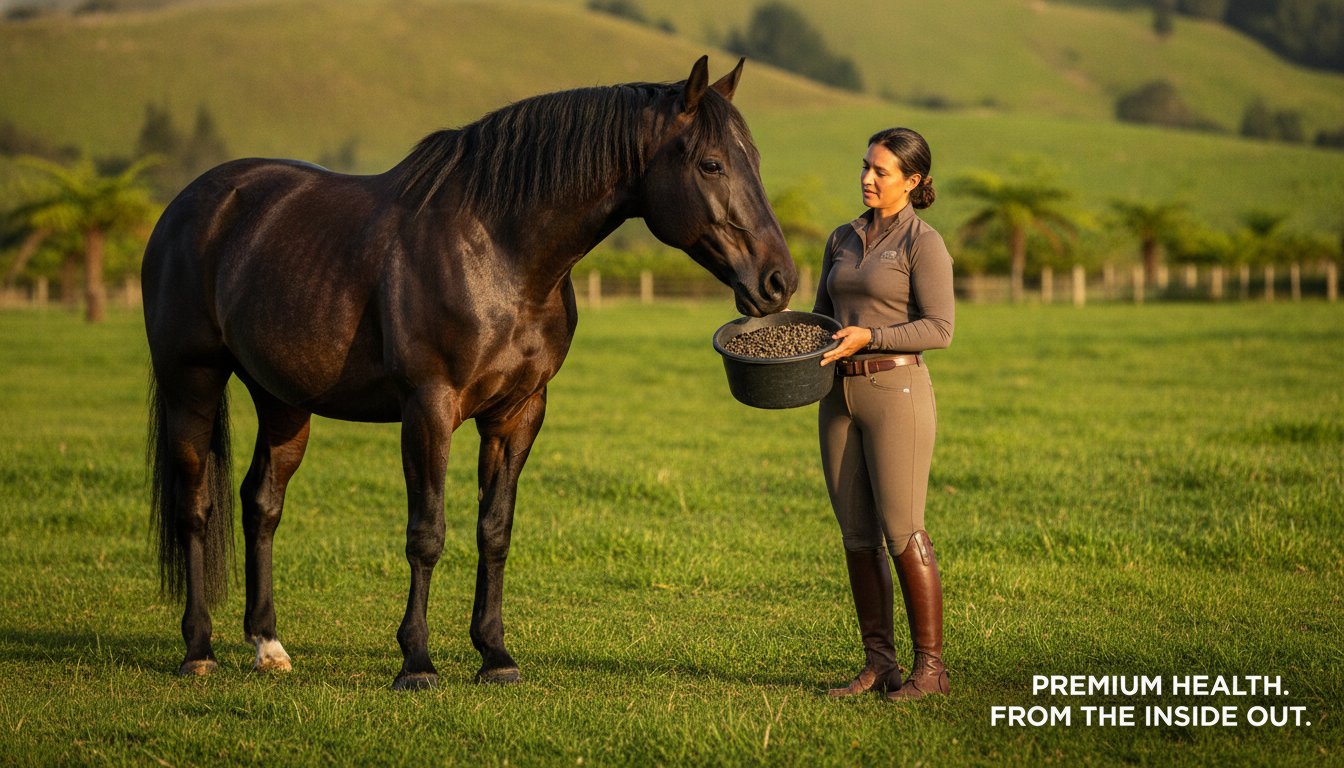
Most horse owners believe that a lush green paddock is the pinnacle of equine nutrition, yet for many New Zealand horses, these "perfect" pastures are actually the primary source of systemic mineral imbalances. While the grass looks plentiful, our unique soil profiles often lack the essential trace elements required for foundational health. You likely spend a significant amount of time scrutinising complex feed labels or worrying if your horse's "grass-affected" behaviour is a training flaw rather than a nutritional deficit. It's frustrating to manage the high cost of multiple individual minerals while fearing that your horse isn't getting exactly what they need to stay sound and settled. Using targeted everyday horse supplements is the most effective way to address these deficiencies before they manifest as visible health issues.
This guide will show you how to bridge these critical nutritional gaps so your horse can thrive with a radiant coat, resilient hooves, and a predictable temperament. You'll learn how to correct the mineral "holes" inherent in New Zealand soil by choosing formulations that prioritise bioavailability and scientific integrity. We will examine the biological mechanisms behind effective supplementation, explain the importance of minerals like zinc and copper, and provide a clear framework for long-term vitality. By the end of this article, you will have the evidence-based knowledge to simplify your feeding routine and gain the peace of mind that comes from supporting your horse's health from the inside out.
Key Takeaways
- Learn why New Zealand’s lush green pastures often mask critical mineral deficiencies that require deliberate, science-led intervention.
- Discover how everyday horse supplements function as biological "spark plugs" to support metabolic health, skeletal integrity, and hormonal balance.
- Evaluate the practical advantages of pelleted supplements over loose powders to ensure your horse actually consumes their full daily requirement.
- Recognise the physical indicators of success, from coat depth to hoof quality, and understand why these systemic changes take three to six months to manifest.
- Understand the "Inside Out" approach to wellness, focusing on bioavailable ingredients that eliminate the need for unnecessary fillers or sugars.
The Nutritional Gap: Why Everyday Horse Supplements are Essential in New Zealand
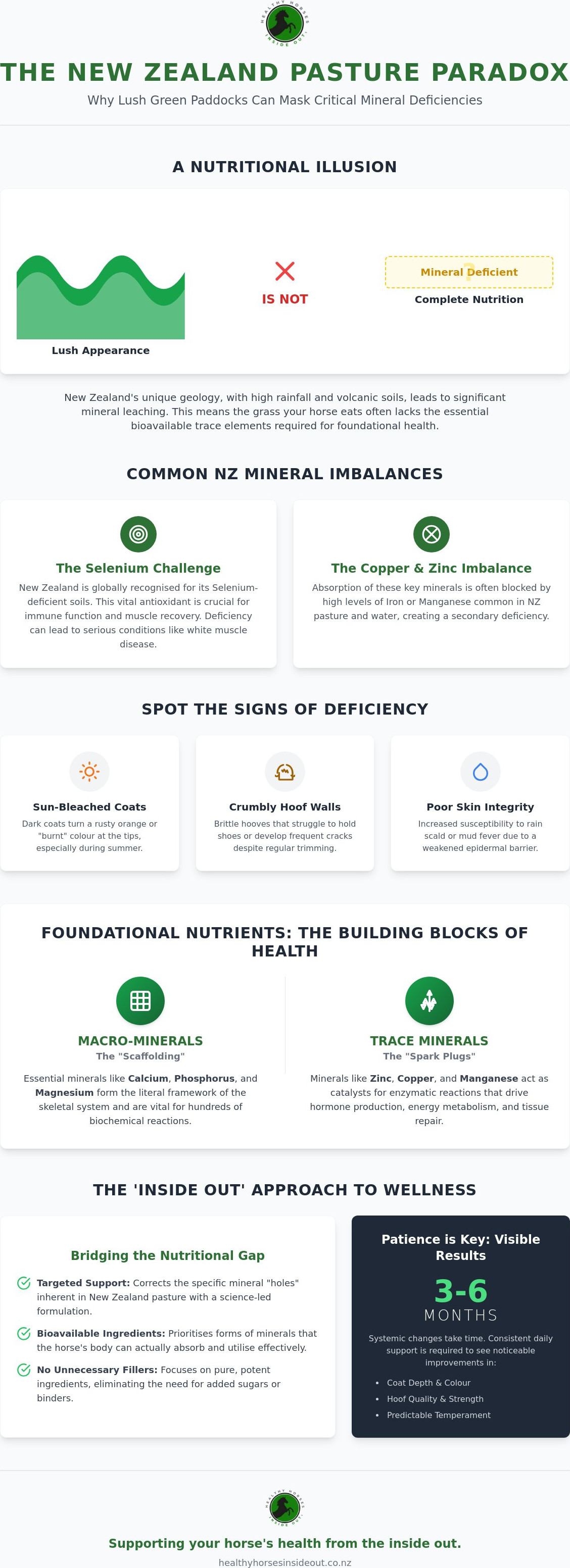
Many New Zealand horse owners view the nation's lush, emerald paddocks as a complete diet, yet this visual abundance is frequently a nutritional illusion. In reality, everyday horse supplements are not luxury add-ons reserved for high-performance athletes; they are foundational requirements for every horse. The unique geological history of New Zealand, characterised by high rainfall and volcanic activity, has led to significant soil leaching. This process strips essential minerals from the land, meaning the grass may look vibrant while lacking the bioavailable trace elements required to support the equine digestive system and its complex metabolic pathways.
Achieving a balanced base is the primary goal of any science-led supplementation programme. Without these foundational building blocks, the horse's internal systems struggle to maintain homeostasis. This leads to subtle but persistent issues that often go unnoticed until they manifest as poor performance or chronic health struggles. By providing consistent daily support, you ensure that the systemic holes left by our pasture are filled, allowing for optimal cellular function and long-term vitality. High-quality everyday horse supplements act as a corrective bridge between what the soil provides and what the horse actually requires for metabolic stability.
New Zealand Soil and the Selenium Challenge
New Zealand is globally recognised for its Selenium-deficient soils, a factor that directly impacts equine health across both islands. This trace mineral is vital for immune function and acts as a powerful antioxidant that protects cells from oxidative stress during muscle recovery. Selenium deficiency in horses is most notably identified by the presence of white muscle disease, a condition where skeletal or cardiac muscle fibres undergo visible degeneration and lose their functional integrity. Because the margin between deficiency and toxicity is narrow, providing a precisely measured daily dose is the safest way to support muscle health and disease resistance.
The Copper and Zinc Imbalance
Copper and Zinc are often the most overlooked components of the equine diet, yet their absorption is frequently blocked by high levels of Iron or Manganese in New Zealand's water and pasture. This secondary deficiency occurs even if Copper is present in the soil, as excess iron competes for the same absorption sites in the gut. You can often see the results of this mineral competition in the paddock through visible physiological markers.
- Sun-bleached coats: Dark coats that turn a rusty orange or "burnt" colour at the tips, particularly in summer.
- Crumbly hoof walls: Brittle hooves that struggle to hold shoes or develop frequent cracks despite regular trimming.
- Poor skin integrity: An increased susceptibility to rain scald or mud fever due to a weakened epidermal barrier.
Restoring the correct mineral ratios is the only way to reverse these signs. By prioritising bioavailable Copper and Zinc in the daily diet, you support the biological production of keratin and melanin, leading to structurally sound hooves and deeper, more resilient coat pigment.
Foundational Nutrients: What Your Horse Needs for Daily Vitality
Providing the right nutrients isn't just about survival; it's about enabling your horse to reach their full biological potential. While macro-minerals like Calcium and Phosphorus form the literal scaffolding of the skeletal system, they must be balanced in a specific ratio to prevent bone demineralisation. Magnesium completes this essential trio, acting as a vital cofactor for over 300 biochemical reactions. Research into New Zealand sport horse diets highlights that even horses in consistent work often face imbalances when their forage isn't correctly supplemented with these foundational elements.
Trace minerals function as the "spark plugs" of the equine body. Without precise levels of Zinc, Copper, and Manganese, the enzymatic reactions that drive hormone production and tissue repair simply cannot fire at full capacity. For horses with restricted access to fresh, growing grass, Vitamin E becomes a critical daily requirement. As a fat-soluble antioxidant, it protects neurological health and muscle function, yet it degrades rapidly once grass is cut for hay or enters a dormant winter phase. Ensuring these nutrients are present in everyday horse supplements provides the internal security your horse needs to handle the physical demands of training and environmental stress.
If you're looking for a way to provide these essentials without the guesswork of mixing multiple tubs, exploring high-quality everyday horse supplements can simplify your management while ensuring systemic health.
Magnesium and Behavioural Stability
Many owners struggle with "grass-affected" behaviour, often characterised by heightened anxiety, spookiness, or physical muscle tension. It's vital to distinguish between a pharmaceutical "calmer" and the correction of a functional Magnesium deficiency. When a horse lacks this mineral, their nervous system remains in a state of hyper-excitability. Daily consistency is paramount here. The body doesn't store Magnesium efficiently for long-term use, so the nervous system requires a steady supply. Correcting the underlying deficit through steady supplementation provides a predictable, stable temperament that temporary "loading" doses simply cannot replicate.
Amino Acids and the 'Topline' Myth
It’s a mistake to assume that a hollow topline is purely a result of low calorie intake. Muscle is built from protein, specifically the limiting amino acids Lysine and Methionine. These are the primary building blocks for muscle repair and hoof wall structural integrity. If these specific amino acids are missing, the horse cannot utilise the rest of the protein in their diet effectively. Additionally, amino acids like Threonine and Glutamine play a specialised role in supporting the health of the gut lining. By providing these specific building blocks, you support the internal architecture required for both external muscle development and digestive resilience; this focus on high-quality, bioavailable protein is also championed by natural health brands like My Wellness.
Navigating the Feed Room: Choosing Between Pellets, Powders, and Bundles
Selecting the delivery format for your horse's nutrition is just as critical as the mineral profile itself. In the feed room, you're typically faced with a choice between loose powders and pelleted formulations. While powders are a traditional staple, they often fail the "sift test". This occurs when a horse selectively eats their grain or chaff but leaves the fine mineral dust at the bottom of the bucket. It results in inconsistent dosing and a wasted financial investment. Transitioning to high-quality everyday horse supplements in a more palatable form ensures that the calculated nutrient levels actually reach the horse's stomach rather than being left behind by a picky eater.
Scientific insights from New Zealand sport horse nutrition research indicate that management practices significantly influence how well a horse utilises their diet. For owners managing multiple horses or those with limited time, the complexity of measuring out several different bags of minerals every morning is a common source of frustration. When evaluating your options, it's more effective to look at the cost-per-day rather than the initial tub price. A comprehensive, all-in-one solution often proves more economical than buying individual components that may overlap or lack the necessary bioavailability for New Zealand conditions.
The Convenience of HHIO Pellets
Pelleted supplements offer a streamlined alternative to messy powders. HHIO Pellets are specifically designed to ensure every gram of nutrition is consumed, effectively eliminating the waste associated with traditional mineral mixes. This format is particularly beneficial for horses on a "track system" or restricted "dry lot" diet where they may not receive a large hard feed to hide powders in. Because these pellets are palatable enough to be fed as a small standalone snack, they provide a reliable way to maintain nutritional consistency without adding unnecessary bulk to the diet.
Horse Supplement Bundles for Targeted Support
As your horse's needs evolve, you might find that an everyday base requires additional support for specific issues like gut health or joint mobility. Horse Supplement Bundles allow you to layer these targeted solutions with your existing foundation. This methodical approach ensures ingredient compatibility and prevents the accidental over-supplementation that can occur when mixing random products from different manufacturers. Using a bundled system streamlines the morning routine for busy agistment centres or large properties, providing a cohesive strategy to manage complex nutritional requirements efficiently.
Visible Results: How to Monitor the Impact of Daily Nutritional Support
Measuring the success of a nutritional programme requires a methodical approach and a degree of patience. Biological systems do not reorganise themselves overnight; instead, they require a consistent supply of precursors to repair tissues and balance hormones. Most owners will begin to see the full systemic impact of everyday horse supplements within a three to six month window. This timeline reflects the natural rate of cellular turnover and the growth cycles of hair and hoof horn. To start your horse's journey toward visible vitality, browse our range of everyday horse supplements designed for New Zealand conditions.
The "Coat Test" provides the most immediate visual feedback. A truly healthy coat isn't just about shine from a bottle; it’s a deep, vibrant colour accompanied by a natural oily sheen. This "bloom" suggests that the internal lipid metabolism is functioning correctly. Similarly, you should monitor the coronet band for the emergence of a smoother, tighter hoof wall. While a full hoof capsule takes nearly a year to grow out, the quality of the new horn at the top is a clear indicator that the foundational minerals are being utilised effectively. Behavioural shifts are often the most profound changes to track. You may notice an improved work ethic or a decrease in reactivity during handling. This isn't because of a sedative effect, but rather the result of a nervous system that is no longer in a state of mineral-induced stress.
The 12-Week Transformation Timeline
Weeks 1 to 4 focus on the internal environment. You'll likely notice improved gut comfort and more consistent manure as the digestive system stabilises. During weeks 4 to 8, skin health begins to peak. Small irritations often clear up, and the coat starts to show its first signs of dapple. By weeks 8 to 12, the horse displays more stable energy levels and the improved hoof quality at the coronet band becomes undeniable.
When to Adjust the Dosage
Dosage isn't static. Seasonal shifts in New Zealand, such as the rapid growth of lush spring grass, may require you to increase certain minerals like Magnesium to offset high potassium levels. Conversely, during winter when the diet shifts toward dry forage, the requirement for Vitamin E increases. A "good doer" on a restricted diet still needs the same mineral base as a "poor doer", even if their calorie intake differs significantly. If performance demands increase or you notice a plateau in results, consulting with a nutritionist ensures your horse’s base remains robust enough to handle the extra metabolic load.
The HHIO Philosophy: Streamlining Equine Wellness from the Inside Out
The Healthy Horses Inside Out (HHIO) approach is built on a foundation of intentionality. We believe that equine wellness is not achieved through high-pressure retail tactics or the addition of unnecessary "extras", but through a disciplined commitment to systemic health. Our philosophy centres on the understanding that every ingredient in a horse's bucket must serve a biological purpose. By focusing on high-quality everyday horse supplements, we provide a streamlined solution that respects the natural requirements of the horse while addressing the specific challenges of the New Zealand environment.
This same dedication to quality and authenticity can be found in other industries, such as the Best Indian Food in Hayward, CA | Favorite Indian Restaurant | Indian Food near me, which offers a comprehensive weekend buffet for those who value genuine culinary care.
Integrity and transparency are at the core of our formulations. Unlike many commercial feeds that rely on molasses or grain-based fillers to improve palatability, we prioritise bioavailable minerals and amino acids in their purest forms. This "inside out" strategy ensures that you aren't just masking symptoms but are instead providing the internal support needed for long-term vitality. Our NZ-based expertise allows us to formulate products that are precisely fit for our unique soil conditions, giving you the confidence that your horse is receiving exactly what they need without the risk of over-supplementation.
Science-Led, Compassion-Driven
HHIO acts as a methodical mentor in the field of equine nutrition. Our formulations are driven by clinical authority and a deep-seated passion for animal welfare. We don't believe in "quick fixes" that offer temporary results; we are a serious partner in your horse’s long-term health journey. This evidence-based wellness provides owners with a profound sense of peace of mind. You can trust that the biological mechanisms we've discussed, from enzymatic reactions to skeletal integrity, are fully supported by every scoop of our everyday horse supplements.
Next Steps for Your Horse's Nutrition
When transitioning your horse onto a new nutritional programme, it's best to introduce changes gradually over seven to ten days. This allows the delicate microbial balance of the hindgut to adapt to the new mineral profile. For those seeking to deepen their understanding of equine physiology and local pasture management, we offer a range of educational resources to help you make informed decisions. Taking control of your horse's foundational health is the most significant step you can take toward a future of sound hooves, a gleaming coat, and a stable temperament.
Explore the Healthy Horses Inside Out range of everyday supplements today
Prioritising Long-Term Vitality for the New Zealand Horse
True health starts within. Understanding the unique mineral imbalances in our soil is the first step toward achieving systemic balance and lasting wellness for your horse. By addressing the specific deficiencies in Selenium, Copper, and Zinc, you move beyond reactive care and toward a state of biological optimisation. Choosing high-quality everyday horse supplements ensures these nutritional gaps are filled with bioavailable ingredients rather than unnecessary fillers or sugars. This methodical approach provides the internal architecture required for a resilient coat, strong hooves, and a settled temperament.
At Healthy Horses Inside Out, we offer science-led formulations specifically created for New Zealand pasture conditions. Our products provide high-quality, bioavailable minerals with no fillers, backed by direct-to-consumer expert support to give you total confidence in your feeding routine. Whether you're managing a sport horse or a retired companion, investing in foundational nutrition is the most effective way to secure their future health. Take the guesswork out of your feed room and give your horse the support they deserve.
Shop the HHIO Everyday Supplement Range
Frequently Asked Questions
What are the most important everyday horse supplements for NZ horses?
For New Zealand horses, the most critical components of everyday horse supplements are Copper, Zinc, Selenium, and Magnesium. Our volcanic soils are notoriously deficient in Selenium, which is essential for immune function and muscle recovery. Additionally, high levels of Iron in our water and pasture often block the absorption of Copper and Zinc. Providing these minerals in a bioavailable form ensures your horse maintains a strong epidermal barrier and resilient hooves despite these environmental challenges.
Can I give my horse too many supplements?
Yes, over-supplementation can lead to toxicity or dangerous mineral imbalances that compromise your horse's health. Selenium, while vital, has a narrow safety margin and can be toxic if fed in excessive amounts over a prolonged period. Additionally, adding too much of one mineral can inadvertently block the absorption of another. It's better to use a balanced, all-in-one formulation rather than mixing multiple individual products without a clear understanding of their biological interactions.
How long does it take to see results from a daily supplement?
You should expect to see significant systemic changes within three to six months of starting a consistent nutritional regime. While gut comfort may improve within the first few weeks, structural changes like hoof wall quality and coat depth depend on natural growth cycles. A full hoof capsule takes approximately twelve months to grow out, so the improved horn quality will first appear at the coronet band before moving down the wall.
Does a horse on 24/7 pasture still need a mineral supplement?
A horse on 24/7 pasture absolutely requires a mineral supplement because New Zealand grass rarely provides a complete nutritional profile. While the grass provides calories and fibre, soil leaching and regional variances mean it often lacks essential trace elements. Relying solely on forage can lead to "grass-affected" behaviour and sub-clinical deficiencies that eventually manifest as poor coat quality, brittle hooves, or a weakened immune system.
What is the difference between a balancer pellet and a supplement powder?
The primary difference lies in the delivery method and the reliability of consumption. A balancer pellet, such as HHIO Pellets, is a compressed form that horses generally find palatable and consume entirely. In contrast, supplement powders can easily sift to the bottom of the feed bin, leading to wasted product and inconsistent dosing. Pellets are often the superior choice for picky eaters or horses on restricted diets where a large hard feed isn't provided.
Are HHIO supplements safe for horses with metabolic issues like Laminitis or EMS?
Yes, our formulations are specifically designed to be safe for horses managing metabolic sensitivities such as Laminitis or Equine Metabolic Syndrome (EMS). We prioritise high-quality active ingredients and avoid the use of molasses, cereal fillers, or hidden sugars that can trigger insulin spikes. This makes them an ideal choice for owners who need to provide essential minerals and everyday horse supplements without adding unnecessary caloric load or starch to the diet.
How do I know if my horse has a mineral deficiency?
You can identify potential deficiencies through several visible physiological markers in your horse's daily appearance. Look for "sun-bleached" orange tips on dark coats, a lack of dapple, or hooves that are prone to cracking and chipping despite regular farriery. Behavioural signs, such as heightened reactivity or muscle tension, can also indicate a functional Magnesium deficiency. While blood tests provide some data, these external indicators often reflect the horse's long-term nutritional status more accurately.
Should I change my horse's supplements during the winter months?
Adjusting your horse's diet seasonally is a methodical way to maintain balance as forage conditions change throughout the year. During winter, when horses rely more on hay or dormant grass, their intake of Vitamin E and certain amino acids typically drops. Conversely, the rapid growth of spring grass can lead to a Magnesium imbalance due to high potassium levels. Monitoring these environmental shifts allows you to fine-tune their daily support for optimal health.


