

Does it feel like you're pouring expensive feed into a bottomless pit while your horse remains stubbornly ribby? Many owners facing the challenge of feeding hard keeper horses NZ find themselves trapped in the "grass-belly" paradox, where a horse looks bloated from lush pasture yet lacks any meaningful muscle or topline. It's a stressful cycle, particularly when wet winters arrive and condition seems to melt away overnight despite heavy covers and increased rations. You likely worry that adding more calories will only result in a "fizzy," unpredictable horse or, worse, trigger metabolic issues through high-sugar concentrates.
We believe that true wellness starts from the inside out, which is why this 2026 guide moves beyond traditional "quick-fix" fillers. You'll learn how to transform your horse’s condition by addressing the specific mineral imbalances found in New Zealand’s soil, such as the high iron and manganese levels that often block essential nutrient absorption. By the end of this article, you'll have a science-led strategy to achieve a calm temperament, a glossy coat, and a resilient topline. We will break down the logic of foundational nutrition, showing you how a simplified, mineral-balanced routine can yield the visible results and peace of mind you've been searching for.
Key Takeaways
- Understand why lush New Zealand pasture often lacks the dry matter and protein required for weight gain, which leads to the deceptive "grass-belly" appearance.
- Discover why "cool" energy sources like fat are 2.25 times more efficient for feeding hard keeper horses NZ compared to starch-heavy grains.
- Identify the role of copper and zinc in muscle development and how correcting these common NZ deficiencies acts as the missing link for conditioning.
- Learn to build a foundational diet that prioritises high-quality forage and mineral-complete pellets to ensure your horse utilises every calorie effectively.
- Simplify your feeding routine using targeted nutritional bundles designed to support systemic health and produce a visible, long-term transformation.
Understanding Weight Loss in NZ Horses: Beyond the Winter Paddock
Many owners feel a sense of confusion when they look at their horse in the paddock. The animal might have a rounded, hanging belly, yet their ribs are easily felt and their spine protrudes. This "grass-belly" appearance is a common sight across New Zealand, often masking a horse that's actually struggling to maintain condition. It happens because the horse is consuming high volumes of water-heavy pasture that provides bulk without providing actual nutrient density. Feeding hard keeper horses NZ requires you to look past the belly and focus on the structural integrity of the topline and the coverage over the ribs.
Our seasonal cycles create unique hurdles for equine health. In spring and autumn, New Zealand grass is often "washy," meaning it's high in sugar but exceptionally low in dry matter. This affects the equine digestive system because the high water content causes feed to pass through the hindgut too quickly for efficient nutrient absorption. When winter arrives, the challenge intensifies. New Zealand's wet, windy climate forces horses to expend significant energy on thermoregulation. If they aren't wearing appropriate covers or receiving enough calorie-dense forage, they'll burn through their own internal reserves just to stay warm, leading to a rapid loss of condition that can be difficult to reverse.
The Deception of Green NZ Grass
Green grass doesn't always equate to "good" nutrition for a poor doer. While ad-lib forage is the non-negotiable foundation of any diet, relying solely on NZ pasture for a hard keeper is often a losing battle. The rapid digestive transit of lush grass means the horse isn't getting the protein building blocks required for muscle development. You end up with a horse that looks "full" but lacks the structural muscle needed for a healthy topline. High-quality hay or baleage must be used to provide the necessary dry matter that pasture lacks.
Metabolic Stall: When Calories Are Not Enough
Sometimes, you're feeding plenty of calories, yet the horse remains ribby. This is often a sign of "metabolic stall," where internal biological mechanisms aren't functioning optimally. Poor nutrient partitioning means the horse can't effectively turn feed into muscle or fat. Integrating everyday horse supplements can help correct the underlying mineral gaps that cause these inefficiencies. This is a critical step when feeding hard keeper horses NZ, as it ensures that every kilogram of feed actually contributes to physical condition rather than just passing through the system unused.
The Science of Cool Energy: Why Fat Trumps Starch for Conditioning
When feeding hard keeper horses NZ, the traditional response is often to increase grain rations. However, relying on starch-heavy diets can be counterproductive for sensitive individuals. High-starch intakes often lead to "fizzy" behaviour and metabolic instability, as they cause significant spikes in blood glucose and insulin. In contrast, fat provides what we call "Cool Calories." This form of energy is 2.25 times more energy-dense than carbohydrates, offering a highly concentrated fuel source that doesn't disrupt the horse's mental state or metabolic balance. By shifting the focus from starch to lipids, you provide the horse with the building blocks for weight gain without the risk of behavioural "hotness."
Sustainable conditioning also relies on the production of Volatile Fatty Acids (VFAs) through the fermentation of fibre in the hindgut. While forage provides the baseline for these VFAs, adding fat as a supplemental energy source allows the horse to meet its caloric requirements more efficiently. It's a method that respects the horse's physiology. While the mineral content of forages remains the foundation of health, fat acts as the high-octane, low-reactivity fuel that fills the ribs and rounds out the topline. This approach ensures the horse remains calm and focused while steadily gaining condition.
Lipids vs. Carbohydrates for Weight Gain
Cool Energy is fat-derived fuel that maintains a calm temperament while providing the caloric density required for significant weight gain. Beyond just adding kilograms, fat supplementation supports skin health and produces that sought-after coat shine by providing essential fatty acids. It's vital to remember that the equine liver needs time to adapt to higher fat levels. You should introduce any oils or high-fat supplements gradually over a 14 day period to allow the digestive system to upregulate the enzymes necessary for lipid metabolism. This steady introduction prevents digestive upset and ensures maximum absorption.
Protecting the Hindgut
One of the greatest risks of a high-grain diet is starch overload. When undigested starch reaches the large intestine, it undergoes rapid fermentation, which produces lactic acid and drops the gut pH. This acidic environment is toxic to the beneficial microbes responsible for fibre digestion, leading to hindgut acidosis and discomfort. Maintaining a stable gut pH is essential for the microbes to thrive and effectively convert forage into energy. Incorporating prebiotics for horses NZ can further support this delicate microbial balance. For a comprehensive approach to gut-friendly conditioning, consider how specialised mineral bases can stabilise the internal environment for better nutrient uptake.
The NZ Mineral Connection: How Deficiencies Stall Weight Gain
While increasing the bucket size is the instinctive response to weight loss, it often ignores the underlying biological "tools" required to build physical tissue. In New Zealand, the mineral profile of our soil is the "missing link" that frequently prevents even the most calorie-dense diets from yielding results. Our volcanic soils are often high in iron and manganese, both of which actively compete with and block the absorption of copper and zinc. This creates a secondary deficiency where the horse may be consuming minerals, but they're chemically unable to reach the bloodstream. When feeding hard keeper horses NZ, you must address this mineral antagonism to unlock the horse's ability to gain weight.
According to the University of Minnesota Extension guide to caring for underweight horses, a structured feeding plan is essential for recovery, but NZ owners must overlay this with local mineral data. High iron levels in bore water and pasture can lead to systemic overload, which further stalls the metabolic processes required for muscle repair and fat deposition. Without correcting these ratios, you're essentially pouring energy into a system that lacks the machinery to process it.
The Copper and Zinc Engine
Copper and zinc act as vital co-factors for the enzymes involved in protein synthesis and the development of a healthy topline. Without these specific minerals, high-calorie feed is essentially wasted; the horse lacks the physiological tools to convert that energy into muscle. It's important to look past the marketing and focus on understanding horse supplement ingredients NZ to ensure you aren't just feeding cheap fillers. Precision in mineral ratios ensures that the "engine" of weight gain is actually running rather than just idling.
Selenium and Iodine: The Thyroid Link
Metabolic rate and muscle repair are heavily influenced by thyroid function, which relies on adequate levels of selenium and iodine. Selenium deficiency is a well-documented issue across New Zealand pasture samples in 2026, yet owners must be precise with supplementation to avoid toxicity while preventing a deficiency that stalls weight gain. Identifying these gaps requires a methodical approach. Using a framework for what supplements does my horse need NZ allows you to target specific deficiencies rather than guessing with broad-spectrum products that don't account for local soil profiles.
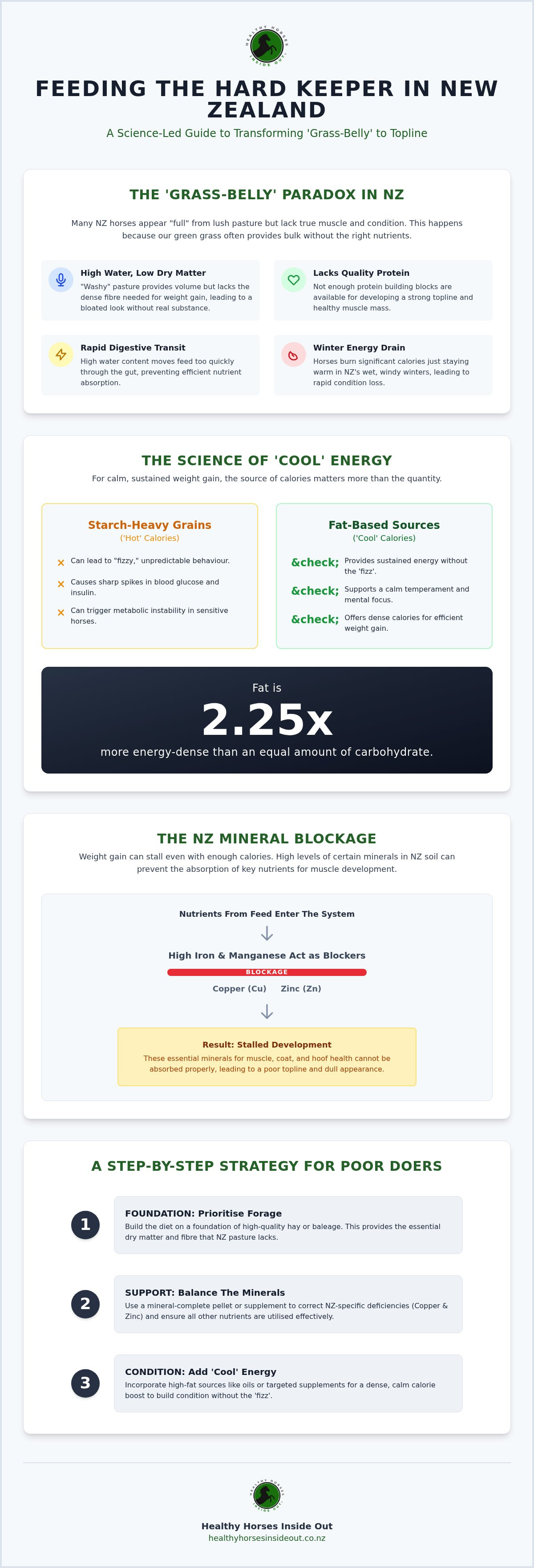
Building a Conditioning Diet: A Step-by-Step Strategy for Poor Doers
Successfully feeding hard keeper horses NZ requires a methodical hierarchy of needs that prioritises internal health before simply adding bulk. If you ignore the foundation, you'll find yourself trapped in a cycle of expensive, ineffective overfeeding. A structured approach ensures that every calorie is utilised efficiently, rather than being wasted due to biological bottlenecks or digestive transit issues. By following these four steps, you can transition your horse from a ribby, struggling state to a resilient, well-covered individual.
- Step 1: Maximise Forage Intake. Ensure your horse has access to at least 1.5% to 2% of its body weight in forage daily. High-quality NZ hay or baleage provides the essential dry matter that lush pasture lacks.
- Step 2: Introduce a Mineral-Complete Base. Before adding extra calories, correct the soil-driven imbalances discussed earlier. A targeted mineral base acts as the catalyst for weight gain.
- Step 3: Add "Cool" Fats. Once the mineral foundation is set, introduce energy-dense fats. Specialised oils or high-fat meals provide the caloric density needed without causing behavioural issues.
- Step 4: Monitor and Adjust. Review the horse's condition score every fortnight. If the ribs are covered but the topline remains weak, you may need to adjust protein quality to support muscle development.
The Fibre-First Foundation
Fibre is the most cost-effective calorie source for any NZ horse. Beyond providing energy, the fermentation of fibre in the hindgut acts as a constant internal heat source, which is vital for maintaining condition during wet winter months when thermoregulation drains energy. Using lucerne or beet pulp is an excellent way to boost calorie density without the "fizz" associated with grain. These fibre sources are highly digestible and support a stable gut environment while providing the bulk necessary to prevent the horse from feeling empty or anxious.
Hard Feed Optimisation
When structuring a hard feed, it's essential to respect the horse's small stomach capacity. Large, grain-heavy meals often pass through the small intestine too quickly, leading to the fermentation issues mentioned in previous sections. Instead, feed smaller, more frequent meals that are nutrient-dense. For senior poor doers, the addition of horse joint supplements NZ can be a game-changer, as chronic discomfort often contributes to weight loss in older animals. Accurate monitoring is the final piece of the puzzle; weight gain should always be measured by scales or a weigh tape rather than by scoops, as the density of different feeds varies significantly. To build a truly effective conditioning plan from the ground up, explore our specialised mineral foundations designed for New Zealand conditions.
Optimising Condition with HHIO: Targeted Nutritional Solutions
Achieving a healthy weight for a poor doer requires moving beyond the "more is better" mentality. When feeding hard keeper horses NZ, the objective is to optimise the internal biological machinery so that every calorie is captured and utilised effectively. This is the essence of our "Inside Out" philosophy. By addressing the root causes of metabolic inefficiency, such as the mineral antagonisms prevalent in New Zealand soil, we help your horse transition from struggling to thriving. This approach doesn't just add kilograms; it builds a resilient foundation for long-term health, resulting in a calm temperament and a "Show Ring Shine" that reflects genuine systemic wellness.
Our targeted nutritional solutions are designed to work in harmony with the "Cool Energy" strategies discussed earlier. By providing a concentrated, mineral-balanced base, we ensure that the high-fat and fibre-dense components of the diet are processed with maximum efficiency. This methodical approach provides owners with peace of mind, knowing they're supporting their horse's biology rather than just masking symptoms with high-sugar fillers.
The HHIO Pellet Advantage
HHIO Pellets simplify the daily feeding routine by providing a comprehensive, mineral-rich foundation in a single, easy-to-measure format. These pellets are specifically formulated to account for New Zealand's unique soil chemistry, prioritising bioavailable minerals that bypass the absorption blocks caused by high iron and manganese levels. Beyond mineral balance, the pellets contain a precise concentration of essential amino acids, which are the non-negotiable building blocks for topline and muscle development. This makes them the ideal base for hard keepers; they provide the "machinery" required to turn additional fats or oils into physical condition and structural strength.
Support for the Total Horse
Maintaining condition is a year-round commitment that often faces seasonal hurdles. During the challenging mud and cold of the colder months, integrating winter horse care supplements NZ helps sustain the energy reserves needed for thermoregulation. Additionally, the stress of weight gain or intense performance can tax the system, making equine immune support supplement NZ a valuable tool for maintaining resilience. By supporting the horse's internal environment, you ensure that their energy is directed toward growth and repair rather than just surviving environmental stressors. To find the right combination for your horse's specific needs, view the HHIO range of high-calorie support bundles and take the first step toward a healthier, more covered horse.
Transforming Condition from the Inside Out
Achieving a healthy topline and a calm temperament doesn't have to be a source of constant anxiety. By shifting your focus from high-sugar fillers to a science-led foundation, you can overcome the unique challenges of feeding hard keeper horses NZ. Remember that New Zealand's soil mineral profiles often act as the hidden bottleneck; once you correct these imbalances and prioritise "Cool Energy" from fats and fibre, your horse's biological efficiency will naturally improve. This methodical approach ensures that every kilogram of feed contributes to lasting physical resilience rather than just passing through the system.
At Healthy Horses Inside Out, we provide specialised solutions formulated specifically for our local pasture profiles. Our trusted, "Inside Out" approach prioritises systemic health to deliver sustainable conditioning that you can see in your horse's coat and feel in their performance. If you're ready to simplify your routine and see visible results, Browse HHIO’s Targeted Weight Gain & Conditioning Solutions. You've got the tools to build a stronger, healthier horse; it's time to start the journey toward long-term vitality and peace of mind.
Frequently Asked Questions
What is the best high calorie horse supplement for a senior horse in NZ?
The best approach for a senior horse involves combining a highly digestible fibre source with a mineral-rich foundation like HHIO Pellets. Older horses often have compromised dental health and reduced digestive efficiency, so they benefit from "pre-digested" energy sources. While we don't sell veterinary services, we suggest focusing on bioavailable minerals and amino acids to support muscle maintenance. This ensures the horse utilises their feed effectively rather than simply passing it through their system.
Can I use vegetable oil from the supermarket for horse weight gain?
You can use supermarket vegetable oil, but it's often high in Omega-6, which can be pro-inflammatory if not balanced. For feeding hard keeper horses NZ, specialised oils like cold-pressed linseed are superior due to their high Omega-3 content. Regardless of the type, always introduce oil gradually over 14 days to allow the liver to adapt. This prevents digestive upset and ensures the horse can metabolise the additional lipid-based calories efficiently.
How long does it take to see weight gain results from supplements?
Visible weight gain usually takes between 14 and 21 days for the first subtle changes to appear, such as improved coat shine and better "fill" over the ribs. A significant transformation in topline and muscle coverage typically requires a consistent nutritional programme for at least 90 days. This timeline accounts for the biological rate of protein synthesis and fat deposition, provided the underlying mineral deficiencies common in New Zealand are addressed first.
Will high calorie supplements make my horse too energetic or fizzy?
High-calorie supplements will not make your horse "fizzy" if you choose "cool" energy sources like fats and digestible fibres rather than starch-heavy grains. Starch and sugar cause rapid spikes in blood glucose and insulin, which often lead to reactive behaviour. By using a fat-based approach to feeding hard keeper horses NZ, you provide a slow-burning fuel that supports weight gain while maintaining a calm, focused temperament throughout the conditioning process.
Does my horse need extra protein or extra fat to build a topline?
Building a topline requires a combination of both fat for overall caloric cover and high-quality protein for muscle development. Fat provides the "fill" over the ribs, but amino acids are the actual building blocks of muscle tissue. If your horse has enough fat but lacks a topline, they likely need specific amino acids like lysine and methionine, which are often deficient in New Zealand's high-iron pastures and standard forage.
How do I know if my horse is a "poor doer" or has a mineral deficiency?
Many horses labelled as "poor doers" are actually suffering from sub-clinical mineral deficiencies that stall their metabolic rate. Signs of deficiency include a dull coat, brittle hooves, and a "grass belly" appearance where the horse looks bloated but lacks muscle over the spine. Correcting these gaps with HHIO Pellets ensures the horse's internal biological machinery is functioning correctly, allowing them to finally utilise the calories they are consuming for physical condition.
Can I feed high calorie supplements to a horse prone to laminitis?
You can safely feed high-calorie supplements to laminitic horses provided they are strictly low in non-structural carbohydrates (NSC). For these individuals, fat and fibre are the safest energy sources because they don't trigger the insulin spikes associated with laminitic episodes. Always check the sugar and starch levels of any conditioning product. A mineral-balanced, grain-free foundation is essential to support metabolic health while safely adding the weight required for recovery.
Should I increase hay or hard feed first for weight gain?
You should always increase high-quality forage, such as hay or baleage, before adding more hard feed to the bucket. Forage is the most cost-effective calorie source and is vital for maintaining hindgut health and internal warmth. Once the horse is consuming at least 2% of their body weight in forage, you can then introduce nutrient-dense hard feeds and mineral bases to provide the extra caloric boost needed for significant weight gain.


