
More supplements don’t always provide better support. The dangers of over-supplementing horses include disrupted nutrient balance, reduced absorption and, in some cases, toxicity. To reduce the risk, assess the whole ration, including forage, fortified feed and every supplement, so nutrients aren’t unintentionally added more than once.
It’s understandable to want to cover every nutritional need, especially when a horse has a specific health or performance concern. But excess nutrients can compete with one another, and selenium needs particular care because its safety margin is narrow. Plant selenium levels vary with soil, so forage can contribute different amounts depending on its source.
This article explains how overlapping products can affect nutrient balance, why selenium intake varies and how to make more considered feeding choices. You’ll learn why following product directions matters, how gradual changes can support digestion, and when reviewing the full diet can help avoid unnecessary supplementation.
Key Takeaways
- Count nutrients from forage, fortified feed and supplements together to spot duplication before it builds up.
- Compare supplement labels and feed according to directions; adding more can upset nutrient balance without adding benefit.
- Consider forage quality and the horse’s age, workload and lifestyle when deciding what the diet needs.
- Take extra care with selenium: soil influences plant levels, so forage can contribute differently depending on where it grows.
Dietary imbalances and nutrient absorption
Assess the whole ration: forage, fortified feed and every supplement. Excess minerals can compete for absorption or affect how a horse uses other nutrients. The dangers of over-supplementing horses often start with duplicated ingredients, rather than a single product used on its own.
Mineral Toxicity and Absorption Balance
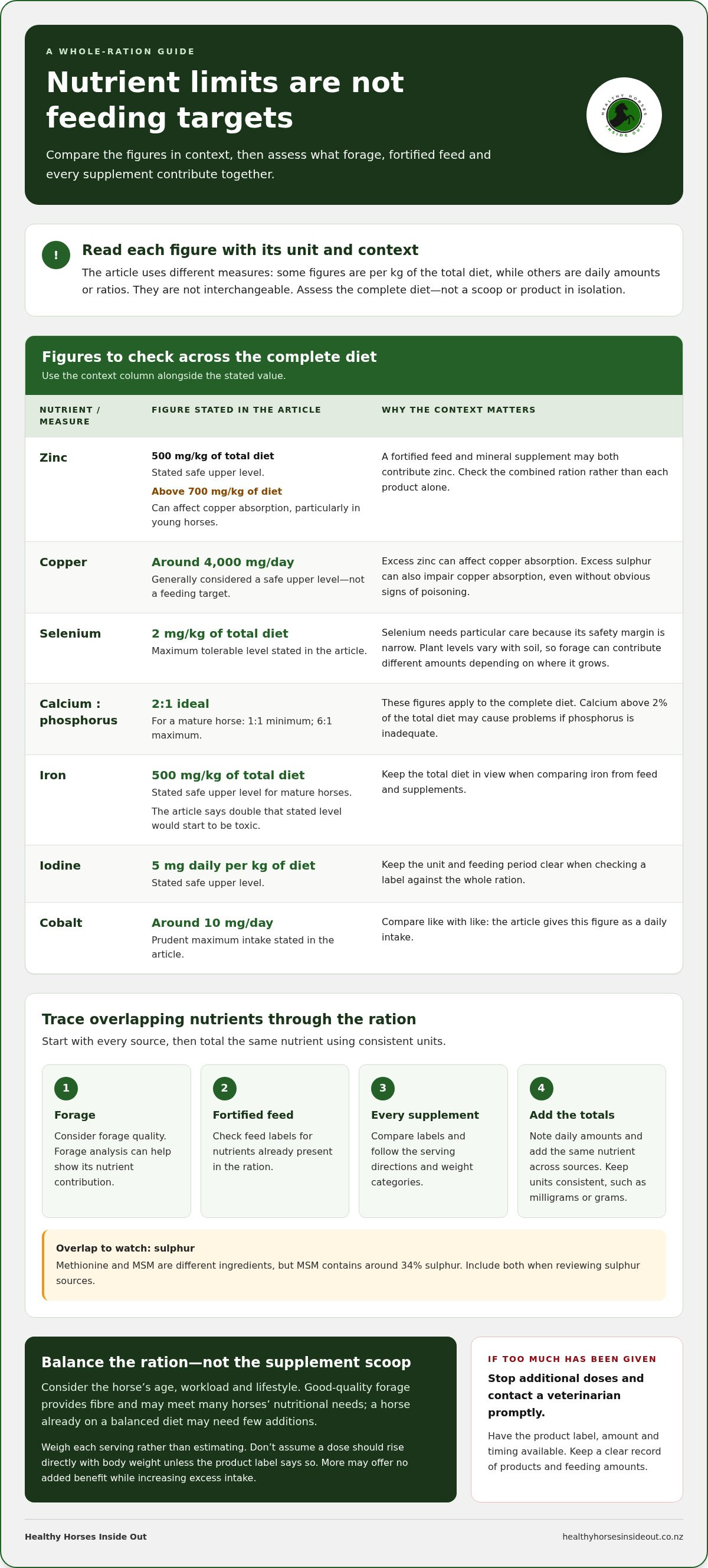
Mineral toxicity occurs when excessive intake harms health or disrupts the use of other nutrients. Zinc illustrates why balance matters: 500 mg per kg of total diet is given as a safe upper level, while amounts above 700 mg per kg of diet can affect copper absorption, particularly in young horses. Excess sulphur can also impair copper absorption, even without obvious signs of poisoning.
Check the combined ration rather than assessing each product in isolation. For example, a fortified feed and a mineral supplement may both contribute zinc, while other ingredients add sulphur. Two nutrients consumed in excess can bind together, reducing the horse’s ability to use either one. Around 4,000 mg per day is generally considered a safe upper copper level, not a feeding target. These interactions show why the dangers of over-supplementing horses extend beyond simply exceeding a toxic threshold.
Toxicity Signs and Upper Limits
Supplement toxicity is harm caused by excessive intake. Signs can include digestive upset and liver problems. Long-term oversupply of selenium, zinc, calcium, copper or iron can also cause wider toxicity. These signs aren’t specific to supplements, so note recent feeding changes and when symptoms began. A clear record can help identify a possible connection.
There is no single safe daily upper limit for every vitamin and mineral expressed by body weight. Limits use different units: zinc is expressed per kg of total diet, while copper’s general upper level is expressed per day. Selenium has a maximum tolerable level of 2 mg per kg of total diet. Follow each product’s directions and account for nutrients already present in feed and forage. To reduce the dangers of over-supplementing horses, assess the full ration before adding another product.
How can Over-Supplementation be Avoided?
Start with the whole ration, not one product in isolation. Forage, fortified feed and supplements can all contribute overlapping nutrients.
Nutrient Overlap Across Feed and Supplements
Nutrient overlap occurs when several parts of the ration provide the same ingredients. It matters because combining products can raise total intake beyond the intended amount. Compare labels against the feed and forage information, looking for repeated nutrients and active ingredients. For example, methionine and MSM are different ingredients, but MSM contains around 34% sulfur. Include both when reviewing sulfur sources.
Calculating Total Nutrient Intake
Total nutrient intake combines what the horse gets from forage, feed and each supplement. Note the amount fed daily from each source, then add the stated amount of the same nutrient across them. Keep units consistent, such as milligrams or grams, and record the total for each ingredient. Forage analysis can help show what forage contributes; feed labels and supplement directions provide the other figures.
Dose Guidance and Horse Weight
A recommended dose is the amount directed on a product label for its intended use. Follow the serving instructions and weight categories. Don’t assume the dose should increase in direct proportion to body weight unless the label says so. Weigh each serving rather than estimating, and account for the same ingredient in other products. More may offer no added benefit while increasing excess intake.
In New Zealand, importing, selling and using supplements are separate considerations. For feeding decisions, follow the product label and include the horse’s forage and feed in your ration assessment. An overseas label is not a substitute for New Zealand requirements.
If a horse has received too much, stop giving additional doses and contact a veterinarian promptly with the product label, amount and timing. A veterinarian should also assess the supplement plan when the horse takes medication, develops concerning signs, or has a health issue affecting its diet. A clear record of every product and feeding amount helps guide that assessment. For routine feeding, everyday horse supplements can be considered alongside the full ration.
Balancing nutrition without creating nutrient excesses or deficiencies
Balance the whole ration around the horse’s age, workload and lifestyle instead of adding supplements out of habit. Good-quality forage provides fibre and may meet many horses’ nutritional needs. A horse already receiving a balanced diet with varied vitamins and minerals may need few additions. For example, alfalfa hay can provide substantial protein, so extra protein may be unnecessary unless the horse is in hard work, pregnant or lactating.
Check mineral ratios as well as individual amounts. For a mature horse, a calcium-to-phosphorus ratio of 2:1 is described as ideal, with 1:1 as the minimum and 6:1 as the maximum. Calcium above 2% of the total diet may cause problems if phosphorus is inadequate. These figures concern the complete diet, not a scoop of supplement considered alone.
Some minerals have upper levels that make unnecessary additions especially concerning. Iron’s safe upper level for mature horses is 500 mg per kg of total diet; double that stated level would start to be toxic. The stated safe upper iodine level is 5 mg daily per kg of diet, while a prudent maximum cobalt intake is around 10 mg per day. Keep units and feeding periods clear when comparing figures with labels.
Vitamins differ in how excess intake affects a horse. Most have a broad safety margin, but very large amounts of fat-soluble vitamins A, D, E and K can cause problems. Feeding more supplement than directed may offer no added benefit, while excess active ingredients may be excreted. Don’t increase fortified feed simply to meet one nutrient target if doing so also raises calories, sugar or starch, particularly for a horse carrying excess weight. First identify the specific dietary gap.
Selenium toxicity and soil variation
Selenium is essential in small amounts, but excess can cause serious toxicity in horses. Its concentration in plants varies with the soil, so pasture and conserved forage can contribute different amounts. Consider forage, feed and supplements together when assessing total intake.
The maximum tolerable selenium level is 2 mg per kg of total diet, while toxicity has been recorded at 5 mg per kg of total diet. According to the European Union, selenium-related alkali disease in horses can develop after eating plants containing 5-25 mg Se/kg for less than one month. These levels show why forage from selenium-rich ground matters when selecting additional products.
Exposure can be chronic or acute. Chronic poisoning can occur when total feed intake provides 5-40 mg of selenium per kg of feed. A single oral dose of 3.3 mg per kilogram of body weight can be lethal. Acute intoxication may cause respiratory distress, diarrhoea and death, so suspected excessive exposure needs urgent veterinary attention.
Selenium isn’t the only nutrient that needs care. Excess iodine and iron can also be harmful, and very large amounts of fat-soluble vitamins A, D, E and K can cause problems. Vitamin D toxicity can damage the kidneys, causing mineral deposits, renal failure, excessive urination and thirst. Risk depends on the nutrient, dose, duration and the horse’s total diet, so a supplement label alone doesn’t tell the whole story.
For a practical review, record the forage source and every selenium-containing feed or supplement, then compare their contributions. This is especially useful when pasture or hay changes, because the new forage may alter the ration’s baseline. Explore specific horse supplements as part of a considered feeding plan, rather than adding selenium without accounting for existing sources.
Healthy Horses Inside Out: Everyday Horse Supplements
Healthy Horses Inside Out offers Everyday Horse Supplements for routine nutritional support and Specific Horse Supplements for targeted needs. Once you’ve assessed the ration and identified a suitable addition, these products offer focused options to consider. Horse Supplement Bundles and HHIO Pellets are also part of the range.
Choose with the whole diet in mind: match a supplement to a genuine nutritional need, account for what forage and feed already provide, and follow product directions. Don’t combine products simply to add ingredients, especially when their nutrients overlap. If your horse is on medication or has concerning health signs, supplements don’t replace veterinary advice.
To explore the available horse supplement options, contact Healthy Horses Inside Out.
Make your horse’s nutrition an ongoing practice
A horse’s needs can change with workload, health and daily routine. Consider feeding decisions as part of the bigger picture rather than reaching for another product whenever a concern arises. Keeping a current record of what your horse receives can support thoughtful decisions and help you recognise when the overall plan needs another review.
Understanding the dangers of over-supplementing horses isn’t about avoiding all supplements. It’s about choosing with purpose, so every addition has a clear role in your horse’s care. If you’re considering what to add, explore Healthy Horses Inside Out’s Everyday Horse Supplements, Specific Horse Supplements and Horse Supplement Bundles.
Explore options with Healthy Horses Inside Out and take your next feeding decision with greater confidence. Thoughtful care starts with one considered choice, and you can build on it from there.
Frequently Asked Questions
How does over-supplementation occur?
Over-supplementation happens when a horse receives more of a nutrient or active ingredient than intended. It can occur when fortified feed, a ration balancer and a separate supplement all contain the same vitamin or mineral. For example, a new hoof product may duplicate ingredients already in the daily feed. Keep an up-to-date list of products and amounts, especially when changing feed or adding a product.
When it comes to supplements, can there be too much of a good thing?
Yes. A useful nutrient can cause problems when intake is excessive, and more may not improve the intended result. Some excess active ingredients are excreted, while others can disrupt nutrient use or cause toxicity. Selenium and iodine need particular care because their safety margins are narrow. Treat a supplement as targeted support, not an automatic addition to every horse’s daily ration.
How can overlapping supplements and fortified feeds cause excessive nutrient intake in horses?
Yes, products can stack the same ingredients, even when each is fed according to its own label. For example, fortified feed and a multi-nutrient supplement may both contribute zinc, while a joint product adds other ingredients to the total ration. Compare product labels with feed and forage information, then note repeated nutrients. This can reveal overlaps before you add another product for a separate concern.
What are the symptoms of selenium poisoning in horses and how much is toxic?
Selenium poisoning can cause respiratory distress, diarrhoea and, in severe cases, death. The maximum tolerable level is 2 mg per kg of total diet; toxicity has been recorded at 5 mg per kg of total diet. A single oral dose of 3.3 mg per kilogram of body weight can be lethal. If excessive exposure is suspected, seek urgent veterinary help and provide the product or feed details.


