

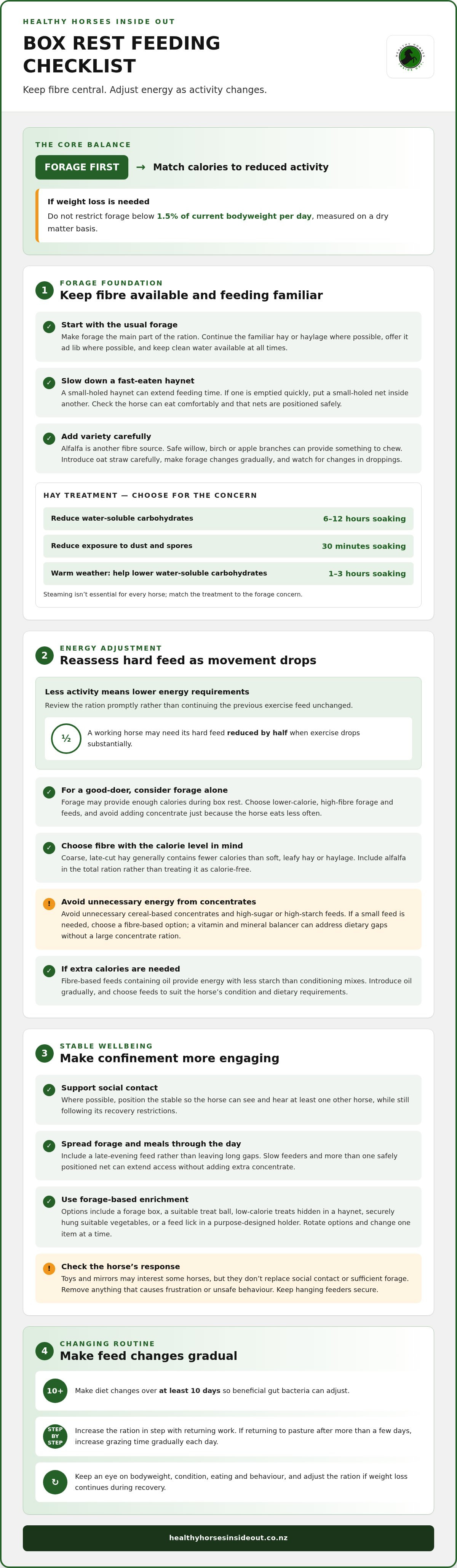
A horse on box rest needs less energy as activity falls, but forage remains essential. When feeding a horse on box rest, keep forage as the main part of the diet, continue the familiar forage where possible, and adjust calorie intake to suit the horse’s changing condition. For weight loss, forage should not be restricted below 1.5% of the horse’s current bodyweight per day on a dry matter basis.
Feeding a horse on box rest can make it difficult to balance recovery, weight and wellbeing. Cutting feed too sharply may leave the horse short of fibre, while continuing its usual hard feed can provide more energy than it needs with less activity.
This guide explains how to choose forage, adjust calories safely, ease boredom and stress, and respond if your horse is losing weight. You’ll also find practical ways to monitor condition and support steady feeding through box rest.
Key Takeaways
- Use small-holed haynets to slow forage intake and make it last longer; double-netting can extend feeding time further.
- Reassess hard feed as activity drops, keeping fibre central while avoiding unnecessary energy from concentrates.
- Make stable life more engaging with forage-based enrichment, smaller feed portions and the company of another horse where possible.
- Track bodyweight and condition regularly, and adjust the ration if your horse continues to lose weight during recovery.
1. Which forage is best for my horse at rest?
Make forage the main part of the ration, and continue the familiar hay or haylage where possible. Horses naturally spend up to 18 hours a day grazing, so a sudden switch to sparse meals can leave long gaps without fibre. Offer forage ad lib where possible, with clean water available at all times. This supports digestive function while the horse’s movement is restricted.
If hay disappears quickly, use a small-holed haynet to slow intake and extend feeding time. If your horse empties one net rapidly, place a small-holed net inside another. Check that the horse can eat comfortably and that the net is positioned safely. Longer access to forage can help reduce boredom without adding concentrate simply to occupy the horse.
For variety, offer suitable alternative fibre alongside hay or haylage. Alfalfa provides another fibre source, while safe branches from willow, birch or apple trees give a horse something to chew. Introduce oat straw carefully, as excessive intake can cause compaction problems. Make any forage change gradually and watch for changes in the amount or consistency of droppings.
Should hay be soaked or steamed? Soak hay for 6–12 hours to help reduce water-soluble carbohydrates, or for 30 minutes to reduce exposure to dust and spores. In warm weather, a 1–3-hour soak can help lower water-soluble carbohydrates. Steaming isn’t essential for every horse; choose the treatment to match the forage concern.
What should a horse eat on box rest? Primarily its usual forage, with concentrate adjusted to suit reduced activity. In New Zealand, feed costs depend on forage type, daily quantity and local sourcing, so plan the ration around the horse’s needs rather than a standard feed bill.
What nutrients or supplements are needed? Forage is the foundation; a vitamin and mineral balancer can address dietary gaps without adding a large concentrate ration. The right choice depends on the forage and the horse’s condition.
2. Adjusting calorie intake when activity is reduced
As movement and turnout decrease, a horse’s energy requirements also fall. Review the ration promptly: a working horse may need its hard feed reduced by half when exercise drops substantially. Keep forage as the dietary foundation, then adjust calorie-dense feeds to match workload and body condition. This prevents the previous exercise ration from supplying surplus energy during stable rest.
For a good-doer, forage alone may provide enough calories during box rest. Choose lower-calorie, high-fibre forage and feeds, and avoid adding concentrate just because the horse is eating less often. Coarse, late-cut hay generally contains fewer calories than soft, leafy hay or haylage. Alfalfa can add fibre, but include its contribution in the total ration rather than treating it as calorie-free.
What foods should be avoided for a horse on box rest? Avoid unnecessary cereal-based concentrates and high-sugar or high-starch feeds, which may provide energy an inactive horse doesn’t need. If the horse needs a small feed, choose a fibre-based option; a balancer or vitamin and mineral supplement can supply nutrients without a large calorie load.
When extra calories are needed, choose a source that suits the horse’s condition and dietary requirements. Fibre-based feeds containing oil provide energy with less starch than conditioning mixes. Introduce oil gradually. A low-calorie feed high in fibre and low in sugar and starch can suit horses maintaining weight, while alfalfa or other fibre sources help keep them eating. Stable toys may encourage interest, but they don’t replace appropriate forage.
How should feeding change when exercise resumes? Increase the ration in step with returning work rather than switching straight back to the former feed amount. If the horse returns to pasture after more than a few days, increase grazing time gradually each day; make diet changes over at least 10 days so beneficial gut bacteria can adjust. For equine nutrition support, explore everyday horse supplements as part of a balanced feeding plan.
3. Reducing boredom and stress during prolonged confinement
Box rest disrupts a horse’s normal routine, particularly when injury limits movement and turnout. Where possible, position the stable so the horse can see and hear at least one other horse. Social contact can make confinement less isolating while allowing the horse to follow its recovery restrictions.
Spread forage and meals throughout the day, including a late-evening feed, rather than leaving long gaps between eating periods. A small-holed haynet or slow feeder can extend access to hay or haylage. More than one net, hung in safe and accessible positions, gives the horse varied feeding points without requiring extra concentrate. Place forage around the stable only if the horse’s permitted movement allows it.
Forage-based enrichment encourages natural searching and chewing. Try a forage box, a treat ball suited to the horse, or low-calorie treats hidden in a haynet. Hang suitable vegetables securely, and use a feed lick in a purpose-designed holder to make it last longer. Rotate options regularly; changing one item at a time keeps enrichment interesting and helps show which activities the horse enjoys.
Stable toys and mirrors may interest some horses, but they’re no substitute for social contact or sufficient forage. Observe the horse’s response to each change, and remove anything that causes frustration or unsafe behaviour. Adequate forage may help reduce the risk of gastric ulcers, colic and stable vices such as weaving or crib-biting.
Keep a practical routine during confinement: offer varied enrichment, check that hanging feeders remain secure, and note changes in eating or behaviour. For a horse on prolonged box rest, make the reduced-activity period more engaging without encouraging movement that conflicts with its recovery plan.
4. Feeding horses losing weight on box rest
Respond to weight loss during confinement methodically, rather than abruptly increasing concentrate. First record body condition and use a weightape every fortnight to track the trend. Check that the horse is eating its forage, drinking and producing normal droppings. Reduced water intake or appetite can affect digestion as well as condition.
Protect fibre intake while adjusting energy. Forage restriction should not fall below 1.5% of current bodyweight per day on a dry matter basis. For a 500kg horse, that is approximately 9kg of hay or 11–12kg of haylage daily. Haylage provides more calories than hay, so consider forage type as well as weight when assessing the ration.
If the horse cannot maintain condition on lower-energy feed, use good-quality forage and a conditioning diet with higher digestible energy and protein. Divide any concentrate into several small meals rather than one large feed. A complete feed, pelleted balancer or broad-spectrum vitamin and mineral supplement can address nutrient gaps when forage alone falls short. Introduce every diet change gradually over at least 10 days.
Severe undernutrition needs particular care: in a study of chronically starved horses, feed containing around 20% starch was associated with an insulin response linked to re-feeding syndrome. The syndrome tends to occur 3 to 7 days after re-feeding begins. A prebiotic may support digestive function, while consistent access to fresh water supports water intake. Keep variety purposeful, and track weight alongside the ration.
When should a vet or equine nutritionist advise on feeding? Seek advice when weight loss continues, the horse is severely underweight, or illness requires a low- or no-starch diet. A vet can assess health factors, while an equine nutritionist can help match calories, protein, vitamins and minerals to the horse’s condition. Explore horse supplement options as part of a considered nutrition plan.
Healthy Horses Inside Out: Everyday Horse Supplements
Healthy Horses Inside Out offers Everyday Horse Supplements to complement a forage-based ration when nutritional support is needed. During box rest, a supplement can help address vitamins and minerals that forage alone may not provide, while the overall diet should still match the horse’s condition and reduced activity. Choose support to address a specific dietary gap, rather than adding products without a clear purpose.
For more specific needs, explore Specific Horse Supplements, Horse Supplement Bundles or HHIO Pellets. These options can form part of a wider feeding plan, but they don’t replace veterinary assessment if a horse is ill, losing weight or following a restricted diet. Consider forage, feed and supplements together as one ration, and introduce dietary changes gradually. Explore the range at healthyhorsesinsideout.co.nz.
Make the next feeding decision with confidence
Recovery needs can change over time. As your horse’s condition, appetite and permitted activity shift, the feeding plan may need adjusting too. Keep a simple record of what your horse eats and how its condition develops. This history helps you make considered changes, especially if box rest lasts longer than expected.
Feeding a horse on box rest also means recognising when general guidance isn’t enough. If weight loss continues or the horse’s health affects what it can eat, involve your veterinarian and use their advice to shape the ration. Consider supplements as part of that wider plan, not as a substitute for investigating a change in condition.
For nutritional support that complements your horse’s diet, Healthy Horses Inside Out offers Everyday Horse Supplements, Specific Horse Supplements and Horse Supplement Bundles. Contact Healthy Horses Inside Out to explore the range and take a thoughtful next step for your horse.
Frequently Asked Questions
Which forage is best for my horse at rest?
Choose clean, familiar hay or haylage that your horse eats readily; consistency matters more than changing forage during recovery. Check each new batch for mould, a musty smell or excessive dust, and remove spoiled portions. If the forage changes, introduce it gradually and monitor appetite and droppings. These checks help keep the ration predictable while the horse’s routine and movement are restricted.
Can I do anything to aid healing?
Good nutrition supports tissue repair and immune function, but it doesn’t replace appropriate veterinary treatment. Provide suitable forage and ensure the whole ration supplies adequate protein and micronutrients. Vitamin E and selenium are antioxidants involved in helping the body combat free radicals; selenium also supports immune function. Their relevance depends on the horse’s existing diet, so avoid adding multiple supplements without assessing the full ration.
How much hay should a horse on box rest be fed per day?
For weight management, forage restriction shouldn’t fall below 1.5% of current bodyweight daily on a dry matter basis. For a 500kg horse, that’s approximately 9kg of hay per day. Weigh the forage rather than estimating by flake, since bale density varies. If hay is soaked, account for dry matter loss by increasing the amount by 20%, unless feeding it ad lib.
What low-calorie feeds are suitable for a horse on box rest?
Coarse, late-cut hay generally provides fewer calories than soft, leafy hay or haylage. For a good-doer, forage may meet energy needs, while a low-calorie balancer can supply vitamins and minerals without a large concentrate ration. If a small feed is needed for medication, choose a fibre-based option rather than cereal-rich concentrate. Base your choice on body condition and the forage’s nutritional contribution.
How should feed be adjusted to prevent weight gain during box rest?
Reduce energy-providing hard feed as exercise and turnout decrease, while maintaining adequate fibre. A working horse may need its hard-feed quantity reduced by half when activity falls substantially. Reassess weight and body condition every fortnight, then adjust the ration according to the trend. Avoid sudden diet changes; introduce alterations gradually so the digestive system can adapt.
How can feeding help prevent gastric ulcers and colic during box rest?
Maintain regular access to forage and avoid long periods without eating, as chewing and fibre intake support normal digestive activity. Keep fresh, clean water available, and monitor drinking, appetite and droppings daily. A marked reduction in faecal output, harder droppings or reduced water intake warrants prompt veterinary attention. Avoid feeding large quantities of straw, including as bedding, because it increases the risk of impaction.


