
A feeding plan should change when your horse’s needs change. When creating a horse feeding plan, account for age, body condition, workload, reproductive status, health and breed; use concentrates only when forage doesn’t meet energy needs. Good-quality forage should form the foundation, with feed portions measured by weight rather than estimated from a scoop.
A clear daily routine is a useful starting point when creating a horse feeding plan. The work does not stop once the routine is set: monitor your horse’s body condition, appetite and response, and review the ration when workload, health or other needs change. Make dietary changes gradually to help reduce the risk of digestive upset.
This guide explains how to build a practical routine, assess feed amounts and adapt the plan to your horse’s age, workload, condition and goals. You’ll also learn what to monitor over time so the plan continues to suit your horse as its needs evolve.
Key Takeaways
- Weigh feed and forage rather than relying on scoops or flakes, and record clear portions and preparation instructions for everyone who feeds your horse.
- For horses with metabolic concerns, precise portions and clear feeding alerts help reduce the risk of unintended diet changes.
- Consider supplements as part of the whole ration so additions address a nutritional need without overlooking what the rest of the diet provides.
- Keep feeding times consistent, and reassess the plan when your horse’s workload, body condition, age or health needs change.
1. What if I don’t know the weight of feed or hay my horse is fed?
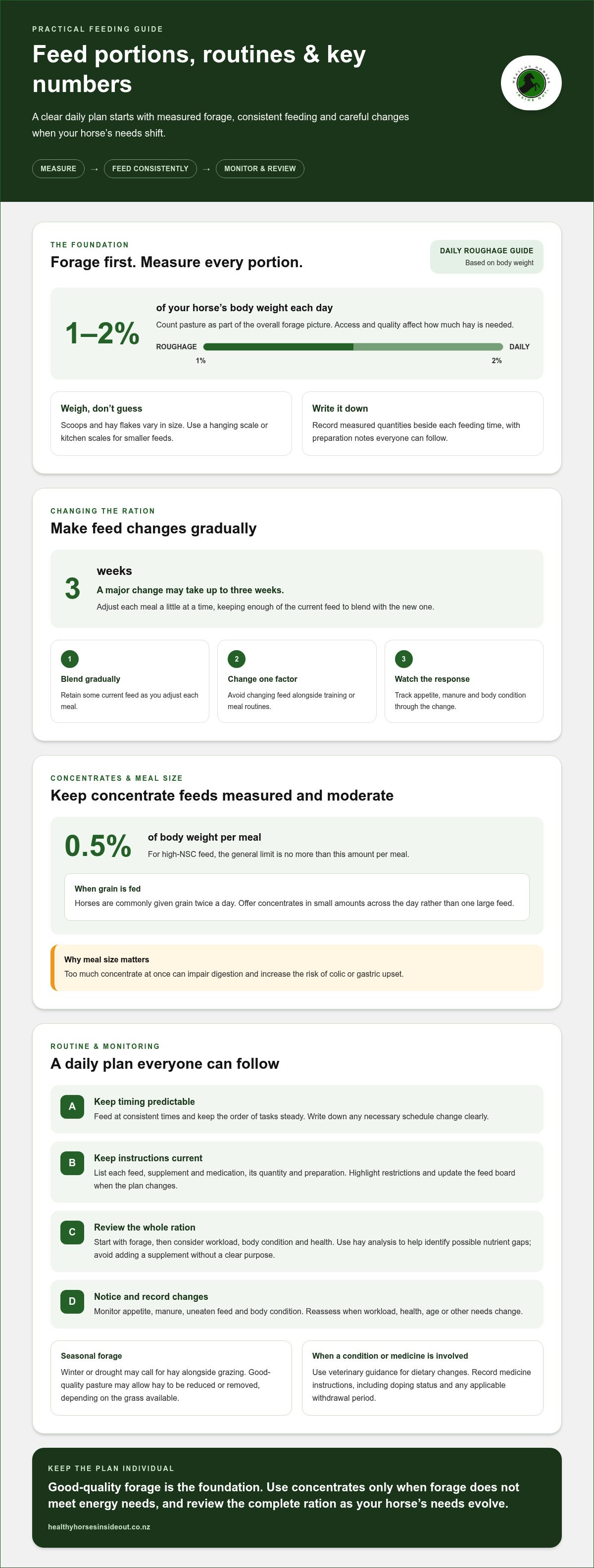
Weigh each feed and forage portion; scoops and hay flakes vary in size. Use a hanging scale or kitchen scales for smaller feeds, then record the measured amount beside each feeding time. Roughage should amount to 1–2% of your horse’s body weight every day. Include pasture in the overall forage picture, since access and quality affect how much hay is needed.
For a horse with metabolic concerns, consistency matters. Clear feed-board instructions should name each feed, its quantity and any preparation notes. Highlight restrictions, then update the board whenever the nutrition plan changes. Precise portions and current instructions help prevent accidental extras that could affect weight, insulin regulation or laminitis risk.
Keep the feed board aligned with the horse’s current ration by reviewing every feed, supplement and medication. A dated note can distinguish a temporary change from the standard plan. Make sure everyone feeding the horse can follow the same instructions, rather than relying on an estimated scoop or an outdated routine.
Change feed gradually. Adjust each meal a little at a time, retaining enough of the current feed to blend with the new one. A major change may take up to three weeks. Avoid changing feed alongside training or meal routines, so you can assess the horse’s response. Track appetite, manure and body condition throughout the transition.
The cost of hay, hard feed and supplements in New Zealand depends on feed type, quality, season, transport and the amount needed. Compare the cost of the whole ration, not just one bag or bale. Forage availability and your horse’s needs affect how much you need to buy.
Overfeeding can contribute to excess body condition and metabolic concerns, while too little forage can leave the ration short of roughage. Sudden diet changes or excessive concentrates can upset digestion and increase colic risk. Excess body condition is linked with insulin resistance and endocrinopathic laminitis.
2. Why is a personalised equine nutrition plan better?
Assess the ration as a whole, not as separate scoops and supplements. Start with your horse’s forage, then consider workload, body condition and health needs. Good-quality hay or pasture is often enough for a horse that does not need concentrates. If the ration already supplies a nutrient, adding another product may duplicate it instead of addressing a gap.
Hay analysis can show nutrient levels in the forage and help identify possible deficiencies. Consider the results alongside your horse’s condition and daily workload when deciding whether supplementation is useful. If forage meets your horse’s needs and body condition is steady, a supplement without a clear purpose may not improve the ration. If you identify a shortfall, choose a product that addresses it, then reassess the complete ration.
Keep an up-to-date record of every feed, supplement and medication. Label each item clearly as basic feed, supplementary feed or medicine, and note its amount and feeding instructions. This can prevent missed doses or accidental duplication when several people feed the horse. For medicines, record whether they are doping-positive and any applicable withdrawal period, so the information is visible in the feeding plan.
For a horse with a diagnosed condition or prescribed medicine, use veterinary guidance when planning dietary changes. Keep the written plan accurate, including all feeds, supplements and medicines, and update it when instructions change. In New Zealand, the practical safeguard is a clear record that everyone involved in feeding can follow.
For a targeted addition to the overall ration, compare the available horse supplement options with the nutritional need you’re trying to address. A supplement should complement forage and existing feed, not replace a balanced ration or veterinary treatment.
3. Consistent feeding routines
Feed at consistent times each day and keep the order of tasks predictable. A written timetable can show who feeds each horse, which meals to serve, and when to refresh water and forage. Sudden schedule changes may increase colic risk in horses prone to colic. Irregular feeding can disrupt gut function, contribute to loose manure and reduce feed efficiency. If the routine must change, record the new times clearly for everyone involved.
New Zealand’s changing seasons can affect pasture growth and forage availability. During winter or drought, supplement grazing with hay. When pasture is good quality, you may be able to reduce or remove hay, depending on the grass available. In most cases, horses should have hay or pasture throughout the day. Weather can also affect feed consumption, so note conditions alongside changes in appetite. This context can help distinguish a seasonal shift from a response to another change in the ration.
Offer concentrates in small amounts across the day rather than serving a large feed at once. When grain is fed, horses are commonly given it twice a day. For high-NSC feed, the general limit is no more than 0.5% of body weight per meal. Too much concentrate at once can impair digestion and increase the risk of colic or gastric upset. Include meal size and timing in the routine, not just the daily total.
Make changes to your horse’s diet easier to assess by recording the date and changing one routine factor at a time. For example, avoid changing feed at the same time as training, shelter or the health programme. Note appetite, manure and uneaten feed each day, then compare them with the horse’s usual pattern. Contact a veterinarian about concerning digestive signs or persistent changes in eating. A practical routine helps everyone spot changes early and follow the same plan.
4. Tailoring a feeding plan to a horse’s age, workload, body condition and goals
A useful feeding plan reflects the individual horse, not a standard ration. Consider age, breed, body condition, activity level, reproductive status and health conditions together. These factors shape energy and nutrient needs, while pasture quality and access affect forage intake. Record a baseline, then review it as circumstances change.
Start by assessing body condition and current workload. A horse in light work may meet its energy needs through forage, while a horse in harder work may need additional energy if forage alone falls short. Concentrates should fill that gap, not be added automatically. If activity decreases, reassess the ration to ensure the feed still matches energy use.
Age and health also shape the plan. Growing horses, older horses and horses with health conditions can have different nutritional priorities. Reproductive status matters too, so review the feed when it changes. For a horse carrying excess body condition, carefully assess energy intake and pasture access. Excess condition is closely linked with insulin resistance and endocrinopathic laminitis.
Set a clear goal, such as maintaining body condition as workload changes, then track relevant signs. Note appetite, behaviour, manure and changes in condition alongside exercise and pasture access. These observations can help distinguish a ration issue from a shift in routine or activity. Where practical, change one factor at a time so the horse’s response is easier to assess.
Review the plan whenever age-related needs, workload, health or reproductive status shift. A horse returning to work after a quieter period, for example, may need a different ration as energy demands rise. Match adjustments to the horse’s observed condition and goals, rather than feeding for performance that its current workload doesn’t require. Explore horse supplement options as part of assessing whether the overall ration meets your horse’s needs.
Healthy Horses Inside Out: Everyday Horse Supplements
Healthy Horses Inside Out offers Everyday Horse Supplements, Specific Horse Supplements, Horse Supplement Bundles and HHIO Pellets to support your horse’s dietary plan. These options may suit a nutritional need that forage and the existing ration do not address. Include any supplement in the overall feeding plan, rather than adding products without considering what your horse already eats.
Choose a supplement based on the role it needs to play in your horse’s routine. A specific supplement may suit a defined dietary focus, while a bundle can bring together supplements for a broader approach. For horses with health concerns or prescribed medication, keep veterinary guidance central to feed decisions.
To explore the available options or discuss your horse’s feeding needs, visit Healthy Horses Inside Out.
Keep the plan responsive to your horse
A feeding plan is not a set-and-forget document. Treat it as a working record: note what your horse eats, how its condition changes and whether its routine still meets its needs. This makes future adjustments more considered, especially when workload, pasture access or health changes. If you’re creating a horse feeding plan now, set a clear goal and decide what you’ll observe to assess whether the approach is working.
Keep the next step practical: review the whole ration before adding a supplement, and involve your veterinarian when health concerns or prescribed treatments affect feeding decisions. For dietary support to complement your horse’s routine, explore Healthy Horses Inside Out’s Everyday Horse Supplements, Specific Horse Supplements and Horse Supplement Bundles.
Contact Healthy Horses Inside Out to explore the options. A thoughtful plan can give you a clearer way to support your horse as its needs evolve.
Frequently Asked Questions
Do I need to do anything else besides following the plan?
Yes. Use the plan as a baseline for daily observation, not as a reason to ignore change. Note whether your horse leaves feed, eats more slowly, or shows changes in body condition or manure. If pasture growth, workload or health shifts, review the ration and update feeding instructions. For diagnosed metabolic or digestive concerns, involve your veterinarian in decisions.
What if I don’t know the weight of feed or hay my horse is fed?
Measure a usual portion with a scale, then record it beside the relevant feed-board instruction. For bucket feed, put the empty bucket on the scale and tare it before adding feed. Weigh hay separately, and note any uneaten forage at the next feeding. This distinguishes the amount offered from what your horse actually consumes.
What is a personalised horse feeding plan?
A horse feeding plan is a written daily ration and routine designed for an individual horse, not a standard schedule for the whole stable. Creating a horse feeding plan means recording what the horse eats, its forage access, and relevant health or workload needs. For example, two horses sharing pasture may need different feed amounts because their body condition and activity differ.
Why is a personalised equine nutrition plan better?
A plan connects feeding choices to your horse’s actual needs, rather than copying a ration that suits another horse. Reviewing the whole diet can also reveal whether a supplement would duplicate nutrients already supplied by forage or other feed. If your horse’s workload or health changes, a tailored plan gives you a clear basis for reassessing its ration.
What should a horse’s daily diet include?
For most horses, the foundation is good-quality forage, such as pasture or hay, with water freely available. Choose forage that’s free from dust or mould, and account for pasture when working out how much hay to offer. An average-size horse drinks at least 8 gallons of water. Concentrates and supplements should address needs the forage-based ration doesn’t meet.
How do you calculate a horse’s daily forage and feed requirements by body weight?
Calculate roughage by multiplying your horse’s body weight by 0.01 and 0.02 to find the 1–2% daily range. Count pasture and hay together, rather than treating hay as the entire forage ration. Feed concentrates only to meet energy needs forage doesn’t meet. For high-NSC feed, the general limit is no more than 0.5% of body weight per meal.


