

In New Zealand, growing a sound horse is a mineral game rather than a calorie race. You likely understand the delicate balance required to manage a weanling's development, yet the fear of developmental orthopaedic diseases often lingers when you're faced with high-sugar pastures and conflicting advice on "full feeds." It's stressful to wonder if your young horse is getting the foundational support they need or if you're inadvertently fueling a growth spurt that their skeletal system simply can't support.
This science-led guide to young horse nutrition NZ provides the clinical clarity you need to address our unique soil deficiencies with confidence. We'll examine the biological mechanisms of bone development and explain how targeted supplementation ensures structural integrity without causing "fizzy" behaviour or dangerous growth spikes. You'll learn how to balance mineral ratios and optimise growth rates, giving you total peace of mind that your yearling is ready for the sale ring or the starting process with a rock-solid foundation.
Key Takeaways
- Understand why New Zealand’s volcanic soils create a "mineral gap" that makes pasture alone insufficient for optimal skeletal maturation and long-term soundness.
- Learn to prioritise essential amino acids like Lysine and Methionine alongside precise Calcium to Phosphorus ratios to ensure correct bone ossification.
- Master the balance of young horse nutrition NZ by opting for forage-based mineral supplementation over high-sugar feeds to prevent metabolic issues and "fizzy" behaviour.
- Discover how to support your foal through high-stress milestones like weaning by protecting gut health and maintaining steady, controlled growth rates.
- Simplify your daily regime with HHIO Pellets, providing a science-led foundation that targets internal systemic health as the primary driver of external performance.
The Foundation: Why New Zealand Pasture Isn’t Enough for Growing Foals
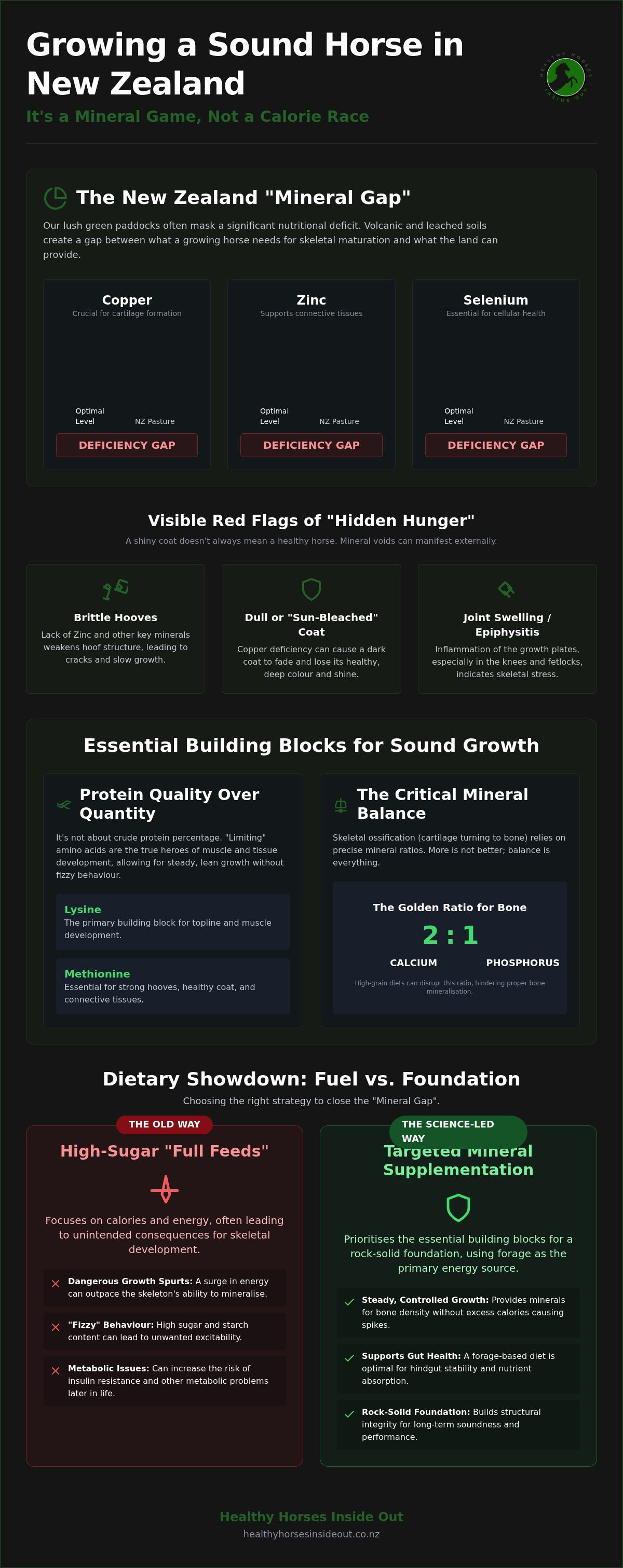
In New Zealand, our lush green paddocks often mask a significant nutritional deficit. Understanding Equine nutrition in our local context is about more than just filling a bucket; it's the precise management of a biological timeline where a foal can gain up to 1.5kg per day. This rapid expansion must be matched by skeletal maturation, yet our volcanic and leached soils often fail to provide the necessary building blocks. This disconnect creates a "NZ Gap" between what the horse needs and what the land provides, making young horse nutrition NZ a specialised field of care that requires intentionality.
Many owners face the challenge of "hidden hunger" in their weanlings and yearlings. A horse might look shiny and well-covered on the outside while their skeletal system remains fragile due to mineral voids. It's a common misconception that a "good doer" on grass is a healthy horse. In reality, mineral balance, rather than caloric volume, is the true driver of structural soundness for horses raised on New Zealand pastures. Without this balance, the risk of permanent joint damage increases during peak growth phases, regardless of how much grass is available.
The Impact of NZ Soil Mineral Deficiencies
New Zealand’s geological history has left much of our land chronically low in Selenium, Copper, and Zinc. These trace elements are vital for cellular health and the development of strong connective tissues. Copper and Zinc are particularly critical for the formation of cartilage and the prevention of OCD (Osteochondritis Dissecans) in growing joints. When these minerals are missing, you'll see visible red flags such as brittle hooves, a dull or "sun-bleached" coat, and joint swelling or epiphysitis. To understand the specific risks of our local soil and the safety guidelines for supplementation, refer to our Horse Selenium Deficiency in NZ guide.
Seasonal Pasture Fluctuations
Spring brings "The Big Flush," a period where pasture is high in sugar but diluted in minerals. This surge in energy can trigger sudden growth spurts that outpace the horse's ability to mineralise their bone structure. This "pumping" effect is one of the primary causes of developmental orthopaedic diseases in NZ yearlings. Conversely, winter forage often lacks the protein and mineral density required to maintain a steady growth curve, leading to "stunted" periods followed by compensatory growth. Maintaining high-quality fibre is essential during these transitions to keep the young horse’s hindgut stable and ensure they can actually absorb the nutrients you provide. A stable gut environment is the gateway to systemic health.
Essential Building Blocks: Protein, Minerals, and the Correct Ratios
While many owners focus on crude protein percentages, the true heroes of muscle and tissue development are specific amino acids. For young horse nutrition NZ, we must look closely at Lysine and Methionine. These are "limiting" amino acids; if they aren't present in sufficient quantities, the horse cannot effectively utilise the rest of the protein in their diet. This often results in a youngster who lacks topline and muscle tone despite receiving plenty of calories. Ensuring these building blocks are available allows for steady, lean muscle growth without the risk of "fizzy" behaviour associated with high-sugar concentrates.
Beyond muscle, the skeletal system requires a precise mineral environment to thrive. Skeletal ossification, the process by which cartilage transforms into strong, dense bone, relies on more than just Calcium. Copper and Zinc are non-negotiables for this process. They facilitate the development of healthy cartilage and the production of high-quality synovial fluid, which acts as the essential "oil" for developing joints. However, it's vital to understand that more is not necessarily better. Over-supplementing individual minerals in isolation can be dangerous, as many minerals compete for absorption sites. An excess of one can inadvertently cause a deficiency in another, disrupting the systemic harmony required for growth.
The Critical Calcium-Phosphorus Balance
Growing horses require a Calcium-to-Phosphorus ratio of approximately 2:1 to ensure correct bone mineralisation. This ratio is a fundamental pillar of skeletal health. If Phosphorus levels become too high, often due to high-grain diets, it interferes with Calcium absorption, which can lead to brittle bones or epiphysitis (swelling of the growth plates). Research within the New Zealand sport horse industry indicates that achieving this balance is a common challenge for breeders relying on regional forage alone. HHIO Pellets help maintain this delicate balance by providing a precisely measured mineral base that complements NZ pastures.
Trace Elements and Joint Soundness
Copper deficiency is one of the most significant nutritional risk factors for Osteochondrosis (OCD), a condition where cartilage fails to mature into bone correctly, often leading to joint chips or lesions. Zinc works alongside Copper to support skin, coat, and hoof integrity while playing a key role in the immune system during the first two years of life. You can often identify early signs of mineral gaps by observing your horse's physical appearance. Look for "knobby" fetlocks, a dull coat that bleaches easily in the sun, or a "pot-bellied" look despite visible ribs. If you notice these subtle red flags, integrating our Everyday Horse Supplements into their daily routine can provide the targeted support needed to correct imbalances before they impact long-term soundness.
Balancing the Diet: Full Feeds vs. Targeted Mineral Supplementation
Choosing the right delivery system for nutrients is just as important as the nutrients themselves. Many New Zealand owners default to "full feeds", which are complete mueslis or nuts designed to be fed in large volumes. While these products are convenient, they often create a caloric surplus that doesn't suit the "good doer" or the horse on high-quality NZ pasture. To get the full mineral dose from these bags, you often have to feed several kilograms daily, which can lead to obesity or excessive energy. By contrast, a targeted "forage balancer" approach allows you to provide essential trace elements without unnecessary starch and sugar. This is particularly relevant when managing young horse nutrition NZ where grass quality varies significantly between seasons.
Moving away from high-grain diets isn't just about weight management; it's about metabolic safety. High-starch meals trigger insulin spikes, which research suggests can interfere with growth plate development. Swapping bulky, grain-heavy bags for a concentrated mineral pellet is also far more cost-effective. You aren't paying for "fillers" or transport costs on heavy bags of grain that your horse likely doesn't need if they have access to decent forage. Focusing on young horse nutrition NZ through a mineral-first lens protects the animal from the metabolic stress of traditional grain-based systems. If you're ready to move away from bulky grains, our HHIO Pellets offer a streamlined way to deliver these essentials.
The Case for Forage-Based Growth
Following established guidelines for feeding young horses, the goal should be moderate, consistent growth rather than rapid "bloom." Utilising New Zealand’s natural grass as the primary calorie source is logical, provided you fill the specific nutrient gaps. A low-glycemic base, such as soaked beet pulp or chaff, paired with a concentrated mineral source, keeps the horse's metabolism stable. For a deeper look into what should actually be in your bucket, our guide on Understanding Horse Supplement Ingredients NZ breaks down the science of labels.
Avoiding the "Fizzy" Youngster
Behavioural issues in weanlings and yearlings are frequently linked to diet-induced sugar highs. When a young horse's blood sugar levels fluctuate due to high-starch feeds, they can become reactive or difficult to handle during critical education phases. Balanced minerals, particularly magnesium, play a vital role in supporting a calm, focused temperament. Steady growth is always safer than the rapid growth often seen in sale-prep youngsters. Prioritising internal structural health over external fat cover ensures the skeletal system matures at a manageable pace, reducing the risk of long-term joint issues.
Managing Growth Milestones: From Weanling to Yearling
Growth is rarely a linear process. It occurs in specific windows that require proactive nutritional pivots. For the nursing foal, the journey begins with creep feeding, typically around two months of age. This practice involves providing the foal with access to a concentrated mineral source that the mare cannot reach. It serves a dual purpose: it compensates for the natural decline in the mare's milk quality and prepares the foal’s digestive system for the transition to solid forage. Starting this early is an essential part of managing young horse nutrition NZ, ensuring the foal doesn't experience a "growth slump" when they're eventually separated from their dam.
The weaning transition is arguably the most high-stress period in a horse's life. This stress triggers a cortisol spike that can disrupt the delicate balance of the gut microbiome, often leading to the development of gastric ulcers. Supporting the immune system during this phase is paramount. As the horse enters the yearling phase, their growth rate slows slightly, but they begin to fill out and prepare for the physical demands of handling or sale prep. Monitoring progress is vital. Use a weight tape monthly to track trends and employ body condition scoring (BCS) to ensure they remain in a "lean but covered" state. Overweight yearlings face significantly higher risks of joint stress.
Gut Health During Weaning
The hindgut is the engine room of the horse. During weaning, the shift in diet and environment can cause significant microbial shifts. Prebiotics provide the necessary fuel for beneficial bacteria, helping to maintain a stable pH and preventing the "scours" often seen in stressed weanlings. A healthy gut ensures that the minerals you provide are actually absorbed rather than wasted. For a comprehensive look at supporting the microbiome, see The Definitive Guide to Prebiotics for Horses NZ.
Identifying Developmental Issues Early
Vigilance is your best tool for ensuring long-term soundness. Regularly check for "knobby" or swollen joints (epiphysitis), upright pasterns, or a dull, scurfy coat, as these are often the first signs that young horse nutrition NZ requirements aren't being met. While a vet is essential for diagnosing lameness, a nutritionist can often help you adjust the diet to correct growth-related concerns before they become permanent. This nutritional support must work in tandem with regular hoof trimming; a mineral-rich diet provides the building blocks for strong horn, but correct balance is required to keep those developing limbs straight. To provide your youngster with a science-led mineral foundation, consider adding HHIO Pellets to their daily forage.
Supporting Structural Integrity with HHIO: The Inside Out Approach
The HHIO philosophy represents a departure from traditional equine retail, moving away from the "quick fix" mentality toward a commitment to systemic wellness. We believe that true soundness begins at the cellular level. When you provide the correct biological building blocks, the results manifest externally as resilient hooves, dense bone structure, and a robust immune system. This approach is particularly vital for young horse nutrition NZ, where the goal isn't just to produce a well-covered yearling for a sale, but to build a horse capable of a long and productive athletic career. By focusing on internal health as the primary driver of external performance, we provide owners with the peace of mind that comes from evidence-based care.
Our HHIO Pellets simplify the complexities of mineral balancing for New Zealand owners. Instead of managing multiple separate supplements, these pellets provide a concentrated, science-led mineral base formulated specifically for our unique soil profiles. This methodical approach ensures that your horse receives the precise levels of Copper, Zinc, and Selenium required to thrive without the risk of over-supplementation or metabolic disruption. It's about intentionality and integrity; we prioritise education and long-term health over the high-pressure tactics of traditional feed marketing.
The HHIO Young Horse Protocol
Integrating HHIO Pellets into your daily routine is straightforward and designed to complement a forage-based diet. For most youngsters, the pellets can be added to a small, low-GI carrier such as lucerne chaff or soaked beet pulp. This protocol allows you to customise the dose based on specific growth spurts or seasonal changes in pasture quality. For example, during "The Big Flush" of spring, you might maintain the mineral dose while reducing supplementary calories to prevent dangerous growth spikes. To determine exactly how to layer these elements for your specific situation, explore our guide on What Supplements Does My Horse Need in NZ?
A Foundation for Life
The return on investment for getting nutrition right in the first two years is immense. By preventing developmental orthopaedic issues early, you significantly reduce the likelihood of costly veterinary interventions and premature retirement later in life. When a horse is truly "balanced" from the inside out, they display a level of resilience that is visible in their steady growth, calm temperament, and physical strength. This isn't about rapid "bloom"; it's about building a rock-solid foundation that lasts a lifetime. If you're ready to start your youngster on the path to long-term soundness, you can view the HHIO Young Horse range here to find the ideal solution for your needs.
Securing Your Young Horse's Future Soundness
Building a sound athlete in New Zealand requires a shift from traditional weight-gain strategies to a precise, mineral-first philosophy. We've explored how bridging the "NZ Gap" in our volcanic soils is the only way to ensure your foal's skeletal system matures at the same rate as their muscle mass. By prioritising essential amino acids and correct mineral ratios over high-sugar calories, you're protecting your youngster from the metabolic stress and developmental disorders that often cut promising careers short.
Mastering young horse nutrition NZ doesn't have to be complex or prohibitively expensive. It's about providing the right biological building blocks at the right time. HHIO Pellets are formulated specifically for NZ soil deficiencies, offering concentrated, low-sugar mineral support that is trusted by breeders across the country for skeletal soundness. When you focus on systemic health from the inside out, you're not just preparing a horse for the sale ring; you're investing in a lifetime of vitality.
Invest in your horse’s future with HHIO’s specialised young horse foundations. You now have the science-led tools to grow a resilient, sound partner, and we're here to support you every step of the way.
Frequently Asked Questions
How much selenium does a young horse in New Zealand actually need?
A young horse in New Zealand generally requires between 1mg and 2mg of selenium per day, depending on their exact weight and growth stage. Because our soils are chronically deficient, this must be supplemented to support immune function and muscle development. You must be precise; selenium has a narrow safety margin, so always calculate the total intake from all feed sources to avoid toxicity.
Can I overfeed my foal if I give them too many minerals?
You can certainly disrupt your foal's development by providing minerals in incorrect ratios rather than just "too many." High levels of one mineral often block the absorption of another, such as excess phosphorus interfering with calcium uptake. This competitive absorption can lead to secondary deficiencies; this is why using a balanced pellet is safer than mixing individual ingredients without professional guidance.
What is DOD and how does nutrition help prevent it?
Developmental Orthopaedic Disease (DOD) is an umbrella term for skeletal issues like OCD or epiphysitis that occur during rapid growth. Nutrition prevents DOD by ensuring that bone mineralisation keeps pace with weight gain. By providing the correct ratios of copper, zinc, and calcium, you allow the skeletal frame to harden properly before the horse carries significant muscle or fat.
Do I need to feed my yearling grain to make sure they grow big enough?
Grain is not a requirement for a yearling to reach their full height; in fact, high-grain diets can be counterproductive. Excessive starch often triggers insulin spikes that may interfere with growth plate health. Most yearlings thrive on a foundation of quality forage and a concentrated mineral source, which allows them to achieve their genetic potential without the metabolic risks associated with cereal-based feeds.
When should I start giving my foal a supplement?
You should ideally start offering a mineral supplement via creep feeding when the foal is approximately two months old. At this stage, the mare’s milk quality begins to decline, and the foal’s requirements for young horse nutrition NZ start to exceed what they can get from milk and pasture alone. Early introduction also helps stabilise their gut microbiome before the stressful weaning period.
Is NZ grass enough for a weanling in the winter?
New Zealand pasture is rarely sufficient for a weanling during winter because the protein and mineral density drop significantly as growth slows. While the grass might provide enough bulk, it lacks the essential amino acids like lysine needed for muscle development. Supplementing with a mineral-rich pellet ensures the weanling maintains a steady growth curve rather than experiencing a winter slump followed by a dangerous spring growth spurt.
What is the best way to monitor my young horse’s growth rate?
The most effective way to monitor growth is by using a weight tape every four weeks alongside regular Body Condition Scoring (BCS). You want to see a steady, upward trend rather than sudden spikes or plateaus. Aim for a "lean but covered" look where you can feel the ribs but not see them; this indicates a moderate growth rate that protects developing joints.
Why are my yearling’s joints looking swollen or knobby?
Swollen or knobby joints are often a clinical sign of epiphysitis, which is inflammation of the growth plates. This typically occurs when young horse nutrition NZ is imbalanced, particularly regarding the calcium-to-phosphorus ratio or a deficiency in copper. It indicates that the bone is growing faster than it can mineralise, requiring an immediate review of the diet to ensure the skeletal system has the support it needs.


