

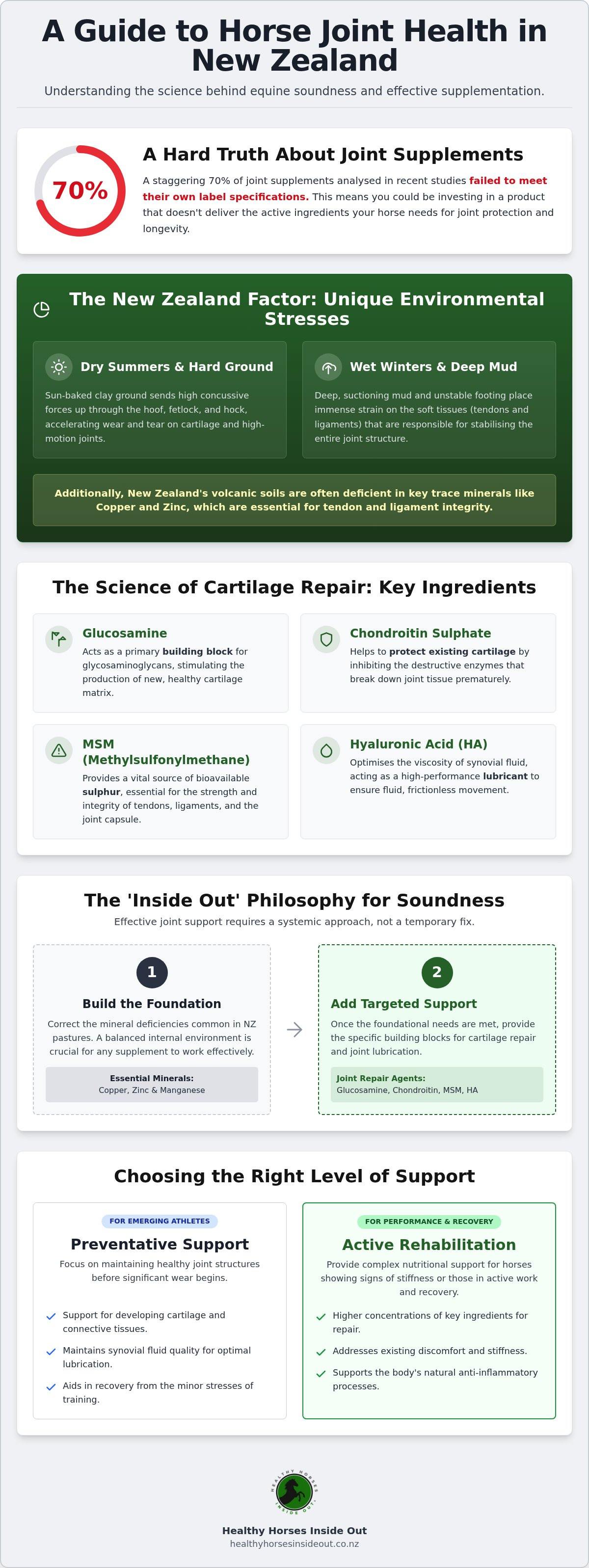
Did you know that a staggering 70% of joint supplements analysed in recent studies failed to meet their own label specifications? This isn't just a waste of your hard-earned money; it's a missed opportunity to protect your horse's longevity. When searching for a horse joint supplement NZ owners often find themselves staring at complex ingredient lists that promise the world but deliver very little. It's incredibly frustrating to watch your horse struggle with seasonal stiffness or a loss of fluid movement, especially when you've invested in what you thought was a premium solution.
We understand that you want more than a quick fix; you want the peace of mind that comes from evidence-based wellness. This guide will strip away the marketing jargon to show you exactly how to identify bioavailable ingredients that actually reach the joint capsule. We'll explore the biological mechanisms of equine mobility, the specific impact of New Zealand's unique soil profiles, and how to build a foundational nutritional base that supports long-term performance from the inside out.
Key Takeaways
- Understand how New Zealand's varied terrain, from sun-baked summer clay to deep winter mud, accelerates joint wear and affects synovial fluid function.
- Identify the essential biological building blocks, such as MSM and Chondroitin, required to support the structural integrity of the proteoglycan matrix.
- Learn how to select the most effective horse joint supplement NZ for your horse by evaluating their current mineral intake and specific performance demands.
- Discover the "Inside Out" approach to soundness, where foundational mineral balance provides the necessary environment for targeted joint repair agents to work.
- Gain the confidence to distinguish between preventative support for emerging athletes and the complex nutritional requirements of horses in active rehabilitation.
Understanding Joint Stress in the New Zealand Paddock Environment
Cartilage is the smooth, resilient connective tissue that caps the ends of bones within a joint, acting as a vital shock absorber. Working in tandem with synovial fluid, which serves as a hydraulic lubricant, it allows for the frictionless movement we admire in a sound horse. In a healthy state, the rate of tissue wear and biological repair remains in a steady equilibrium. However, when the mechanical load exceeds the body's capacity to regenerate these structures, the joint environment begins to degrade. This isn't just a concern for older horses; the biological reality of wear begins with the very first stride of a performance career.
New Zealand paddocks present a unique set of physical challenges that accelerate this process. During our dry summers, the ground often bakes into unforgiving clay, sending significant concussive forces up through the hoof and into the fetlock and hock. Conversely, deep winter mud creates suction and unstable footing, placing immense strain on the soft tissues that stabilise the joint. Before a horse is visibly lame, they often communicate discomfort through subtle cues. You might notice a slight reluctance to move forward, a shortened stride, or heat around a joint after exercise. For those seeking a comprehensive overview of equine lameness, identifying these early indicators is the first step in proactive management.
Concussion and Climate: The NZ Factor
Repetitive impact on hard ground specifically targets the high-motion joints. Many owners believe a purely pasture-based diet provides everything a horse needs for repair, but this is a common myth. While grass provides calories, New Zealand's volcanic soils are notoriously deficient in trace minerals like Copper and Zinc, which are essential for the integrity of tendons and ligaments. Seasonal shifts also play a role; cold weather can cause joint fluid to thicken, leading to that familiar stiffness during the initial stages of a ride. Year-round support is necessary to maintain the elasticity of these tissues regardless of the weather.
The Foundational Mineral Connection
Effective joint support doesn't start with a temporary "quick fix" solution. It requires a systemic approach. A high-quality horse joint supplement NZ will only perform at its peak if the horse's internal environment is balanced first. Manganese and Copper are non-negotiable for the synthesis of the joint matrix and the production of collagen. Without these minerals, the body simply doesn't have the tools to rebuild what the environment has worn down.
This is why we advocate for an "Inside Out" philosophy. HHIO Pellets are designed to provide a foundational mineral base that corrects the deficiencies inherent in our local pastures. By ensuring the horse has a steady supply of bioavailable minerals, we provide the necessary environment for targeted joint repair agents to work effectively. It's about moving away from treating symptoms and toward supporting the fundamental biological processes that keep a horse moving freely.
The Science of Cartilage Repair: Key Ingredients to Look For
To truly support equine mobility, we must look beyond marketing claims and understand the biological architecture of the joint. Cartilage is not a static substance; it is a living matrix of collagen and proteoglycans that requires constant maintenance. Glucosamine and Chondroitin Sulphate are often the first names you will see on a horse joint supplement NZ label. These compounds act as the primary building blocks for glycosaminoglycans, the molecules that give cartilage its "bounce" and structural resilience. While Glucosamine stimulates the production of new matrix, Chondroitin works to inhibit the enzymes that prematurely break down existing cartilage tissue.
MSM (Methylsulfonylmethane) provides a vital source of bioavailable sulphur. This element is essential for the cross-linking of collagen fibres, effectively acting as the structural glue that maintains the strength of tendons, ligaments, and the joint capsule itself. Without sufficient sulphur, the repair process remains incomplete, leading to weakened connective tissues. Hyaluronic Acid (HA) serves a different but equally critical role by optimising the viscosity of synovial fluid. Think of HA as a high-performance lubricant that reduces friction between the articulating surfaces of the bone, ensuring that movement remains fluid and comfortable even under the pressure of work.
Inflammation is the silent driver of joint degradation. When a joint is stressed, it produces oxidative by-products that damage healthy cells. Integrating powerful antioxidants like Vitamin E and Selenium helps to neutralise these free radicals, preventing a cycle of chronic inflammation. If you are looking to refine your horse's diet, exploring our range of specific horse supplements can help you identify the targeted nutrients required to manage these internal stressors effectively.
Bioavailability: Why Quality Matters More Than Quantity
Many owners make the mistake of choosing products based on the highest milligram count, but high numbers mean very little if the horse cannot process the ingredient. Low-grade fillers and large, poorly refined molecules often pass straight through the digestive tract. Bioavailability refers to the proportion of a nutrient that enters the horse's systemic circulation after ingestion, directly determining the efficacy of equine joint repair through targeted absorption rates. To ensure your horse joint supplement NZ is actually working, look for pharmaceutical-grade ingredients that specify their molecular weight or source, as these are far more likely to reach the joint capsule where they are needed.
Synergy in the Feed Bowl
Collagen synthesis does not happen in a vacuum. It requires catalysts like Vitamin C and specific trace minerals to convert raw amino acids into functional tissue. This is why multi-ingredient formulations often outperform single-nutrient supplements; the presence of one nutrient often unlocks the potential of another. Managing systemic inflammation also involves balancing fatty acids. Optimising the ratio of Omega-3 to Omega-6 fatty acids in the daily ration provides a natural anti-inflammatory effect that supports the work of your joint-specific nutrients, creating a comprehensive internal environment for long-term soundness.
Comparing Joint Support Options: From Preventative to Performance
Selecting the right horse joint supplement NZ for your team requires a clear assessment of their current workload and life stage. A young horse entering work for the first time has vastly different biological requirements compared to a retired paddock veteran. For the youngster, the goal is preventative; we want to provide the structural precursors like Glucosamine before the repetitive strain of training begins to outpace the body's natural repair mechanisms. In contrast, supporting an older horse is about maintaining comfort and preserving existing mobility through targeted anti-inflammatories and high-viscosity lubricants.
Performance horses face a unique challenge. High-intensity exercise increases oxidative stress, which can lead to systemic inflammation if not managed through nutrition. These athletes require a comprehensive approach that layers biological repair agents on top of a robust mineral base. Choosing a horse joint supplement NZ that addresses both structural integrity and the inflammatory response is essential for protecting their long-term career and ensuring they remain comfortable through a demanding season.
Matching Supplement to Workload
Low-impact horses, such as those in light hacking or occasional work, often thrive on a diet focused on foundational minerals and a low dose of MSM to support connective tissue elasticity. As the intensity of work increases to moderate or high levels, the joint environment requires more intensive support. This is where full-spectrum ingredients, including Hyaluronic Acid and Chondroitin, become necessary to manage the increased wear on the cartilage surface. For elite athletes, you can find more specialised advice in our guide to performance horse supplements NZ.
Pellets vs. Powders: Practical Considerations
In New Zealand, many of our horses live outdoors year-round, which makes feeding logistics a primary concern for owners. Powders can be difficult to manage in a paddock-fed scenario, often blowing away in the wind or sifting to the bottom of the bucket where they are left behind. Palatability is another factor; some horses are naturally suspicious of concentrated powders. Using integrated horse pellets NZ offers a more reliable solution, as they are generally more palatable and ensure a consistent dosage even when feeding in groups. Pellets simplify the daily routine while ensuring your horse actually receives the nutrients you've paid for.
How to Choose the Right Joint Supplement for Your Horse
Selecting a horse joint supplement NZ requires a methodical approach that prioritises your horse's specific biological needs over flashy packaging. Before you add a new tub to your feed room, you must assess the foundational diet. As we discussed in the opening section, joint repair is physically impossible if there are significant mineral gaps in the daily ration. If your horse lacks the basic trace minerals required for collagen synthesis, even the most expensive joint formula will struggle to produce visible results. It is about ensuring the internal machinery has the fuel it needs to process the high-level ingredients you are about to introduce.
Your horse's age and clinical history should dictate the intensity of the support you provide. A five year old show jumper with no history of injury might only require preventative maintenance to protect against future wear. Conversely, a senior horse showing early signs of stiffness or a performance athlete returning from a tendon strain needs a more aggressive, multi-action approach. You must decide if your primary goal is to preserve existing cartilage or to manage the acute symptoms of an existing condition. This distinction prevents you from over-supplementing a healthy horse or under-supporting one in need.
While many owners feel comfortable managing nutrition independently, consulting with a professional is often the most cost-effective path. An equine nutritionist or your veterinarian can help you interpret subtle changes in movement that might otherwise go unnoticed. If you're unsure where to begin your horse's nutritional journey, you can explore our specific horse supplements to find a formula tailored to their unique workload and life stage.
The Checklist for Savvy Owners
To simplify the selection process, we recommend focusing on transparency and long-term value rather than the initial purchase price. Keep these points in mind when evaluating a horse joint supplement NZ:
- Independent Lab Testing: A study of six popular products found that over 70% did not meet their own label specifications for active ingredients. Always look for brands that provide evidence of quality control.
- Avoid 'Proprietary Blends': These terms are often used to hide the fact that a product contains high levels of cheap fillers and only trace amounts of expensive actives like Hyaluronic Acid.
- Analyse Cost-Per-Day: A large, inexpensive tub that requires four scoops a day is often far more expensive over a month than a concentrated, high-quality formula that requires only one.
Managing Expectations and Timelines
Biological repair is not an overnight event. While some anti-inflammatory effects might be visible within a week, the structural repair of cartilage and the optimisation of synovial fluid typically take four to six weeks of consistent supplementation. Most clinical-grade joint supports require an initial 'loading dose' for the first 10 to 14 days. This higher concentration helps to saturate the tissues and jump-start the repair process before you move to a more sustainable maintenance level.
Consistency is the key to achieving a successful outcome. We recommend performing regular soundness checks at home, such as observing your horse's movement on a circle or monitoring their ease of movement when getting up from a roll. These objective observations will give you the science-backed confidence that your nutritional choices are truly protecting your horse's longevity and performance career.
Supporting Soundness from the Inside Out with HHIO
At Healthy Horses Inside Out (HHIO), we believe that true mobility isn't something that can be achieved through isolated, high-dose additives alone. Our philosophy is rooted in the "Inside Out" approach, where we prioritise the whole horse's systemic health as the primary driver of external performance. By choosing a horse joint supplement NZ that integrates seamlessly with a balanced mineral base, you're not just masking a symptom; you're providing the biological environment required for genuine structural repair. This methodical perspective ensures that every ingredient serves a purpose, working in harmony with the horse's natural physiology.
Our science-led approach is specifically tailored to the New Zealand equestrian community. We understand that our unique volcanic soils and varied paddock conditions require more than generic horse joint supplement NZ options that fail to account for local deficiencies. HHIO Pellets provide the essential mineral foundation, correcting the pasture gaps we've highlighted throughout this guide. When you layer our targeted joint support on top of this foundation, you ensure that the building blocks like Glucosamine and MSM are actually utilised by the body rather than wasted.
The HHIO Joint Support Difference
Integrity is at the heart of our formulations. We're committed to using high-bioavailability ingredients sourced with absolute transparency, ensuring that what's on the label is what ends up in the feed bowl. We also recognise that mobility requirements shift as a horse matures. Whether you're managing a performance athlete or looking for senior horse supplements NZ owners can trust, our range provides the specific ratios required for each life stage. Our products aren't just designed for horses; they're designed for horses grazing New Zealand pastures, reflecting our deep roots in local nutritional science.
Getting Started with a Methodical Plan
Improving your horse's mobility journey starts with a clear, logical strategy. For many owners, the most effective way to address both foundational and targeted needs is through our horse supplement bundle deals NZ, which are curated to provide comprehensive support at every level of work. We invite you to use our nutritional resources to refine your feeding routine, moving away from "quick fix" fillers and toward evidence-based wellness. By taking this proactive step, you're investing in your horse's comfort, longevity, and future success.
Explore our range of science-led joint support today.
Securing Your Horse's Long-Term Soundness
Protecting your horse's mobility requires a transition from reactive treatments to proactive, science-led nutrition. We've established that a successful strategy begins with correcting the mineral deficiencies inherent in New Zealand pastures, providing the essential environment for joint repair agents to function. By prioritising high-bioavailability ingredients and avoiding the "proprietary blends" that often hide low-grade fillers, you ensure your investment translates into visible comfort and fluid movement. Choosing the most effective horse joint supplement NZ is about understanding these biological mechanisms and matching them to your horse's specific workload and life stage.
HHIO offers transparent, science-led formulations designed specifically for the unique conditions faced by New Zealand horses. Our products are trusted by performance riders across the country because they deliver results without hidden compromises. When you choose a partner committed to nutritional integrity, you gain the confidence that your horse's longevity is at the forefront of every scoop. Optimise your horse's mobility with HHIO's science-led joint support. We're here to help you navigate this journey with a methodical plan that puts your horse's welfare first.
Frequently Asked Questions
How do I know if my horse actually needs a joint supplement?
You can identify the need for a joint supplement by observing subtle changes in your horse's movement or behaviour. Watch for a shortened stride, reluctance to engage the hindquarters, or a general stiffness that wasn't there previously. These early indicators often appear long before clinical lameness, suggesting that the joint's natural repair cycle is struggling to keep pace with the workload.
Can a joint supplement help a horse that is already lame?
While a supplement can support the biological repair of cartilage and improve synovial fluid viscosity, it isn't a replacement for veterinary care in acute cases. For a horse that is already lame, these nutrients provide the structural building blocks to aid recovery and improve comfort. They work best as part of a managed rehabilitation plan rather than a standalone cure for structural damage.
Is it safe to give joint supplements to a horse with laminitis or EMS?
Most high-quality joint supports are safe for metabolic horses, provided they don't contain hidden sugar or starch-based fillers. Our philosophy prioritises pure, bioavailable ingredients that won't trigger an insulin response. Always check the label of a horse joint supplement NZ to ensure it's free from molasses or grain-based carriers that could complicate laminitis management.
What is the best age to start my horse on joint support?
The ideal time to begin joint support is before significant wear occurs, typically as a horse enters a consistent training regime around four or five years of age. Starting early provides the proteoglycan matrix with the precursors it needs to withstand the concussive forces of work. It’s far more effective to preserve healthy cartilage than it is to attempt to repair degraded tissue later in life.
Can I feed a joint supplement alongside my current mineral mix?
Feeding a joint supplement alongside a balanced mineral base is actually the most effective way to ensure results. Joint repair agents require trace minerals like Copper and Zinc as catalysts for collagen synthesis. Using HHIO Pellets provides the necessary foundation, allowing your horse joint supplement NZ to perform at its peak by ensuring the body has the secondary tools required for tissue repair.
Do joint supplements for horses have side effects?
Side effects are extremely rare when using pharmaceutical-grade ingredients, though some horses with sensitive digestive systems may experience mild gastric upset if a new product is introduced too rapidly. We recommend a gradual introduction over five to seven days to allow the gut microbiome to adjust. Choosing supplements with transparent ingredient lists reduces the risk of reactions to hidden additives or low-quality fillers.
How long will one tub of supplement typically last for a 500kg horse?
A standard tub of concentrated joint support typically lasts between 30 and 60 days for a 500kg horse on a maintenance dose. This duration varies based on whether the horse is in an initial loading phase or requiring higher performance-level support. Always calculate the cost-per-day based on the weight of active ingredients rather than the total volume of the container to determine true value.
Why should I choose an NZ-made joint supplement over an imported brand?
NZ-made supplements are formulated specifically to address the unique mineral deficiencies found in our local volcanic soils. Imported brands often follow generic global formulas that don't account for the low Copper, Zinc, and Selenium levels common in New Zealand paddocks. Choosing a local product ensures the nutrient ratios are optimised for the specific environmental stressors your horse faces every day.


