

In the rolling green paddocks across New Zealand, what appears to be a nutritional paradise is often a biological minefield for the grazing horse. While our landscapes are world-renowned, the geological reality of our soil means that horse selenium deficiency NZ remains one of the most prevalent yet misunderstood health challenges for local owners. It’s a frustrating paradox; you want to protect your horse from the muscle soreness and poor coat quality associated with low intake, yet the pervasive fear of selenium toxicity makes every scoop of supplement feel like a high-stakes gamble.
You shouldn't have to choose between a deficiency and a disaster. This guide provides the clinical clarity you need to bridge that gap, offering a science-led approach to managing your horse’s trace element health with absolute precision. We'll examine the specific biological markers of deficiency, explain why "fortified" feeds might still leave your horse's requirements unmet, and show you how to implement a safe, foundational mineral strategy that fosters resilient muscle function and lasting immunity.
Key Takeaways
- Learn why New Zealand’s unique volcanic and sedimentary soils lead to widespread horse selenium deficiency NZ and how this impacts foundational health.
- Identify visible symptoms of deficiency, including poor muscle recovery, chronic stiffness, and increased susceptibility to common infections.
- Gain the knowledge to navigate the narrow safety margin between essential selenium intake and the risks of chronic toxicity or selenosis.
- Master a practical two-step audit of your current feeding regime to calculate total daily mineral intake with clinical precision.
- Understand how HHIO Pellets provide a safe, evidence-based nutritional baseline to support long-term wellness and peace of mind.
What is Selenium and Why is Deficiency Common in NZ?
Selenium isn't just another mineral; it's a critical component of the equine antioxidant system. This essential trace element acts as a catalyst for enzymes that neutralise free radicals, preventing oxidative damage to cellular structures throughout the body. In many parts of the world, horses obtain sufficient levels through their forage, but the situation is markedly different for owners managing a horse selenium deficiency NZ. Our country's unique geological history has created a landscape where the soil simply cannot provide what the horse requires for optimal physiological health.
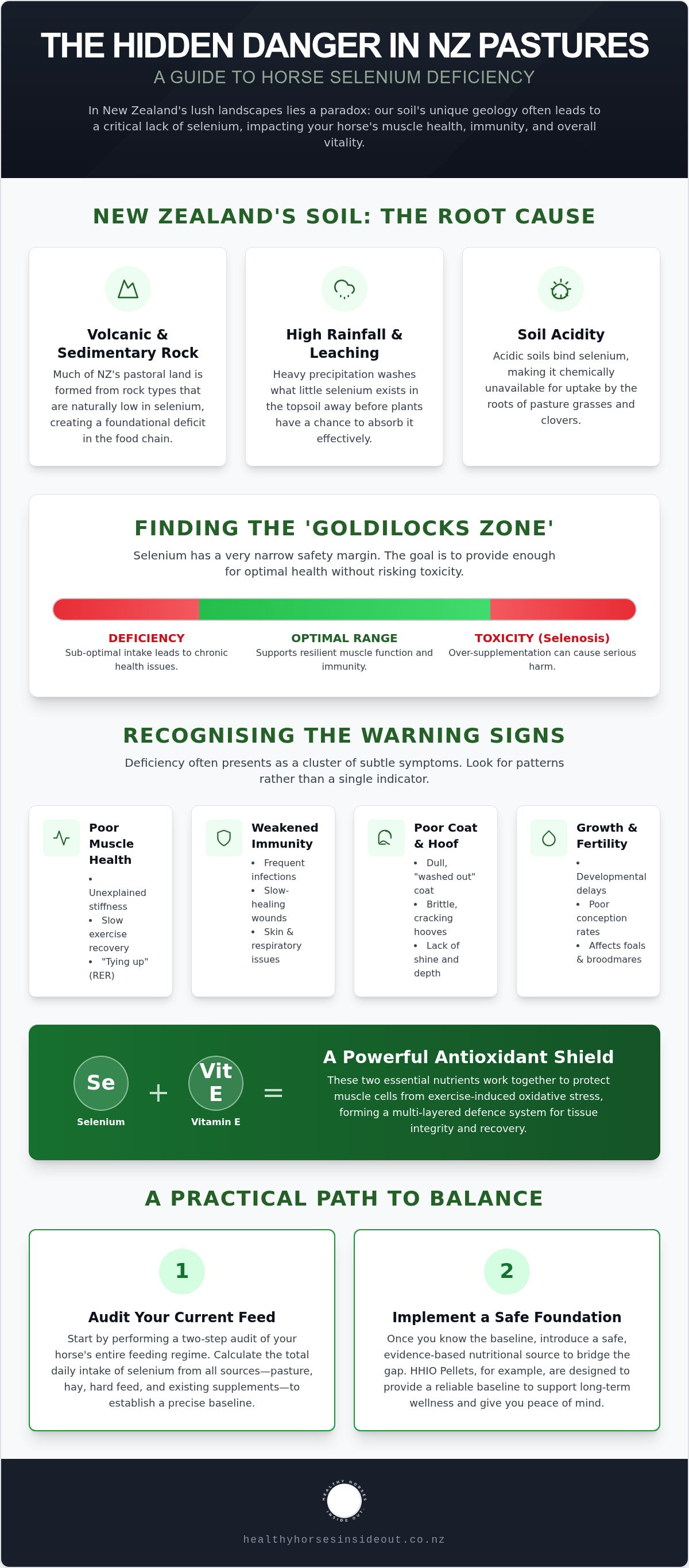
New Zealand's landmass is relatively young in geological terms. Much of our pastoral land is composed of volcanic ash or sedimentary rock, both of which are naturally low in selenium. Even if a paddock looks lush and vibrant, the grass is often a "hollow" calorie source regarding trace elements. This is why selenium deficiency is a systemic issue across both the North and South Islands, rather than a localised concern. Without intervention, the biological cost of this environmental void is paid by the horse's internal systems, specifically impacting thyroid function and metabolic regulation.
The Geological Reality of New Zealand Soil
High rainfall and soil acidity further complicate this mineral void. In regions with heavy precipitation, what little selenium exists in the topsoil is frequently leached away before plants can absorb it. Additionally, acidic soils tend to bind selenium, making it chemically unavailable to the roots of rye grasses and clovers. Many owners believe that "spelling" a paddock or rotating stock will allow the land to recover its mineral profile, but you cannot rest a paddock back to health if the foundational elements were never there to begin with. From the volcanic plateaus of the Waikato to the sedimentary plains of Canterbury, almost no region is truly "safe" from low environmental levels.
Selenium as a Trace Element
The distinction between "trace" and "macro" minerals is one of scale, yet the biological impact is immense. While macro minerals like calcium are measured in grams, selenium is required in mere milligrams. Despite this tiny requirement, it's the primary building block for glutathione peroxidase, an enzyme that patrols the body to destroy harmful peroxides. Selenium functions as a robust biological shield that preserves the integrity of muscle cell membranes against the rigours of exercise and metabolic stress. Without this microscopic support, the horse’s internal environment becomes vulnerable to systemic inflammation and cellular breakdown, making a horse selenium deficiency NZ a significant barrier to performance and recovery.
Recognising the Symptoms of Horse Selenium Deficiency
Identifying the symptoms of horse selenium deficiency NZ requires a keen eye for detail, as the signs frequently masquerade as general fatigue or "off" days. While acute cases are dramatic, most New Zealand horses suffer from a chronic, low-level lack of this trace element. This deficiency manifests across multiple biological systems, from the structural integrity of the hoof wall to the complex pathways of the immune system. When the body's antioxidant capacity is compromised, the first signs are often visible in the horse's outward appearance and willingness to work.
Owners should monitor for a cluster of symptoms rather than a single indicator. Common red flags include:
- Muscle health: Prolonged recovery times after exercise, unexplained stiffness, or the clinical "tying up" associated with muscle fibre breakdown.
- Immune compromise: A horse that seems to "catch everything," showing increased susceptibility to skin infections, respiratory issues, or slow-healing wounds.
- Coat and hoof quality: Brittle hoof walls with horizontal cracks and a "washed out" coat colour that lacks depth and shine despite adequate grooming.
- Growth and fertility: Developmental delays in young stock and disappointing conception rates in broodmares.
The Muscle-Antioxidant Connection
Muscles are high-performance engines that generate significant oxidative stress during exercise. Selenium provides the necessary "cleanup crew" to neutralise these by-products before they damage cell membranes. This process is highly dependent on the synergy between selenium and Vitamin E; these two nutrients work together to provide a multi-layered defence for muscle tissue. Without this partnership, muscle fibres sustain microscopic damage that leads to chronic soreness. For horses struggling with recurrent health issues, an equine immune support supplement NZ can help fortify their natural defences and improve resilience.
Subclinical vs. Clinical Deficiency
Many owners encounter the "poor doer," a horse that simply fails to thrive despite receiving adequate calories. This is the hallmark of subclinical horse selenium deficiency NZ. These horses don't necessarily show the extreme signs described in the selenium toxicity in horses literature, but their internal systems are operating at a constant deficit. While a retired horse might simply look unthrifty, a performance horse will experience a noticeable drop in power and stamina. Supporting these internal mechanisms is the first step toward visible vitality. Ensuring your horse receives a balanced mineral profile through Everyday Horse Supplements can provide the foundational support needed to reverse these subtle signs of decline.
Deficiency vs. Toxicity: Finding the Goldilocks Zone
Managing selenium is a delicate balancing act because this mineral possesses the narrowest safety margin of any trace element in the equine diet. While we rightly focus on the risks of horse selenium deficiency NZ, it's vital to understand that the distance between a therapeutic dose and a toxic one is remarkably small. This "Goldilocks Zone" is where the horse’s antioxidant pathways are fully supported without overtaxing the liver or compromising structural tissues. When it comes to trace minerals, the "more is better" philosophy isn't just incorrect; it's potentially life-threatening.
Excessive selenium intake leads to a condition known as selenosis, which can occur in two forms. Acute toxicity is often the result of a significant dosing error, such as a concentrated injection or a massive mixing mistake in a feed mill. Chronic toxicity, however, is more insidious. It develops over weeks or months of slightly excessive intake, often because an owner is unknowingly "stacking" nutrients. If you are feeding a fortified pellet alongside a multi-vitamin and a specific selenium powder, you might be pushing your horse toward a toxic threshold. The most harrowing signs of chronic selenosis include the loss of mane and tail hair, followed by the horizontal cracking and eventual sloughing of the hoof wall.
Symptoms Comparison: Low vs. High
Distinguishing between the two extremes can be confusing because both can impact the horse's movement and hoof health. A horse suffering from a horse selenium deficiency NZ typically presents with soft tissue issues: muscle soreness, poor recovery, and a general lack of stamina. In contrast, a horse with toxicity often shows structural breakdown. You might notice distinct rings around the hoof wall or a brittle, "cheesy" quality to the horn. While deficiency makes a horse feel flat and stiff, toxicity often causes acute lameness as the internal structures of the hoof begin to lose their integrity. Both states are detrimental, but their biological origins are opposites.
The Role of Blood Testing
Relying on guesswork is a risk no horse owner should take. A blood test is the only fair dinkum way to determine your horse's actual status. When reviewing results with your vet, it's important to differentiate between Plasma Selenium and Whole Blood Selenium. Plasma levels reflect the selenium currently circulating from recent meals, providing a snapshot of immediate intake. Whole Blood Selenium measures the amount stored within the red blood cells, offering a more accurate picture of the horse's status over the previous three to four months. Organising an annual blood test, ideally before the spring flush or when changing your primary feed source, ensures your supplementation remains evidence-based and safe.
Practical Management: Balancing Selenium in the NZ Diet
Moving from clinical theory to paddock-side application requires a methodical approach to the feed room. Managing a horse selenium deficiency NZ isn't about adding more products to the bucket; it's about calculating the total contribution of every element in the diet to ensure the horse remains within the safe, therapeutic window. This process begins with a comprehensive audit of your current hard feed. You must look beyond the marketing claims on the front of the bag and examine the nutritional analysis, specifically looking for the "mg/kg" of selenium. By multiplying this number by the weight of the feed provided daily, you can establish your horse's baseline intake before any additional powders or licks are considered.
Once you have established the baseline from your hard feed, you must account for all other sources, including multi-vitamin pellets, salt licks, and concentrated additives. This cumulative total is what determines whether your horse is protected or at risk. It is also the ideal time to factor in Vitamin E. Because selenium and Vitamin E work in tandem to neutralise oxidative stress, a deficiency in one often mimics a deficiency in the other. Ensuring your supplement provides these necessary co-factors is essential for achieving the muscle resilience and immune function discussed in previous sections. Choosing a high-quality daily mineral base, such as HHIO Pellets, ensures this mineral delivery is consistent and scientifically balanced every single day.
Managing the Grass-Fed Horse
For horses on a grass-only diet, mineral intervention is almost always a physiological necessity in New Zealand. While forage is the natural foundation of the diet, our young soils lack the elemental depth to sustain a horse in work. Many owners rely on "free choice" licks to bridge this gap, but this method is notoriously unreliable. Some horses will over-consume due to the salt or molasses content, while others may ignore the block entirely, leaving them vulnerable to a horse selenium deficiency NZ. For a deeper look at managing these environmental variables, refer to The Ultimate Guide to Everyday Horse Supplements for New Zealand Conditions.
Choosing Safe Supplements
The form of selenium you choose significantly impacts how well it is utilised by the horse's body. Organic selenium, often listed as selenium yeast or selenomethionine, is generally better absorbed and stored in the tissues compared to inorganic forms like sodium selenite. Precision is the final piece of the management puzzle. Using a digital scale or a standardised scoop ensures that you are delivering the exact milligram dose required. In a high-deficiency environment, "one size fits all" blocks can be misleading; they often provide enough to prevent acute disease but not enough to support optimal systemic health. By moving toward a measured, daily mineral strategy, you replace guesswork with the peace of mind that comes from evidence-based wellness.
The HHIO Approach: Foundational Nutrition for Peace of Mind
At Healthy Horses Inside Out, we believe that true vitality is not achieved through reactive measures or the desperate addition of "quick fix" products when symptoms finally surface. Instead, we advocate for a philosophy of intentionality, where health is fostered from the internal environment outward. Managing a horse selenium deficiency NZ requires more than just filling a nutritional gap; it requires a systemic understanding of how trace elements interact to support long-term metabolic and structural wellness. By prioritising Everyday Horse Supplements as a foundational preventative strategy, we help owners move away from the anxiety of deficiency and toward the confidence of evidence-based care.
Our approach is built on the principle that nutritional support should be both precise and accessible. We recognise that the New Zealand equine diet is uniquely challenged by our young soils, making consistent mineral delivery a non-negotiable requirement for the modern horse owner. Our Horse Supplement Bundles, such as the Everyday Care Bundle, are designed to simplify these complex nutritional ratios, ensuring that your horse receives a scientifically balanced profile that respects the narrow safety margins of elements like selenium. This methodical mentor role is at the heart of what we do, empowering you to make informed decisions that promote lasting equine health.
HHIO Pellets: The Safe Mineral Base
HHIO Pellets are engineered specifically for New Zealand conditions, serving as a reliable nutritional anchor that takes the guesswork out of the feed bucket. Unlike powders that can sift to the bottom of the bin or be sorted by finicky eaters, the pelletised form ensures every horse receives their exact required dose in every meal. We focus on highly bioavailable minerals that are easily assimilated by the horse’s digestive system, supporting our "inside out" philosophy. By providing a safe, consistent baseline, these pellets allow the horse's internal antioxidant pathways to function at their peak, protecting muscle tissue and supporting a robust immune response without the risk of accidental over-supplementation.
The Peace of Mind in Precision
When you provide a balanced mineral profile from the start, you significantly reduce the need for specific, high-dose supplements later in the horse's life. Precision in the daily diet creates a state of physiological equilibrium, where the body has the resources it needs to repair and defend itself against oxidative stress. Our team is dedicated to helping you understand your horse's unique requirements, providing the expert support needed to navigate the complexities of trace element health. For those seeking the Best Horse Supplements New Zealand has to offer, the HHIO range provides a science-led pathway to optimal equine vitality and lasting peace of mind.
Empowering Your Horse with Evidence-Based Wellness
Understanding the geological reality of our soil and the narrow safety margins of trace elements is the first step toward genuine equine wellness. By moving away from guesswork and adopting a calculated, daily mineral strategy, you protect your horse from the systemic risks of both deficiency and toxicity. Addressing a horse selenium deficiency NZ isn't just about adding another scoop to the bucket; it's about establishing a reliable, science-led foundation that supports muscle function and immunity from the inside out.
Our methodical, science-led formulations are specifically tailored to bridge the mineral voids found in NZ pastures, providing the precision your horse needs to thrive. Many owners already trust our approach to deliver the bioavailable nutrients required for lasting vitality. Secure your horse's foundational health with HHIO Pellets and experience the peace of mind that comes from intentional nutrition. We're here to guide you toward a future of vibrant health for your equine partner.
Frequently Asked Questions
How much selenium does a horse need per day in New Zealand?
An average 500kg horse in New Zealand typically requires between 1mg and 3mg of selenium daily, depending on their workload and physiological state. While the minimum maintenance requirement is often cited at 1mg, performance horses or broodmares may require slightly higher levels to support their increased metabolic demands. It's essential to calculate the total intake from all sources to ensure you remain within this safe range.
Can I give my horse too much selenium if I use a fortified feed?
Yes, it's entirely possible to exceed safe limits if you are "stacking" fortified feeds with additional supplements or mineral blocks. Many commercial pellets already contain the maximum safe daily dose for a horse selenium deficiency NZ; therefore, adding a concentrated powder on top can quickly lead to chronic toxicity. Always audit your feed labels to ensure the cumulative "mg/kg" across all products doesn't push your horse into the danger zone.
What are the first signs of selenium toxicity in horses?
The earliest visible indicators of chronic selenium toxicity, or selenosis, usually involve the structural integrity of the hair and hooves. You might notice thinning or breakage at the base of the mane and tail, followed by the appearance of distinct horizontal rings or cracks around the hoof wall. In severe cases, the hoof wall may even begin to separate or "slough" at the coronary band, which is a significant veterinary emergency.
Is selenium deficiency the same as Vitamin E deficiency?
No, they are distinct nutrients, but they are biologically inseparable in their function as antioxidants. While selenium is a trace mineral that builds the glutathione peroxidase enzyme, Vitamin E is a fat-soluble vitamin that protects cell membranes directly. Because they work in tandem to neutralise free radicals, the symptoms of a deficiency in one often look identical to the other, which is why they are typically supplemented together for better results.
How long does it take to fix a selenium deficiency in a horse?
Restoring optimal selenium levels is a gradual process that usually takes between three and four months. This timeline is dictated by the life cycle of red blood cells, as Whole Blood Selenium tests measure the mineral stored within these cells. While you might see subtle improvements in coat quality or energy within a few weeks, it takes consistent, measured supplementation to fully stabilise the horse's internal antioxidant reserves.
Do I need to test my horse's blood before starting a selenium supplement?
Testing is highly recommended because of the exceptionally narrow safety margin between a healthy dose and a toxic one. Without a baseline blood test, you are essentially guessing your horse's status in an environment where over-supplementation can be just as damaging as a horse selenium deficiency NZ. A Whole Blood Selenium test provides the clinical data needed to tailor your mineral strategy with absolute precision and peace of mind.
Is it better to use an injection or a daily oral supplement for selenium?
Daily oral supplementation is generally considered safer and more effective than periodic injections for long-term health. Injections can cause a sudden, sharp spike in blood levels that may lean toward toxicity, whereas a daily mineral base like HHIO Pellets provides a steady, controlled intake that mimics natural grazing. This consistent delivery supports the body's antioxidant pathways without the metabolic "rollercoaster" associated with high-dose, infrequent interventions.
Can selenium deficiency cause my horse to be grumpy or sore to brush?
Yes, a lack of selenium often manifests as generalised muscle soreness, which can make a horse sensitive to touch or "girthy" during grooming. When the body cannot neutralise the oxidative by-products of movement, the muscles remain in a state of chronic inflammation and tension. This physical discomfort frequently leads to behavioural changes, such as irritability or a reluctance to move forward under saddle, which often resolves once the mineral void is filled.


