What if your horse's reactive behaviour and crumbling hooves aren't separate management headaches, but outward symptoms of the exact same digestive imbalance? When grazing rich seasonal ryegrass and clover, even the hardiest equines can struggle with subclinical hindgut disturbance. That is why supplementing with quality brewer's yeast for horses NZ owners rely on has become such a valued feeding strategy, delivering dual-action nutrition through functional B-vitamins above and prebiotic fibre fermentation below.
If you have struggled with spooky reactivity or brittle hoof horn despite careful trimming and care, you aren't alone; New Zealand pasture dynamics present distinct, ongoing metabolic challenges. In this complete guide, you will discover how brewer's yeast supports digestion, hooves, and behaviour under demanding grazing conditions. We clarify the physiological differences between live probiotics and deactivated postbiotics, detail safe daily feeding rates tailored to equine workload, and show you how prioritising systemic hindgut balance fosters genuine, long-term vitality through Healthy Horses Inside Out.
Key Takeaways
Deactivated brewer's yeast functions as a nutrient-dense prebiotic and postbiotic, supplying bioavailable B-complex vitamins and essential amino acids to support optimal equine metabolism.
Supplementing with quality brewer's yeast for horses NZ owners graze on lush rye and clover helps buffer against rapid pasture sugar fermentation and soothe gut-related behavioural tension.
Targeted hindgut support enhances microbial fibre digestion, significantly improving feed conversion efficiency from daily pasture and forage.
The natural combination of organic biotin, sulfur amino acids, and trace minerals reinforces keratinisation, promoting resilient hoof walls and lasting coat vitality.
Accurate, workload-based feeding rates paired with a gradual introductory transition safeguard delicate hindgut microflora during dietary changes.
What Is Brewer's Yeast and What Does It Provide Horses?
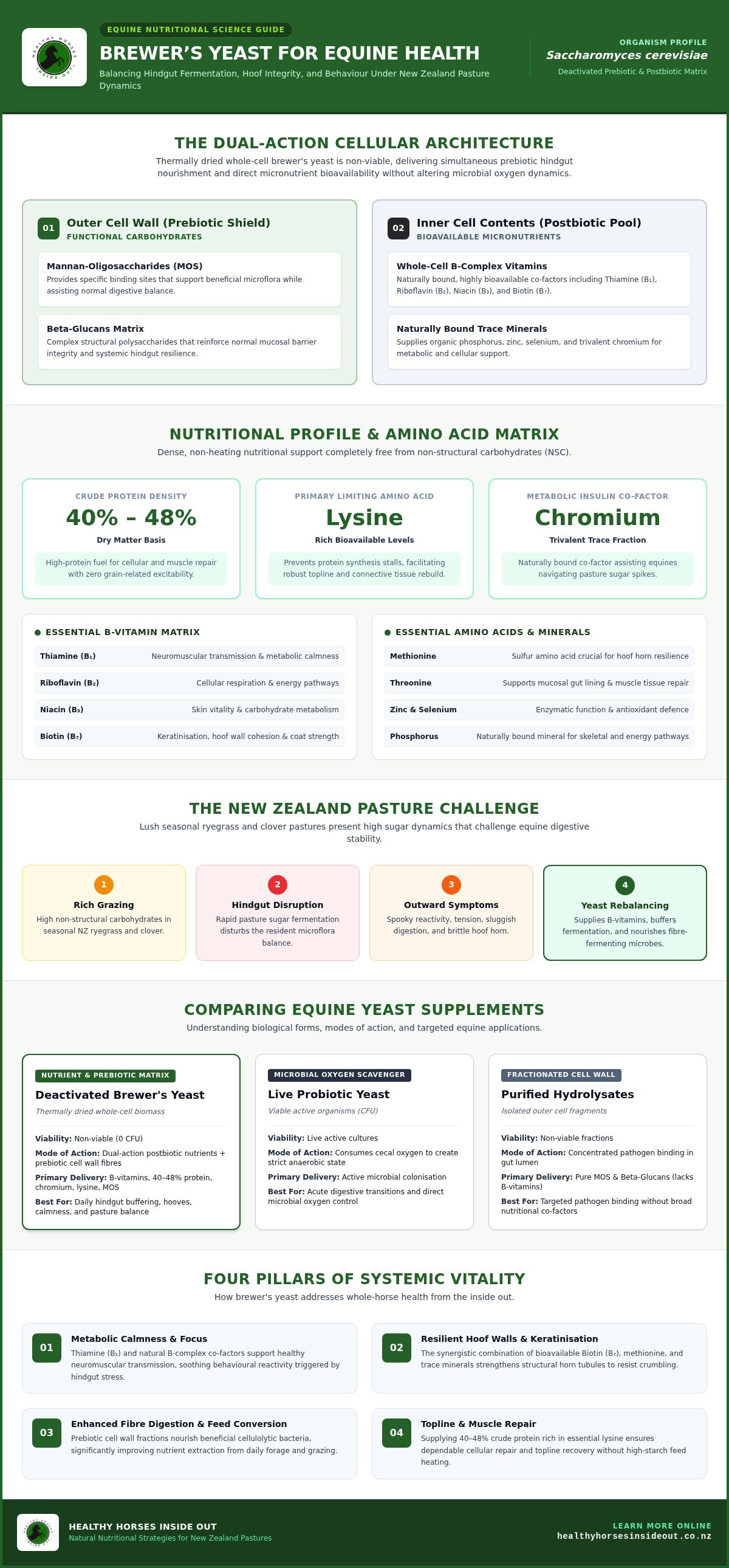
Brewer's yeast is the deactivated cellular biomass of the microscopic fungus Saccharomyces cerevisiae, generated either as a co-product of brewing or cultivated specifically through primary fermentation. Unlike living yeasts that colonise the digestive tract, quality brewer's yeast is thermally dried, rendering the cells non-viable. This turns it into an exceptional prebiotic and postbiotic matrix. Rather than acting as a simple bulk filler, feeding brewer's yeast for horses NZ owners rely on delivers a distinct dual action: the outer yeast cell wall provides mannan-oligosaccharides (MOS) and beta-glucans to support beneficial hindgut microbes, while the interior releases an array of readily absorbed micronutrients directly to the horse.
The Nutritional Breakdown: B-Vitamins and Minerals
Healthy hindgut microbes synthesise B-vitamins naturally, but this internal production falters when pasture imbalances disturb the digestive environment. Brewer's yeast supplies a rich external matrix of natural B-complex vitamins, helping bridge this nutritional gap. Thiamine ($B_1$) plays a major role in neuromuscular transmission and metabolic calmness, while riboflavin ($B_2$), niacin ($B_3$), and biotin ($B_7$) support cellular respiration, skin vitality, and keratin formation.
The mineral fraction is equally valuable. Brewer's yeast delivers naturally bound phosphorus, zinc, selenium, and trivalent chromium. Chromium acts as a vital cofactor for insulin function, assisting horses that navigate the metabolic spikes of sugar-rich grazing. When reviewing dietary labels, understanding horse supplement ingredients NZ equestrians encounter highlights how whole-cell nutrient matrices outperform synthetic, isolated vitamin powders.
Protein and Amino Acids for Cellular Repair
Beyond its micronutrient density, dried brewer's yeast delivers an exceptional 40% to 48% crude protein on a dry matter basis. Because this protein is naturally free from non-structural carbohydrates, it provides safe, non-heating fuel for muscle repair. It won't trigger the erratic behaviour often caused by high-grain rations.
Lysine remains the primary limiting amino acid in equine nutrition; if your horse's diet lacks adequate lysine, protein synthesis stalls across every body system. Brewer's yeast provides rich levels of bioavailable lysine alongside sulfur-containing methionine and threonine. Adding targeted brewer's yeast for horses NZ pastures support ensures reliable topline development, resilient connective tissue repair, and rapid recovery from exercise.
Comparing Equine Yeast Supplements: Brewer's Yeast vs Live Yeast vs Hydrolysates
Equine supplement labels often throw around the word "yeast" without clarifying which biological form sits in the bag. Not all yeast preparations function the same way inside your horse. Choosing the right form of brewer's yeast for horses NZ pastures challenge requires understanding whether your horse needs whole-cell metabolic nourishment, microbial oxygen scavenging, or targeted pathogen defence. Sourcing also influences daily intake; primary cultivated yeasts offer clean, consistent palatability, whereas unrefined brewery by-product slurries can carry lingering bitterness from hops that fussy eaters routinely reject.
Deactivated Brewer's Yeast vs Live Probiotic Yeasts
Live probiotic yeasts consist of viable, active cells measured in colony-forming units (CFU). Within the cecum and colon, these active organisms consume trace oxygen to foster strict anaerobic conditions, supporting beneficial bacteria when rich pasture sugars reach the digestive tract. In contrast, deactivated brewer's yeast contains no live organisms. It functions as a shelf-stable postbiotic nutrient pool and fermentable prebiotic. While live cultures alter oxygen dynamics, brewer's yeast delivers immediate nutritional co-factors to nourish the resident microflora. Reading more about prebiotics for horses NZ equestrians use explains how feeding these non-viable cellular structures supports long-term digestive stability.
Whole Yeast vs Isolated Prebiotic Cell Walls
Purified hydrolysates focus exclusively on the yeast cell wall, concentrating mannan-oligosaccharides (MOS) and beta-glucans. These specialised fractions excel at physically binding pathogenic bacteria and specific dietary toxins, carrying them safely out in manure without adding dietary protein. Whole brewer's yeast, however, retains both the cell wall and the nutrient-dense internal cytoplasm. This complete matrix delivers non-heating amino acids and B-complex vitamins while stabilising the equine hindgut microbiome during pasture shifts.
For owners seeking an economical, all-round dietary foundation, selecting a dedicated brewer's yeast for horses NZ formula delivers whole-body support across coat, hooves, and digestion. If you want to refine your daily feeding strategy against seasonal pasture changes, exploring foundational options from Healthy Horses Inside Out offers a practical, science-led starting point.
Why New Zealand Pasture Challenges Warrant Brewer's Yeast
New Zealand grazing conditions are unique. Most paddocks rely heavily on high-sugar perennial ryegrass and vigorous white clover, varieties originally developed for rapid livestock weight gain rather than equine digestive physiology. During warm, sunny days paired with cool nights, pasture grasses accumulate massive surges of non-structural carbohydrates (NSCs), including simple sugars and fructans. When a grazing horse consumes more soluble sugar than the small intestine can digest enzymatically, this carbohydrate excess spills directly into the caecum and colon. Incorporating quality brewer's yeast for horses NZ equestrians manage on these pastures provides a dependable buffer against this seasonal volatility.
Buffering Hindgut pH and Balancing Microflora
Once undigested fructans reach the hindgut, opportunistic amylolytic bacteria ferment them rapidly, producing excessive lactic acid. This process drops the hindgut pH, creating an acidic state known as subclinical hindgut acidosis. Under these acidic conditions, beneficial fibre-digesting microbes perish, releasing inflammatory endotoxins across the intestinal wall.
Brewer's yeast acts as a functional prebiotic shield during these shifts. Its cell-wall components supply tailored nutrition that nourishes native cellulolytic bacteria, helping them thrive despite fluctuating forage sugars. Supporting these beneficial microbes helps maintain an optimal anaerobic fermentation environment, heading off gut dysbiosis before it translates into loose droppings, girthiness, or unexplained weight loss.
Mitigating 'Grass-Affected' Behaviour and Tension
Many local riders are intimately familiar with "grass-affected" behaviour. When seasonal pasture flushes arrive, calm horses can suddenly become hypersensitive, reactive, or physically tense under saddle. This shift is rarely behavioural stubbornness; it reflects a direct signal from the gut-brain axis. Hindgut cramping and systemic inflammation trigger continuous low-grade physical distress, priming the equine nervous system for flight.
The dense thiamine ($B_1$) and complete B-complex profile in brewer's yeast for horses NZ pastures affect directly supports balanced peripheral nerve transmission. Simultaneously, stabilising the microbial population relieves the gut-ache driving that reactivity. Pairing brewer's yeast with balanced everyday horse supplements creates a comprehensive pasture-management routine, helping your horse stay comfortable, focused, and steady throughout the seasons.
Key Benefits of Brewer's Yeast: Digestion, Hooves, and Coat Vitality
Visible vitality in an equine athlete is never merely skin-deep; a lustrous coat and resilient hooves reflect balanced internal metabolism. By optimising nutrient breakdown in the digestive tract, supplementing with high-specification brewer's yeast for horses NZ equestrians care for produces measurable dividends across physical condition, structural soundness, and immune resilience.
Optimising Fibre Digestion and Body Condition
Because horses evolved as hindgut fermenters, their ability to extract energy depends on microbial efficiency. Peer-reviewed research demonstrates that supplementing equine diets with Saccharomyces cerevisiae derivatives can improve neutral detergent fibre (NDF) and acid detergent fibre (ADF) digestibility by 8% to 15%. This cellulolytic activity generates abundant volatile fatty acids, supplying cool, sustained energy without the metabolic risks of heavy grain meals. Veteran horses, hard keepers, and working horses facing chilly winter pasture benefit significantly from this heightened feed conversion.
Promoting Hoof Quality from the Inside Out
Topical hoof dressings cannot repair horn tissue that was structurally deficient at the coronary band. Hoof horn generation, or keratinisation, demands a constant biological supply of sulfur-containing amino acids, notably methionine and cystine, paired with bioavailable trace minerals and B-vitamins. Brewer's yeast delivers this exact synergy naturally. Daily supplementation encourages the growth of a dense, pliable hoof wall that resists crumbling in wet New Zealand paddock conditions. For horses in demanding work, combining hoof nutrition with a science-backed horse joint supplement NZ riders trust provides comprehensive skeletal and structural support.
Immune Function and Systemic Vitality
A substantial portion of the equine immune system resides in the digestive tract within gut-associated lymphoid tissue (GALT). The beta-glucans present in yeast cell walls actively interact with these mucosal immune cells, priming macrophage activity to defend against opportunistic pathogens. This immune modulation provides valuable support when horses face seasonal stressors, routine anthelmintic treatments, or prolonged wet weather that challenges natural skin barrier resistance.
How to Feed Brewer's Yeast: Dosages, Safety, and Supplement Integration
Integrating a new nutritional component into your feed bucket demands method and patience. The equine hindgut is an extraordinarily sensitive fermentation vat, populated by delicate colonies of microbes that react to sudden dietary changes. Establishing an accurate baseline when feeding brewer's yeast for horses NZ owners graze requires matching daily grams directly to bodyweight, seasonal workload, and the mineral profile of your wider ration.
Step-by-Step Introduction and Feeding Rates
Because pure brewer's yeast possesses a robust, savoury aroma, introduce it gradually over 7 to 10 days to ensure voluntary intake. Begin with a modest pinch (around 5 grams) mixed thoroughly into a damp carrier feed, beet pulp, or chaff before building toward target levels. Standard daily guidelines include:
Ponies (200-350 kg): 10 g to 20 g per day (approximately 1 to 2 tablespoons).
Standard adult horses (450-550 kg at maintenance or light work): 30 g to 50 g per day (approximately 2 to 4 tablespoons).
Performance horses, lactating mares, or post-stress recovery: 50 g to 60 g per day, ideally split across morning and evening feeds.
Look for improved manure consistency, calmer focus under saddle, and deeper coat bloom over 30 to 60 days of consistent feeding.
Metabolic and Laminitic Suitability Considerations
Pure, deactivated brewer's yeast is inherently low in non-structural carbohydrates, containing no simple sugars or starches. This clean profile makes it an exceptionally safe option for horses managing Equine Metabolic Syndrome (EMS), Pituitary Pars Intermedia Dysfunction (PPID), or recurrent laminitis. Always verify that your source contains pure yeast without hidden molasses or grain by-products designed to mask poor-quality raw materials.
Attention must also be paid to overall mineral balance. Brewer's yeast naturally contains more phosphorus than calcium. If your horse grazes phosphorus-heavy subtropical grasses or receives unfortified grain bran, ensure the total diet provides supplementary calcium to maintain an ideal 2:1 calcium-to-phosphorus ratio. For a comprehensive look at balancing your horse's unique seasonal profile, read our guide on what supplements does my horse need NZ. Incorporating brewer's yeast for horses NZ pastures challenge into complete, balanced everyday horse supplements or foundational HHIO Pellets ensures all trace minerals and amino acids work in perfect harmony.
Transform Hindgut Health for Lasting Equine Vitality
Sustained performance and calm behaviour begin deep within the equine digestive system. Implementing high-specification brewer's yeast for horses NZ owners manage provides an evidence-based foundation, buffering against volatile ryegrass flushes while delivering bioavailable amino acids and natural B-complex vitamins. By nourishing native cellulolytic bacteria, you unlock superior fibre fermentation, transforming daily forage intake into calm energy, pliable hoof walls, and systemic resilience.
True vitality is never achieved through quick fixes or superficial topicals; it requires an intentional approach that respects your horse's biological wiring. When you stabilise internal fermentation, physical comfort and outward shine follow naturally. Ready to give your horse the digestive security they deserve? Explore our targeted horse supplements at Healthy Horses Inside Out to discover science-led formulas designed specifically for New Zealand pasture dynamics.
Frequently Asked Questions
Is brewer's yeast safe for horses prone to laminitis or equine metabolic syndrome?
Yes, pure brewer's yeast is exceptionally safe for laminitic and metabolic equines because it contains negligible non-structural carbohydrates. It provides quality protein and amino acids without spiking blood glucose or insulin levels. The natural presence of trivalent chromium also assists normal insulin signalling, helping horses utilise circulating glucose more efficiently while they graze strictly managed pastures.
Can I feed brewer's yeast alongside everyday horse supplements and mineral balancers?
Yes, you can readily combine it with balanced everyday horse supplements, specific horse supplements, or foundational HHIO Pellets. Whole brewer's yeast acts as a functional prebiotic food rather than an isolated mineral mega-dose, so it integrates smoothly into wider dietary routines. Just check that your total feeding plan maintains correct trace mineral ratios tailored to New Zealand soil profiles.
How quickly will I notice improvements in my horse's digestion and coat condition?
Digestive improvements often appear within seven to fourteen days as hindgut microbes respond to prebiotic metabolites, resulting in firmer, more consistent droppings. Changes in coat shine, skin suppleness, and muscular topline generally become evident after four to six weeks. Hoof wall strength takes longer, requiring four to eight months of consistent growth from the coronary band downward.
What is the difference between brewer's yeast and baker's yeast for horses?
While both originate from Saccharomyces cerevisiae, they undergo completely different production methods and serve distinct biological purposes. Baker's yeast consists of active, living cells designed to generate carbon dioxide gas rapidly for dough leavening. Brewer's yeast is thermally deactivated, meaning the cells cannot ferment sugars internally; it functions safely as a dense postbiotic nutrient and prebiotic fibre source.
Will brewer's yeast make my horse excitable or hot in behaviour?
No, pure brewer's yeast does not cause hot or erratic behaviour. It contains zero quick-release starches and provides calm, sustained energy by improving hindgut fibre digestion. In fact, supplementing quality brewer's yeast for horses NZ riders manage often promotes a calmer demeanor, as natural thiamine and balanced hindgut fermentation soothe the digestive tension that frequently triggers spookiness.
Do horses require additional calcium when fed brewer's yeast daily?
It depends on your overall forage base, but monitoring calcium intake is good practice because brewer's yeast naturally contains more phosphorus than calcium. If your horse grazes standard ryegrass-clover pasture or consumes Lucerne, existing calcium levels are usually ample to offset a standard 30 to 50-gram daily dose. Horses on unfortified cereal grains or straight grass chaff may need an added calcium source to preserve an ideal 2:1 ratio.
How should I store brewer's yeast in damp New Zealand conditions?
Store your yeast in an airtight, food-grade plastic container placed in a cool, vermin-proof feed room out of direct sunlight. New Zealand's humid spring and autumn weather can cause open bags of dried brewer's yeast for horses NZ stockists supply to draw moisture from the air. Keeping the seal tight prevents clumping, spoilage, and oxidation, preserving vital B-complex vitamins right through to the bottom of the tub.