

What if a horse’s unsettled behaviour points to something other than magnesium? It’s understandable to look for a nutritional explanation when behaviour or performance changes, and magnesium for horses nz is a common search for owners weighing up possible support. But behaviour alone can’t show whether a horse is getting enough of this mineral, which contributes to normal muscle and nerve function.
The more useful starting point is the whole ration. Pasture, hay and hard feed all contribute nutrients, so adding a supplement without reviewing them together could duplicate intake or affect the balance of the diet. A measured approach can help you make decisions with greater confidence, without relying on promises of a quick fix.
This guide explains magnesium’s role, what to gather when assessing your horse’s daily feed, and when a supplement may be worth discussing with your veterinarian. You’ll also learn how to consider the ration as a whole before making a change, so your next step is practical, evidence-informed and suited to your horse.
Key Takeaways
- Learn what magnesium contributes to normal body function, and why behaviour alone can’t confirm a deficiency.
- Build a clear picture of intake by recording pasture, hay, hard feed and existing supplements together.
- For magnesium for horses nz decisions, compare declared elemental magnesium, serving directions and other ingredients, not just scoop size.
- Use a practical checklist to assess feed information, seek qualified advice and review any changes thoughtfully.
- Explore everyday and specific supplements, bundles and HHIO Pellets with whole-ration needs in mind.
Magnesium for horses in NZ: what it does and what it can tell you
Magnesium is an essential mineral that horses need in their diet to support normal body processes. It contributes to the function of many enzymes and has roles in energy metabolism, nerve signalling, muscle function and bone. These roles matter, but they don’t mean extra magnesium will automatically make a horse calmer, improve performance or resolve a health concern.
Magnesium is required for normal function, but that alone doesn’t show that a horse needs a supplement. The decision depends on the horse’s total intake and circumstances, not a single behaviour or ingredient on a feed label. A general overview of horse nutrition helps put any one mineral in context: nutrients from the whole diet work together.
For horses in New Zealand, the ration may include grazed pasture, hay or other conserved forage, hard feed and existing supplements. Their contribution depends on what the horse eats and the nutrient information available for those feeds. Forage composition can vary, so a pasture-based diet doesn’t reveal the horse’s magnesium intake on its own. The individual horse and its workload also inform the overall feeding picture, but neither is a reason to assume a deficiency.
What role does magnesium play in a horse’s body?
Magnesium participates in ordinary physiological processes, including enzyme activity and the use of energy within cells. It also supports normal nerve and muscle function. These are essential roles, not evidence that a supplement will change temperament or improve performance. For a useful assessment, consider magnesium alongside the entire ration rather than treating it as a stand-alone solution.
Can behaviour show that a horse needs magnesium?
Tension or excitability can prompt questions about nutrition, but behaviour has many possible influences. Management, health, workload and the surrounding environment all matter. A behaviour change alone cannot confirm magnesium deficiency, so avoid diagnosing from a label or matching one visible sign to a particular mineral.
Instead, note what you observe and when it occurs. A simple record can include changes in routine, work, feed, turnout and the behaviour itself. Patterns may give you and your equine veterinarian a more useful starting point, especially if the change persists or comes with other health concerns. Discuss ongoing changes with your veterinarian rather than using supplementation as a test or treatment.
That distinction is central to magnesium for horses nz decisions: first understand what the horse is eating and what has changed, then consider whether the ration warrants a closer nutritional review. Pasture, hay, hard feed, workload and the horse’s individual circumstances all belong in that conversation. The aim isn’t to rule out magnesium, but to avoid treating a possibility as a diagnosis before the full picture is clear.
How NZ pasture, hay, and hard feed shape magnesium intake
A horse’s magnesium intake comes from the complete ration, not one feed in isolation. Pasture, hay or other conserved forage, hard feed and supplements can each contribute nutrients. The amount the horse actually eats matters too. Access to a paddock doesn’t tell you how much forage is consumed, particularly if grazing time, pasture availability or management changes.
There isn’t one magnesium figure that applies to every New Zealand paddock or hay supply. Season, pasture maturity, plant mix, harvest and feed source can all influence forage composition. Storage can affect feed condition and palatability, which may in turn affect how much a horse eats. Green, abundant pasture isn’t a mineral analysis, and the appearance of hay can’t reliably reveal its magnesium content.
Why pasture and conserved forage need individual assessment
National feeding information can provide useful context, but it can’t establish the mineral content of an individual paddock or a particular batch of hay. Forage analysis may help when a substantial share of the ration comes from a consistent source or when a feeding decision depends on better nutrient information. Use a representative sample and follow the laboratory’s sampling instructions. A result describes only the material sampled, not every feed the horse receives.
Research into local feeding practices, including Kentucky Equine Research on NZ horse feeding, offers useful context for thinking about pasture-based diets, but it doesn’t replace assessing your own horse’s feeds. For broader background on soil minerals, the New Zealand soil mineral deficiency guide can help explain why local context matters. It doesn’t prove that an individual horse is deficient in magnesium.
Build a clear picture of the whole ration
Before considering a change, write down what the horse is offered and what it actually consumes. Include:
- Pasture access, including turnout patterns and any changes in grazing.
- Hay or other conserved forage, with its source and approximate amount fed.
- Hard feed, including the product label and the amount given.
- Every supplement, balancer or fortified feed currently in the ration.
Then check labels for overlapping ingredients. A hard feed and a separate supplement may both contribute the same minerals, while a product’s name or front-of-pack claims won’t show the full nutrient picture. The horse supplement ingredients guide can help you read ingredient information carefully. Note any gaps in feed details rather than filling them with assumptions, and share the ration record with a qualified equine nutrition professional or veterinarian if you need help interpreting it.
This inventory is a practical first step for magnesium for horses nz decisions. Once you’ve mapped the ration, you can have a more informed discussion about whether a targeted change is appropriate. Healthy Horses Inside Out’s supplement range includes everyday and specific supplements, bundles and HHIO Pellets. Consider any option in the context of the whole ration.
How to compare magnesium supplements for horses without being misled
Compare the information on the label, not the size of the tub or the strength of its claims. A larger scoop or heavier product doesn’t automatically provide more elemental magnesium, the amount of magnesium itself. A product may contain a magnesium compound alongside other ingredients, so its total weight and its magnesium contribution aren’t interchangeable.
For a fair comparison, set up a simple table with one column for each product and rows for:
- Magnesium source or form: Record the compound named on the label.
- Declared elemental magnesium: Note the amount per stated serving, if provided, and the units used.
- Serving directions: Record the recommended serving and any directions relevant to your horse.
- Other ingredients: List additional minerals and active ingredients that could contribute to the ration.
What should a horse owner check on a magnesium label?
Start with the ingredient list and analytical or nutrient information. Look for the magnesium source and a declared amount of elemental magnesium. Check what that amount refers to: a serving, a daily feed amount or another measure. Keep the serving directions beside it, since comparing figures based on different serving sizes can give a misleading impression. If the label gives only the weight of a magnesium compound, don’t treat that as the weight of elemental magnesium.
Include every other listed mineral and active ingredient in your comparison. A product may contribute more to the ration than its magnesium source alone suggests, particularly if you’re already feeding fortified hard feed or another supplement. Marketing terms and a prominent ingredient name don’t establish that a product suits your horse’s needs.
Do different magnesium forms mean different results?
Labels may name different magnesium compounds, but the form alone doesn’t prove that one product will be more suitable or deliver a particular behavioural or performance outcome. Avoid ranking forms on broad marketing claims unless reliable, directly relevant equine evidence supports the comparison. The declared elemental amount, directions, other ingredients and fit with the existing ration all matter.
Practical considerations count too. A horse must willingly eat the feed for the intended serving to be consumed, and the product’s intended use should make sense for the decision you’re considering. If key label information is unclear, don’t guess at a dose or assume a bigger serving is better. Discuss the label and the full ration with your veterinarian or a qualified equine nutrition professional.
For magnesium for horses nz comparisons, use the table to organise label facts, not to diagnose a deficiency or choose a supplement in isolation. Compare the potential contribution with the horse’s forage, hard feed and existing supplements, then seek appropriate advice before changing the ration. Healthy Horses Inside Out offers everyday and specific horse supplements, bundles and HHIO Pellets. Its equine supplement range can be considered as part of a thoughtful feeding plan.
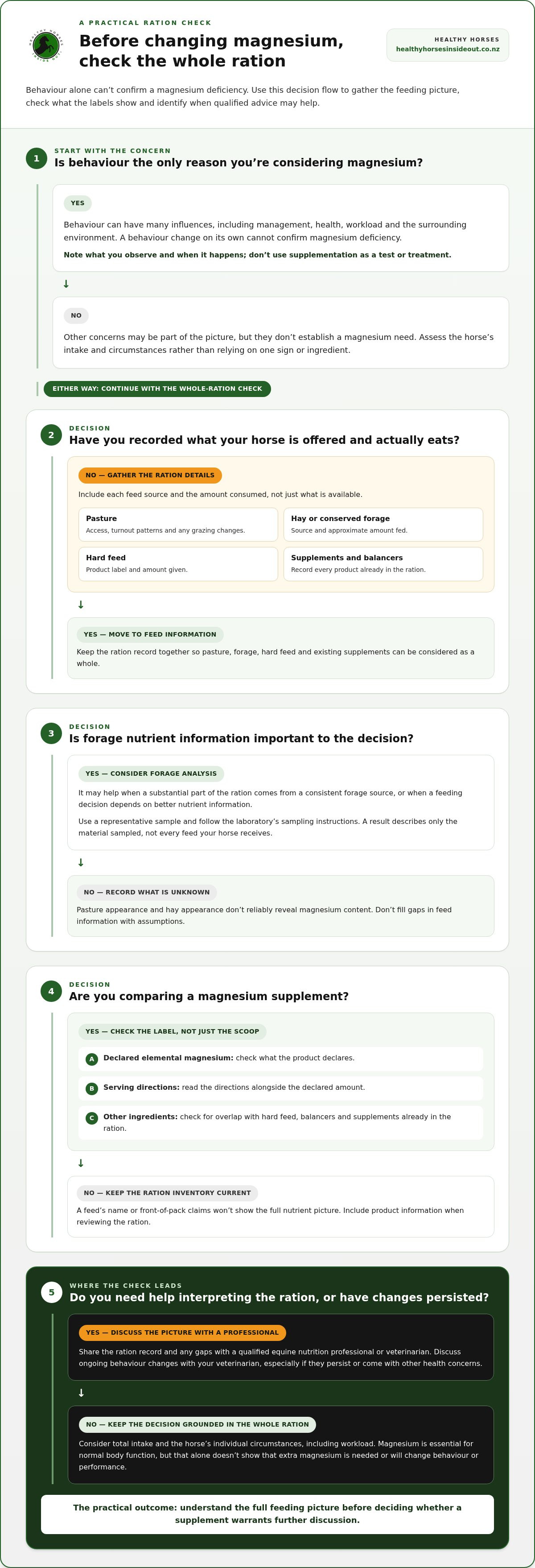
A practical NZ checklist before changing your horse’s magnesium intake
A clear process helps turn concern into a considered feeding decision. Before changing magnesium intake, gather the relevant information, review what it tells you, involve the right professional and monitor the result. This makes it easier to spot overlapping nutrients and avoids changing several parts of the ration at once.
- Record the current ration. Note pasture access, forage, hard feed and every supplement, including product names, label details and amounts fed.
- Assess the available feed information. Gather product labels and any relevant forage or feed analysis. Don’t estimate mineral levels from the look of pasture or hay.
- Seek qualified advice. Share the ration and your concerns with an equine veterinarian or qualified equine nutrition professional, particularly before adding a targeted mineral supplement.
- Make and review one considered change. If a change is recommended, follow the product directions and professional guidance, keep a record, and assess what happens over time.
What information should you gather first?
Make the record specific enough to be useful. Write down where forage comes from, what type it is, how much is offered, and any available analysis. Add the hard-feed label and the name and serving amount of each supplement. Note changes in paddock access, routine or management that might help explain a shift in the horse’s condition or behaviour.
Include the horse’s age, workload, body condition and relevant veterinary history. These details help a professional consider the diet in context rather than judging one ingredient in isolation. A guide to choosing horse supplements in NZ can also help you think through what information to weigh before deciding whether a supplement is appropriate.
How should you review a change to the ration?
Keep other feeding and management routines as consistent as practical while you observe the horse. Record the date of the change, what was adjusted, whether the horse accepted the feed, and any relevant changes in health, behaviour or work. This won’t prove cause and effect, but a clear record is more useful than relying on memory or changing several things at once.
Don’t create a universal dose or exceed label directions in pursuit of a particular result. Follow professional guidance, and contact your veterinarian if concerning signs persist, worsen or are accompanied by other health changes. A supplement shouldn’t delay an assessment of a horse that seems unwell.
For magnesium for horses nz decisions, this checklist puts the whole ration and the individual horse first. Once you’ve gathered the details, Healthy Horses Inside Out’s equine supplements can be considered as part of a measured feeding plan, alongside appropriate professional advice.
A balanced approach to magnesium and horse supplements in NZ
The soundest decision about magnesium starts with the ration, not a product. Pasture, hay, hard feed and existing supplements all contribute to what a horse consumes, while the horse’s own circumstances shape what may be appropriate. If the available information doesn’t point to a specific nutritional need, adding another mineral may not be the right next step.
That doesn’t mean a targeted supplement is never useful. Its role should be considered in relation to the whole feeding plan, rather than chosen because of a single behaviour, an appealing label claim or a general assumption about New Zealand pasture.
When might a targeted supplement fit into the feeding plan?
A targeted product may be worth discussing when a review of the horse’s ration identifies a nutritional need that the current feeds don’t adequately address. That review should account for forage and feed information, serving amounts and nutrients already supplied by other products. If the horse has ongoing health or behaviour changes, involve an equine veterinarian rather than treating supplementation as a diagnostic trial.
A careful review might lead to leaving the ration as it is, adjusting an existing feed, or considering a targeted supplement with professional input. The appropriate choice depends on the individual horse and the quality of the information available. No label or ingredient alone can establish that supplementation will change behaviour, muscle function or performance.
Explore a considered approach to everyday horse nutrition
Healthy Horses Inside Out offers everyday and specific horse supplements, supplement bundles and HHIO Pellets for horse owners across New Zealand. These products are part of a broader approach to equine nutrition, not a substitute for assessing what an individual horse already eats. Consider any product in the context of its ingredients, feeding directions and place in the full ration.
Keep your feed records together and use them to guide a conversation with your veterinarian or a qualified equine nutrition professional. That way, a choice about magnesium for horses nz is based on the horse’s actual feeding picture, not a promise of a quick fix. A measured decision can bring greater clarity, whether the best plan is to make a change or keep the current ration steady.
To explore everyday and specific supplements, bundles and HHIO Pellets as part of an informed feeding plan, visit Healthy Horses Inside Out.
Make your next feeding decision with confidence
You don’t need to make a change simply because magnesium has come to mind. For magnesium for horses nz decisions, a useful next step may be to pause, gather the information you have and discuss any uncertainty with your equine veterinarian. Keeping the ration unchanged can be just as considered as adding a supplement.
Healthy Horses Inside Out is a New Zealand business serving horse owners nationally, with everyday and specific horse supplements, bundles and HHIO Pellets. Let your horse’s needs guide your choices rather than the promise of a quick fix. Explore Healthy Horses Inside Out’s range of horse supplements and pellets as part of a considered approach to nutrition.
Frequently Asked Questions
Is magnesium supplementation safe for horses?
It can be appropriate when the amount and product suit the horse, but a supplement isn’t automatically safe just because magnesium is an essential nutrient. Check the label and consider the horse’s full daily intake, including fortified feeds and other supplements. Don’t combine products or exceed serving directions without professional guidance. If your horse has a health condition or takes medication, discuss a proposed addition with your veterinarian first.
Can magnesium calm a nervous horse?
There’s no strong scientific evidence that giving magnesium beyond a horse’s nutritional requirement has a calming effect. A nervous response might relate to pain, training, handling, workload or a change in surroundings, so a supplement shouldn’t replace looking for the cause. Note when the behaviour occurs and whether anything else has changed. If it’s persistent, sudden or concerning, speak with your veterinarian rather than trying extra magnesium as a test.
How much magnesium does a horse need each day?
There isn’t one daily amount that suits every horse. Requirements depend on factors such as body size and life stage, while the amount already provided by forage and hard feed affects how much more, if any, is needed. For a useful estimate, gather feed labels and available analysis, then ask an equine nutrition professional or veterinarian to assess the complete diet. Avoid using a supplement scoop size as a measure of need.
What happens if a horse gets too much magnesium?
More isn’t necessarily better. A high supplemental intake may make the ration less balanced, particularly if other minerals are also added without checking existing feeds. Some forms may also be poorly tolerated at excessive amounts. If you think your horse has consumed more than directed, contact your veterinarian for advice and have the product label and estimated amount to hand. Don’t wait for symptoms before seeking guidance.
What is the best form of magnesium for horses?
No single form can be called best for every horse based on a label alone. Products differ in their magnesium source, declared elemental amount, serving directions and additional ingredients. A practical choice depends on what the horse’s diet needs and what it will reliably eat. Ask a qualified adviser to compare the product’s contribution with the existing ration, rather than choosing by marketing claims or product weight.
Can pasture provide enough magnesium for a horse in New Zealand?
It may contribute substantially, but pasture alone can’t confirm whether an individual horse’s intake is adequate. Mineral content varies between paddocks and over time, and grazing access doesn’t show exactly how much the horse consumes. For example, a horse moved to a different paddock may be eating forage with a different nutrient profile. Use representative feed information where available and assess the rest of the ration before deciding whether to add magnesium.
Should I give magnesium to my horse every day?
Only give a daily supplement if it fits the horse’s assessed needs and the product directions or professional advice support that routine. Daily use isn’t automatically necessary simply because magnesium is essential. Before starting, check whether another feed already supplies it and decide how you’ll keep the routine consistent. If the reason for supplementation is a new or ongoing health or behaviour concern, discuss that concern with your veterinarian first.


