

What if the tonics traditionally fed to boost equine stamina are quietly working against your horse's systemic health? Many dedicated owners rightly ask: can a horse have too much iron? The scientific answer is an unequivocal yes. While traditional lore often promotes iron supplements for vitality, true equine iron deficiency is extraordinarily rare because standard forage easily exceeds the 400 mg daily requirement for a 500 kg horse. If you feel frustrated by stubborn bleached coats or brittle hooves despite feeding daily supplements, you are certainly not alone.
In this guide, you will discover the physiological impact of dietary overload, uncover how excess iron blocks vital zinc and copper absorption, and learn how to interpret pasture analysis with confidence. We'll explore the cellular mechanics of equine iron metabolism, identify the physical symptoms of trace mineral antagonism, and outline how to safely balance your horse's daily ration for foundational, long-term health.
Key Takeaways
- When asking can a horse have too much iron, the answer is grounded in equine evolution: horses lack an active excretion pathway, meaning excess intake accumulates within internal tissues.
- Chronic dietary overload fuels cellular oxidative stress, which frequently manifests externally as bleached coat tips, reddish mane ends, and brittle hoof walls.
- Surplus dietary iron triggers competitive mineral antagonism in the gut, effectively blocking the uptake of vital zinc and copper.
- Reliable pasture and hay assessment demands wet chemistry testing to accurately distinguish plant-incorporated minerals from insoluble surface soil contamination.
- Rebalancing your horse's ration requires auditing feeds to eliminate added ferrous compounds while prioritising balanced, bioavailable copper and zinc supplementation.
Can a Horse Have Too Much Iron? The Biological Reality
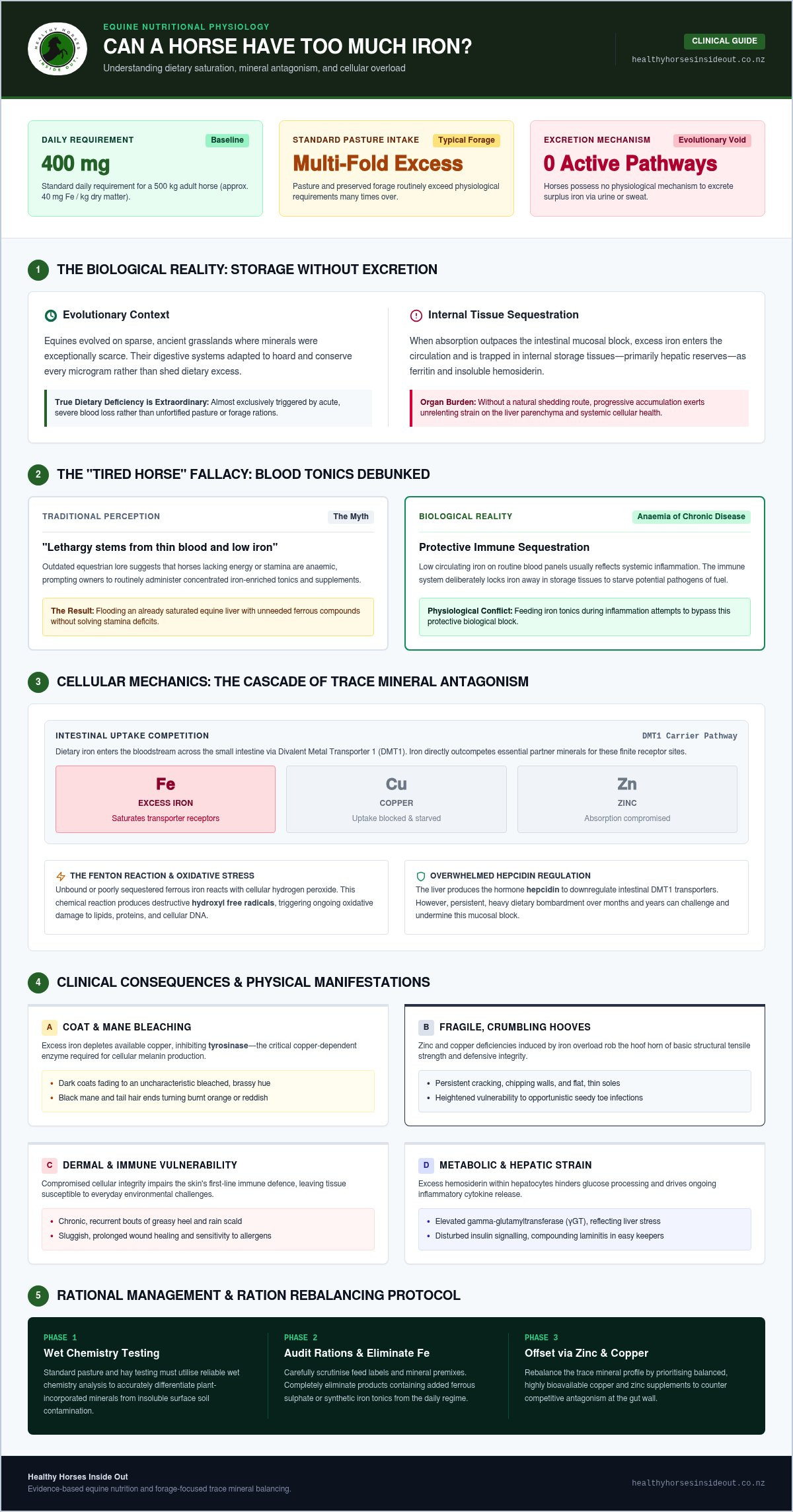
When asking can a horse have too much iron, the biological reality is an unequivocal yes. Equine iron overload is a metabolic state where dietary intake consistently surpasses physiological requirements, leading to excessive cellular storage because horses possess no active physiological mechanism to excrete surplus iron. While human medicine often examines systemic accumulation through conditions like hereditary haemochromatosis, horses experience systemic overload primarily through relentless dietary saturation. Equines evolved on sparse, ancient grasslands where minerals were scarce; their physiology developed to conserve every microgram rather than eliminate surplus amounts.
Because baseline maintenance requires merely 40 mg of iron per kilogram of dry matter, standard pasture and preserved forage routinely exceed daily requirements many times over. Genuine equine iron deficiency anaemia is remarkably rare, almost exclusively triggered by acute, severe blood loss rather than a dietary shortage.
The Myth of the Anaemic Horse and Iron Tonics
For decades, outdated equestrian marketing has linked unexplained lethargy or poor performance directly to "thin blood". Well-meaning owners frequently reach for traditional blood tonics to restore vitality, unknowingly flooding the equine liver with unneeded minerals. Lethargy rarely stems from a nutritional deficit. Instead, low circulating iron levels on standard blood panels typically reflect anaemia of chronic disease, where the immune system deliberately sequesters iron inside storage tissues to withhold it from pathogens during systemic inflammation. Administering concentrated iron tonics during these periods bypasses the horse's protective biology without resolving the underlying fatigue.
How the Equine Body Absorbs and Stores Dietary Iron
Dietary iron enters the bloodstream across the small intestine via divalent metal transporter 1 (DMT1) carrier proteins. In response to rising levels, the liver secretes hepcidin, a hormone that downregulates these transporters to curb further absorption. However, continuous dietary excess can challenge this mucosal block. Because the body lacks an excretion pathway, excess absorbed iron cannot be eliminated through urine or sweat. Instead, it accumulates progressively within hepatic tissues as ferritin and insoluble hemosiderin reserves, creating an unmonitored burden on systemic organ function.
The Clinical Risks and Signs of Equine Iron Overload
When considering can a horse have too much iron, owners must evaluate the insidious cellular damage caused by chronic overconsumption. Unbound or poorly sequestered iron undergoes the Fenton reaction, a biological process where ferrous iron reacts with hydrogen peroxide to generate destructive hydroxyl free radicals. Over several seasons, this unchecked oxidative stress damages lipids, proteins, and cellular DNA, particularly within the liver parenchyma where excess mineral reserves reside.
Visible External Indicators of Trace Mineral Imbalance
Because systemic iron accumulation compromises the uptake and utilisation of partner minerals, the earliest clinical signs surface externally across the coat, skin, and feet:
- Coat and mane bleaching: Dark coats take on a faded, brassy hue, while black manes develop burnt orange or reddish tips due to inhibited tyrosinase, a copper-dependent enzyme required for melanin pigment synthesis.
- Fragile, crumbling hooves: Hoof horns lose tensile strength, presenting with persistent wall cracks, chipping, thin soles, and a high susceptibility to opportunistic seedy toe.
- Dermal vulnerability: Compromised cellular integrity impairs local immune defences, causing recurrent greasy heel, rain scald, prolonged wound healing, and heightened sensitivity to environmental allergens.
Metabolic Disruptions and Cellular Oxidative Stress
Beyond cosmetic changes, excessive iron load presents serious metabolic consequences. Elevated ferritin and hemosiderin levels inside hepatocytes impair normal glucose handling. This intracellular oxidative burden interferes with insulin signalling pathways, which exacerbates hyperinsulinaemia and compounds the risks of pasture-associated laminitis in easy keepers. Indeed, clinical studies investigating chronic equine iron overload demonstrate marked elevations in gamma-glutamyltransferase (γGT), directly signalling hepatic strain from protracted mineral excess.
Circulating pro-inflammatory cytokines remain perpetually elevated in horses carrying high tissue iron burdens. Instead of guessing your horse's requirements, auditing the pasture ration and choosing targeted everyday horse supplements formulated without added iron provides critical foundational support. For owners navigating persistent metabolic challenges or coat dullness, exploring evidence-based nutritional options at Healthy Horses Inside Out can help restore internal equilibrium safely.
Mineral Antagonism: How Excess Iron Blocks Copper and Zinc
To truly understand can a horse have too much iron, one must look at mineral antagonism within the digestive tract. Minerals don't operate in clinical isolation. Instead, trace elements constantly compete for the same metabolic pathways. When a horse consumes large amounts of iron from rich pasture, hay, or fortified feeds, that surplus directly suppresses the absorption of partner minerals. This biological block triggers induced secondary deficiencies, meaning a horse can eat plenty of dietary zinc and copper yet remain profoundly deficient at the cellular level.
The Mechanics of Competitive Intestinal Absorption
Intestinal uptake relies on shared entry gates. Divalent metal transporter 1 (DMT1) proteins lining the small intestine actively transport divalent cations into mucosal cells. Iron, zinc, copper, and manganese all rely on these identical pathways. When dietary iron concentrations heavily outnumber other cations, iron physically saturates and monopolises these transport proteins. Copper and zinc are literally crowded out. The unabsorbed minerals pass unutilised straight into the manure.
This competitive exclusion causes widespread physiological fallout. Essential metalloenzymes starve without adequate trace minerals. Copper depletion paralyses tyrosinase, destroying coat pigment, while zinc shortages restrict superoxide dismutase, an enzyme crucial for disarming cellular free radicals. Consequently, outward symptoms of chronic iron overload mirror classic zinc and copper deficiencies down to the finest detail.
Target Ratios: Understanding Fe:Cu:Zn Equilibrium
Maintaining metabolic harmony requires balancing mineral proportions rather than examining raw milligrams alone. In equine clinical nutrition, the 4:1:3 ratio rule states that the total dietary intake of iron, copper, and zinc should ideally maintain a proportion of 4 parts iron to 1 part copper and 3 to 4 parts zinc to prevent competitive absorption blocks. Forage analyses across New Zealand frequently reveal natural iron-to-copper ratios exceeding 20:1 or even 40:1, turning a balanced baseline into severe physiological disproportion.
Uncorrected imbalances leave horses vulnerable to persistent hoof wall separation, poor connective tissue repair, and immune fatigue. Overcoming this nutritional gridlock requires choosing targeted formulations with elevated levels of bioavailable zinc and copper. Gaining a practical grasp of understanding horse supplement ingredients empowers owners to spot high-quality chelates and avoid products carrying unnecessary iron fillers that worsen mucosal competition.
Assessing Your Horse: Diagnostic Testing and Forage Audits
If you suspect your grazing environment is driving chronic mineral toxicity, establishing clarity requires objective testing rather than guesswork. Resolving whether can a horse have too much iron in your specific management routine involves a systematic five-step audit across animal and forage:
- Step 1: Commission wet chemistry forage analysis. Avoid near-infrared reflectance spectroscopy (NIR) for mineral profiling. Wet chemistry laboratory assays remain the gold standard for accurately quantifying trace mineral parts per million (ppm).
- Step 2: Differentiate plant iron from soil contamination. Cross-reference iron figures against ash or acid-insoluble ash values. High iron accompanied by elevated ash generally reflects surface dirt or dust rather than bioavailable plant tissue iron.
- Step 3: Test stock water sources. Bore water and uncleaned, rusting iron troughs often harbour high concentrations of dissolved ferrous iron, which enters systemic circulation far more readily than dirt-bound oxides.
- Step 4: Request comprehensive blood panels. Ask your veterinarian for a full iron panel rather than a standard screen.
- Step 5: Calculate total daily intake. Compare total milligram consumption against the National Research Council (NRC) baseline requirement of 400 mg daily for a 500 kg horse, keeping intake well beneath the 5,000 mg tolerable upper limit.
Accurate Laboratory Blood Testing Beyond Simple Serum Iron
A basic serum iron test offers very little clinical value on its own. Serum iron fluctuates significantly throughout the day in response to feeding, exercise, and minor stress, routinely generating false alarms or false assurances. To genuinely assess internal loading, your veterinarian must measure:
- Serum ferritin: The primary intracellular storage protein that correlates directly with long-term hepatic reserves.
- Transferrin saturation (TSAT): The percentage of circulating carrier proteins bound to iron. In clinical studies of chronic equine iron overload, affected horses consistently display transferrin saturation figures exceeding 80%, accompanied by elevated liver enzymes.
Identifying Environmental Iron: Forage, Soil, and Water
Overgrazed paddocks force horses to graze close to root systems, significantly increasing accidental soil ingestion during wet winter or dry summer conditions. While much of this soil iron is poorly absorbed, continuous ingestion stresses the digestive tract. Furthermore, forage samples that undergo dedicated laboratory washing steps clarify true internal plant values versus external surface dust. Addressing bore water quality is equally crucial; dissolved iron bypasses many natural gut restrictions. To accurately align your horse's diet with forage test findings, partner with Healthy Horses Inside Out to build an unadulterated trace mineral profile tailored to your property.
Managing and Balancing the High-Iron Equine Diet
Understanding that horses cannot excrete excess minerals shifts your management focus entirely. When asking can a horse have too much iron, the practical resolution lies not in attempting to strip iron out of soil or grass, but in actively neutralising its competitive dominance in the digestive tract. Grazing equines will inevitably consume substantial baseline iron from pasture and preserved hay. Effective management requires an unadulterated feed room strategy that eliminates superfluous intake while delivering targeted trace mineral support.
Eliminating Superfluous Supplemental Iron from the Stable
The first defensive step is a ruthless feed room audit. Many multi-ingredient feeds and generic pre-mixes quietly include added iron compounds as inexpensive bulking agents. Read ingredient tags carefully and discard supplementary products that list:
- Ferrous sulphate or ferrous carbonate
- Iron amino acid chelate or iron proteinate
- Ferric oxide (often added purely as a red colouring agent)
- Dried animal blood or haemoglobin meals
If you're unsure how to evaluate specific formulations, refer to our comprehensive guide on what supplements does my horse need for practical ingredient breakdowns.
Balancing the Ration with Targeted Copper and Zinc
Once you remove extraneous iron from the bucket, you must rebalance your horse's trace mineral ratios against background forage. Because pasture grass and hay supply plentiful iron, feeding elevated levels of bioavailable copper and zinc is essential to restore the ideal 4:1:3 ratio. Unbound, inorganic sulphates often taste bitter and can irritate the digestive tract. High-quality organic chelates absorb efficiently across intestinal transporters, preventing iron from monopolising receptor sites.
Base your hard feed around low-sugar, high-fibre carriers like unmolassed beet pulp, soy hulls, or timothy chaff. Pair this fibrous foundation with clean nutritional solutions formulated specifically for grazing environments. Choosing evidence-backed Everyday Horse Supplements, Specific Horse Supplements, or convenient, mess-free HHIO Pellets provides peace of mind that your horse receives optimal trace mineral protection without adding a single gram of unnecessary iron filler to their daily routine.
Taking Control of Your Horse's Trace Mineral Balance
When asking can a horse have too much iron, the physiological evidence provides absolute clarity. Forage alone easily satisfies baseline equine requirements, and because horses possess no internal excretion pathway, surplus dietary iron quietly accumulates while locking away vital zinc and copper. You don't have to accept sun-bleached coats, crumbling hoof walls, or stubborn metabolic challenges as normal management hurdles.
Reclaiming your horse's systemic equilibrium begins with a conscious feed room audit. By eliminating superfluous iron additives and counterbalancing pasture intake with bioavailable copper and zinc, you protect vital cellular pathways and build authentic structural strength from within. Trusted across the nation for methodical, evidence-based wellness, our formulations are crafted deliberately without added iron to respect real grazing conditions. Explore science-led, iron-conscious equine nutrition at Healthy Horses Inside Out and give your horse the targeted foundational support they need to thrive.
Frequently Asked Questions
Can a horse get iron toxicity from pasture alone?
Acute toxicity from clean pasture forage alone is uncommon because healthy equine intestinal membranes naturally downregulate iron absorption. However, answering whether can a horse have too much iron from pasture environments requires examining chronic intake. Pastures grown on acidic or waterlogged ground routinely supply iron levels far above basal requirements. When coupled with inevitable soil ingestion from low-grazed turf, daily intake can slowly cause chronic tissue accumulation over several seasons.
What are the main symptoms of too much iron in horses?
The earliest clinical symptoms usually appear in external epithelial tissues. Dark coats develop a faded, bleached appearance with red or orange hair tips along the mane and tail. Hooves frequently become brittle, prone to chronic wall cracking, persistent thrush, and recurring white line separation. Over time, affected horses may also display tender soles, exercise intolerance, stiff movement, and unexplained lethargy caused by sustained cellular oxidative stress.
Why do so many commercial horse feeds and supplements still contain added iron?
Many feed manufacturers rely on legacy formulation templates originally designed for swine or poultry, where dietary iron supplementation is routine. Additionally, base ingredients like dicalcium phosphate, calcium carbonate, and mineral premixes carry high natural iron contamination. Inexpensive bulking agents or compounds like ferric oxide are frequently added as colourants, meaning horses receive added iron simply because manufacturers do not actively filter it out of their supply chains.
Does excess iron cause laminitis or insulin resistance in horses?
Excess iron does not directly trigger laminitis on its own, but it functions as a potent metabolic aggravator. When surplus iron stores accumulate within the liver, progressive oxidative damage disrupts normal hepatocyte function and cellular glucose handling. This biochemical strain worsens peripheral insulin dysregulation. For easy keepers or horses predisposed to Equine Metabolic Syndrome, this heightened insulin resistance substantially elevates the risk of pasture-associated laminitic episodes.
How do I test my horse for iron overload accurately?
Accurate testing requires asking your veterinarian for a comprehensive iron panel rather than a simple serum iron test. Basic serum iron fluctuates continuously throughout the day based on recent meals or physical exertion. A dependable diagnostic evaluation must measure serum ferritin to determine stored liver reserves, alongside transferrin saturation percentages to assess active blood transport capacity. Values consistently above 80% saturation strongly suggest chronic mineral overload.
Can I give my tired horse an iron blood tonic to improve energy?
No, administering iron tonics to a lethargic horse is counterproductive and potentially hazardous. Fatigue in horses rarely stems from true nutritional anaemia, which is exceptionally rare without acute, severe haemorrhage. Sluggishness usually traces back to underlying systemic inflammation, digestive imbalances, or poor saddle fit. Feeding iron tonics bypasses normal gut regulation, overburdening hepatic tissue with minerals the horse cannot actively excrete and failing to resolve the real cause of low energy.
How does excess iron affect my horse's hooves and coat colour?
Excess dietary iron directly outcompetes zinc and copper at intestinal receptor sites, triggering induced secondary deficiencies. Copper is required by the enzyme tyrosinase to produce dark melanin pigment; without it, dark hair bleaches quickly under sunlight. Zinc is equally vital for keratin synthesis and cellular differentiation inside the hoof capsule. When iron blocks zinc uptake, hoof walls become soft, slow-growing, and vulnerable to fungal invasions.
What is the correct ratio of iron to copper and zinc in a horse diet?
Equine nutritional science recommends maintaining an iron to copper to zinc ratio around 4:1:3 or 4:1:4 across the total diet. Because forage iron levels routinely exceed 400 mg/kg dry matter, this balance easily skews into severe disproportion. Determining whether can a horse have too much iron in their daily ration comes down to these ratios; feeding elevated bioavailable copper and zinc effectively neutralises forage excess.


