

What if your horse's unpredictable "hot" behaviour isn't a personality flaw, but a biological SOS triggered by the very grass they graze? In New Zealand, our lush pastures often hide a metabolic hurdle where high potassium levels actively block magnesium absorption. This creates a systemic imbalance that can leave even the most seasoned mount feeling tense, reactive, and physically unable to relax their muscles under saddle.
You likely recognise the frustration of managing a horse that becomes "spooky" during spring and autumn flushes, or perhaps you're tired of conflicting advice regarding which mineral forms offer the best value. Finding a high-quality horse magnesium supplement NZ riders can rely on is about more than just "calming." It is about restoring the foundational mineral ratios required for neuromuscular health. This guide provides a clear, science-backed roadmap to help you understand New Zealand’s unique soil challenges and choose a bioavailable supplement that helps your horse feel comfortable in their own skin. We will explore the specific biological mechanisms of magnesium, the impact of potassium spikes, and how to identify a targeted solution that supports long-term vitality rather than offering a temporary fix.
Key Takeaways
- Understand why high potassium and nitrogen levels in New Zealand's rye-grass pastures create a biological barrier to magnesium absorption, often resulting in reactive or "hot" behaviour.
- Learn how to identify the most effective mineral forms to ensure your chosen horse magnesium supplement NZ is highly bioavailable and provides genuine nutritional value.
- Discover the physiological importance of magnesium in over 300 biochemical reactions, focusing on its essential role in allowing muscle fibres to release and relax.
- Master a logical, step-by-step method for calculating your horse's specific magnesium requirements by assessing their base forage intake and current exercise levels.
- Transition from reactive "calming" strategies to a foundational wellness plan that prioritises correct mineral ratios for sustained physiological equilibrium and peace of mind.
Why New Zealand Horses Struggle with Magnesium Deficiency
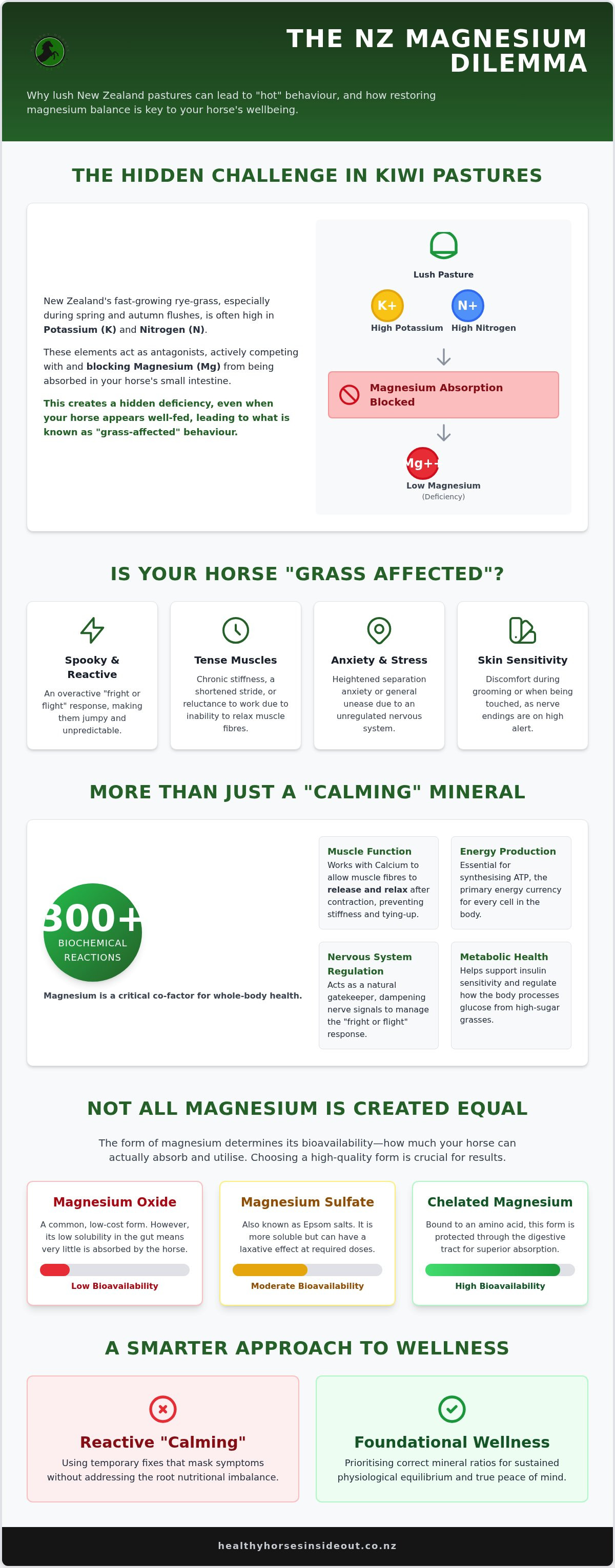
New Zealand is world-renowned for its lush, emerald-green landscapes, yet this verdant growth often masks a significant nutritional challenge for equine health. What we commonly refer to as a "pasture flush" occurs when rapid grass growth outpaces the soil's ability to provide balanced minerals. During these periods, particularly in spring and autumn, the grass is physically high in volume but physiologically imbalanced. A horse grazing on these paddocks might appear well-fed, but their internal systems are often struggling to function correctly due to a hidden deficiency.
The core of the issue lies in the composition of a horse's diet when it consists primarily of modern New Zealand rye-grasses. These varieties are bred for rapid production and high sugar content, which requires significant nitrogen and potassium. While these elements are excellent for fattening livestock, they create a hostile environment for magnesium absorption. High levels of nitrogen and potassium in the forage act as antagonists, effectively blocking the pathways the horse uses to take up magnesium in the small intestine.
The Potassium-Magnesium Antagonism
Magnesium and potassium share a complex relationship at the cellular level. When potassium levels spike, as they frequently do following heavy rain or the application of potassium-rich fertilisers, they compete with magnesium for the same absorption sites. This competition is rarely won by magnesium. This imbalance is why many owners find that a standard horse magnesium supplement NZ riders use in winter isn't enough to maintain stability during the spring growth spurt. Grass tetany is a critical metabolic condition that occurs when magnesium levels in the blood drop dangerously low due to this mineral imbalance.
Signs Your Horse is "Grass Affected"
A "grass-affected" horse isn't simply being difficult; they are experiencing a physiological breakdown of their nervous system's ability to regulate stress. You might notice heightened spookiness, extreme separation anxiety, or skin sensitivity that makes grooming a chore. These aren't necessarily personality traits. Magnesium is vital for managing the "fright or flight" response, acting as a natural gatekeeper for the nervous system. Without sufficient magnesium to dampen nerve signals, the horse remains in a state of constant high alert. Distinguishing between a nutritionally stressed horse and a "naughty" one is the first step toward achieving a calm, focused partner through a targeted horse magnesium supplement NZ strategy.
The Biological Role: More Than Just a Calming Agent
While many owners view magnesium primarily as a tool for managing "hot" behaviour, its physiological impact is far more expansive. Magnesium functions as a critical co-factor for over 300 biochemical reactions within the horse's body. It is an essential component of energy production, specifically in the synthesis of adenosine triphosphate (ATP), which is the primary energy currency of every cell. Without adequate levels, a horse's metabolic efficiency declines, affecting everything from protein synthesis to the maintenance of healthy hooves and coat shine.
For "easy-doers" or horses prone to metabolic issues, magnesium plays a vital role in supporting insulin sensitivity. It helps regulate how the body processes glucose, making it a cornerstone of nutritional management for horses grazing on high-sugar New Zealand pastures. When you choose a high-quality horse magnesium supplement NZ, you aren't just buying "calmness" in a tub. You're investing in the foundational machinery that keeps your horse's internal systems running smoothly. This mineral is a metabolic spark plug that ensures nutrients are converted into usable energy rather than being stored as inflammatory fat.
Muscle Function and Recovery
In the context of physical performance, magnesium is often dubbed the "relaxation mineral." It works in a delicate, antagonistic partnership with calcium to manage muscle movement. While calcium is responsible for muscle contraction, magnesium is the trigger that allows the muscle fibre to release and relax. A deficiency often manifests as chronic stiffness, a shortened stride, or, in severe cases, "tying up" during or after work. Providing essential major minerals like magnesium ensures that the muscles can recover effectively after exercise. This balanced approach is a key pillar of holistic horse health NZ riders use to maintain longevity in their equine partners.
Nerve Transmission and Focus
The neurological benefits of magnesium are equally profound. It acts as a natural regulator for nerve cell "gates," specifically the NMDA receptors. When magnesium levels are sufficient, these gates remain closed to unnecessary stimuli, allowing the horse to maintain a higher threshold for external stress. A horse with low magnesium is essentially "hard-wired" to overreact. Their nervous system is primed for a flight response because the biological brakes are missing. By supporting nerve transmission, a targeted horse magnesium supplement NZ helps improve a horse's ability to focus and retain training. This makes sessions more productive and less stressful for both horse and rider. If you're looking to support your horse's internal balance, exploring our everyday horse supplements can provide the nutritional foundation they need to thrive.
Comparing Forms: Magnesium Oxide, Sulfate, and Chelates
Selecting the right form of magnesium is just as critical as the dosage itself. The chemical structure of the mineral dictates how effectively it can be absorbed by the equine digestive tract. For most owners, the choice of horse magnesium supplement NZ retailers offer comes down to a balance between cost and clinical efficacy. Not all forms are created equal, and understanding the difference can prevent you from investing in products that simply pass through the horse unutilised.
Magnesium Oxide remains the industry staple for several reasons. It boasts a high concentration of elemental magnesium, typically around 60 percent, and clinical observations suggest it has a respectable absorption rate for the average horse. It is a stable, cost-effective option that addresses the foundational needs of horses grazing on high-potassium pastures. Conversely, Magnesium Sulfate, commonly known as Epsom salts, is a poor choice for daily mineral support. While it is highly soluble, it acts primarily as an osmotic laxative by drawing water into the bowel. This often results in loose manure rather than delivering magnesium to the cells where it is needed for metabolic support.
Chelated Magnesium represents a more sophisticated approach for "difficult" absorbers. In this form, the magnesium is chemically bound to an amino acid, which allows it to bypass certain competitive absorption barriers in the small intestine. This can be particularly beneficial for horses suffering from specific metabolism disorders in horses that hinder standard mineral uptake. While the price point is higher, the increased bioavailability often justifies the cost for horses that don't respond to traditional oxide forms.
Bioavailability Explained
Bioavailability refers to the proportion of a nutrient that is actually digested, absorbed, and utilised by the body. It is a common trap to look only at the "elemental" magnesium listed on a label. A supplement might contain a high percentage of magnesium, but if it is in an insoluble or low-grade form, the horse's body cannot access it. This is why understanding horse supplement ingredients NZ is vital for savvy owners. You want a product that prioritises internal absorption over impressive-looking numbers on a packet.
Palatability and Practical Feeding
Even the most scientifically advanced supplement is useless if your horse refuses to eat it. Magnesium oxide can be somewhat chalky or dusty, which may deter fussy eaters. To improve acceptance, try mixing the supplement into damp roughage, lucerne chaff, or a small amount of soaked beet pulp. For many owners, the simplest solution is a pelleted delivery system. Pellets ensure the minerals stay integrated with the feed rather than sifting to the bottom of the bucket. This provides the peace of mind that comes with knowing your horse has received their full daily requirement for optimal health.
Dosage and Implementation: How Much Does Your Horse Need?
Determining the correct dosage for a horse magnesium supplement NZ owners purchase requires a methodical assessment of the individual animal's environment and workload. It is a common mistake to follow a generic "one scoop" recommendation without considering the mineral content already present in the horse's forage. A 500kg horse in light work typically requires approximately 10 grams of magnesium per day from their total diet, but this number fluctuates significantly based on several external factors.
To implement a successful mineral strategy, follow these four steps:
- Assess the baseline: Audit the current intake from hay, baleage, and commercial hard feeds. NZ-grown lucerne, for example, is naturally higher in calcium, which influences the magnesium requirement.
- Calculate the gap: Performance horses or those grazing on high-potassium "flush" grass have a higher metabolic demand for magnesium.
- Introduce gradually: Start with a quarter dose and increase over seven to ten days. This allows the digestive system to adapt without causing stress.
- Monitor the threshold: Pay close attention to manure consistency. If the manure becomes loose or cow-pat like, you have reached the "bowel tolerance" limit and should reduce the dose slightly.
The Calcium to Magnesium Ratio
Mineral balance is rarely about a single nutrient; it is about the relationship between them. Feeding magnesium in isolation can sometimes disrupt the uptake of other minerals like calcium. In most cases, maintaining a ratio of 2:1 (calcium to magnesium) is ideal, though some "grass-affected" horses benefit from a 1:1 ratio during peak growth seasons. Properly building a horse supplement plan NZ conditions demand means looking at the whole picture to ensure no single mineral is working in a vacuum. This balanced approach prevents the accidental creation of secondary deficiencies.
Seasonal Adjustments
Your magnesium strategy must be dynamic. During wet, lush periods when the grass is high in nitrogen and potassium, your horse's magnesium requirements will peak. Conversely, during a dry summer spell or the dormant winter months, you may find you can maintain a lower foundational dose. Recognising these seasonal shifts allows you to provide precise support when it is most needed. If you are ready to optimise your horse's mineral intake, explore our range of Specific Horse Supplements designed for New Zealand conditions.
The HHIO Approach: Foundational Magnesium Support
At Healthy Horses Inside Out (HHIO), we believe that true equine wellness begins with a structural understanding of biology. Rather than viewing a horse magnesium supplement NZ riders might buy as a reactive "calming" tool, we integrate it into a complete nutritional ecosystem. This systemic approach moves away from the search for a magic bullet. It focuses instead on the foundational mineral ratios that allow every internal process to function at its peak. When the internal environment is balanced, the external results follow naturally.
Our range of everyday horse supplements is formulated with a deep respect for the specific challenges of New Zealand soil. We recognise that the high potassium levels in our rye-grass paddocks require a targeted response. HHIO Pellets are a game-changer for owners seeking this level of precision. They provide a reliable, mess-free delivery system that ensures your horse receives their daily requirements without the guesswork or waste associated with loose powders.
Precision Nutrition for NZ Conditions
Our methodical formulation process accounts for the unique mineral profiles found across local paddocks. By prioritising "Inside Out" health, we help owners achieve more than just a quieter horse. Proper mineral support manifests in stronger hooves, resilient coats, and a steady, focused temperament. Magnesium is a vital piece of the vitality puzzle, but it performs best when supported by a full spectrum of balanced nutrients. This creates a state of physiological equilibrium that allows your horse to thrive regardless of seasonal grass flushes.
Next Steps for Your Horse
Transitioning your horse onto a magnesium-supported diet should be an exercise in patience. Cellular changes and the restoration of mineral reserves do not happen overnight. It often takes several weeks of consistent supplementation to see the full impact on a horse's nervous system and muscle function. As you begin this journey, stay observant of the subtle shifts in your horse's comfort and focus. For those ready to commit to long-term health, you can discover the best horse supplements New Zealand owners trust for daily wellness. Investing in foundational nutrition today provides the peace of mind that comes with a truly healthy, balanced horse.
Cultivating Long-Term Equine Vitality
Achieving a calm, focused horse in New Zealand requires more than just reactive management; it demands a deep understanding of how our unique pastures influence internal mineral ratios. We have explored how high potassium levels can actively disrupt magnesium uptake, leading to the physical and behavioural tension often seen during seasonal flushes. By prioritising bioavailability and correct mineral balance, you can move away from temporary "magic bullets" and toward a state of genuine systemic health.
Choosing a high-quality horse magnesium supplement NZ owners can trust is the first step in restoring this metabolic equilibrium. At HHIO, we provide NZ-made solutions specifically designed for our local conditions, offering expert nutritional guidance that focuses on foundational wellness rather than quick fixes. This methodical approach ensures your horse has the internal support required for optimal muscle function, nerve transmission, and overall performance.
Optimise your horse’s mineral balance with HHIO’s science-led supplements and enjoy the peace of mind that comes with a truly comfortable, healthy horse. Your partner deserves a nutritional foundation that supports them from the inside out.
Frequently Asked Questions
Can I overfeed magnesium to my horse?
Yes, it is possible to over-supplement, though horses with healthy renal function typically excrete excess magnesium through their urine. The most immediate sign of overfeeding is loose manure, which indicates you have reached the "bowel tolerance" threshold. Excessive intake can also interfere with the absorption of other essential minerals, such as calcium and phosphorus, which is why maintaining correct ratios is vital for long-term health.
How long does it take for a magnesium supplement to work?
You may notice subtle changes in your horse's focus and muscle relaxation within three to seven days, but full systemic restoration often takes several weeks. While a high-quality horse magnesium supplement NZ riders use can provide relatively fast support for nerve transmission, cellular and metabolic changes require consistent daily intake to stabilise. Patience is a key component of foundational nutritional support.
Is magnesium oxide better than magnesium sulfate for horses?
Magnesium oxide is significantly better for daily nutritional support than magnesium sulfate. Magnesium sulfate, or Epsom salts, acts as an osmotic laxative that draws water into the bowel, making it unsuitable for long-term mineral absorption. Magnesium oxide provides a higher concentration of elemental magnesium and is a stable, cost-effective option for addressing the mineral imbalances common in New Zealand pastures.
Does my horse need magnesium if they are on a "complete" commercial feed?
Many horses on a "complete" feed still require additional magnesium due to the high potassium levels found in New Zealand grass. Potassium is a powerful antagonist that blocks magnesium absorption in the small intestine. This means that even if a feed contains the recommended daily allowance, the horse may still be deficient if they are grazing on lush, modern rye-grass paddocks.
Will magnesium help with my horse’s "grass staggers"?
Magnesium provides significant relief for "grass staggers" by addressing the metabolic imbalance caused by high potassium and nitrogen levels. However, true staggers is often a multifaceted issue involving mycotoxins in the pasture. While a horse magnesium supplement NZ owners trust will support the nervous system, it should be used as part of a broader management plan that includes toxin binders and forage control.
What is the best way to feed magnesium to a picky eater?
The most effective way to feed magnesium to a picky eater is through a high-quality pelleted delivery system. Pellets ensure the minerals are integrated into a palatable form that cannot be sifted out or left at the bottom of the feed bucket. If you are using a powder, mixing it with damp lucerne chaff, beet pulp, or a small amount of oil can help mask the taste and texture.
Can magnesium help with cresty necks and laminitis?
Magnesium plays a critical role in supporting insulin sensitivity, which is essential for managing horses with cresty necks or those prone to laminitis. By helping the body process glucose more effectively, magnesium reduces the metabolic stress that contributes to fat deposits and inflammatory responses. It is a foundational part of the diet for "easy-doers" grazing on high-sugar pastures.
Should I feed magnesium all year round or just in spring?
While the demand for magnesium peaks during the spring and autumn "flushes," maintaining a foundational dose year-round is highly recommended. Consistent supplementation ensures that cellular reserves remain stable, preventing the dramatic metabolic dips that occur during sudden weather changes. You can adjust the dosage upward during periods of rapid grass growth to account for increased potassium levels in the forage.


