

Why does a horse living on lush, emerald-green pasture still struggle with crumbling hooves and explosive, "hot" behaviour? It's a common paradox within horse nutrition NZ circles; the grass that looks the most nutritious often hides the very mineral imbalances that trigger systemic health issues. You've likely felt the frustration of following traditional feeding advice only to be met with recurring abscesses or a horse that feels like a ticking time bomb under saddle. It's exhausting to sift through conflicting labels when all you want is a calm, resilient partner with hooves that can handle the terrain.
This guide will help you master the complexities of the New Zealand equine diet by looking beneath the surface of the paddock. You'll learn how to balance your horse's internal health using a foundation of science rather than guesswork. We'll explore the specific soil deficiencies of 2026, the impact of high iron levels on mineral absorption, and how to simplify your routine with targeted, bioavailable supplementation. By the end of this article, you'll have the confidence to build a feeding plan that supports long-term vitality from the inside out.
Key Takeaways
- Understand the "pasture paradox" and why lush green grass often fails to provide the essential micronutrients required for systemic health.
- Learn to identify the physical markers of mineral deficiencies, such as sun-bleached coats or poor hoof quality, which indicate a lack of copper, zinc, or selenium.
- Discover how to avoid the "calorie trap" by prioritising targeted supplementation over complete feeds to master horse nutrition NZ without causing unwanted weight gain.
- Master the foundational rule of forage-first feeding, ensuring your horse receives at least 1.5% of their body weight in quality roughage daily.
- Explore how HHIO Pellets serve as a precise, bioavailable foundation to bridge the gap between New Zealand’s soil deficiencies and your horse’s internal requirements.
Understanding the New Zealand Pasture Paradox: Why Grass Isn’t Enough
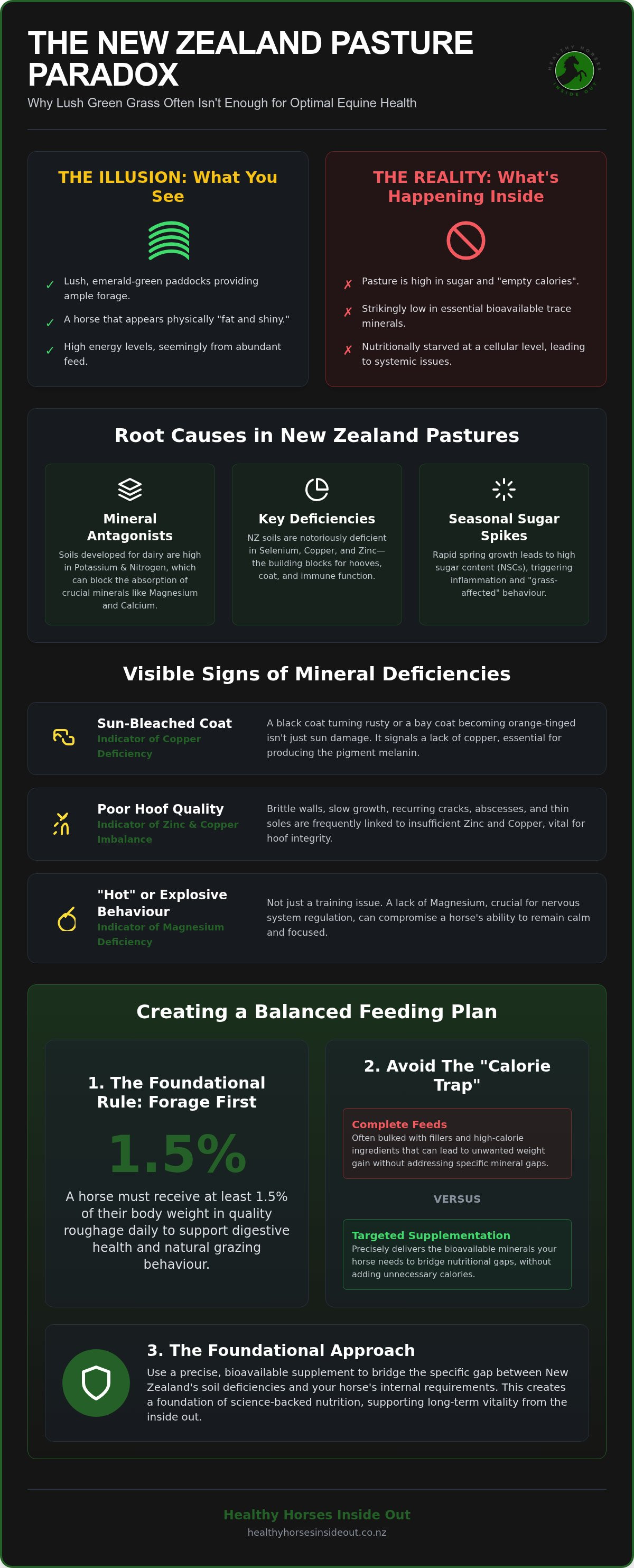
In New Zealand, we are often lulled into a false sense of security by the sight of lush, emerald-green paddocks. We assume that if a horse has access to plenty of grass, their dietary needs are being met. However, the reality of horse nutrition NZ is far more complex. Our pastures are frequently a source of "empty calories"—high in sugars and energy but strikingly low in the essential trace minerals required for long-term systemic health. This creates the "Pasture Paradox," where a horse can appear physically "fat and shiny" while remaining nutritionally starved at a cellular level.
Effective nutrition in the New Zealand context is the science of balancing local forage with the specific micronutrients that our soil simply cannot provide. While a horse might look healthy on the surface, a lack of bioavailable minerals often manifests in subtle, frustrating ways. You might notice poor hoof quality, a lack of topline despite work, or a coat that bleaches out in the sun. These aren't just aesthetic issues; they are biological distress signals. Understanding Equine nutrition basics is the first step in recognising that what grows in the ground is rarely a complete diet for a modern horse.
The Myth of the "Complete" Paddock
New Zealand's agricultural history has a significant impact on our horses today. Many of our paddocks were originally developed for dairy production, leading to soils that are heavily fertilised to promote rapid grass growth. This often results in pasture that is excessively high in potassium and nitrogen, which can actively interfere with a horse's ability to absorb magnesium and calcium. Additionally, our soils are notoriously deficient in selenium, copper, and zinc. When you rely solely on the paddock, you aren't just missing out on minerals; you're often dealing with an "antagonist" effect where high levels of one element block the uptake of another. For a deeper dive into managing these variables, you can read more about how to optimise grass-fed horse nutrition in NZ.
Biological Mechanisms of Pasture Imbalance
The seasonal volatility of New Zealand grass adds another layer of difficulty. During the spring flush, the rapid growth leads to high concentrations of non-structural carbohydrates (sugars). This sugar spike can trigger insulin dysregulation, leading to systemic inflammation and "grass-affected" behaviour. This isn't just a training issue; it's a physiological response. When a horse lacks magnesium—a mineral crucial for over 300 biochemical reactions, including nervous system regulation—their ability to remain calm and focused is compromised. Forage-based nutrition is the essential foundation of equine health, prioritising the horse's evolutionary need for high-fibre intake while acknowledging that modern pastures require precise mineral correction to ensure metabolic stability.
Identifying Mineral Deficiencies in NZ Horses: Signs and Symptoms
While the "Pasture Paradox" explains why our paddocks fail to provide a complete diet, the physical evidence of these gaps often appears in plain sight. In the context of horse nutrition NZ, we primarily focus on the "Big Three" deficiencies: Selenium, Copper, and Zinc. These micronutrients are the silent architects of your horse's structural integrity and metabolic health. When they are missing or imbalanced, the horse's body begins to prioritise essential internal functions, leaving visible "markers" of deficiency in the coat, skin, and hooves.
One of the most recognisable signs of copper deficiency is the "sun-bleached" coat. If your bay horse develops orange-tinged hair or your black horse takes on a rusty hue during summer, it's rarely just the effect of the sun. This discolouration often indicates a lack of bioavailable copper, which is essential for melanin production. Similarly, poor hoof quality, including brittle walls, recurring cracks, and thin soles, is frequently linked to improper mineral ratios. For a comprehensive look at these physical markers, you can refer to our signs of mineral deficiency in horses NZ checklist to help identify what your horse might be lacking.
Maintaining a balanced diet is about more than just appearance; it's a fundamental welfare requirement. Following established SPCA feeding guidelines ensures that your horse receives the foundational roughage they need, but addressing these specific mineral gaps requires a more clinical approach. If you're noticing these subtle shifts in your horse's condition, exploring targeted mineral solutions can help restore their internal balance from the ground up.
The Iron Overload Problem
A significant hurdle in New Zealand is the prevalence of iron in our soil and water. High iron levels act as a biological antagonist, effectively blocking the absorption of zinc and copper in the small intestine. This means even if you're feeding a supplement, the iron in the environment might be preventing your horse from utilising it. Performance horses suffering from this ratio imbalance often show signs of poor recovery, lacklustre coats, and a heightened susceptibility to skin conditions like mud fever or rain scald.
Selenium: The Critical NZ Trace Element
New Zealand's volcanic soils are notoriously selenium-poor, making this trace element a primary concern for local owners. Selenium is vital for muscle function and immune health, yet the margin between deficiency and toxicity is remarkably narrow. Signs of deficiency include muscle stiffness and poor growth, while toxicity can lead to horizontal hoof cracks and hair loss in the mane and tail. It is essential to conduct blood testing for selenium levels before beginning a supplementation programme to avoid the risk of toxicity.
Complete Feeds vs Targeted Supplementation: Which Does Your Horse Need?
When managing horse nutrition NZ, owners generally face two distinct paths: the "bucket-fed" approach using commercial complete feeds or the "supplement-led" strategy focused on balancing forage. Complete feeds are often marketed as a convenient, all-in-one solution. However, for many New Zealand horses, these products create a "calorie trap." Because these feeds are designed to provide a full spectrum of minerals only when fed at high volumes, an easy keeper might receive too much energy and sugar before they ever reach their required daily intake of copper or zinc. This often leads to unnecessary weight gain and metabolic stress while the horse remains micronutrient deficient.
Recent NZ sport horse industry research highlights the diversity in local feeding practices, yet a common theme is the reliance on concentrates that may not align with our unique pasture profiles. For horses that maintain weight easily on grass, a low-GI, mineral-dense pellet is often the more logical choice. This allows you to deliver high concentrations of essential minerals without the baggage of excess grain or molasses. If you are sifting through the options, understanding the nuances of choosing the best horse pellets in NZ is vital for creating a streamlined, effective routine.
Reading the Label: What to Look For
Don't be swayed by glossy packaging; the ingredient list tells the real story. Many commercial feeds rely on fillers like wheat pollard or oat husks to bulk out the bag. You should also watch for high-sugar binders like molasses, which can exacerbate "hot" behaviour or insulin issues. Precision feeding requires you to look for chelated minerals, which are bound to amino acids to ensure they aren't lost during digestion. Calculating your horse's actual intake is simple: check the milligrams per kilogram on the label and compare it against the recommended daily allowance for their weight and workload. If you have to feed 4kg of a product to meet their zinc requirements, but your horse only needs 500g of energy, that feed isn't the right fit.
Bioavailability and Mineral Ratios
In the context of equine mineral supplements, bioavailability refers to the efficiency with which a nutrient is absorbed from the digestive tract and utilised by the horse's body. It isn't just about the raw amount of a mineral in the bucket; it's about the ratio. For example, the balance of Zinc to Copper should ideally sit between 3:1 and 4:1. If this ratio is skewed, the excess of one mineral can block the absorption of the other, regardless of how much you feed. A healthy gut microbiome also plays a critical role in this process. By supporting the hindgut with stable, fibre-based carriers, you enhance the horse's natural ability to process these vital elements.
Creating a Balanced Feeding Plan for the NZ Environment
The foundation of any robust feeding plan is fibre. In the context of horse nutrition NZ, this means ensuring your horse consumes a minimum of 1.5% to 2% of their body weight in forage daily. For a 500kg horse, this equates to roughly 7.5kg to 10kg of dry matter from pasture and hay. This isn't just about filling the stomach; it's about maintaining the delicate hindgut microbiome that drives systemic health. Once you've met this fibre requirement, you can layer in the "missing links" by selecting a daily mineral base that addresses the specific deficiencies we identified in earlier sections. This methodical approach ensures that the horse's basic biological needs are satisfied before you introduce more complex dietary elements.
Adjusting for workload requires a careful assessment of energy sources. If your horse needs more "fuel" for performance or condition, consider the source carefully. Fats, such as oil or rice bran, provide slow-release energy without the metabolic spikes often associated with starches. Conversely, horses in high-intensity training might require controlled levels of starch for glycogen replenishment. Success isn't measured in days, but in months. It takes approximately 12 weeks to see a nutritional transformation in the coat and the beginning of a stronger, tighter hoof wall growing down from the coronet band. To ensure you're using the right tools for this journey, explore our range of science-led equine supplements.
The Role of Salt and Hydration
Plain white salt is perhaps the most overlooked component of horse nutrition NZ. Many owners rely on salt blocks, but these are often insufficient as horses' tongues are too smooth to lick enough to meet their daily needs. Salt intake is the primary driver of the thirst response. Without it, water consumption drops, which significantly increases the risk of impaction colic. As a general guideline, a horse in light work requires approximately one tablespoon (roughly 15-20g) of plain salt daily. This amount should increase for horses in heavy work or during those humid summer months when sweat loss is high.
Managing Seasonal Shifts
Our New Zealand climate demands agility in your feeding routine. During winter, when grass growth slows and its nutritional value drops, you must focus on maintaining condition through increased hay and perhaps calorie-dense additives. If you're struggling to keep weight on your horse, you might find value in our guide on supplements for poor doer horses NZ. In contrast, spring management involves protecting the metabolic horse from sudden "sugar spikes" in the pasture. This often means restricting grazing time or using a grazing muzzle while ensuring their mineral base remains consistent. This consistency helps support their nervous system and metabolic stability through the rapid seasonal transition.
The Healthy Horses Inside Out Approach to Foundational Nutrition
At Healthy Horses Inside Out (HHIO), our philosophy is built on a single, uncompromising principle: true wellness is driven by internal systemic balance. We move away from the traditional model of "fixing" external symptoms and instead act as a methodical mentor for owners who want to understand the biological "why" behind their horse's condition. By addressing the root cause—which in New Zealand almost always stems from the mineral imbalances discussed in earlier sections—we can help you achieve a state of health that is resilient and sustainable. This science-led approach to horse nutrition NZ provides you with the peace of mind that comes from knowing your horse is supported at a cellular level.
Our HHIO Pellets serve as the essential foundation for any New Zealand horse diet. Rather than adding more "stuff" to the bucket, we focus on high-quality mineral bioavailability to bridge the gaps left by our unique soil profiles. For owners dealing with specific challenges, our Horse Supplement Bundles offer a targeted way to address issues like poor hoof quality or "hot" behaviour without over-complicating the daily routine. These bundles are designed to work in synergy with our foundational pellets, ensuring that every ingredient serves a physiological purpose and contributes to the horse's overall vitality.
Why HHIO Pellets Differ from Standard Feed
Most commercial feeds are designed for a global market, but HHIO Pellets are formulated specifically for the New Zealand environment. They offer a high concentration of essential minerals like copper, zinc, and selenium without the unnecessary calories, sugars, or fillers found in standard "complete" feeds. This makes them the ideal choice for the typical NZ "good doer" who requires precise micronutrient support but doesn't need the extra energy from grain. Because they are highly concentrated, they serve as an efficient carrier for other Specific Horse Supplements, allowing you to customise the diet to your horse's individual needs while keeping the total volume of feed low and manageable.
Taking the Next Step for Your Horse
Transitioning your horse to a new nutritional regime should always be a gradual process to protect the stability of the hindgut. We recommend introducing HHIO Pellets over a period of 7 to 10 days, slowly increasing the amount while monitoring your horse's appetite and manure consistency. Patience is key in this journey; while some changes in behaviour can be seen quickly, the structural transformations in the hoof wall and coat quality require the consistency of a long-term commitment. By maintaining a steady, science-backed routine, you allow the horse's body to repair and optimise its internal systems from the ground up.
If you're ready to simplify your routine and see the difference that targeted mineral balance can make, explore the Ultimate Guide to Everyday Horse Supplements to find your horse’s perfect match. Taking control of your horse's nutrition doesn't have to be a source of anxiety; with the right foundational tools, you can build a future of health and performance that lasts a lifetime.
Empowering Your Horse’s Health Through Precision Nutrition
Mastering the intricacies of horse nutrition NZ is a journey that begins with looking beyond the surface of your paddocks. We've explored how the New Zealand pasture paradox and regional mineral deficiencies, such as selenium and copper, can compromise your horse’s systemic health. By choosing targeted supplementation over the "calorie trap" of complete feeds, you can provide the essential micronutrients your horse needs without the baggage of unnecessary sugars or fillers. This methodical approach doesn't just improve a coat; it builds resilience and provides a foundation for long-term vitality.
Our science-first philosophy ensures that every product we offer is formulated specifically for New Zealand soil and pasture profiles. With high-bioavailability minerals and a focus on internal balance, you can finally achieve the visible results in hoof quality and temperament you've been searching for. It's time to move away from guesswork and embrace a routine that offers true security. Optimise your horse’s health with HHIO’s science-led supplements and take the first step toward a calmer, healthier partner. You have the tools and the knowledge to make a lasting difference; we are here to guide you every step of the way.
Frequently Asked Questions
Do NZ horses really need supplements if they are on good grass?
Yes, because New Zealand pasture is notoriously deficient in essential trace minerals like selenium, copper, and zinc. While lush grass provides ample calories, it rarely meets the full micronutrient requirements for a modern horse's systemic health. This gap is the primary reason why horse nutrition NZ focuses on balancing the forage rather than simply adding more energy to the bucket.
What are the most common mineral deficiencies in New Zealand horses?
Selenium, copper, and zinc are the three most prevalent deficiencies found across New Zealand's volcanic and sedimentary soils. These gaps often manifest as poor hoof quality, sun-bleached coats, and compromised immune function. High levels of iron and potassium in the paddock can further block the absorption of these elements, creating secondary deficiencies even when trace amounts are present in the grass.
Can I over-supplement my horse with selenium in NZ?
Yes, selenium has a narrow safety margin and over-supplementation can lead to serious toxicity. Symptoms of excess include horizontal hoof cracks and hair loss in the mane and tail. It's essential to perform a blood test to establish your horse's current levels before starting a high-dose selenium regime, as this ensures you bridge the gap without reaching dangerous thresholds.
How long does it take to see results from a new nutrition plan?
You'll typically notice improvements in coat shine and behaviour within three to four weeks, but structural changes take longer to manifest. It takes approximately 12 weeks to see new, stronger hoof growth at the coronet band. Because equine health is a long-term investment, consistency over several months is required to fully resolve chronic mineral imbalances and observe a total systemic transformation.
Why does my horse have a "grass belly" but still look thin over the ribs?
This appearance often indicates a lack of quality protein and mineral balance rather than a lack of total calories. A "grass belly" is frequently caused by gas or fluid in the hindgut due to the fermentation of low-quality fibre or a microbiome imbalance. When the diet lacks the specific minerals needed for muscle development, the horse will lose topline and rib cover despite a large abdomen.
Is it better to feed a complete feed or a separate mineral supplement?
A separate mineral supplement is often superior for New Zealand horses that maintain weight easily on pasture. Complete feeds require you to feed a large daily volume to reach the required mineral levels, which often leads to obesity and metabolic stress. Using a targeted supplement allows you to meet micronutrient needs precisely without adding unnecessary calories or sugars to the diet.
How do I know if my horse is getting too much iron from their diet?
Physical indicators like a bleached coat, recurring mud fever, or brittle hoof walls often suggest an iron overload. High iron levels in the soil or water act as an antagonist, blocking the uptake of copper and zinc in the small intestine. While blood tests for iron are less reliable, observing these symptoms alongside a water test can confirm if iron is the primary antagonist in your plan.
What is the best way to manage a "hot" horse on spring grass in NZ?
Manage the "sugar spikes" by restricting grazing during peak daylight hours and ensuring a consistent mineral base is maintained. Spring grass is high in non-structural carbohydrates and potassium, which can trigger reactive behaviour and insulin instability. Adding a bioavailable magnesium supplement and providing high-quality fibre like hay helps stabilise the nervous system and slows the passage of lush grass through the digestive tract.


