

What if the secret to your foal’s lifelong soundness isn't found in the volume of feed you provide, but in the precise ratios of minerals you balance? Breeding a foal is a deeply emotional journey, yet it's often clouded by anxiety over Developmental Orthopedic Disease or the sight of a mare struggling to maintain her condition during peak lactation. You aren't alone in feeling overwhelmed by conflicting advice regarding selenium or copper levels in our local soils. Selecting the right mare and foal supplements NZ requires a shift from guesswork to a methodical, science-led foundation.
We understand that you want more than just a quick fix; you want the peace of mind that comes from evidence-based wellness. This guide will show you how to optimise the health of your broodmare and the structural development of your foal through intentional, NZ-specific mineral balancing. We'll examine the biological mechanisms that link trace mineral absorption to visible skeletal strength. You'll discover how a focused nutritional strategy ensures your mare recovers quickly post-foaling while her foal develops the strong, correct frame necessary for a future of athletic performance.
Key Takeaways
- Understand why the critical window for preventing Developmental Orthopedic Disease (DOD) begins in the mare's third trimester, long before the foal takes its first breath.
- Learn to navigate the unique challenges of New Zealand pastures, including managing the high sugar spikes in rye and clover that can lead to metabolic stress and laminitis in pregnant mares.
- Discover how specialised mare and foal supplements NZ can bridge the gap between soil-based mineral deficiencies and the intense nutritional demands of peak lactation.
- Shift from a high-calorie feeding approach to a methodical mineral-balancing strategy that builds foundational structural integrity from the inside out.
- Implement a science-led feeding timeline that transitions from maintaining a baseline in early pregnancy to boosting vital mineral reservoirs for optimal skeletal development.
Understanding the Nutritional Demands of Broodmares and Foals in NZ
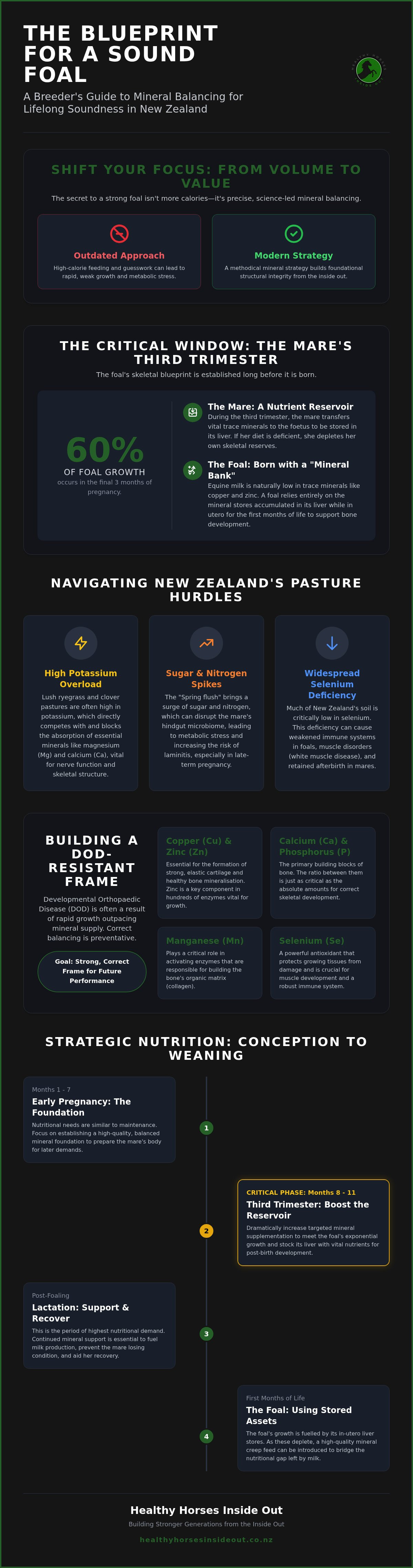
Success in the paddock starts with a fundamental shift in perspective. Our "Inside Out" philosophy dictates that systemic health is a proactive pursuit, not a reactive treatment. For breeders, this means recognising that the foal's skeletal integrity is largely determined while it's still in utero. The mare acts as a biological nutrient reservoir. She doesn't just provide energy; she transfers vital trace minerals to the foetus to be stored in its liver, as equine milk is naturally deficient in these elements. This is why high-quality mare and foal supplements NZ are essential for bridging the gap between pasture availability and physiological demand.
During the first seven months of pregnancy, the mare's requirements are similar to those of a horse at maintenance. However, the third trimester triggers a massive physiological surge. The foetus completes approximately 60% of its growth in these final months, placing an immense strain on the mare’s internal stores. If her diet lacks balanced minerals, she'll deplete her own skeletal reserves to support the foal, often leading to a loss of condition that's difficult to reverse during the even more demanding lactation phase. Reviewing Equine Nutrition Basics helps clarify how these core nutrients form the building blocks of life. It isn't just about quantity; it's about the precision of the delivery.
The Impact of New Zealand Pasture on Breeding Stock
New Zealand’s lush landscapes often mask hidden nutritional hurdles. Our ryegrass and clover pastures are frequently high in potassium, which directly competes with the absorption of magnesium and calcium. Additionally, the "Spring flush" brings a surge of sugar and nitrogen that can disrupt the hindgut and increase the risk of metabolic issues. Selenium deficiency is another critical concern across much of the country. Without targeted supplementation, mares are at higher risk of retained afterbirth, and foals may suffer from weakened immune systems or muscle disorders. Relying on pasture alone often leaves these gaps wide open.
Defining Foundational Health for the Next Generation
We must move beyond the traditional focus on calories. While maintaining a healthy body condition score is important, mineral balance is the true driver of correct growth and immune resilience. A foal born to a mineral-deficient mare starts life at a disadvantage, often lacking the internal stores required for dense bone and strong connective tissue. By prioritising trace mineral ratios over simple energy intake, you provide your youngstock with a superior start. For more on the fundamentals of regional mineral requirements, see The Ultimate Guide to Everyday Horse Supplements for New Zealand Conditions. Using specialised mare and foal supplements NZ ensures that these specific regional gaps are closed with precision, giving you peace of mind that the next generation is built on a solid foundation.
Preventing Developmental Orthopedic Disease (DOD) Through Mineral Balancing
Developmental Orthopedic Disease (DOD) remains one of the most significant anxieties for New Zealand breeders. It isn't a single condition but a group of growth disturbances, including osteochondrosis (OCD), physitis, and wobbler syndrome, that can compromise a foal's future soundness. While genetics and exercise play a role, the primary driver in our local environment is often a mismatch between rapid growth and mineral availability. Our high-energy ryegrass promotes fast weight gain, yet it frequently lacks the trace mineral density required to support that expanding frame. When a foal grows faster than its skeletal system can mineralise, the risk of permanent structural damage increases exponentially.
Timing is everything. The critical "mineral window" occurs during the final three months of gestation. Because equine milk is naturally low in trace minerals, the foal must accumulate a sufficient "savings account" in its liver while in utero. Research into the in-utero effects of mare nutrition confirms that maternal diet directly influences the foal's osteoarticular health. If the mare isn't receiving precise mare and foal supplements NZ during this stage, the foal is born with a nutritional deficit that's nearly impossible to correct through milk alone. This proactive approach ensures the foal has the necessary internal resources for the explosive growth that follows birth.
The Science of Skeletal Integrity
Copper is the silent architect of the skeleton. It's essential for the activation of lysyl oxidase, an enzyme that cross-links collagen and elastin to provide bone and cartilage with their tensile strength. Zinc works in tandem, facilitating the rapid cell division and protein synthesis required for tissue maturation. In many New Zealand regions, high levels of iron or manganese in the water and soil can "lock up" these minerals, making them unavailable to the horse. Understanding this biological interplay is as vital as choosing the right Horse Joint Supplements in NZ: A Science-Led Guide when managing youngstock performance.
Selenium and Vitamin E: The Antioxidant Shield
Selenium deficiency is a widespread reality across New Zealand. Without adequate levels, foals are vulnerable to White Muscle Disease, a painful degenerative condition of the skeletal and cardiac muscles. Precision is mandatory. Ensuring your mare and foal supplements NZ provide a calculated, safe dose of selenium is far more effective than relying on generic blocks or licks. While selenium is vital, it must be balanced carefully with Vitamin E to form an effective antioxidant shield. This combination protects developing tissues from oxidative stress and supports a robust immune response during the foal's first vulnerable months. To ensure your mare is receiving these critical elements in their most bio-available forms, consider a specialised mineral balancer designed for our unique soil profile.
Navigating New Zealand Pasture Fluctuations for Breeding Stock
New Zealand’s temperate climate allows for year-round grazing, yet this convenience brings significant metabolic risks for breeding stock. The rapid growth of ryegrass and clover during spring and autumn creates high-sugar "spikes" that can overwhelm a mare’s digestive system. For a pregnant mare, these fluctuations aren't just a management hurdle; they're a direct threat to her metabolic health. Excessive intake of non-structural carbohydrates (NSC) increases the risk of laminitis, a devastating condition that can be difficult to manage alongside the physical weight of a late-term pregnancy. Relying on traditional high-grain stud mixes often exacerbates this problem by adding more sugar and starch to an already rich diet.
A more methodical approach involves using low-sugar mare and foal supplements NZ that prioritise mineral density over caloric volume. By selecting a mineral-balanced pellet as a base, you provide the necessary building blocks for growth without the inflammatory risks associated with grain-heavy feeds. Incorporating high-quality fibre acts as a vital buffer, stabilising the hindgut and supporting the intense energy demands of a lactating mare. This nutritional stability ensures that the mare’s internal environment remains consistent, which is essential for both her own recovery and the steady development of her foal.
Balancing the Grass-Based Diet
Magnesium plays a critical role in maintaining metabolic stability and nervous system health. In many New Zealand paddocks, high potassium levels in the grass can interfere with magnesium absorption, leading to "grass-affected" symptoms in both mares and youngstock. You might notice heightened sensitivity, muscle twitching, or erratic behaviour. Addressing these issues requires a targeted mineral programme rather than simply adding more feed. Supporting the microbiome during these pasture shifts is also vital. You can find deeper insights on this in The Definitive Guide to Prebiotics for Horses NZ (2026), which explains how to protect the horse's internal ecosystem from pasture-driven stress.
Wintering the Broodmare in NZ
Maintaining condition becomes a challenge when pasture quality drops and paddocks become wet and cold. During these months, the mare’s energy is often diverted toward maintaining body heat, which can lead to a decline in coat and hoof quality if her mineral stores are low. Consistent use of mare and foal supplements NZ through the winter ensures she doesn't enter the demanding third trimester in a state of depletion. For a structured approach to seasonal care, refer to The Methodical Guide to Winter Horse Care Supplements in NZ. This strategy ensures your mare remains resilient, providing the foal with a steady supply of nutrients regardless of the weather outside.
A Methodical Feeding Plan: From Conception to Weaning
Navigating the journey from conception to weaning requires more than just an increase in the volume of feed. It demands a structured approach that respects the changing biological priorities of both the mare and her developing foal. By breaking this timeline into distinct phases, you can ensure that every gram of nutrition serves a specific physiological purpose. A science-led plan removes the guesswork and provides a clear roadmap for long-term health.
- Step 1: Early Pregnancy (Months 1-7). During this period, the goal is maintaining a stable baseline. Overfeeding energy now can lead to obesity, which complicates later metabolic health. A high-mineral, low-sugar base is ideal for maintaining condition without unnecessary weight gain.
- Step 2: Late Pregnancy (Months 8-11). This is the critical window for boosting the foal's internal mineral reservoir. As foetal growth accelerates, your choice of mare and foal supplements NZ must provide concentrated, bio-available levels of copper, zinc, and selenium to be stored in the foal's liver.
- Step 3: Early Lactation. This phase represents the peak of nutritional demand. The mare’s requirements for energy and minerals can double almost overnight as she begins producing milk for a rapidly growing foal.
- Step 4: Creep Feeding. Introducing the foal to small amounts of independent nutrition around three months of age prepares their digestive system for the eventual transition away from milk.
Lactation: The Greatest Nutritional Challenge
Milk production is an incredibly taxing biological process. If the mare’s diet doesn't meet the massive demand for calcium and phosphorus, she will deplete her own skeletal stores to enrich her milk. This often results in the "ribby" mare look that many breeders struggle to correct. To prevent this, focus on adding "cool" calories through fats and digestible fibres rather than large grain meals, which can trigger metabolic instability. High-quality protein sources are also essential, as the amino acid profile of the diet directly influences the quality of the milk produced.
Weaning Without the Stress
The transition to independence is often where youngstock suffer a "growth check" or immune slump. Foundational gut health is your best defence against this setback. By ensuring the foal is already accustomed to a consistent mineral supply before weaning, you reduce the risk of growth-related issues like epiphysitis. Supporting the foal's internal resilience during this stressful time is paramount for maintaining steady development. For a deeper look at protecting your youngstock during transitions, see our Equine Immune Support Supplement NZ: A 2026 Buying Guide. To find the ideal nutritional base for every stage of your breeding programme, explore our specialised mineral-balanced pellets.
The HHIO Solution: Foundational Nutrition for Mares and Foals
At Healthy Horses Inside Out, we view breeding as an exercise in intentionality. Our "Inside Out" philosophy is built on the belief that systemic health is the primary driver of external performance, and this journey starts long before a foal takes its first breath. By providing a science-led nutritional foundation, we move away from the high-pressure tactics of traditional retail and toward a trust-based partnership in your horse’s long-term wellness. Choosing the right mare and foal supplements NZ is about more than just filling a bucket; it's about ensuring your breeding programme is underpinned by integrity and biological logic.
Our approach focuses on building structural integrity from day one. We recognise that the New Zealand environment, while beautiful, presents specific mineral challenges that require a methodical solution. Real-world results are visible in the correct bone development, robust immune systems, and superior coat quality of youngstock reared on a balanced mineral programme. When you prioritise internal health, you gain the peace of mind that your foal has the best possible start in life.
Why HHIO Pellets Beat Generic Stud Feeds
Traditional stud mixes often rely on cereal grains and high-sugar fillers to provide bulk and calories. While these might maintain a mare's weight, they frequently fail to address the underlying mineral deficiencies prevalent in New Zealand soils. HHIO Pellets are designed as a concentrated, low-sugar, and high-mineral base. This allows you to feed less volume while providing more essential trace minerals like copper, zinc, selenium, and magnesium. Because they're highly palatable and easy to digest, they're an ideal choice for both the pregnant mare and the young foal beginning to explore independent nutrition. By removing unnecessary starch, you reduce the risk of metabolic stress and growth plate issues, ensuring a steady and safe growth rate.
Getting Started with HHIO Breeding Support
Transitioning your mare to a mineral-balanced diet should be a gradual process to protect her hindgut stability. We recommend introducing HHIO Pellets over a period of seven to ten days, slowly increasing the amount while decreasing any grain-based feeds. This methodical transition ensures the microbiome remains resilient during the shift. Customising the diet is simple with our targeted supplement bundles, which allow you to scale the nutrition based on whether your mare is in early pregnancy, late gestation, or peak lactation. Each stage has unique demands, and our bundles ensure those demands are met with clinical precision. To take the first step toward a sounder future for your youngstock, Explore our Mare and Foal Support Bundles and discover the difference that foundational mare and foal supplements NZ can make.
Building a Sounder Future for the Next Generation
Breeding success is defined by the intentionality of your nutritional choices today. We've explored how a methodical approach to mineral balancing protects your foal from developmental disorders while ensuring your mare remains resilient through the stresses of lactation. By moving away from generic, high-sugar stud mixes and embracing a science-led foundation, you address the specific deficiencies of our local environment with clinical precision. This strategy ensures that your youngstock isn't just growing, but maturing with the dense bone and strong connective tissue required for a future of athletic performance.
Using specialised mare and foal supplements NZ allows you to build structural integrity from the inside out, providing the high-quality, bio-available trace minerals required for maximum absorption. Our "Inside Out" philosophy is designed to give you peace of mind, knowing that every nutrient serves a biological purpose in your horse's long-term health. We invite you to Explore HHIO’s Science-Led Mare and Foal Supplements and see the difference that foundational nutrition makes. You aren't just feeding for today; you're investing in the lifelong soundness and vitality of your youngstock. We look forward to being your partner in this rewarding journey.
Frequently Asked Questions
When should I start giving my pregnant mare specialised supplements?
Specialised nutrition should ideally begin at conception to maintain a steady baseline, though the most critical period starts at the eighth month of pregnancy. During this final trimester, the foetus undergoes rapid development and must accumulate vital mineral stores in its liver. Since equine milk is naturally low in trace minerals, providing mare and foal supplements NZ during this window ensures the foal is born with the internal resources required for healthy skeletal maturation.
Can New Zealand pasture meet all the needs of a lactating mare?
No, relying on New Zealand pasture alone is often insufficient for the extreme demands of lactation. While our grass provides energy, it frequently lacks the necessary density of trace minerals like copper and zinc. Additionally, high potassium levels in local ryegrass can interfere with the absorption of magnesium and calcium. Because a mare’s nutritional requirements can double during peak milk production, targeted supplementation is necessary to prevent her from depleting her own skeletal reserves.
What are the most important minerals for foal skeletal growth in NZ?
Copper and zinc are the primary drivers of skeletal integrity in New Zealand youngstock. Copper is essential for the enzymatic activation that cross-links collagen, providing bones with tensile strength, while zinc facilitates the rapid cell division needed for tissue growth. These must be balanced with correct ratios of calcium and phosphorus. Because our soils are often deficient in these elements, a methodical mineral programme is vital to avoid growth-related structural weaknesses.
How do I prevent Developmental Orthopedic Disease (DOD) through nutrition?
Prevention of DOD begins in utero by ensuring the mare has optimal trace mineral levels during late gestation. You should avoid overfeeding high-sugar grains, as rapid weight gain without corresponding mineral support can trigger growth plate issues. By using mare and foal supplements NZ that prioritise mineral density over simple calories, you ensure the foal’s skeletal system mineralises at a rate that matches its physical growth, reducing the risk of permanent orthopedic damage.
Is selenium deficiency common in New Zealand breeding paddocks?
Yes, selenium deficiency is a widespread challenge across most New Zealand regions. This trace element is vital for protecting developing tissues from oxidative stress and supporting a robust immune system in the young foal. Without precise supplementation, foals are at a significantly higher risk of developing White Muscle Disease, a painful degenerative condition. It's safer to use a calculated daily supplement rather than relying on generic salt blocks, which don't guarantee consistent intake.
Should I creep feed my foal, and if so, when should I start?
Creep feeding is highly recommended to prepare the foal’s digestive system for the transition to independent nutrition. You should typically begin introducing small amounts of a mineral-balanced pellet around three months of age. This practice ensures the foal is already accustomed to a consistent supply of trace minerals before the stress of weaning occurs. It helps prevent the common "growth check" seen when foals are suddenly moved from milk to a purely pasture-based diet.
Are HHIO Pellets safe for mares with metabolic issues or laminitis?
Yes, HHIO Pellets are formulated specifically as a low-sugar and low-starch option, making them ideal for mares with metabolic sensitivities or a history of laminitis. Many traditional stud feeds are high in cereal grains, which can exacerbate insulin dysregulation. Our pellets provide a concentrated source of essential minerals without the inflammatory risks associated with high-NSC diets. This allows you to support the mare’s pregnancy and lactation safely while maintaining her metabolic stability.
How does New Zealand soil deficiency affect the health of my unborn foal?
New Zealand’s soil profile is naturally low in critical trace minerals, which directly impacts the nutrient transfer from mare to foetus. If the mare grazes on deficient pasture without supplementation, she cannot provide the foal with the necessary stores of copper and zinc required for cartilage maturation. This deficiency often leads to structural weaknesses that only become apparent once the foal begins rapid growth after birth, highlighting the need for a science-led nutritional foundation.


