

Your horse’s dull coat or brittle hooves aren't just cosmetic issues; they are the final, visible signals of a biological system that has been struggling for months. Many owners in New Zealand face the constant frustration of shoes that won't stay on or sudden, uncharacteristic spookiness that defies consistent training. You probably recognise that despite plenty of green grass, your horse isn't truly thriving, yet the complexity of soil ratios and mineral antagonisms makes it difficult to know where to start. Identifying the specific symptoms of mineral imbalance in horses NZ requires looking beyond the surface to understand how internal deficiencies manifest in daily life.
This science-led guide promises to help you pinpoint the subtle physical and behavioural red flags before they compromise your horse’s long-term health and performance. We will explore how our unique, selenium-poor and iron-rich soils impact equine vitality and provide a methodical checklist of symptoms to monitor. By the end, you’ll have the clarity needed to move past generic licks and embrace a targeted supplement programme that offers genuine peace of mind.
Key Takeaways
- Understand why a dull coat or brittle hooves are "lagging indicators" that only appear after internal systems have been compromised for months.
- Learn how to recognise the specific physical symptoms of mineral imbalance in horses NZ, such as sun-bleached manes and poor hoof wall integrity linked to copper and zinc deficiencies.
- Identify the connection between muscle stiffness or "tying up" and the critical need for bioavailable antioxidants like Selenium in New Zealand’s unique soil conditions.
- Discover why unexplained spookiness or muscle tremors may be a metabolic cry for help rather than a training issue.
- Gain a methodical framework for conducting a visual health audit and evaluating your current feed programme against actual equine nutritional requirements.
Recognising the Subtle Signs of Equine Nutritional Deficiency
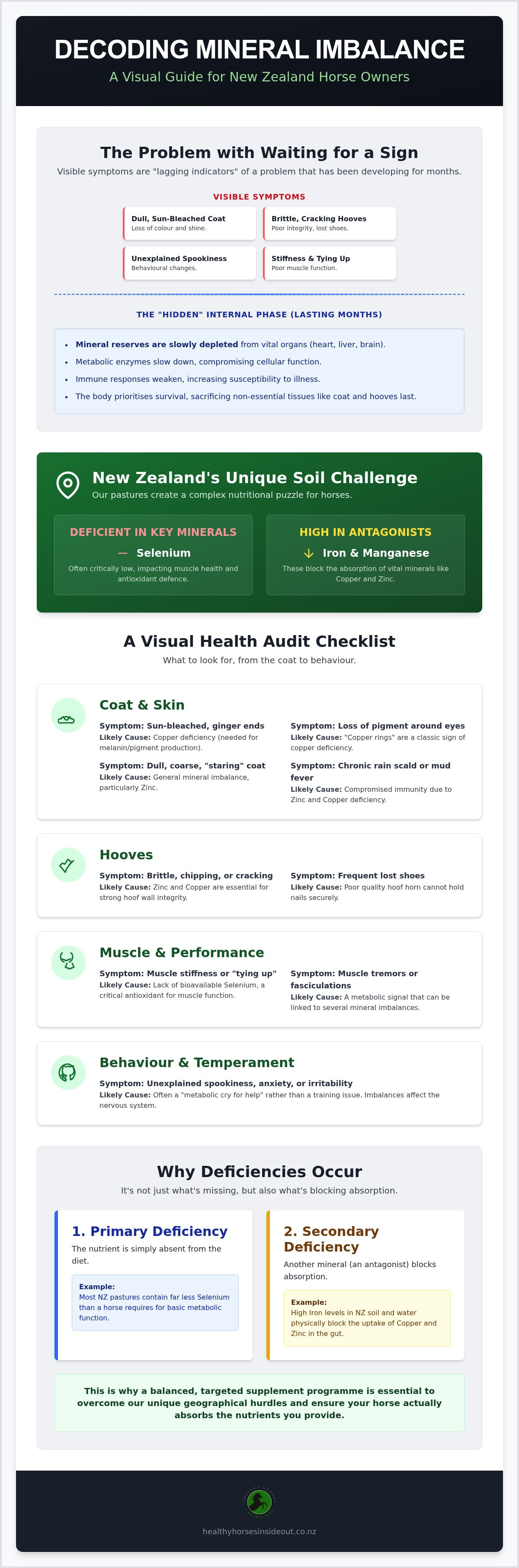
Nutritional deficiency is rarely a sudden event. It's a progressive, systemic failure where the body’s internal machinery begins to stutter long before you see a single physical red flag. In New Zealand, many owners mistake a horse carrying good weight for a horse that is nutritionally complete. However, "looking well" is a deceptive metric. A horse can be overweight while simultaneously suffering from profound cellular hunger. Carrying fat does not equate to metabolic health; it often masks the underlying symptoms of mineral imbalance in horses NZ that are quietly developing beneath the surface.
When we discuss these imbalances, we must treat the coat and hooves as lagging indicators. These tissues are non-essential for immediate survival, so the horse’s physiology prioritises its dwindling mineral reserves for vital organs like the heart, liver, and brain first. By the time you notice a ginger-tinged coat or brittle hoof walls, the internal systems have likely been compromised for months. This delay between internal depletion and external manifestation is why a proactive, science-led approach is essential for long-term vitality.
The "Hidden" Phase of Mineral Imbalance
During the early stages of a deficiency, changes occur at a cellular level that are invisible to the naked eye. Metabolic enzymes slow down and immune responses weaken. You might notice your horse seems slightly "off" or lacks its usual spark, but these signs are often dismissed as moodiness or seasonal changes. Simply giving a horse a "spell" on New Zealand grass rarely corrects these issues because our soil profile is fundamentally lacking in key trace elements. For a deeper understanding of these biological requirements, an Equine Nutrition Overview reveals how complex these interactions truly are and why they require intentional management.
Primary vs. Secondary Deficiencies
Understanding why a deficiency occurs is as important as recognising the signs. We categorise these into two distinct types:
- Primary Deficiencies: These occur when the nutrient is simply absent from the diet. For example, most NZ pastures contain less than 0.01mg/kg of selenium, which is significantly lower than the 0.1mg/kg recommended for a standard 500kg horse.
- Secondary Deficiencies (Antagonisms): This is where it gets complex. NZ soils are frequently iron-rich. High levels of iron or manganese in soil and water act as antagonists, physically blocking the absorption of copper and zinc in the gut.
This means even if your feed contains copper, your horse may still show symptoms of mineral imbalance in horses NZ because the mineral ratios are skewed. Precision in the daily hard feed is the only way to overcome these geographical hurdles and ensure your horse actually absorbs what you provide.
Physical Indicators: What the Coat and Hooves Reveal
The most striking visual cue of a mineral shortfall is often the "sun-bleached" look. While it's tempting to blame the harsh New Zealand sun, orange or ginger-tinged ends on a dark mane or tail are classic symptoms of mineral imbalance in horses NZ, specifically pointing toward a copper deficiency. Copper is essential for the production of melanin; without it, the hair loses its natural pigment and becomes susceptible to UV damage. This change isn't just a cosmetic quirk. It's a sign that the horse's internal copper stores are depleted, affecting everything from connective tissue strength to iron metabolism.
Dermatological Red Flags
Beyond the mane, look for a loss of pigment around the eyes and muzzle, creating what many call a "copper ring". The coat's texture also provides a roadmap to internal health. A healthy horse should possess a silky, reflective shine, yet a deficient one often presents a coarse, "staring" coat that feels dry to the touch. These are not merely aesthetic faults. As the Merck Veterinary Manual on nutritional diseases notes, these external changes reflect deeper physiological disturbances that compromise the horse's first line of defence: its skin. Chronic skin issues like rain scald or mud fever that refuse to clear with topical treatments often indicate a compromised immune system struggling with a lack of zinc and copper.
Hoof Quality and Structural Integrity
Hoof integrity is perhaps the most reliable indicator of long-term mineral status. Zinc and copper are the primary drivers of keratin production, the protein that provides the hoof wall with its structural strength. If your horse struggles with brittle walls, frequent seedy toe, or an inability to hold shoes through a standard six-week cycle, the issue is likely internal. You may also notice horizontal ridges, known as event lines, or exceptionally slow growth rates even when spring grass is abundant. Because hoof horn takes months to grow out, these issues require a consistent, high-quality foundation like targeted mineral pellets to resolve.
Delayed shedding is another critical red flag. If your horse is still holding onto a thick winter coat in October, its metabolic rate may be sluggish due to a lack of foundational minerals. This metabolic lag often coincides with increased skin sensitivity. Identifying these symptoms of mineral imbalance in horses NZ early allows for intervention before permanent damage occurs to the hoof capsule or immune system. When the body lacks the building blocks for healthy skin and horn, it's a clear signal that the internal environment is out of balance.
Performance and Muscle Function: Identifying Internal Gaps
Performance issues often represent the bridge between sub-clinical deficiency and visible physical decline. While a dull coat is a lagging indicator, muscle stiffness and exercise intolerance are more immediate signals that your horse's internal chemistry is struggling. You might find your horse reaches fatigue much earlier than their fitness level suggests they should, or they may appear "tucked up" and sore after even moderate work. These symptoms of mineral imbalance in horses NZ are frequently rooted in the body's inability to manage oxidative stress and cellular repair during exercise.
The Selenium and Vitamin E Connection
New Zealand’s landscape presents a unique challenge for performance horses. Because our soils are historically low in selenium, the forage your horse consumes likely fails to meet the basic antioxidant requirements needed for muscle repair. Selenium and Vitamin E work in tandem to protect cell membranes from damage during exertion. Without this protection, horses often experience sub-clinical muscle soreness that owners mistake for a "lazy" temperament or poor attitude. As an equine nutritionist on mineral deficiencies would observe, these performance gaps often precede more severe clinical conditions like tying up.
You may also notice a frustrating lack of topline development. Even with correct training and adequate protein intake, a horse cannot build or maintain healthy muscle tissue without the underlying mineral foundation. The "poor doer" who fails to thrive on standard rations is often a horse whose metabolic pathways are stalled by a lack of bioavailable trace elements. Providing these missing pieces allows the horse to finally translate their diet into functional muscle and stamina.
Joint and Bone Health
Structural integrity extends well beyond the muscle fibres. For young, growing horses, a mineral shortfall often leads to Developmental Orthopaedic Disease (DOD), where bones and cartilage fail to form correctly. In the mature performance horse, this same lack of foundational support manifests as clicking joints, shifting lameness, or early-onset degenerative changes. These issues are frequently linked to imbalances in copper and manganese, which are essential for collagen synthesis and bone density.
Maintaining the skeletal foundation requires more than just luck; it needs a targeted horse joint supplement NZ owners trust to provide the necessary ratios for structural repair. By addressing these symptoms of mineral imbalance in horses NZ through a science-led lens, you move away from reactive treatments and toward a proactive model of long-term soundness. Protecting the joints and muscles today ensures your horse remains a willing partner for years to come.
Behavioural Symptoms: How Imbalances Affect Temperament
Behavioural changes are often the most distressing signs for an owner, yet they are frequently mislabelled as "naughty" or "stubborn" behaviour. In reality, unexplained spookiness or hyper-reactivity to familiar environments are common symptoms of mineral imbalance in horses NZ owners observe during seasonal shifts. These aren't character flaws; they are physiological responses from a nervous system that lacks the necessary chemical dampeners to process environmental stimuli correctly. When the internal chemistry is skewed, a horse loses the ability to remain calm and focused, leading to a state of constant high alert.
Beyond simple reactivity, you may notice general grumpiness during grooming or an increased "girthiness" when tacking up. These are often physical manifestations of low-grade nerve sensitivity. If your horse appears to have poor concentration or struggles to retain training sessions, it's likely that their brain is prioritising survival over learning. Addressing these issues requires looking past the behaviour to the underlying nutritional stress.
The Magnesium Factor
Magnesium is the "great relaxer" of the equine world, playing a critical role in nerve transmission and muscle relaxation. In New Zealand, the abundance of high-potassium spring grass creates a significant biological hurdle. Potassium and magnesium compete for the same uptake pathways. When potassium levels surge in rapidly growing grass, they effectively flush magnesium out of the horse's system. This creates the "wired but tired" horse: an animal that is physically exhausted yet mentally hyper-alert and unable to settle. You might also notice muscle tremors or "thumps" (synchronous diaphragmatic flutter) during rest or work, which are clear indicators of a magnesium-related metabolic crisis.
Vitamin B1 (Thiamine) and the Nervous System
Thiamine plays a vital role in carbohydrate metabolism and nerve function. When horses graze on high-sugar (fructan) grasses common in many NZ paddocks, the resulting shift in hindgut pH can disrupt the delicate microbes responsible for B-vitamin production. A thiamine deficiency often leads to erratic behaviour and a lack of mental "brakes." Many owners find that traditional calming supplements fail because they don't address this nutritional root cause. To truly stabilise your horse's temperament and support their nervous system, you must provide the specific building blocks they lack. For a comprehensive solution that balances these complex interactions, explore our Everyday Horse Supplements designed specifically for New Zealand conditions.
Identifying these symptoms of mineral imbalance in horses NZ allows you to intervene with precision. By restoring the balance between magnesium, calcium, and potassium, you give your horse the internal tools they need to stay relaxed and responsive. This methodical approach to nutrition doesn't just improve performance; it restores the trust and partnership between horse and rider.
Addressing Deficiencies: From Paddock Analysis to Targeted Support
Moving from observation to action requires a structured approach. Once you recognise the symptoms of mineral imbalance in horses NZ, the next step is to methodically dismantle the barriers to your horse's health. This isn't about guesswork or adding random additives; it's about a clinical, evidence-based correction of the diet. To achieve lasting results, follow this five-step framework:
- Step 1: Visual Audit. Conduct a thorough assessment of the coat, hooves, and behaviour as discussed in previous sections to establish a baseline.
- Step 2: Feed Evaluation. Compare your current 'hard feed' against the specific trace element requirements of a horse grazing on New Zealand pastures.
- Step 3: Testing. Consider professional forage or soil testing to identify the exact mineral gaps and antagonisms present in your specific region.
- Step 4: Foundation. Introduce a high-quality, bioavailable base such as HHIO Pellets to bridge the most common deficiencies like selenium and zinc.
- Step 5: Monitoring. Commit to a full 12-week cycle. This is the minimum time required to see structural changes in the hoof wall and metabolic function.
The "Inside Out" Philosophy
We believe that external vitality is merely a reflection of internal cellular health. This is why everyday horse supplements are a non-negotiable component of modern equine management. Most New Zealand horses rely on pasture that, while looking lush, is often high in iron and low in selenium. A balanced diet must account for these antagonisms, ensuring that minerals like copper and zinc are actually absorbed rather than blocked by soil-based competitors. Consistency is paramount; a daily, measured intake provides the steady-state nutrition required for long-term resilience.
Selecting Targeted Solutions
While a foundational pellet serves most horses, some require more specific intervention. You might choose targeted bundles for metabolic or gut health, or perhaps an equine immune support supplement NZ owners use to combat chronic skin issues or seasonal allergies. It’s always wise to consult with a nutritionist to ensure you aren't 'over-supplementing', which can be just as detrimental as a deficiency. Taking a methodical approach ensures you address the root cause of the symptoms of mineral imbalance in horses NZ without wasting resources on unnecessary fillers. To find the right fit for your horse's unique profile, explore the best horse supplements New Zealand has to offer for 2026.
Building a Foundation for Long-Term Vitality
Recognising that your horse’s performance, appearance, and temperament are all deeply connected to their nutritional baseline allows you to move away from reactive fixes. We have explored how physical changes in the coat and hooves are often lagging indicators of deeper systemic failures, and why behavioural reactivity is frequently a metabolic cry for help. Addressing the specific symptoms of mineral imbalance in horses NZ requires a methodical shift toward science-led nutrition that accounts for our unique soil deficiencies. Simply hoping that lush grass provides everything your horse needs is rarely enough in our selenium-poor landscape.
By adopting an "Inside Out" philosophy, you ensure that every cell has the building blocks it needs to thrive. Our signature HHIO Pellets are specifically formulated to bridge the known mineral gaps in New Zealand and Australian pastures, providing a simple, daily solution for foundational support. It's time to stop guessing and start providing the precise ratios your horse deserves. Optimise your horse’s health with HHIO’s science-led supplements and gain the peace of mind that comes with evidence-based wellness. Your journey toward a more resilient, willing partner starts with the very next feed.
Frequently Asked Questions
Can I tell if my horse has a mineral deficiency just by looking at them?
You can identify certain visual markers like sun-bleached manes or brittle hooves; however, these physical symptoms of mineral imbalance in horses NZ only appear after internal reserves are depleted. By the time the coat loses its shine or the hooves begin to crack, the horse’s metabolic systems have been struggling for months. A methodical visual audit is a great starting point, but it should always be paired with a review of their total dietary intake.
How long does it take for supplements to fix a nutritional deficiency?
Expect to wait at least 12 weeks to observe significant structural changes, particularly in the hoof wall and coat quality. While behavioural improvements or muscle relaxation can sometimes occur within days or weeks, the physical repair of tissues takes much longer. A full hoof-growth cycle lasts several months, so consistency with a science-led programme is essential. Patience is required as the body rebalances its internal chemistry and begins to prioritise non-essential tissues again.
Is it possible to over-supplement my horse with minerals?
Over-supplementation is a genuine risk that can lead to toxicity or secondary deficiencies through mineral antagonisms. For instance, excessive iron intake can block the absorption of copper and zinc, even if those minerals are present in the diet. This is why we advocate for a methodical approach rather than adding multiple "shotgun" supplements. Working with a nutritionist ensures that you provide the correct ratios without creating new metabolic imbalances that compromise long-term health.
Why is my horse spooky even though they have plenty of grass in the paddock?
Lush pasture often contains high levels of potassium, which can flush magnesium out of the horse's system and cause hyper-reactivity. Magnesium is critical for nerve transmission and muscle relaxation; without it, a horse becomes "wired but tired" and unable to process environmental stimuli calmly. This nutritional stress is a common cause of unexplained spookiness. Providing a bioavailable magnesium source helps restore the chemical balance needed for a focused and relaxed temperament.
Does a standard salt lick provide enough minerals for my NZ horse?
Standard salt licks primarily provide sodium and chloride, which does not address the specific symptoms of mineral imbalance in horses NZ like selenium or copper deficiencies. Most horses won't lick a block enough to meet their daily requirements for trace elements. Relying on a lick leaves too much to chance. A measured, daily dose of targeted pellets ensures your horse receives the exact minerals required to bridge the gaps in our local soils.
What are the most common mineral deficiencies in NZ and AU horses?
Selenium, copper, and zinc are the most widespread deficiencies across New Zealand and Australian pastures. Our soils are naturally low in selenium, which is a vital antioxidant for muscle function and immune health. Additionally, high levels of iron and manganese often act as antagonists, preventing the horse from absorbing enough copper and zinc. This combination leads to common issues like poor hoof quality, skin sensitivity, and faded coat colour.
Can nutritional deficiencies cause symptoms similar to laminitis?
Nutritional imbalances can indeed cause foot soreness and horizontal "event lines" on the hoof wall that owners often mistake for laminitis. While true laminitis is a complex metabolic event, a lack of zinc and copper weakens the hoof’s structural integrity, making it more prone to sensitivity. Addressing these foundational gaps through a science-led supplement programme often resolves the "unexplained" foot soreness that doesn't respond to traditional management changes or restricted grazing.
Should I get a blood test or a forage test for my horse?
Forage testing is the superior method for identifying the specific mineral profile of your horse's primary diet. Blood tests only provide a snapshot of what is circulating at that exact moment; the body often pulls minerals from bone or liver reserves to keep blood levels "normal" even during a chronic deficiency. Analysing your pasture or hay allows you to identify antagonisms like high iron and balance the diet with precision, providing much better long-term outcomes.


