

That vibrant, emerald-green paddock might look like a nutritional paradise, but for the modern equine, it often functions as a biological minefield. While New Zealand is world-renowned for its grazing, achieving truly balanced grass fed horse nutrition NZ requires looking far beneath the surface of the blade. You've likely felt the frustration of managing "hot" behaviour during the spring flush or the confusion of balancing complex mineral ratios against hidden soil deficiencies like Selenium. It is a common struggle for dedicated owners who want the best for their horses but find themselves lost in a sea of conflicting advice and complicated feeding regimes.
We understand that your ultimate goal is a calm, resilient horse with strong hooves and the internal foundations to support external performance. This guide provides a science-led pathway to bridge the nutritional gaps inherent in our local pastures. By understanding the biological mechanisms at play and adopting a methodical approach to supplementation, you can establish a simple routine that ensures your horse thrives from the inside out. We will examine the specific mineral challenges of New Zealand soils and show you how to build a nutritional foundation that offers genuine peace of mind.
Key Takeaways
- Understand why visually lush New Zealand pastures often lack the essential minerals required for optimal equine health and performance.
- Learn how our young volcanic soils create natural deficiencies in critical trace minerals like Selenium, Copper, and Zinc.
- Discover how to bridge the nutritional gaps in grass fed horse nutrition NZ by moving beyond "empty calories" toward a balanced, science-led diet.
- Implement a simple, methodical feeding routine that prioritises internal systemic health to drive external results like hoof quality and calm behaviour.
- Identify how targeted supplementation with HHIO Pellets provides a reliable nutritional base without the need for unnecessary fillers.
Understanding the Paradox of New Zealand’s Lush Pasture
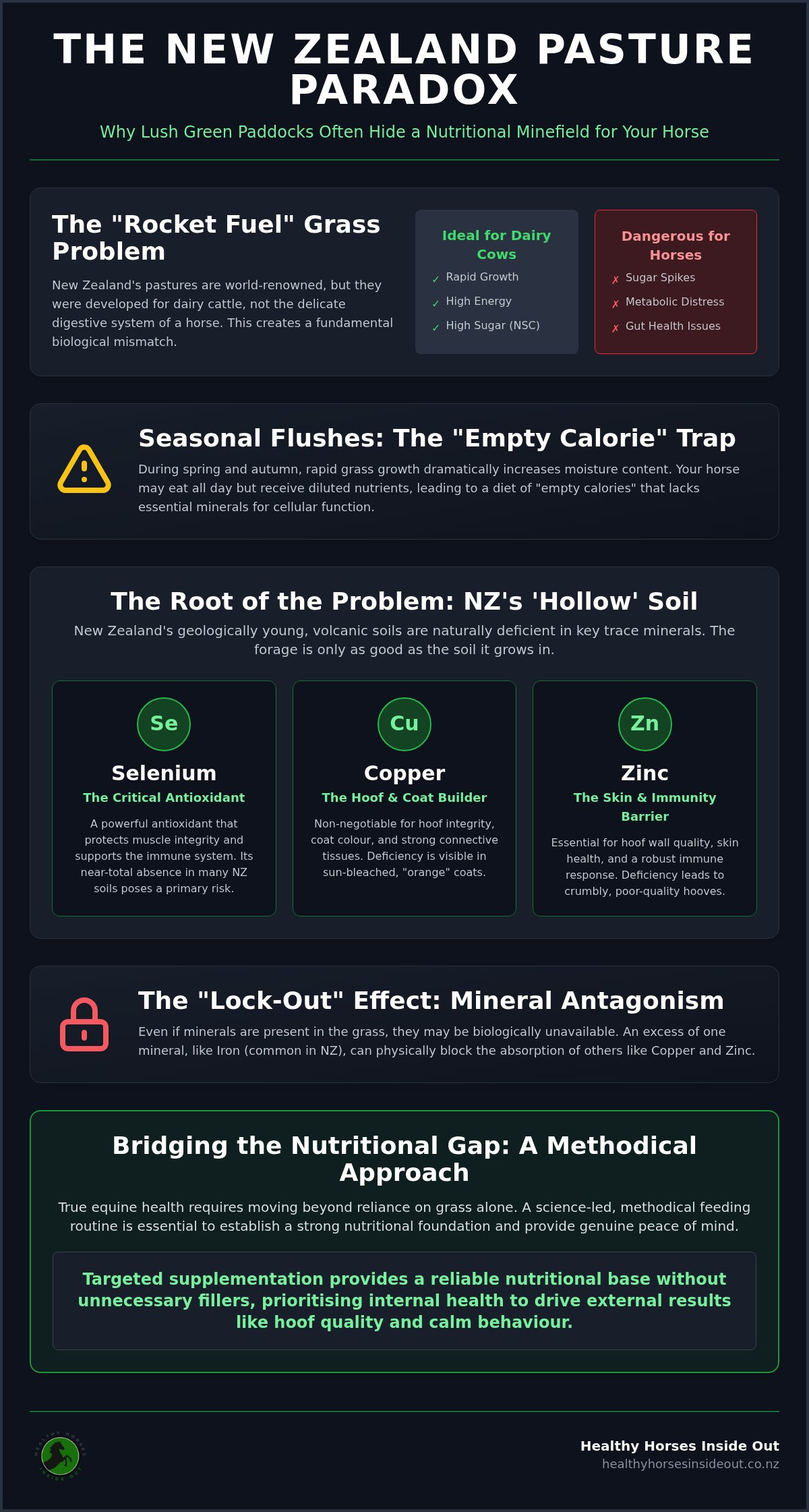
New Zealand is often celebrated as the "grass basket" of the world, but for horse owners, this reputation is both a blessing and a complex challenge. While a sea of green grass suggests abundance, it frequently masks a significant nutritional deficit that can lead to systemic health issues. The fundamental issue lies in the fact that most New Zealand pastures were originally developed to maximise milk production in dairy cattle, rather than to support the delicate digestive physiology of the horse. This historical focus on high-energy, high-sugar forage has created a landscape where grass fed horse nutrition NZ requires careful, intentional management to avoid metabolic distress.
Many owners experience deep emotional stress when their previously calm horses suddenly become "hot" or reactive during seasonal shifts. This isn't just a training issue; it's often a physiological response to an internal system under pressure. When the pasture provides an excess of certain elements while remaining deficient in others, the horse's internal balance is compromised. Establishing foundational support through targeted nutrition is the only way to move past these cycles of frustration and ensure long-term wellness.
Why Dairy-Grade Grass Can Be "Toxic" for Horses
Modern rye grass varieties are bred for rapid growth and high sugar content, specifically non-structural carbohydrates (NSC). While this is ideal for a dairy cow's energy needs, it can be devastating for horses. A foundational understanding of Equine nutrition reveals that horses evolved to thrive on high-fibre, low-sugar forage. When they consume "rocket fuel" grass, the resulting sugar spikes can trigger laminitis or insulin dysregulation. High nitrates in rapidly growing grass also interfere with gut health and magnesium absorption, often leading to the "grass tetany" symptoms of spookiness and muscle tremors. It's a biological mismatch that requires a methodical intervention to correct.
The Impact of Seasonal Growth Spurts on Equine Health
Spring and autumn flushes in New Zealand significantly alter the mineral-to-sugar ratio of the forage. During these periods, the grass is often high in moisture, which dilutes the essential dry matter intake. Your horse might be eating all day, yet they're effectively consuming "empty calories" that lack the trace minerals required for cellular function. For horses on 24/7 turnout, this lack of control over intake makes methodical nutritional monitoring vital. Without a consistent mineral base to bridge these gaps, the horse is left at the mercy of fluctuating soil chemistry and seasonal weather patterns. Relying on grass alone simply isn't enough for the modern horse to truly thrive.
The Biological Reality of NZ Soil Mineral Deficiencies
Soil mineral deficiency occurs when the land lacks the essential chemical elements required for optimal biological function in the animals grazing upon it. In New Zealand, this is a systemic reality rather than an isolated exception. Our geologically young volcanic soils are naturally low in several key trace minerals, meaning the grass might look healthy but lacks the essential building blocks for internal wellness. When we discuss grass fed horse nutrition NZ, we must acknowledge that the forage is only as good as the soil it grows in, and our soil is frequently "hollow" in terms of trace element density.
This challenge is often compounded by the "lock-out" effect, scientifically known as mineral antagonism. This happens when an excess of one mineral, such as Iron or Manganese, physically prevents the horse from absorbing another, like Copper or Zinc. Even if a mineral is present in the grass, it may be biologically unavailable to the horse. Selenium deficiency is a primary risk factor for NZ horses due to its near-total absence in many local soil profiles, leaving the animal without its most critical antioxidant defence.
The Critical Roles of Selenium, Copper, and Zinc
Copper and Zinc are the non-negotiable foundations for hoof integrity and coat colour. Without adequate levels, the internal structures of the hoof weaken, leading to chronic issues. Owners often notice visible signs of mineral deficiency in horses NZ, such as "orange" sun-bleached coats or crumbly, poor-quality hoof walls that struggle to hold a shoe. Selenium is equally vital, acting as a powerful antioxidant that protects muscle tissue from oxidative stress and supports a robust immune system. A deficiency here doesn't just affect appearance; it compromises the horse's ability to recover from exercise and resist disease.
Managing the Potassium-Sodium Imbalance
A significant gap in many nutritional plans is the failure to address the Potassium-Sodium ratio. New Zealand rye grass is often excessively high in Potassium while being critically low in Sodium. This imbalance disrupts the "sodium-potassium pump" at a cellular level, which is responsible for nerve transmission and muscle contraction. When this pump is compromised, horses often exhibit spooky, anxious, or unpredictable behaviour. This is one of the hidden dangers of lush pasture that goes beyond simple sugar content. Correcting this requires a methodical approach to mineral balance rather than just a standard salt lick. You can begin to address these systemic gaps by choosing HHIO’s targeted mineral solutions to restore internal equilibrium.
Analysing Forage Quality: Why Grass Alone Falls Short
Many owners aspire to a natural, forage-based lifestyle, but a "grass-only" approach often fails the modern horse. While pasture provides essential bulk, it frequently delivers what we call "empty calories"—energy without the accompanying micronutrients required for cellular repair and metabolic regulation. Optimising grass fed horse nutrition NZ isn't about replacing forage with grain; it's about identifying what's missing from the blade and filling those gaps with precision. You don't need a laboratory test to start evaluating your paddock's output. Look for signs like rapid, "puffy" growth or a lack of plant diversity, which often indicate a nitrogen-heavy, mineral-poor environment. For a deeper dive into the specific products that address these issues, see our ultimate guide to everyday horse supplements for New Zealand conditions.
Comparing Pasture Nutrients to NRC Requirements
The National Research Council (NRC) provides the global benchmark for minimum nutrient requirements. When we look at research on the feeding value of New Zealand pastures, a stark reality emerges: our grass rarely meets these basic maintenance levels for trace minerals. This creates a massive gap for performance horses or growing youngstock. Interestingly, "poor doers" are often just horses suffering from mineral starvation. They might have a belly full of grass, but their bodies are desperately seeking the Copper, Zinc, and Selenium required to process that energy into muscle and top-line. Without these catalysts, the horse's system simply cannot function at its peak.
The Hidden Dangers of High Sugar (NSC) Levels
Non-Structural Carbohydrates (NSC) are the sugars and starches that fuel plant growth. In New Zealand, environmental stress like heavy frosts or prolonged drought causes plants to store these sugars as a survival mechanism. Grazing "at-risk" paddocks during these times can lead to insulin spikes and systemic inflammation. It's vital to identify when your grass is becoming a metabolic liability. To protect your horse, you should balance the diet with high-fibre alternatives. Feeding quality meadow hay helps dilute the NSC load and provides the roughage needed for a stable hindgut. It's a simple, methodical way to ensure your horse stays level-headed and metabolically sound throughout the year, regardless of the weather.
How to Balance Your Horse’s Grass-Fed Diet: A Step-by-Step Guide
Achieving optimal grass fed horse nutrition NZ requires moving beyond reactive feeding and becoming a "Methodical Mentor" for your horse. This process isn't about finding a quick fix but about establishing a consistent, evidence-based routine that prioritises "Inside Out" health. When we focus on internal systemic balance, external performance and appearance follow as a natural consequence. By following a structured, step-by-step approach, you can eliminate the guesswork and provide your horse with the foundational support they need to thrive in our unique environment.
Step 1: Conduct a Forage and Health Assessment
The first step in any methodical plan is a thorough audit of both the environment and the animal. Evaluate the current state of your paddocks, noting the grass length, the variety of species present, and the percentage of clover. A paddock dominated by lush, short rye grass and heavy clover often signals a high-sugar, high-potassium environment that will require careful management. Simultaneously, perform a physical check on your horse. Look for a vibrant coat shine, strong hoof walls, and a well-developed topline. Be vigilant for metabolic "red flags" like fat pads behind the shoulder or a cresty neck, as these are clear indicators that the current pasture-only diet is causing internal stress and requires immediate adjustment.
Step 2: Select a Targeted Mineral Base
Once you understand the gaps in your forage, you must select a high-spec mineral balancer. Generic salt licks are rarely sufficient for the needs of the modern horse, as they often lack the concentration or the correct ratios required to offset New Zealand’s specific soil deficiencies. Look for bioavailable forms of minerals, such as chelates, which are more easily absorbed by the horse's digestive system than inorganic oxides. A high-quality carrier is also essential to ensure consistent daily intake. You can learn how to choose the best horse pellets in NZ to act as a nutritional base, ensuring that every dose of minerals is delivered effectively without the use of unnecessary fillers or grains.
Step 3: Implement and Adjust Seasonal Support
Consistency is vital, but your programme must also be responsive to the changing seasons. During the "grass flushes" of spring and autumn, adding extra salt and magnesium is often necessary to counter high potassium levels and maintain stable nerve function. Conversely, in winter or during drought conditions, increasing high-fibre intake through quality hay is essential for maintaining gut stability and providing warmth. Monitor your results over a 12-week cycle. This timeframe allows for the cellular turnover required to see visible changes in hoof quality and coat health. If you are ready to start this journey with a proven foundation, you can explore HHIO’s science-led supplement range to find the right balance for your horse.
Implementing a Methodical Nutrition Plan with HHIO Solutions
HHIO serves as a science-led partner for New Zealand horse owners who seek a deeper understanding of their animal's internal health. We don't believe in the high-pressure tactics of traditional retail or the "quick fix" approach that often masks underlying issues. Instead, our communication and product development are rooted in clinical authority and compassionate advocacy. Every formulation is the result of intentional research into the specific challenges of grass fed horse nutrition NZ, ensuring that our recommendations are both evidence-based and practical for the local environment. We act as a methodical mentor, guiding you toward a state of wellness where internal systemic health drives external performance.
The HHIO system is designed for simplicity and integrity. We understand that busy owners need a routine that is easy to implement yet scientifically sound. By focusing on the foundational requirements of the horse, we provide a sense of security and peace of mind. Our approach challenges conventional wisdom by prioritising high-dose, bioavailable minerals like Copper and Zinc without the unnecessary fillers often found in generic products. This commitment to transparency ensures that you know exactly what your horse is consuming and why it matters for their long-term vitality.
The Role of HHIO Pellets as a Nutritional Base
HHIO Pellets provide a low-sugar, high-mineral foundation that is essential for any grass-fed horse in New Zealand. Because they are a grain-free carrier, they are the ideal solution for metabolic or sensitive horses that cannot tolerate the high-starch content of traditional hard feeds. These pellets ensure that your horse receives a concentrated dose of essential trace elements without the risk of an insulin spike or digestive upset. For those managing horses that struggle to maintain condition, they are the ideal solution for supplements for poor doer horses NZ. By providing a consistent, high-spec base, you allow the horse's system to function optimally regardless of the quality of the seasonal forage.
Streamlining Care with Targeted Supplement Bundles
Our Horse Supplement Bundles take the guesswork out of complex mineral balancing by providing a complete, methodical solution in one package. When you choose a bundle, you gain the confidence that all critical foundations—including Copper, Zinc, and Selenium—are covered at the correct ratios for New Zealand conditions. This methodical approach eliminates the risk of over-supplementing certain minerals while leaving others deficient. Transitioning your horse to an HHIO programme is a straightforward process that focuses on gradual integration to support gut health. As you move through a 12-week cycle, you will begin to see the visible results of this internal balance, from a deeper coat colour to more resilient hooves. This is the essence of grass fed horse nutrition NZ: a simple, science-led routine that delivers genuine, long-term wellness.
Building a Foundation for Long-Term Equine Vitality
Achieving true wellness for your horse requires looking beyond the surface of the paddock. We've explored how the visually lush New Zealand landscape often masks significant mineral gaps, and why a methodical approach to supplementation is the only way to ensure your horse isn't just surviving, but thriving. By addressing the biological reality of our young volcanic soils and managing the specific mineral imbalances found in modern rye grass, you move away from the frustration of "hot" behaviour and toward the peace of mind that comes with evidence-based care.
Establishing a consistent routine is the most impactful step you can take for your horse's internal health. When you prioritise grass fed horse nutrition NZ through targeted, high-potency minerals, you provide the building blocks for resilient hooves, a vibrant coat, and a calm temperament. Our formulas are created with clinical authority and a compassionate focus on animal welfare, delivering essential nutrients without unnecessary fillers. You can optimise your horse’s nutrition with HHIO’s science-led supplement range and begin a journey toward lasting vitality. Your horse’s health starts from the inside out, and with the right foundations, their potential is limitless.
Frequently Asked Questions
Can a horse survive on just grass in New Zealand?
While a horse can physically survive on pasture alone, they rarely thrive without targeted intervention. New Zealand’s young volcanic soils are naturally deficient in critical trace elements, meaning the forage often lacks the mineral density required for optimal systemic function. Relying solely on grass for your horse's needs often leads to sub-clinical deficiencies that eventually manifest as poor hoof quality, dull coats, or metabolic instability.
What are the signs of mineral deficiency in grass-fed horses?
Visible signs often include a sun-bleached or "orange" tint to the coat, particularly in dark horses, and crumbly hoof walls that struggle to hold shoes. You might also notice a lack of topline despite adequate calories or the presence of "grass glands," which are swollen parotid glands behind the jaw. These physical markers are clear signals from the horse's system that the current mineral intake is insufficient for their biological requirements.
Why does my horse get "grass mad" in the spring?
This behavioural shift is typically a physiological reaction to the rapid growth of spring pasture, which is high in non-structural carbohydrates and potassium. These elements can interfere with magnesium absorption and disrupt nerve transmission, leading to an over-reactive or "spooky" temperament. Balancing the diet with extra magnesium and salt during these flushes helps stabilise the horse's internal chemistry and restore a calmer state of mind.
Do I need to feed grain to balance my horse’s minerals?
Grain is not a requirement for mineral balance and can often be counterproductive for metabolic or sensitive horses. A more methodical approach to grass fed horse nutrition NZ involves using a concentrated mineral balancer or high-spec pellets. This allows you to provide the necessary trace elements like Copper and Zinc without adding the high-sugar and starch loads associated with traditional grain-based hard feeds.
How much salt should I add to a grass-fed horse’s diet?
Most horses require approximately one to two tablespoons of plain white salt daily to maintain a healthy sodium-potassium balance. Because New Zealand pasture is naturally high in potassium and low in sodium, this simple addition is vital for the correct functioning of the cellular sodium-potassium pump. Providing salt in the feed ensures a consistent daily intake, which is far more reliable than relying on the horse to use a salt lick.
Is it safe to feed Selenium supplements to horses in NZ?
Selenium supplementation is safe and often essential in New Zealand, provided the dosage is carefully controlled. Since our soils are notoriously low in this mineral, horses lack the antioxidant protection required for muscle recovery and immune health. It's important to use a supplement with a guaranteed analysis to ensure you are meeting the horse's requirements without exceeding safe limits, providing genuine peace of mind for the owner.
How long does it take to see results from a mineral balancing programme?
Behavioural improvements, such as a reduction in "grass-affected" anxiety, can often be observed within a few days of starting a methodical programme. However, cellular changes like improved coat shine and stronger hoof growth take longer to become visible. You should monitor your horse over a 12-week cycle, as this timeframe allows for the growth of new, mineral-rich tissue to replace the old, deficient structures.
What is the best way to feed minerals to a horse that doesn’t get a hard feed?
The most effective solution is using a high-mineral pellet designed to be fed as a small, concentrated dose. These pellets act as a nutritional base and can be fed alone as a "handful" treat, ensuring the horse receives their daily minerals without the need for a large bucket feed. This method is ideal for good doers or horses on 24/7 turnout where maintaining a simple feeding routine is a priority for grass fed horse nutrition NZ.


