

What if the "sun-bleaching" on your horse's coat has actually very little to do with the sun? While it's easy to blame the harsh New Zealand UV rays for those frustrating orange tips on a dark mane, the biological reality is often found deep within the horse's physiology. You've likely spent a small fortune on topical oils and sprays that provide a temporary gloss, only to find the underlying scurf and faded colour remain unchanged once the product wears off. We understand the frustration of a horse that looks dull despite your meticulous grooming routine.
This article explores the science of equine nutrition to help you transform a lacklustre coat into a brilliant, deep-coloured shine by addressing the foundational imbalances unique to our volcanic soils. By choosing the right horse coat supplements NZ conditions demand, you can support melanin production and skin integrity at a cellular level. We will break down why copper and zinc are the true architects of coat health, how to avoid the "iron trap" in local pastures, and how HHIO Pellets provide the essential mineral base your horse needs for lasting peace of mind and a genuine show-ring finish.
Key Takeaways
- Understand why topical oils only provide a temporary gloss and how true brilliance starts with the structural protein keratin.
- Identify the common mineral antagonists in New Zealand pastures, such as iron and manganese, which can block the absorption of essential nutrients.
- Discover how the specific horse coat supplements NZ conditions demand can address soil deficiencies in copper and zinc to prevent "rusting" or sun-bleaching.
- Learn the difference between surface-level shine from fatty acids and the deep, rich pigment that results from a balanced mineral foundation.
- See how HHIO Pellets provide a methodical nutritional base to support long-term skin health and coat vibrancy from the inside out.
The Biology of a Brilliant Coat: More Than Just Surface Shine
The equine coat is far more than a decorative exterior; it is the horse's largest organ and a direct reflection of internal metabolic health. While many owners reach for topical sprays to create an artificial glow, true brilliance is synthesised within the body. The hair shaft itself is primarily composed of keratin, a tough, fibrous structural protein that also forms the basis of the hooves. For a horse to produce high-quality keratin, the body requires a steady supply of specific amino acids and minerals. If these building blocks are missing, the hair becomes brittle, loses its elasticity, and appears lacklustre regardless of how much grooming is performed.
Liver health plays a pivotal role in this biological process. As the primary site for detoxification and nutrient processing, the liver's efficiency dictates how well a horse can utilise the vitamins and minerals provided in their diet. When the liver is supported and functioning optimally, the results are visible in a coat that possesses a natural, deep-seated lustre. We believe that "Inside Out" health is the essential foundation for external vitality, where systemic balance drives every visible result.
How the Coat Reflects Internal Nutritional Status
A dull or brittle coat is often a biological "red flag" indicating a deficiency in essential amino acids or a disruption in gut health. If the digestive system is compromised, the horse cannot absorb the building blocks necessary for hair growth, regardless of the volume of feed provided. For instance, persistent scurf or dry skin is frequently a clinical sign of zinc deficiency, as this mineral is vital for skin cell regeneration and immune function. When evaluating horse coat supplements NZ riders often find that addressing these internal gaps yields far more sustainable results than temporary surface treatments.
The Role of Melanin and Pigmentation
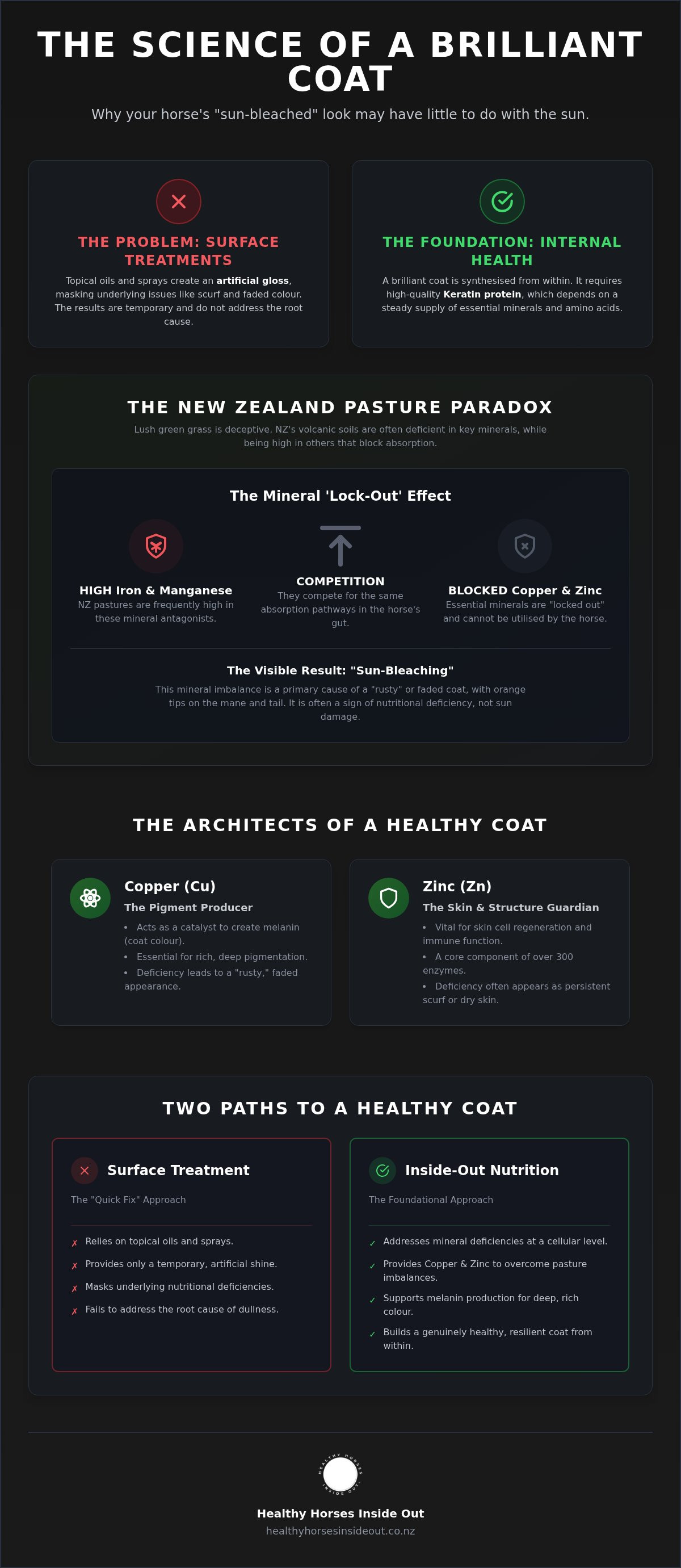
The depth of a horse's coat colour is determined by melanin, the pigment produced by specialised cells called melanocytes. While the genetics of coat color provide the hereditary blueprint, nutrition provides the actual raw materials. Copper acts as a critical catalyst in the enzymatic process that creates melanin. Without sufficient copper, the hair shaft cannot hold its rich pigment, leading to the "rusty" or sun-bleached appearance often seen on dark manes and tails during the summer. This fading isn't just a result of UV exposure; it's a sign that the horse's internal mineral stores are depleted. By using targeted horse coat supplements NZ horses can maintain their true, deep colour by supporting these underlying biological pathways from the very beginning of the hair growth cycle.
Why New Zealand Pasture Often Falls Short for Coat Health
Lush green grass is deceptive. NZ soils, particularly those with volcanic origins, are notoriously deficient in copper and zinc. While the grass looks healthy, it often lacks the trace minerals required for a resilient coat. This is where horse coat supplements NZ owners use become essential for bridging the gap between what nature provides and what the horse actually needs. Without these targeted additions, the horse is forced to prioritise internal organs, leaving the coat as the first place where nutritional poverty becomes visible. A dull coat is rarely just an aesthetic issue; it's a window into the horse's systemic mineral status.
The problem is compounded by "antagonists." NZ pastures are frequently high in iron and manganese. These elements compete for the same absorption pathways as copper and zinc. When iron levels are excessive, they effectively "lock out" copper, making it unavailable to the horse. This is a primary reason why a dark horse might "rust" or develop orange tips even when they are fed a supposedly balanced diet. Many standard feeds use generic formulations designed for international markets; they simply don't account for the specific high-iron profile of our local paddocks. This competition at the cellular level means that even if a supplement contains copper, it may not be absorbed if the iron levels in the base diet are too high.
The Copper and Zinc Connection
Copper and zinc are the primary horse coat supplements NZ horses require for structural integrity. Copper is essential for cross-linking collagen, while zinc is a fundamental component of over 300 enzymes. Together, they ensure the hair shaft is strong and the skin remains a functional barrier. Understanding the balance of nutritional players in this arena is key to achieving that elusive show-ring glow.
Selenium and Iodine: The Supporting Cast
Selenium is another critical gap in NZ soils, working alongside Vitamin E to protect skin cells from oxidative stress. However, selenium has a narrow margin of safety. While deficiency leads to poor hair quality, over-supplementation can be toxic, so testing is always advised. Iodine supports the thyroid gland, which regulates the metabolic processes behind hair growth cycles and ensures a clean spring shed.
Finding the right balance requires an evidence-based approach. You can explore how we use HHIO Pellets to address these specific New Zealand challenges through foundational nutrition.
Comparing Horse Coat Supplements: Oils vs. Mineral-Based Formulas
Choosing between different horse coat supplements NZ owners often encounter, specifically oils and mineral-based formulas, requires an understanding of how each affects the body. Oils are frequently marketed as the ultimate solution for shine, but they primarily provide a surface-level gloss. This is achieved through the deposition of fats into the hair cuticle, creating a reflective sheen that looks impressive in the short term. In contrast, mineral-based formulas work on the structural depth of the hair. While oils offer immediate visual feedback, they cannot repair the underlying weaknesses caused by a lack of essential building blocks like Methionine. This sulfur-containing amino acid is a critical component of keratin synthesis. Without adequate Methionine, the hair shaft lacks the tensile strength to resist breakage and maintain a smooth, light-reflecting texture.
Omega-3 and Omega-6 fatty acids are also vital for skin suppleness and maintaining a functional moisture barrier. Omega-3 is particularly effective at reducing systemic inflammation, which is beneficial for horses with sensitive or reactive skin. However, an over-reliance on Omega-6 can sometimes promote inflammatory responses if the ratio isn't carefully managed. Beyond diet, consistent grooming remains important for skin and coat health, as it stimulates the natural production of sebum and helps distribute these essential fats across the hair shaft.
When to Choose Equine Oils
Oils serve as an excellent source of "cool" energy, providing calories for performance without the excitability often associated with high-starch feeds. For horses prone to seasonal itching, the anti-inflammatory properties of cold-pressed flax oil can offer relief and improve skin elasticity. It's important to recognise, however, that oils alone cannot prevent the sun-bleaching or "rusting" discussed in previous sections. Fading is a mineral-driven issue, not a fat-driven one. If your horse has a glossy but faded coat, adding more oil won't restore the original deep pigment; it will only make the faded hair look shinier.
The Case for Mineral-Dense Pellets
For those seeking a sustainable solution, HHIO Pellets provide the foundational base for systemic coat health. These pellets are formulated to address the specific mineral imbalances found in New Zealand, simplifying your feeding routine by combining essential trace elements into a single, palatable delivery system. This methodical approach ensures that the horse's internal machinery has everything required to build a coat with genuine structural integrity. If you are unsure which path to take, reviewing our guide on what supplements does my horse need NZ can provide the clarity needed to make an informed decision for your horse's long-term wellness.
A Practical Routine for Achieving a Show-Ring Finish
A brilliant coat isn't achieved overnight. Because a new coat takes roughly 6-8 weeks to grow through, the results of your nutritional changes won't be immediate. You're feeding for the hair that is currently forming beneath the skin's surface, not just the hair you see today. This requires a shift in perspective, moving away from quick fixes toward a disciplined, long-term routine. Consistency is the primary driver of success when using horse coat supplements NZ riders rely on for competitive results. Internal health remains the absolute driver of external shine; if the systemic foundation is weak, the finish will always be fragile.
Nutrition Timing and Consistency
Many owners attempt "loading doses" in the weeks leading up to a major event, but this strategy is rarely effective for coat health. Equine biological processes have set rates; you can't force a hair follicle to synthesise keratin faster by doubling the mineral intake over a few days. Instead, focus your efforts on the critical transition periods of Autumn and Spring. This is when the horse's metabolic system is already working overtime to produce a new seasonal coat. Providing targeted support during these windows ensures the new growth is resilient and deeply pigmented from the moment it emerges. For those managing multiple horses or seeking a streamlined approach, horse supplement bundles NZ can offer a comprehensive solution that covers all nutritional bases without the complexity of mixing individual ingredients.
Holistic Management: Grooming and Rugging
Physical management serves as the essential partner to internal nutrition. Rugging is a vital tool in the New Zealand climate, acting as a physical barrier against the harsh UV rays that degrade hair pigment and cause that unwanted "rusty" look. However, a rug only preserves the colour that nutrition has already created. Similarly, daily grooming is indispensable. Vigorous brushing stimulates the sebaceous glands to produce sebum, the natural oil that provides water resistance and a healthy sheen. While grooming helps distribute these oils and removes dead skin cells, it's important to remember that no amount of elbow grease can compensate for a fundamental mineral deficiency. If the internal building blocks are missing, the hair will remain brittle and dull regardless of your grooming tools. To establish a routine that prioritises foundational health, you can explore our range of horse coat supplements NZ designed specifically for our unique local conditions.
Supporting Your Horse from the Inside Out with HHIO
Achieving a genuine show-ring shine requires more than just a surface-level approach; it demands a deep commitment to systemic health. At HHIO, our philosophy is rooted in the "Inside Out" principle, where external beauty is viewed as a natural byproduct of internal metabolic balance. We move away from the high-pressure sales tactics common in the industry, opting instead for a science-led strategy that prioritises animal welfare and nutritional integrity. By addressing the foundational gaps in our local pastures, we help you transition from using temporary "miracle" fixes to a sustainable wellness model that supports your horse for the long term.
Integrity is at the heart of our formulations. We utilise high-quality ingredients without the unnecessary fillers or binders that often dilute the efficacy of cheaper retail products. This focus on purity ensures that every gram of our horse coat supplements NZ range provides the targeted support your horse needs to thrive. When you choose HHIO, you aren't just buying a product; you're investing in a methodical partnership that values transparency and evidence-based results above all else.
The Methodical Mentor Approach
We act as a guide for owners who find the world of equine nutrition complex and overwhelming. Our goal is to provide the clinical authority you need to make informed decisions, offering a sense of confidence that your horse is receiving exactly what they require. This "peace of mind" comes from knowing that your hard feed is balanced specifically for the high-iron and low-copper challenges unique to New Zealand paddocks. For those who want to investigate the logic behind our formulations, understanding horse supplement ingredients NZ provides a deeper look into the biological roles of each component we use.
Next Steps for Your Horse’s Transformation
Starting with HHIO Pellets is the most effective foundational step you can take. These pellets provide a simple, concentrated delivery system for essential minerals, ensuring your horse has the structural building blocks for healthy skin and a vibrant coat. While the pellets serve as the nutritional base, you may also find that certain life stages or workloads require specific horse supplements to optimise performance and vitality.
We encourage you to take a long-term view of your horse's health. True transformation happens over months, not days, as the body repairs itself from the inside out. If you're ready to move beyond the guesswork and implement a professional nutritional plan, we invite you to book a consultation with us at healthyhorsesinsideout.co.nz to discuss your horse's unique requirements. Together, we can build a foundation of wellness that reflects in every strand of their coat.
Cultivate a Lasting Shine from Within
Achieving a show-ring finish is a journey of nutritional intentionality rather than a quick cosmetic fix. We've explored how the deep pigment and structural strength of a horse's coat are biological byproducts of balanced mineral intake; specifically addressing the copper and zinc gaps prevalent in New Zealand soils. While topical oils offer a fleeting gloss, true brilliance requires a methodical approach that respects the horse's internal physiology and the 6-8 week growth cycle of a new coat. By choosing the right horse coat supplements NZ horses need to counteract high-iron pastures, you provide the foundational support necessary for healthy skin and vibrant colour.
At HHIO, we're committed to providing science-led formulations and expert nutritional guidance that you can trust. Our integrity-based, filler-free supplements are designed to give you peace of mind and your horse the vitality they deserve. Invest in your horse’s brilliance with HHIO Pellets today and begin the transformation from the inside out. Your horse's healthiest, most radiant coat is well within reach through consistent, evidence-based care.
Frequently Asked Questions
How long does it take to see results from a horse coat supplement?
It typically takes approximately 6 to 8 weeks to see visible results because you are feeding for the new hair growth rather than the existing shaft. A supplement cannot change the hair already on the horse's body; it supports the follicles in synthesising high-quality keratin for the next cycle. For the best outcome, you should maintain a consistent routine throughout the seasonal transition periods in Autumn and Spring when coat changes are most active.
Can I give my horse too much copper and zinc?
While any mineral can be toxic in extreme amounts, the primary challenge in New Zealand is chronic deficiency rather than over-supplementation. Copper and zinc are essential for skin integrity and pigmentation, but they must be provided in the correct ratio to avoid secondary imbalances. We focus on evidence-based levels that counteract the high iron and manganese found in local pastures, ensuring your horse receives foundational support without the risk of physiological excess.
Why is my black horse turning orange in the sun?
That "rusty" or orange appearance on a black horse is usually a clinical sign of copper deficiency rather than just sun damage. Copper is a vital catalyst for the enzyme tyrosinase, which produces melanin, the pigment responsible for deep coat colours. When copper levels are low, the hair cannot hold its pigment and fades quickly under UV light. Using targeted horse coat supplements NZ owners trust can help restore that rich, dark lustre.
Do I need to rug my horse to keep a shiny coat?
Rugging is a management tool used to protect the coat from environmental bleaching and to keep the hair lying flat, but it cannot create shine. True brilliance is a biological byproduct of internal health and sebum production. While a rug preserves the colour by blocking UV rays, it is the underlying nutrition that provides the deep-seated glow and skin suppleness. A well-nourished horse will often have a better coat unrugged than a deficient horse kept under canvas.
What is the difference between coat oils and mineral supplements?
The main difference lies in whether you are addressing surface gloss or structural integrity. Oils provide a reflective sheen by coating the hair cuticle in fats and offering Omega fatty acids for skin elasticity. Mineral supplements, however, provide the raw materials like copper, zinc, and amino acids required to build the hair shaft itself. For a sustainable show-ring shine, minerals are the essential foundation, while oils act as a useful secondary top-up for extra gloss.
Are HHIO Pellets suitable for horses prone to laminitis?
Yes, HHIO Pellets are formulated to be safe for horses prone to laminitis or metabolic issues. They are low in non-structural carbohydrates (NSC) and contain no grain or high-sugar fillers that might trigger an insulin response. Our focus is on providing concentrated mineral support in a safe, palatable delivery system. This allows you to balance your horse's diet and support their coat health without compromising their metabolic stability or safety during the grazing season.
Does my horse need a coat supplement if they are on a full commercial feed?
Many horses on commercial feeds still require additional support because standard premixes often do not account for the high iron and manganese levels in New Zealand grass. These antagonists block the absorption of copper and zinc, meaning the minerals in the bag might never reach the horse's system. Supplementing with horse coat supplements NZ specific formulations ensures these gaps are bridged, providing peace of mind that your horse is actually receiving the nutrition listed on the label.
How does gut health affect my horse’s skin and coat?
Gut health is the gateway to a brilliant coat because the digestive system is responsible for absorbing every nutrient the horse consumes. If the hindgut is inflamed or the microbiome is imbalanced, the horse cannot efficiently process the amino acids and minerals required for keratin production. A healthy gut ensures that the building blocks for skin and hair are successfully transported from the feed bucket to the hair follicle, resulting in a naturally resilient and vibrant shine.


