

Feeding a high-protein diet to a horse with a weak topline is often like trying to build a house with plenty of timber but no nails. You might be spending hundreds of NZ$ on premium bags, yet your horse still struggles with poor muscle definition or slow recovery after exercise. It's a common frustration for many Kiwi owners who find that traditional "crude protein" labels don't always translate to physical results. If you've been searching for the right amino acids for horses NZ, you've likely realised that volume alone doesn't guarantee a strong, healthy frame.
We understand how disheartening it is to see a sunken topline despite your hard work in the arena and the paddock. This article will unlock the nutritional secrets to equine muscle development, showing you how to choose the specific building blocks required to support performance in New Zealand conditions. We'll move beyond basic protein percentages to focus on the essential "limiting" nutrients that actually drive muscle synthesis and repair. You'll gain a simplified, science-backed perspective on how to refine your feeding routine to ensure your horse has the foundational support they need for visible, lasting results.
Key Takeaways
- Learn why "crude protein" percentages on feed labels are often misleading and how to identify the bioavailable nutrients that actually build muscle.
- Discover the "Barrel Theory" of nutrition and why specific amino acids for horses NZ, such as Lysine and Methionine, are the critical keys to unlocking a stronger topline.
- Understand the "Inside Out" connection between hindgut health and muscle mass to prevent your nutritional investment from being wasted through poor absorption.
- Gain a framework for evaluating supplement integrity by comparing high-quality protein isolates against the generic fillers often found in bulk feeds.
- Identify how to streamline your feeding plan using nutrient-dense pellets that provide a precise amino acid base tailored for New Zealand pasture conditions.
The Science of Strength: Why Muscle Development Starts with Foundational Equine Nutrition
Many horse owners reach for the highest protein feed on the shelf when they notice a "sunken" topline or lack of muscle definition. However, building a powerful frame isn't a simple equation of "protein in, muscle out." True strength is built on specific, bioavailable amino acids for horses NZ riders need to understand if they want to see genuine physical changes. At HHIO, our "Inside Out" philosophy suggests that a visible, powerful topline is the external reflection of a horse's internal metabolic health. If the internal foundation is missing, no amount of heavy training will create the desired definition.
Effective horse muscle building supplements should be viewed as targeted amino acid profiles rather than just "extra protein." When you look at a feed tag, the "crude protein" percentage tells you the total nitrogen content, but it doesn't tell you if that protein is actually digestible or if it contains the specific building blocks your horse requires. Without the right balance, your horse's body cannot synthesise the new tissue needed for a strong back and hindquarters.
Protein vs. Amino Acids: The Building Blocks Explained
When a horse consumes protein, their digestive system breaks it down into 21 distinct amino acids. These are the actual "bricks" used for repair and growth. It's vital to understand that the equine body prioritises these resources based on survival. Vital organ function and cellular repair always come before the "luxury" of building a show-ready topline. If you feed generic crude protein without the right amino acid profile, the horse's system must process the excess. This often results in the kidneys working overtime to excrete nitrogen as ammonia. You end up with expensive urine and a stressed metabolic system rather than improved muscle mass.
Of these 21 amino acids, 10 are considered "essential," meaning the horse's body cannot manufacture them and must receive them through the diet. If even one of these essential building blocks is missing, protein synthesis for muscle growth simply grinds to a halt. This is why precision matters more than volume.
The NZ Pasture Challenge for Performance Horses
New Zealand's lush, green paddocks can be deceptive. While our grass is often high in sugar and calories, it frequently lacks the specific mineral balance required for efficient protein synthesis. High-sugar ryegrass can create metabolic shifts that interfere with how nutrients are utilised. In particular, NZ soils are notoriously low in trace elements like Zinc and Selenium. These minerals act as gatekeepers; without them, the body cannot effectively use amino acids to build muscle tissue.
Incorporating everyday horse supplements helps correct these baseline gaps that are so common in our localised conditions. Even "good" grass rarely provides the precise ratios needed for a horse in consistent work. For the performance horse, relying on pasture alone often leads to a cycle of muscle wasting and slow recovery because the "raw materials" for repair aren't available when the horse needs them most.
The Amino Acid Equation: Decoding Protein Synthesis for Better Equine Toplines
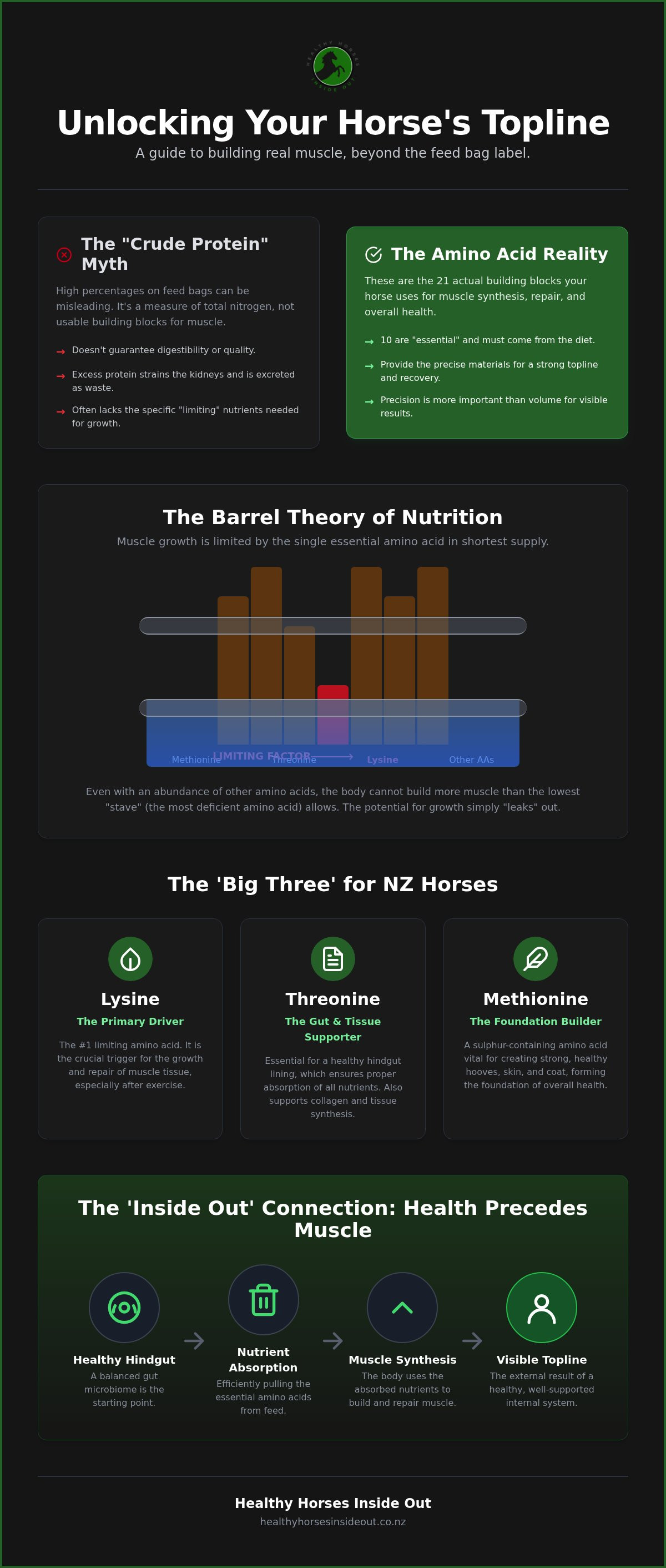
Understanding how muscle is built requires looking at the "Barrel Theory." Imagine a wooden barrel where each stave represents a different amino acid. The Barrel Theory is the biological rule where protein synthesis is limited by whichever essential amino acid is in shortest supply. If your horse has plenty of nine essential amino acids but lacks the tenth, the body cannot simply use the others to compensate; the "water" (muscle growth) will always leak out at the lowest point. This is why many owners see poor results even when feeding high-protein diets that lack the specific amino acids for horses NZ pastures fail to provide in sufficient quantities.
Lysine, Threonine, and Methionine: The 'Big Three'
While many international guides focus solely on Lysine, New Zealand conditions require a more balanced approach to ensure total systemic health. These three are the most likely to be deficient in a grass-based diet:
- Lysine: Often called the first limiting amino acid, it's the primary driver for growth and the repair of muscle tissue after work. Without it, no other amino acids can be used for building muscle.
- Threonine: This is essential for the production of gut mucin, supporting the "Inside Out" philosophy by protecting the digestive lining while maintaining lean muscle mass.
- Methionine: Beyond its role in muscle development, it provides the sulphur required for strong hoof integrity and healthy skin.
If you're looking to address these gaps effectively, choosing HHIO Pellets ensures your horse receives a high-spec, balanced profile of these critical nutrients without the fillers found in bulk feeds.
Branch-Chain Amino Acids (BCAAs) and Exercise Recovery
For the performance horse, the focus shifts toward Leucine, Isoleucine, and Valine, collectively known as Branch-Chain Amino Acids. These are unique because they're metabolised directly within the muscle tissue rather than the liver, making them incredibly efficient for recovery. By including BCAAs in the diet, you help prevent catabolism (muscle breakdown) during strenuous training sessions. This directly impacts the horse's willingness to work; by reducing post-exercise soreness, you ensure the horse can comfortably work through their back and engage their topline the next day. Consistent intake helps mitigate exercise-induced muscle damage, ensuring your horse stays in peak condition throughout the competition season.
Muscle repair is a continuous, 24-hour process. While the "anabolic window" immediately after exercise is a popular concept, the most significant gains come from consistent daily intake. This steady supply ensures the "staves" of your horse's nutritional barrel are always high enough to support sustained development and metabolic balance.
Ingredient Integrity: Comparing Effective Muscle Builders Against Common Fillers
Selecting a supplement based on the size of the bucket is a common pitfall that often results in more filler than functional nutrition. When you're looking for amino acids for horses NZ riders must prioritise quality over sheer volume. Bioavailability is the only metric that truly matters for muscle growth. If the protein source isn't easily broken down and absorbed in the small intestine, it won't reach the muscle cells to facilitate repair. High-quality sources like whey protein or soy isolate offer superior amino acid profiles compared to generic "protein meals," which are often by-products of other industries and vary significantly in their actual nutrient density.
Muscle development isn't just about building; it's about protection. Strenuous exercise creates oxidative stress, which can damage the very tissues you're trying to develop. This is why the inclusion of Vitamin E and Selenium is non-negotiable. Because New Zealand soils are notoriously low in Selenium, precision is vital. Owners should always check that their supplements align with the current NZ Selenium safety margins. Providing these antioxidants ensures that the metabolic pathways for muscle growth remain clear and that recovery is not hindered by cellular damage.
What to Look for on a NZ Supplement Label
Transparency is the hallmark of a high-quality product. A reliable label should provide specific mg/g listings for essential amino acids rather than hiding behind "proprietary blends." These blends often serve to obscure low inclusion rates of expensive active ingredients. When understanding horse supplement ingredients NZ owners should also look for chelated minerals. Zinc and Copper in chelated form are more readily absorbed, supporting the enzymatic processes that allow amino acids to be converted into visible muscle mass.
Common Fillers and Marketing Jargon to Avoid
Many bulk feeds and cheaper supplements rely on molasses or grain by-products to add weight and improve palatability. These high-sugar fillers can be counterproductive, potentially causing metabolic fluctuations that disrupt systemic health. You should also be wary of "window dressing." This occurs when a manufacturer adds a popular ingredient in a tiny, clinically insignificant amount just so they can feature it on the label. If a "natural builder" lacks clinical evidence for equine-specific protein synthesis, it's likely adding more to the cost than to your horse's topline. Integrity in formulation means every gram in the bag serves a functional purpose for the horse's internal wellness.
The 'Inside Out' Philosophy: Why Digestive Health Precedes Muscle Mass
You can invest in the highest quality amino acids for horses NZ suppliers offer, but if the digestive tract is compromised, those nutrients won't reach the muscle fibres. The hindgut serves as the "engine room" of the horse, where microbial fermentation converts forage into energy. When this environment is disrupted by sub-clinical ulcers or hindgut acidosis, the efficiency of nutrient absorption plummets. In these cases, expensive supplements are often "wasted" as they pass through a system too inflamed to utilise them effectively. A horse dealing with a sore gut will never reach its full muscular potential because its body is stuck in a cycle of maintenance rather than growth.
Maintaining a stable microbiome is a critical precursor to physical development. Using prebiotics for horses NZ owners can help support the beneficial bacteria that synthesise essential B-vitamins and facilitate the uptake of amino acids. Without this internal balance, the external results you're working for will remain frustratingly out of reach.
The Gut-Muscle Axis Explained
The connection between the digestive system and muscle mass is more direct than many realise. When inflammation exists in the digestive tract, the body's metabolic priorities shift. Energy and amino acids that should be used for muscle repair are diverted to the immune system to manage the inflammatory response. This often presents as "gut-related" muscle wastage, where the horse loses topline despite adequate caloric intake and work. A healthy microbiome is also responsible for synthesising B-vitamins, which are essential for the energy metabolism required during strenuous exercise. If the gut is out of balance, the horse lacks the metabolic spark needed to build power.
Practical Steps to Optimise Nutrient Absorption
To ensure your nutritional investment pays off, always follow the "forage-first" rule. Constant access to fibre helps maintain a healthy pH level in the hindgut, preventing the acidity that kills off beneficial microbes. If your horse shows signs of irritability, girthiness, or a dull coat, they might need a gut reset before you begin a targeted muscle-building programme. Combining specific gut support with your amino acid routine ensures the pathway from the bucket to the muscle is clear and efficient. For a comprehensive approach to foundational health, you can explore the HHIO range of targeted solutions to bridge the gap between digestion and performance.
Strategic Supplementation: Structuring Your Horse's Diet for Peak Condition
Structuring the daily feed room routine requires a shift from guesswork to precision. When asking what supplements does my horse need NZ, owners must evaluate the horse's workload alongside the seasonal quality of their pasture. A leisure horse in light work has vastly different requirements than a competitive eventer. However, the requirement for essential amino acids for horses NZ remains a constant baseline for maintaining systemic health. It's also vital to remember that nutrition doesn't work in isolation; it must work in tandem with correct, biomechanically sound training. You can provide the perfect building blocks, but without the correct "work" to stimulate muscle fibres, the horse won't develop the desired strength.
Building the Foundation with HHIO Pellets
HHIO Pellets serve as the ideal nutrient-dense base for any equine diet in New Zealand. By providing a high-spec mineral and amino acid baseline, they remove the need for multiple separate products, which simplifies the routine for busy riders. These pellets are formulated to address the specific mineral profiles found in our local soils, ensuring that Copper, Zinc, and Selenium levels support the metabolic pathways necessary for muscle function. For owners looking to streamline their approach, Horse Supplement Bundles offer a cost-effective way to ensure total nutritional coverage. This approach provides several key benefits:
- A high-spec mineral baseline specifically tailored for New Zealand soil profiles.
- Concentrated amino acid profiles that support efficient muscle synthesis and repair.
- A simplified feeding routine that replaces the need for multiple, expensive separate additives.
Creating a Long-Term Nutritional Plan
Building a powerful topline is a marathon, not a sprint. Consistency is far more valuable than high-dose "loading" periods that often overwhelm the horse's system and lead to nutrient wastage. We recommend a methodical approach: start with the foundation and monitor progress over months rather than weeks. Using weight tapes and taking monthly photos from the same angle can provide objective proof of muscle development that the naked eye might miss during daily feeding. This long-term perspective is the essence of the "Inside Out" approach. By prioritising foundational health and internal balance, you're not just chasing a cosmetic result; you're investing in your horse's long-term performance and overall peace of mind.
Building a Foundation for Lasting Equine Performance
Building a stronger topline is a methodical process that begins deep within your horse's metabolic system. By shifting your focus from generic crude protein to the precise amino acids for horses NZ pastures often lack, you provide the essential raw materials needed for genuine muscle development. It's important to remember that external results are always gated by internal health. An optimised hindgut and a balanced mineral profile are the true foundations of physical strength.
At HHIO, we combine clinical authority with a compassionate understanding of the unique challenges Kiwi owners face. Our specialised, NZ-centric formulas are trusted by competitive riders across the country because they prioritise integrity and systemic wellness over quick, cosmetic fixes. When you feed with intentionality, you aren't just building muscle; you're providing your horse with the foundational support they need for a long, comfortable career.
Explore our range of science-led horse supplements and HHIO Pellets today to start your horse's journey toward peak condition from the inside out. We're here to help you achieve the peace of mind that comes with evidence-based nutrition.
Frequently Asked Questions
Do horse muscle building supplements actually work?
High-quality horse muscle building supplements work by supplying the specific "limiting" amino acids that are often missing from a standard forage diet. When you provide bioavailable nutrients like Lysine and Threonine, you're giving the body the raw materials it needs to repair and build tissue after exercise. However, they aren't magic potions; they require a baseline of good digestive health and consistent, correct work to produce visible physical changes in the horse's topline.
How long does it take to see results from an amino acid supplement?
You should expect to see subtle changes in coat quality and recovery times within three to four weeks, but significant muscle development takes longer. Visible changes to the topline generally require eight to twelve weeks of consistent supplementation and training. Because muscle synthesis is a slow physiological process, we recommend taking monthly photos to track progress. This methodical approach ensures that the development is sustainable and reflects genuine structural improvement.
Can I feed muscle builders to a horse with laminitis or EMS?
Yes, targeted amino acids are often highly beneficial for horses with metabolic challenges like EMS or laminitis, as these conditions frequently cause muscle wastage. It's crucial to choose a supplement that is free from molasses, grains, and high-sugar fillers. By providing pure amino acids for horses NZ owners can support muscle maintenance without triggering an insulin spike. This allows metabolic horses to maintain better structural integrity and strength while remaining on a strictly controlled diet.
Will a muscle building supplement make my horse hot or fizzy?
Pure amino acids don't typically cause "fizz" or excitability because they're used for structural repair rather than providing a quick source of glucose or non-structural carbohydrates. Behavioural issues are usually linked to high-sugar fillers or excess grain in the diet rather than the protein building blocks themselves. By choosing high-integrity formulas like HHIO Pellets, you provide the nutrients required for strength and focus without the unnecessary energy spikes associated with traditional high-protein conditioning feeds.
Is it better to feed more protein or specific amino acids?
It's far more effective to feed specific, bioavailable amino acids than to simply increase the total "crude protein" in the diet. Excess protein that lacks the correct amino acid balance cannot be used for muscle building; instead, the horse's system must break it down and excrete it as ammonia through the kidneys. This process is metabolically taxing. Focusing on the "limiting" amino acids ensures that your horse can build muscle efficiently without the stress of processing unnecessary waste.
Can muscle supplements replace correct training and lunging?
No supplement can replace the need for biomechanically correct training and engagement. Think of amino acids as the bricks and training as the builder; you can have all the materials on site, but the house won't build itself without the work. Supplements provide the nutritional capacity for the horse to develop muscle, but the physical stimulus of correct lunging or riding is what triggers the body to actually use those nutrients to strengthen the topline.
What are the signs that my horse is lacking essential amino acids?
Common signs of deficiency include a persistent "sunken" appearance along the spine, a lack of muscling over the quarters, and slow recovery after exercise. You might also notice poor coat quality, brittle hooves, or a "pot-bellied" appearance despite a thin neck and topline. If your horse struggles to maintain condition despite being fed adequate calories, it's often a sign that the specific amino acids required for tissue synthesis are missing from their daily intake.
How does New Zealand soil quality affect my horse’s ability to build muscle?
New Zealand soils are notoriously deficient in key trace minerals like Selenium and Zinc, which act as essential co-factors for protein synthesis. If these minerals are missing, the horse's body cannot effectively utilise the amino acids for horses NZ pastures provide. This gap creates a "ceiling" on muscle development. Using a supplement tailored for NZ conditions ensures these mineral deficiencies are corrected, allowing the metabolic pathways for muscle growth and repair to function at peak efficiency.


