

Why does a horse standing in a knee-deep paddock of lush New Zealand rye-grass still struggle with brittle hooves, a dull coat, or unpredictable behaviour? It is a common paradox that leaves many owners feeling frustrated, especially when a cupboard full of expensive supplements fails to deliver the promised results. Establishing a routine for science-based horse nutrition NZ requires looking past the green grass to the complex chemistry beneath the surface. You have likely spent hours researching only to be met with conflicting advice that feels more like trial and error than a professional health strategy.
We understand that you want more than just a quick fix; you want the peace of mind that comes from a foundational wellness plan. This guide provides a methodical look at how to manage the complexities of our local pasture chemistry to optimise your horse's health. By moving away from guesswork and focusing on internal health, you can finally address the specific mineral imbalances like Selenium and Iodine deficiencies that are so prevalent in our soil. We will show you how to simplify your feeding routine while achieving visible improvements in your horse's vitality and performance from the inside out.
Key Takeaways
- Learn how the 'Inside Out' philosophy prioritises internal metabolic balance as the primary driver for visible health and long-term performance.
- Understand how to apply science-based horse nutrition NZ to address specific local soil imbalances, including common Selenium and Iodine deficiencies.
- Discover how to identify sub-clinical mineral deficiencies through a methodical visual assessment of your horse's coat, hooves, and behaviour.
- Explore the science of mineral ratios and learn why balancing Copper and Zinc is essential for horses grazing on high-iron New Zealand pastures.
- Master a research-led approach to designing a feeding programme that uses forage as a base to eliminate the frustration of trial-and-error supplement buying.
The Foundation of Science-Based Equine Nutrition in New Zealand
At its core, science-based horse nutrition NZ isn't about following the latest feed room trend or buying supplements based on a flashy label. It is the disciplined study of a horse’s specific nutrient requirements weighed against their actual forage intake. We operate on an 'Inside Out' philosophy, where internal metabolic balance is the non-negotiable driver of external health. If the internal chemistry is skewed, no amount of grooming or topical treatments will fix a brittle hoof or a dull coat. As a methodical mentor, our role is to strip away the confusion of complex biochemistry, providing you with a clear, evidence-based path to wellness.
New Zealand's unique geological history presents a specific set of challenges for equine health. Our landscapes, shaped by volcanic activity and sedimentary shifts, create a soil profile that is often rich in some minerals while being critically deficient in others. This means that the foundation of equine nutrition in this country must be highly localised to be effective.
Understanding NZ Soil and Pasture Chemistry
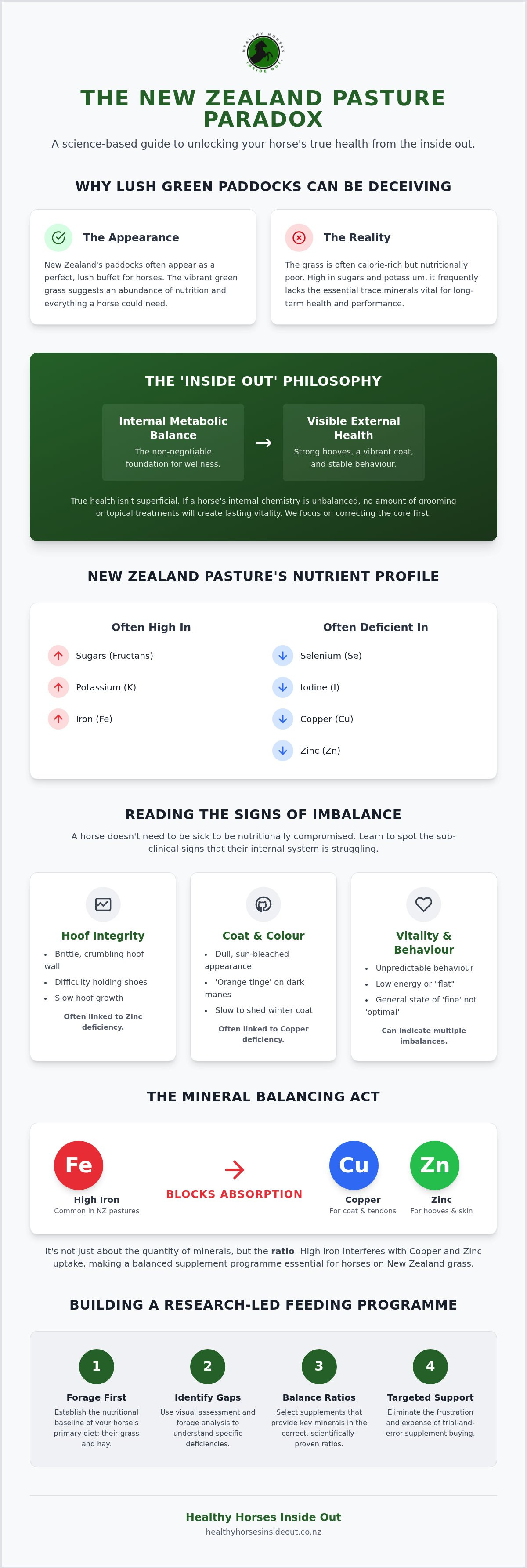
The lush, emerald paddocks that define our landscape are often deceptive. While they look like a buffet of health, the chemistry tells a different story. In many regions, volcanic and sedimentary soil types significantly influence mineral uptake in the grass. We frequently see a pattern where "lush" green grass is high in sugars and potassium but remarkably low in essential trace minerals. This creates a scenario where a horse may be calorie-rich but nutritionally starved. You can't judge a paddock's value by its colour; appearance is a poor indicator of the actual mineral density required for systemic health.
Why Grass-Only Diets Often Miss the Mark
There is a significant evolutionary gap between the diet of a roaming horse and the restricted grazing of a modern NZ paddock. Historically, horses would travel kilometres daily, consuming a vast array of forages across different soil types. In a typical New Zealand environment, they are restricted to a few grass species that often lack key elements. Common deficiencies found in local forage include Selenium, Iodine, Copper, and Zinc. These gaps become even more pronounced during seasonal growth spurts. When grass grows rapidly in spring or autumn, the plant's mineral content is often diluted by the sheer volume of water and sugar, leaving your horse's nutritional requirements unmet despite the abundance of feed.
Identifying the Biological Indicators of Mineral Imbalance
Identifying a mineral imbalance requires more than a cursory glance at a horse in a paddock. A horse doesn't need to be clinically ill to be nutritionally compromised. Many horses suffer from sub-clinical deficiencies; they aren't 'sick' in the traditional sense, but they certainly aren't thriving. This state of being 'fine' rather than 'optimal' is where science-based horse nutrition NZ provides the most value. By conducting a methodical visual assessment, we can decode the subtle biological signals that indicate the internal system is struggling to maintain equilibrium.
It is a common misconception that blood tests are the definitive gold standard for determining mineral status. While they are useful for specific markers, the body prioritises maintaining stable mineral levels in the blood to keep vital organs functioning. It will often 'steal' minerals from tissues or bones to keep blood levels within a normal range. Consequently, a 'normal' blood result might mask a significant systemic shortage. This nuance is particularly relevant within the New Zealand sport horse industry, where the high metabolic demands of performance require a more sophisticated understanding of nutrient uptake and endocrine health than a simple blood draw can provide.
The Role of Copper and Zinc in Skin and Hoof Integrity
Zinc acts as the primary building block for keratinisation. When Zinc levels are insufficient, the hoof wall loses its structural integrity, often resulting in brittle, crumbling feet that struggle to hold a shoe. Copper is equally vital, as it supports the production of elastin and collagen, which are essential for healthy tendons and vibrant coat colour. A classic indicator of Copper deficiency in New Zealand is the 'orange tinge' seen on the tips of dark manes and tails, or a sun-bleached coat that persists even when the horse is rugged. These aren't just cosmetic flaws. They are visible evidence of a breakdown in the horse's internal chemistry.
Selenium and Iodine: The Critical NZ Trace Elements
Selenium is essential for muscle function and immune resilience, yet New Zealand’s volcanic soils are notoriously low in this trace element. Without adequate Selenium, horses may suffer from poor muscle recovery or a weakened immune response. Iodine plays a similarly critical role by regulating the thyroid gland, which dictates metabolism and energy levels. Signs of deficiency can include lethargy or an inability to maintain condition. However, because both minerals can be toxic in excess, precision is vital. A science-led approach ensures you are providing enough to support health without risking the dangers of over-supplementation. If you've noticed these signs in your own team, exploring horse supplement bundles tailored to local deficiencies can provide a clear path forward.
The Science of Ratios: Why Quality Ingredients Matter More Than Quantity
In the pursuit of science-based horse nutrition NZ, many owners fall into the trap of believing that a longer ingredient list equates to a better product. This is rarely the case. True nutritional efficacy is governed by the science of ratios rather than the sheer volume of additives. Mineral antagonism is a biological reality where an excess of one element actively blocks the absorption of another. For instance, many New Zealand pastures are naturally high in Iron. When a horse consumes excessive Iron, it competes for the same uptake pathways as Zinc and Copper, often leading to a secondary deficiency despite those minerals being present in the diet.
Understanding The Basics of Equine Nutrition helps us realise that more is not always better. A methodical approach requires us to look at the Copper to Zinc ratio, which is particularly critical for horses on New Zealand's iron-rich soils. If this balance is skewed, the horse’s metabolic system faces an unnecessary workload to process the excess while starving for the blocked nutrients. Reading a supplement label like a scientist means looking for intentionality. You should ask why each ingredient is there and how it interacts with the base forage.
Avoiding the 'Trial and Error' Feeding Trap
The 'kitchen sink' approach to supplementation is both expensive and scientifically unsound. Generic mixes often attempt to cover every possible deficiency globally, but they frequently fail to address the specific imbalances of local forage. This leads to a cycle of trial and error that causes frustration for the owner and metabolic stress for the horse. A targeted, evidence-based formulation prioritises the minerals most likely to be missing or blocked in a New Zealand context. This precision offers peace of mind, knowing that you aren't just adding 'stuff' to a bucket, but are providing the specific keys needed to unlock systemic health.
Bioavailability and Absorption Rates
Bioavailability refers to the proportion of a nutrient that actually enters the circulation and is able to have an active effect. Not all minerals are created equal. Inorganic oxides, while cheap, often have poor absorption rates and can be abrasive to the digestive tract. In contrast, chelated or organic minerals are bonded to amino acids, allowing them to 'piggyback' through the intestinal wall more efficiently. While these high-quality ingredients may seem like a larger investment initially, they result in lower overall feeding rates. Because the horse can actually utilise what is in the bucket, you achieve better value and visible results with less waste.
Designing a Research-Led Feeding Programme for Your Horse
Creating a feeding routine that actually works requires a shift from reactive buying to proactive planning. A successful programme for science-based horse nutrition NZ is built on a sequence of logical steps that account for the horse's biology and the environment they live in. It isn't about finding a magic ingredient. It's about ensuring every component of the diet serves a specific, evidence-based purpose. Follow this five-step methodical framework to build your horse's nutritional foundation:
- Step 1: Assess the individual. Start by documenting your horse's current condition, workload, and life stage. A growing foal has vastly different amino acid requirements than a retired senior or a high-performance athlete.
- Step 2: Evaluate the forage. Since pasture and hay form the bulk of the diet, you must account for the seasonal shifts in New Zealand grass, such as the high potassium levels in spring or the mineral dilution during rapid growth.
- Step 3: Select a base carrier. Choose a low-calorie, high-nutrient base like HHIO Pellets. This ensures your horse receives their essential minerals without the metabolic stress of unnecessary sugars or starches.
- Step 4: Layer targeted support. Once the foundation is solid, you can add specific support for individual challenges, such as extra biotin for poor hoof quality or prebiotics for a sensitive digestive system.
- Step 5: Monitor and adjust. Systemic changes in the coat, hooves, and hooves take time. Commit to a 12-week cycle before making further changes, as this allows enough time for new, nutritionally supported tissue to grow.
The Forage-First Philosophy
The equine hindgut is a complex fermentation vat that requires a constant flow of fibre to maintain a healthy microbiome. When this balance is disrupted, it can lead to issues ranging from poor condition to behavioural changes. Choosing the right hay is vital. In New Zealand, look for forage that complements your pasture rather than adding to existing imbalances. High-quality fibre provides the energy needed for maintenance while supporting the beneficial bacteria that drive digestive efficiency in the grass-fed horse.
Balancing the Bucket Feed for NZ Conditions
A common mistake is using 'fillers' or high-starch grains that can trigger inflammatory responses. A science-led bucket feed should be clean and intentional. One often-overlooked element in the New Zealand diet is plain salt. It is a critical electrolyte that many horses simply don't get enough of from a standard lick. For a deeper look at specific requirements, you can read our guide on what supplements does my horse need NZ. To start your horse on a cleaner, more effective path, explore our HHIO Pellets as the ideal nutritional base.
HHIO: Bridging the Gap Between Science and Practical Equine Care
Healthy Horses Inside Out (HHIO) was founded to translate complex equine biochemistry into accessible, daily care. It isn't enough to understand the theory. You need tools that work in a New Zealand context. By applying local research to every product, we ensure that science-based horse nutrition NZ is a practical reality for every owner. Our commitment to integrity means we prioritise substance over marketing. We source high-quality minerals that meet the specific needs of horses grazing on our unique soils. This direct-to-consumer model allows us to maintain high standards while providing national delivery, ensuring every horse in the country has access to evidence-based wellness.
HHIO Pellets: A Methodical Base for Every Horse
The HHIO Pellets represent an intentional shift away from traditional, bulky feeds that are often high in starch and low in bioavailable minerals. We designed these pellets as a concentrated, mineral-rich base that fits into any bucket. Unlike loose powders, which can sift to the bottom or be blown away, a pelletised form ensures your horse actually consumes the nutrients you've paid for. This form is more stable and palatable. It simplifies the feeding routine, especially for those managing multiple horses with varying needs. It's about efficiency. You can find more about the specific formulations in our guide to everyday horse supplements.
Targeted Supplement Bundles for Specific Health Goals
Nutrition is rarely about a single ingredient. It's about how different elements work in synergy to support systemic health. Our supplement bundles are the most methodical way to address complex health goals without the guesswork of trial and error. Whether you are focusing on hoof health, gut support, or metabolic balance, these bundles provide a streamlined approach to supplementation. The 'Everyday Care' bundle, for instance, is specifically balanced for New Zealand conditions. It ensures your horse receives the foundation they need to thrive from the inside out. This approach removes the frustration of buying individual pots of minerals that may not be balanced correctly. We invite you to explore the HHIO supplement bundles to find the ideal match for your horse's unique requirements.
Cultivating Long-Term Vitality Through Evidence-Based Care
Achieving optimal equine health in New Zealand's unique environment requires moving beyond the visual appeal of green pastures to understand the biological mechanisms at play. By prioritising the 'Inside Out' philosophy, you can transition from the frustration of trial and error to a structured routine that addresses specific mineral imbalances. We've explored how understanding mineral ratios and focusing on forage-first principles creates the foundation for systemic wellness. Implementing a routine for science-based horse nutrition NZ ensures that your horse isn't just surviving on a grass-only diet but is thriving with the precise support their physiology demands.
Healthy Horses Inside Out is your partner in this journey, offering specialised solutions for our local conditions. Our methodical, science-backed formulations are trusted by owners nationwide to deliver visible improvements in coat, hoof, and behaviour. It's time to stop guessing and start feeding with intentionality. Build your horse's health from the inside out with HHIO's science-led supplements. With the right nutritional foundation, you can enjoy the peace of mind that comes from knowing your horse is supported by the very best in nutritional science.
Frequently Asked Questions
What are the most common mineral deficiencies for horses in New Zealand?
Selenium, Copper, Zinc, and Iodine are the most common deficiencies found in New Zealand pastures. Our unique soil chemistry means that even lush-looking grass often lacks these critical trace minerals. Selenium deficiency is particularly widespread due to volcanic and sedimentary soil profiles. Addressing these gaps is a core component of science-based horse nutrition NZ, as it ensures the internal metabolic systems have the necessary components to support healthy muscle function and immune resilience.
Is it possible to over-supplement my horse with minerals like Selenium?
Yes, it is entirely possible to over-supplement Selenium, and doing so can lead to serious toxicity. While New Zealand soils are often deficient, the margin between a safe dose and a toxic one is relatively narrow. Symptoms of toxicity include hair loss in the mane and tail or horizontal cracks in the hoof wall. This is why we advocate for precise, measured dosing rather than an unguided 'more is better' approach to supplementation.
How long does it take to see visible results from a science-based feeding plan?
You should expect to see significant systemic changes over a 12-week cycle. While some improvements in behaviour or gut comfort may appear sooner, physical structures like the coat and hooves take time to grow. A new, nutritionally supported hoof wall must grow down from the coronary band, which is a slow biological process. Consistency is key during this period to allow the horse's internal chemistry to stabilise and reflect externally.
Can I use everyday horse supplements for a horse with a sensitive gut?
Our Everyday Horse Supplements are designed to be safe for horses with sensitive digestive systems. We prioritise high-quality, bioavailable minerals and avoid the high-starch grains or inflammatory fillers often found in generic feeds. By focusing on a forage-first approach and using clean carriers, you can provide essential nutritional support without triggering gut distress. This methodical approach ensures that even the most sensitive horses can achieve optimal health without metabolic upset.
Do NZ horses really need extra salt if they have a salt lick?
Most horses don't receive adequate sodium from a standard salt lick alone. Many horses find licks abrasive on their tongues or simply don't use them enough to meet their daily requirements, especially during hard work or hot weather. Providing a measured amount of loose salt in the bucket feed is a far more reliable method. This ensures your horse maintains proper hydration and electrolyte balance, which is vital for efficient muscle and nerve function.
What is the difference between a generic horse vitamin and a science-based supplement?
The difference lies in the intentionality of the formulation and the quality of the ingredients used. Generic vitamins often use cheap, inorganic oxides with low absorption rates and may not account for the mineral antagonisms present in New Zealand soil. A science-based supplement prioritises bioavailability and correct mineral ratios, such as the balance between Copper and Zinc. This ensures the nutrients actually reach the bloodstream rather than simply passing through the horse's system as waste.
How do I know if my horse's hooves are suffering from a nutritional deficiency?
Nutritional deficiencies in the hoof often manifest as brittle walls, frequent cracks, or a persistent struggle with seedy toe. You might also notice horizontal rings or a lack of the natural waxy shine that indicates a healthy lipid barrier. Because Zinc is a primary building block for keratinisation, poor hoof quality is frequently a visible signal of an internal mineral imbalance. Using science-based horse nutrition NZ helps restore the structural integrity of the hoof from the inside out.
Are HHIO pellets suitable for horses prone to laminitis?
HHIO Pellets are an excellent choice for horses prone to laminitis because they are formulated to be very low in sugar and starch. We understand that managing metabolic horses requires strict control over non-structural carbohydrates. Our pellets provide a concentrated mineral base without the calorie load of traditional grain-based feeds. This allows you to provide essential nutritional support for hoof and systemic health without risking the metabolic spikes that can trigger laminitic episodes.


