

The persistent spookiness and reactive behaviour you're facing under saddle are rarely signs of a 'naughty' horse, but are more likely biological symptoms of a mineral-depleted system struggling with the unique profile of New Zealand pasture. It's incredibly disheartening to feel unsafe while riding or to waste money on short-term calming pastes that offer only a fleeting window of focus before the anxiety returns. You've likely wondered if your horse's temperament is simply fixed; yet, the science of equine nutrition suggests that many behavioural issues are actually rooted in nutritional gaps and mineral antagonists found in our lush, green paddocks.
By selecting the most effective horse calming supplements NZ has to offer, you can finally bridge these gaps and restore systemic balance to your horse's nervous system. This 2026 guide will help you understand the physiological link between gut health and mental clarity, moving away from temporary herbal sedation toward evidence-based wellness. We'll preview how to identify specific mineral deficiencies, simplify your daily supplement routine, and ultimately achieve the relaxed, sane, and focused partner you deserve for every ride. Understanding the cause of the heat is the first step toward a truly settled horse.
Key Takeaways
- Identify how mineral antagonists like iron and manganese in local soil can block magnesium absorption, creating the physiological "grass-affected" behaviour common in New Zealand.
- Learn to select effective horse calming supplements NZ riders trust by prioritising Vitamin B1 and essential amino acids over short-term, herbal sedatives.
- Discover the benefits of switching to grain-free HHIO Pellets to avoid the "sugar high" trap and provide a low-fizz, foundational base for reactive horses.
- Master a methodical approach to feeding that removes metabolic triggers while gradually introducing minerals to support long-term nervous system stability.
- Transition from managing "naughty" behaviour to addressing systemic health, ensuring your horse feels safe and focused from the inside out.
The Biological Link Between NZ Pasture and 'Hot' Behaviour
In the unique environment of New Zealand, 'grass-affected' behaviour is a term every rider eventually encounters. It describes a state of hyper-reactivity where a horse becomes uncharacteristically spooky, anxious, or difficult to manage. While many owners mistake this for a lack of training, the reality is often rooted in the biochemistry of our soil. Lush, green paddocks may look like equine paradise, but they frequently harbour high levels of mineral antagonists that disrupt internal stability. Understanding natural Horse behavior is vital, but we must also recognise when that behaviour is being pushed into overdrive by nutritional imbalances.
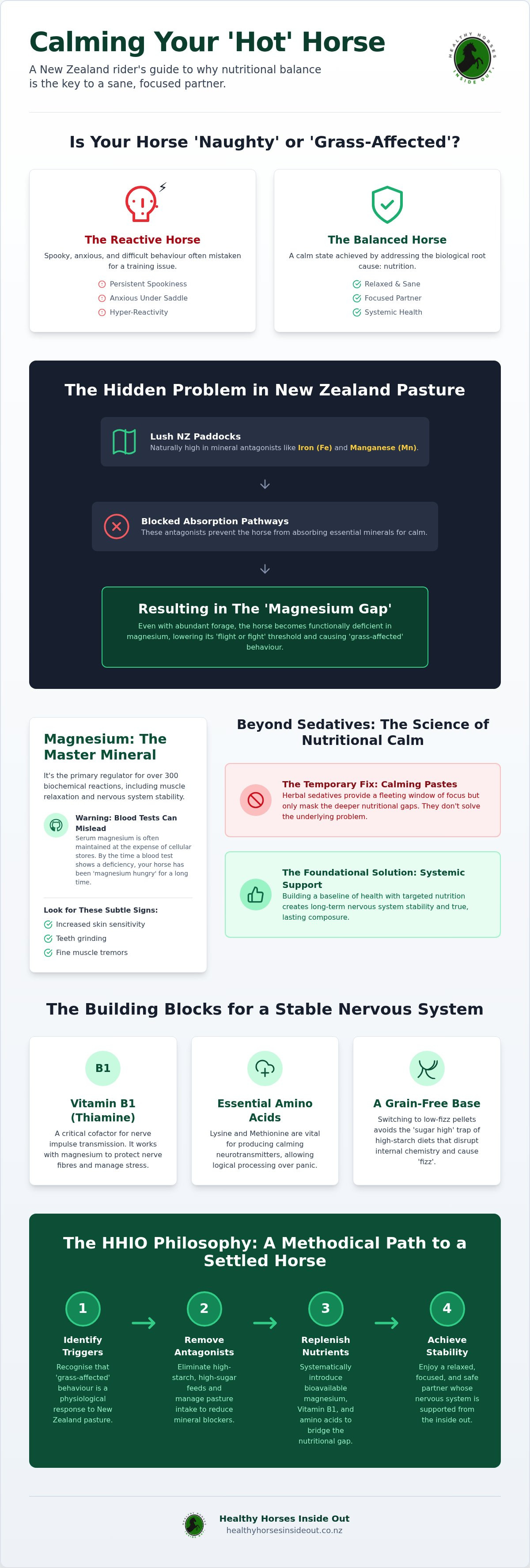
Our local soil chemistry presents a significant challenge for equine wellness. High concentrations of iron and manganese act as powerful antagonists, effectively blocking the pathways the horse uses to absorb magnesium. This creates a 'Magnesium Gap' where, despite consuming large quantities of forage, the horse remains functionally deficient. Finding the right horse calming supplements NZ owners can rely on requires looking past the label and into this specific soil-plant-horse interaction. When a horse's magnesium levels are depleted, their neurological flight or fight threshold is significantly lowered, causing them to perceive minor environmental changes as immediate threats.
Magnesium: The Master Mineral for Focus
Magnesium is the primary regulator for over 300 biochemical reactions, including the critical process of muscle relaxation and nervous system dampening. Without it, the horse's body remains in a state of high tension. It's a common mistake to rely on blood tests to check for this; serum magnesium levels are often maintained at the expense of cellular stores. By the time a blood test shows a deficiency, the horse has been 'magnesium hungry' for a long time. You might notice subtle signs before the 'blow up' occurs, such as increased skin sensitivity, teeth grinding, or fine muscle tremors along the neck and flanks.
The Iron-Manganese Factor in NZ Soil
New Zealand's volcanic and alluvial soils are naturally rich in iron and manganese. While these minerals are necessary in trace amounts, their abundance in our pasture creates a barrier to uptake for other essential elements. This problem intensifies during seasonal 'flushes' in spring and autumn. During these periods, rapid grass growth leads to spikes in potassium and nitrates, which further interfere with mineral balance. If your horse seems to lose their 'sane' edge every time the grass greens up, it's a clear indicator that their pasture is contributing to the 'fizz'. Identifying this link allows you to move away from frustrating training sessions and toward a targeted nutritional solution that supports foundational calm.
Beyond Sedatives: The Science of Nutritional Calm
True composure in the horse is not a state of drug-induced lethargy, but a biological byproduct of a well-supported nervous system. Many owners reach for one-off calming pastes in a moment of crisis, yet these often provide only a temporary mask for deeper nutritional gaps. A methodical approach to equine wellness focuses on building a baseline of health rather than chasing a quick fix. When you select high-quality horse calming supplements NZ riders trust, you're investing in the long-term stability of your horse's metabolic function and central nervous system. Calmness is a systemic outcome of internal balance, not a targeted drug-like effect.
The foundation of this stability relies heavily on Vitamin B1 (Thiamine) and essential amino acids like Lysine and Methionine. Vitamin B1 is a critical cofactor in carbohydrate metabolism and nerve impulse transmission; without it, the nervous system becomes hypersensitive. Research has shown that dietary choices significantly impact temperament, with studies on high-starch diets and horse reactivity highlighting how easily internal chemistry can be disrupted. By providing amino acids that support the production of calming neurotransmitters, you allow your horse to process environmental stressors with logic rather than panic.
Vitamin B1 and Nerve Conductivity
Vitamin B1 is essential for horses under the physical and mental stress of training, travel, or competition. It works in close synergy with Magnesium to maintain the integrity of the myelin sheath, which protects nerve fibres. When a horse is deficient, they may exhibit a specific type of 'spookiness' that stems from neurological hypersensitivity; they aren't being difficult, they're simply over-sensing their environment. Integrating B1 into daily horse calming supplements NZ helps ensure that nerve signals are transmitted clearly and calmly, reducing the likelihood of explosive reactions.
Gut Health and the 'Second Brain'
The link between the hindgut and behaviour is so profound that the gut is often referred to as the 'second brain'. Hindgut acidosis or general digestive discomfort frequently manifests as 'bad' behaviour, such as girthiness or lack of focus. A balanced gut pH is the first step toward a trainable horse, as this environment is where critical neurotransmitters like serotonin are produced. Utilising prebiotics for horses NZ can help stabilise the microbiome, ensuring that digestive distress doesn't derail your training progress. For those looking to support this systemic harmony, exploring Specific Horse Supplements tailored to these needs can provide the necessary nutritional foundation for a truly composed partner.
Pellets vs Grains: Managing the 'Good Doer' Without the Fizz
For many New Zealand riders, the struggle to manage a 'hot' horse is complicated by the animal's metabolic type. If you have a 'good doer' who seems to gain weight just by looking at a lush paddock, feeding traditional grain-based 'complete' mixes often leads to the 'Sugar High' trap. These feeds are frequently loaded with starch and sugar, which act as rocket fuel for the equine brain and body. When searching for horse calming supplements NZ owners often overlook the foundational bucket feed, yet this is where the cycle of reactivity frequently begins. Replacing high-fizz grains with a concentrated, low-sugar alternative is a pivotal step in achieving a focused partner.
HHIO Pellets offer a grain-free solution designed specifically for this scenario. Unlike traditional mixes that require feeding several kilograms to meet mineral requirements, these pellets provide a high-spec mineral base in a small, low-calorie volume. This allows you to stabilise your horse's behaviour by removing the glucose spikes associated with grain, while still ensuring they receive the essential nutrients required for nervous system regulation.
The Advantage of a Low-Glycaemic Base
Starch and sugar are particularly volatile for horses with Equine Metabolic Syndrome (EMS) or those prone to laminitis. These horses require steady, fibre-based energy to maintain focus and physical health. By utilising a low-glycaemic base, you avoid the insulin and glucose surges that trigger flight-and-fight responses. It's a common misconception that a horse needs 'hard feed' for energy; in reality, a horse on New Zealand pasture usually has ample calories but lacks the specific minerals to process that energy calmly. Providing minerals to a horse that 'looks at grass and gets fat' is much safer when those minerals are carried in a non-heating, fibre-based pellet.
Concentrated Mineral Delivery
One of the greatest frustrations in the feed room is watching expensive minerals being sifted to the bottom of the bin. Concentrated pellets ensure the full dose of calming nutrients is actually consumed, rather than wasted. Transitioning to a 'wet' feed routine, where pellets are mixed with a small amount of dampened fibre, further enhances supplement absorption. This approach streamlines your routine by replacing multiple bags of 'fizz-inducing' feed with a single, high-spec pellet. A cost-per-day analysis often reveals that feeding a concentrated base is more economical for NZ owners, as you aren't paying for bulk fillers that contribute to behavioural instability.
Implementing a Stress-Free Feeding Routine
Establishing a composed equine partner requires more than just adding a scoop of minerals; it involves a structured transition that respects the horse's metabolic and digestive sensitivity. When you begin a new regime with horse calming supplements NZ riders often expect overnight results, but the biological reality of mineral absorption requires a more patient, step-by-step approach. By following a methodical plan, you ensure that the horse's system has the time to reach a steady state of equilibrium without triggering further stress or digestive upset.
The first step is a thorough audit of the feed room to remove high-sugar 'fizz' triggers, such as molasses-heavy mixes or high-starch grains, which keep the horse in a state of metabolic unrest. Once the baseline diet is clean, you can introduce everyday horse supplements gradually over several days to protect the delicate microbiome. It typically takes between 14 and 21 days for cellular magnesium and B1 levels to stabilise, so this is the window where you should monitor for the 'settle'. Finally, remain prepared to adjust these levels based on seasonal grass growth flushes or changes in workload intensity, as these factors directly impact the horse's mineral burn rate.
Transitioning Fussy Eaters
Horses with sensitive palates may initially be wary of the concentrated mineral profile found in high-spec horse calming supplements NZ. To ensure success, the 'Methodical Mentor' standard is a slow, 10-day introduction, starting with just a pinch and building up to the full dose. Masking the taste with a small amount of salt or mixing the minerals into a dampened fibre base can help the horse accept the new flavour. Consistency is your greatest tool here; skipping even a single day can reset the mineral balance and delay the visible improvements in focus you're working to achieve.
Monitoring Success: Signs of a Balanced Horse
As the nutritional gaps close, you'll notice distinct physical markers of neurological calm, such as a 'soft eye', a more relaxed jaw, and a willingness to stand quietly while being tacked up. This improved trainability occurs because the horse's brain can finally process instructions rather than simply reacting to environmental stimuli. It's also worth considering the link between physical comfort and mental state; integrating a horse joint supplement NZ can often support this process, as pain-free horses are naturally more settled and focused. For a comprehensive approach to your horse's wellbeing, you can browse our full range of Everyday Horse Supplements to find the ideal foundation for your routine.
The HHIO Philosophy: Foundational Health for Long-Term Stability
At Healthy Horses Inside Out, our philosophy is grounded in the belief that behaviour is a direct window into a horse's internal wellbeing. The 'Inside Out' approach means we don't view spookiness or anxiety as mere training hurdles to be overcome with force or short-term sedatives; instead, we recognise them as physiological signals of a system out of balance. By focusing on the nutritional roots of reactivity, we help owners move from a state of constant 'guessing' to a position of 'knowing'. This transition provides a profound sense of peace of mind, as you begin to understand the biological mechanisms that drive your horse's focus and composure.
We purposefully avoid the hyperbolic marketing tactics common in the retail supplement industry. More products aren't always better, and over-supplementation can be just as disruptive to the equine system as a deficiency. Our commitment to integrity means we advocate for science-led strategies that use only what the horse truly needs to thrive on New Zealand pasture. When you choose horse calming supplements NZ riders trust, you're opting for a serious partner in your horse's long-term health, ensuring that every mineral and amino acid serves a specific, evidence-based purpose in supporting the nervous system.
Systemic Support Across Life Stages
The requirement for a stable mineral foundation doesn't end as a horse ages; in fact, it often becomes more critical. Our senior horse supplements NZ riders rely on incorporate the same essential calming minerals to support the metabolic changes seen in ageing veterans. Similarly, building focus in young horses begins with a solid nutritional base, allowing them to process new experiences without the interference of mineral-induced anxiety. We prioritise these foundational minerals over 'glamour' additives; while coat shine and hoof quality are important, they're secondary to the internal systemic health that allows a horse to remain sane and safe under saddle.
Your Partner in NZ Equine Nutrition
Choosing HHIO means you're buying direct from a manufacturer that specialises in the unique challenges of our local environment. This direct relationship provides you with expert support and the confidence that you're using high-quality, NZ-made ingredients tailored for our specific soil profiles. We represent a community of owners who value substance and transparency over quick fixes, working together to achieve optimal equine vitality through methodical, evidence-based care. If you're ready to stabilise your horse's behaviour and reclaim your confidence in the saddle, explore our range of horse calming supplements NZ today and experience the difference that foundational health makes.
Reclaiming Confidence in the Saddle Through Nutritional Balance
Achieving a focused and composed equine partner is a journey that begins with understanding the unique biological challenges of the New Zealand environment. You've learned that 'hot' behaviour is often a physiological response to mineral antagonists in our soil and the metabolic triggers found in high-sugar grains. By shifting your focus from temporary sedatives toward foundational wellness, you can stabilise your horse's nervous system from the inside out. By choosing horse calming supplements NZ riders can address the root cause of reactivity rather than just masking the symptoms, ensuring long-term safety and performance.
Healthy Horses Inside Out provides science-led formulations specialised for New Zealand's high-iron pasture conditions, ensuring maximum mineral bioavailability for your horse. Our direct-to-consumer shipping model guarantees freshness and expert support throughout your transition to a grain-free routine. It's time to move past the frustration of unpredictable rides and start building a relationship based on trust and mental clarity. Build a foundation of focus with HHIO Calming Supplements today. Your horse deserves to feel as settled and capable as you know they can be.
Frequently Asked Questions
What are the best horse calming supplements NZ owners should look for?
The best formulations prioritise bioavailability and address the specific mineral antagonists found in local soil. The most effective horse calming supplements NZ riders use typically contain high-spec Magnesium, Vitamin B1 (Thiamine), and essential amino acids. These ingredients work systemically to support nerve conductivity and metabolic stability. Avoid products that rely solely on herbal sedatives, as these often mask symptoms rather than addressing the underlying nutritional gaps caused by New Zealand's unique pasture profile.
How long does it take for magnesium supplements to work for horses?
It typically takes between 14 and 21 days for cellular magnesium levels to stabilise and for visible behavioural changes to manifest. While some owners might notice a subtle 'settle' within the first week, the biological process of reaching equilibrium in the nervous system requires consistent daily intake. This timeframe allows the horse's system to overcome existing deficiencies and mineral blockers, leading to improved focus and a significantly reduced flight-or-fight response during training.
Can too much magnesium be harmful to my horse?
While horses with healthy kidney function generally excrete excess magnesium through their urine, over-supplementation can lead to digestive upset or loose manure. The goal is always balance rather than excess; providing more than the horse can biologically process doesn't lead to 'extra' calm. It's better to follow a methodical dosing plan that accounts for the horse's weight and the specific mineral antagonists present in your grazing conditions to ensure optimal absorption.
Does my horse need calming supplements if they are only on grass?
Yes, horses on a grass-only diet are often the most in need of support because New Zealand pasture is frequently high in iron and manganese. These minerals act as antagonists that block the absorption of magnesium, leaving the horse functionally deficient despite having plenty of forage. Supplementing helps bridge this 'Magnesium Gap', ensuring the nervous system has the nutrients it needs to function correctly even when the pasture is nutritionally imbalanced.
Why is my horse so 'hot' in spring and autumn?
Seasonal 'flushes' of growth in spring and autumn lead to rapid spikes in grass sugars, potassium, and nitrates, which directly impact equine behaviour. These changes in pasture chemistry create a metabolic 'fizz' and further interfere with the uptake of calming minerals like magnesium. During these periods, the horse's mineral burn rate increases significantly, often requiring an adjustment in their horse calming supplements NZ routine to maintain mental clarity and prevent reactive, spooky behaviour under saddle.
Are HHIO Pellets safe for horses with laminitis or EMS?
HHIO Pellets are specifically designed to be safe for horses with Equine Metabolic Syndrome (EMS) or a history of laminitis. They provide a grain-free, low-sugar, and low-starch carrier for essential minerals, avoiding the glucose spikes associated with traditional hard feeds. This makes them an ideal foundational base for 'good doers' who require high-spec nutritional support without the added calories or inflammatory triggers that often exacerbate metabolic conditions and reactive behaviour.
Can I use horse calming supplements alongside veterinary medication?
Nutritional supplements based on minerals and vitamins are generally safe to use, but you should always consult your veterinarian if your horse is on prescription medication. While magnesium and B1 are natural components of a horse's diet, certain medications for gastric ulcers or specific metabolic disorders can interact with mineral absorption. A transparent approach ensures that your horse's total treatment plan remains cohesive and that nutritional support doesn't interfere with clinical veterinary care.
What is the difference between a 'calmer' and a 'sedative'?
A sedative is a pharmacological agent that induces lethargy or sleepiness by depressing the central nervous system, often used for short-term veterinary procedures. In contrast, a nutritional 'calmer' works by providing the biological building blocks, such as magnesium and B1, required for a healthy, stable nervous system. These supplements don't 'dull' the horse; they restore the animal's ability to process environmental stimuli logically, resulting in a focused, trainable, and naturally composed partner.


