

What if the secret to a resilient hoof isn't found in a topical dressing, but in the precise chemical balance of your horse's internal physiology? It's deeply frustrating to arrive at the paddock only to find a thrown shoe or to watch your farrier struggle with shelly hooves that simply won't hold a nail. When you're investing in horse hoof growth supplements, you're looking for more than a temporary patch; you're seeking a foundational change that ensures your horse stays sound and comfortable. We understand that expensive farrier bills feel even heavier when the horn quality doesn't seem to improve despite your best efforts.
This guide provides a science-led nutritional blueprint to fix brittle walls and sluggish growth by balancing the minerals that compete for absorption in the gut. By prioritising systemic health, you can achieve a resilient hoof horn that holds a shoe or stays sound barefoot. We will examine the essential building blocks of hoof quality, the impact of the 2026 FEI prohibited substance updates on your supplement choices, and how targeted mineral ratios can finally grow out those stubborn cracks. Discover how to provide your horse with the internal support required for lasting external strength and true peace of mind.
Key Takeaways
- Learn why the coronary band is the primary factory for hoof production and how the biological process of keratinisation determines the strength of the new horn.
- Discover how the precise balance of copper and zinc in horse hoof growth supplements works to cross-link keratin fibres for a harder, more resilient hoof wall.
- Understand the impact of high-iron soils and lush spring growth on hoof quality and how to protect your horse's foundation from these common environmental challenges.
- Master a step-by-step strategy for conducting a diet audit to identify mineral imbalances that may be causing cracks or slow growth.
- Find out how an "Inside Out" nutritional approach using mineral-dense pellets can help grow out damage and provide lasting peace of mind for you and your farrier.
Understanding Horse Hoof Growth: Why It Is More Than Just Biotin
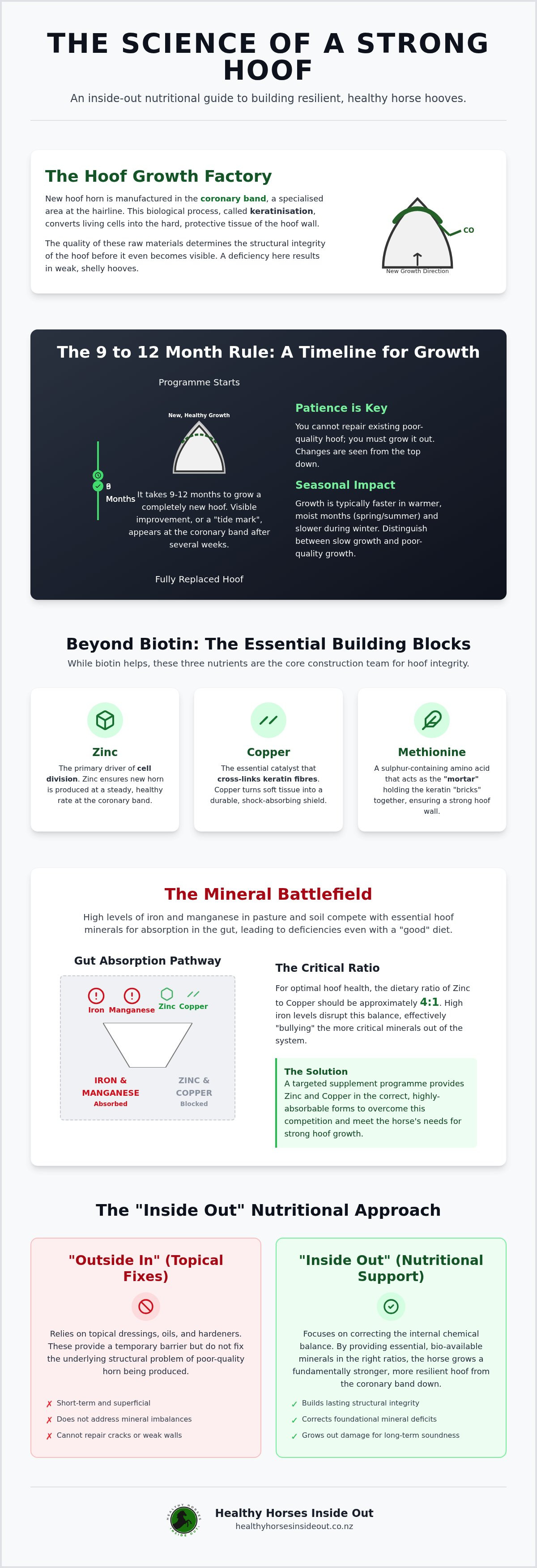
To understand how horse hoof growth supplements actually work, we must first look at the coronary band. This specialised area, located at the hairline, acts as the primary "factory" where new hoof horn is manufactured through a biological process called keratinisation. During this stage, living cells are converted into hard, dead tissue composed primarily of keratin proteins. If the raw materials for this factory are missing or imbalanced, the resulting horn will be structurally compromised before it even emerges from the hairline.
Many owners reach for biotin as a first-line defence, but relying solely on this B-vitamin is often a singular solution to a multifaceted problem. This is known as the "Biotin Myth." While biotin is certainly a vital component of the cellular "glue" that holds the hoof together, it only addresses one piece of the nutritional puzzle. A horse can have an abundance of biotin but still suffer from brittle walls if they lack the essential minerals required to cross-link those keratin fibres into a durable, shock-absorbing shield.
The Anatomy of a Healthy Hoof Wall
A healthy hoof wall is more than just a hard shell; it's a sophisticated, waterproof barrier designed to protect the internal structures of the foot. Understanding the equine hoof requires an appreciation of the laminae, the delicate, interlocking leaves of tissue that attach the hoof wall to the pedal bone. When nutritional gaps occur, this attachment can weaken, leading to "shelly" hooves that flake and crumble easily. This isn't just a surface issue. It's a clear signal that the horse's internal systemic health is lacking the minerals necessary to maintain a tight, resilient bond between the wall and the internal structures.
The 9-Month Rule: Setting Realistic Expectations
Patience is a prerequisite for success when using horse hoof growth supplements. It generally takes between 9 and 12 months for a horse to grow an entirely new hoof capsule from the coronary band down to the ground. When you start a high-quality nutritional programme, you won't see an immediate change at the toe. Instead, you'll notice a "tide mark" appearing near the hairline after several weeks. Above this line, the new growth will appear smoother, denser, and more pigmented than the old, damaged horn below.
In the Southern Hemisphere, growth rates fluctuate with the seasons. Hooves often grow faster during the warm, moist months of spring and summer, while growth can slow significantly during the cold winter period. Recognising the difference between slow growth and poor structural integrity is essential for effective management. A horse might grow hoof quickly but still suffer from persistent cracks, which suggests the "bricks" are being laid, but the "mortar" required for strength is missing.
The Essential Minerals for Keratin Production: Zinc, Copper, and Methionine
Building a superior hoof requires more than just high-quality forage; it demands the presence of specific trace minerals in precise proportions. While many owners focus on the speed of growth, the structural integrity of the hoof horn is determined by the availability of zinc, copper, and methionine. These are the primary ingredients in effective horse hoof growth supplements, but their success depends entirely on how they interact with the rest of the horse's diet. Feeding these elements in isolation is rarely successful because the equine body requires a synergistic balance to facilitate true cellular repair.
Zinc is the primary driver of cell division within the coronary band, ensuring that new horn is produced at a steady rate. However, hardness isn't achieved by zinc alone. Copper acts as the essential catalyst for the enzymes that cross-link keratin fibres, turning a soft, pliable tissue into a durable shield. Research into nutrition for equine hoof health highlights that these elements must work in concert to prevent the wall from becoming brittle or prone to seedy toe.
The Critical Zinc to Copper Ratio
Many paddocks across the Southern Hemisphere are naturally high in iron and manganese. These minerals are problematic because they compete for the same absorption pathways in the gut, effectively "bullying" zinc and copper out of the system. This competition is why a standard dose of minerals often fails; if the background diet is flooded with iron, the minerals in your horse hoof growth supplements simply won't reach the hoof. We look for a specific ratio, often aiming for roughly 3:1 or 4:1 of zinc to copper, to overcome this antagonism. You can often spot a deficiency by looking at your horse's coat. "Orange" or bleached tinges on the ends of dark manes and tails are classic indicators that the internal factory is lacking the copper required for pigment and hoof strength.
Amino Acids: The Building Blocks of Horn
Protein quality is just as important as mineral balance. Methionine is a sulphur-rich amino acid that provides the structural "glue" for the hoof wall. Because horses cannot synthesise methionine themselves, it must be provided through their feed. In typical grass-based diets, methionine and lysine are often the "limiting factors." This means that even if every other nutrient is present, hoof production will stall once these specific building blocks are exhausted. Our HHIO Pellets are designed to provide a mineral-dense base that includes these vital amino acids, ensuring the "Inside Out" approach to health is supported by the correct chemical foundations.
Environmental Challenges: How Pasture and Soil Impact Hoof Integrity
Many horse owners assume that a lush, green paddock provides everything a horse needs for optimal health. However, in many parts of the Southern Hemisphere, the soil profile is heavily skewed towards high iron and manganese levels. While the grass looks vibrant, it's often nutritionally hollow regarding the specific minerals required for hoof integrity. This environmental reality is why many horse hoof growth supplements fail to deliver results; they're fighting against a background of mineral antagonism that isn't being addressed at the source. Green grass does not always equate to complete nutrition for hooves.
Seasonal shifts also play a significant role in the structural soundness of the foot. The "spring flush" brings grass that is high in non-structural carbohydrates (NSC) and low in effective fibre. This combination can disrupt the delicate microbial balance of the hindgut, leading to systemic issues that directly affect the laminae. Additionally, persistent wet conditions can physically soften the hoof wall, making it more porous. Without a robust internal foundation, the hoof becomes susceptible to bacterial infections like seedy toe, as the external protective layer loses its ability to repel environmental moisture.
The Iron and Manganese Antagonism
Excess iron in the diet is a silent thief of hoof quality. It competes directly with copper and zinc for absorption in the small intestine. Because iron is so prevalent in our soil and water, most horses are already at saturation point. Many "off-the-shelf" horse hoof growth supplements mistakenly include iron in their formulations, which only serves to worsen the deficiency of the minerals that actually build a strong hoof. Testing your forage is the most reliable way to identify these hidden imbalances and ensure your mineral balancer is actually providing the targeted support your horse requires.
Hindgut Health and Natural Biotin Synthesis
A healthy horse is a natural biotin factory. The microbes in a well-functioning hindgut synthesise B-vitamins, including biotin, as a byproduct of fibre fermentation. When a diet becomes too high in sugar or lacks adequate roughage, this natural production halts. This is where the "Inside Out" philosophy becomes critical for long-term soundness. Supporting the gut environment with prebiotics for horses NZ ensures that the horse can maintain its own vitamin levels. By stabilising the hindgut, you're not just improving digestion; you're protecting the very source of the horse's natural hoof-building capabilities.
How to Implement a Hoof Support Programme: A Step-by-Step Approach
Implementing a successful hoof rehabilitation strategy requires a methodical approach that looks beyond the surface. It isn't enough to simply add a scoop of powder; you must create an environment where those nutrients can be successfully absorbed and utilised. By following a structured five-step plan, you can transform brittle, shelly hooves into a resilient foundation that provides lasting peace of mind.
- Step 1: Conduct a diet audit. Identify where hidden minerals, particularly excess iron from water or soil, might be blocking your progress.
- Step 2: Prioritise roughage. High-quality fibre is the essential fuel for the hindgut microbes that produce natural B-vitamins.
- Step 3: Choose targeted horse hoof growth supplements. Select a formula with high concentrations of copper and zinc to overcome environmental mineral competition.
- Step 4: Maintain consistent farrier visits. Regular professional care manages the leverage on existing cracks while the new, stronger horn grows down.
- Step 5: Monitor the coronary band. Watch for the distinct "growth ring" near the hairline that signifies your nutritional changes are taking effect.
Evaluating Your Current Feed Routine
Many "complete" feeds are heavily fortified with iron, which can inadvertently hinder the effectiveness of horse hoof growth supplements. If your horse's diet is already saturated with iron, adding a generic mineral mix may not provide the necessary shift in ratios. It's often more effective to use everyday horse supplements as a baseline while stripping back unnecessary fillers. To ensure your horse actually consumes their mineral powders, try mixing them into a damp hard feed or a small amount of soaked fibre. This prevents the fine particles from sifting to the bottom of the feed bin.
Working with Your Farrier or Trimmer
Your farrier is your most valuable ally in this process. They observe the physical evidence of your nutritional choices every few weeks and can provide objective feedback on the horn's density. Ask them specifically if they notice changes in how the hoof holds a nail or if the wall feels more resilient under the rasp. While topical dressings can help manage external moisture, they cannot fix the "shelly" texture caused by internal gaps. If you're ready to provide your horse with a chemically sound foundation, you can view our targeted HHIO mineral solutions to begin the transition.
Supporting Hoof Health from the Inside Out with HHIO Solutions
At HHIO, we believe that external performance is merely a reflection of internal systemic health. This "Inside Out" philosophy is why we move away from generic horse hoof growth supplements that offer a one-size-fits-all approach. Instead, we focus on providing the precise mineral ratios required to overcome the high-iron challenges of our local pastures. By treating the gut and balancing the minerals, we provide the horse with the foundational stability needed to grow a resilient, sound hoof capsule. This methodical approach ensures that you're not just patching over a problem, but resolving it at the cellular level.
Our commitment to animal welfare drives us to provide transparency in every formulation. We understand the frustration of seeing no improvement despite a cabinet full of products. By focusing on intentionality and integrity, we act as a serious partner in your horse's long-term wellness. Our goal is to provide you with the peace of mind that your horse's foundation is chemically sound, allowing them to perform at their peak without the constant worry of crumbling horn or thrown shoes.
The HHIO Pellet Advantage
Many retail feeds are packed with fillers and molasses, which can unintentionally disrupt hindgut fermentation and add unnecessary iron to an already saturated system. Our HHIO Pellets serve as a grain-free, molasses-free carrier designed specifically for mineral delivery. This simplified base ensures that your horse receives their essential nutrients without the "iron-overload" common in standard "complete" feeds. For busy owners, it provides a streamlined daily routine, ensuring that the critical building blocks for hoof horn hardness are delivered consistently and effectively without compromising metabolic health.
Targeted Bundles for Problem Hooves
For horses with chronic shelly walls or persistent seedy toe, a more concentrated approach is often necessary. Our horse hoof growth supplements are available as targeted bundles that combine high-specification copper and zinc with magnesium to support systemic resilience. Our best horse supplements New Zealand range is formulated to take the guesswork out of equine nutrition, particularly for the performance horse whose feet are under constant stress. These bundles are designed to fill the specific gaps identified in your diet audit, ensuring that every scoop contributes to a chemically sound foundation.
We don't just sell products; we act as a mentor for your horse's wellness journey. Our direct-to-consumer model means you have access to a team that understands the specific environmental hurdles your horse faces every day. By choosing a science-led, intentional approach to nutrition, you gain the confidence that comes from knowing your horse's feet are being built on a foundation of evidence-based wellness.
Securing Your Horse’s Foundation for a Sounder Future
Building a resilient hoof is a long-term commitment that requires a deep understanding of the biological mechanisms at play. By shifting your focus from topical fixes to internal mineral balance, you're addressing the root cause of shelly walls and persistent cracks. High-quality horse hoof growth supplements facilitate this change by overcoming environmental iron antagonism and supporting the hindgut's natural synthesis of B-vitamins. When you prioritise these foundational elements, you provide your horse with the structural integrity required for both performance and longevity. You don't have to settle for the frustration of thrown shoes and crumbling horn when a science-led approach is available.
Our range is specifically formulated for Southern Hemisphere pasture profiles, offering grain-free and molasses-free options that simplify your daily routine while avoiding common mineral blocks. We believe in providing more than just a product; we include expert nutritional guidance to help you navigate the complexities of equine health with confidence. If you're searching for horse hoof growth supplements that prioritise biological function over quick fixes, our team is ready to assist. Take the first step toward a chemically sound foundation and browse the HHIO range of science-led horse hoof growth supplements today. You can feel secure knowing that you're giving your horse the evidence-based support they deserve for a stronger, healthier future.
Frequently Asked Questions
How long does it take for horse hoof supplements to work?
It typically takes 9 to 12 months to grow a completely new hoof capsule from the coronary band to the ground. While you may notice a "tide mark" of smoother, denser growth at the hairline within six to ten weeks, the structural benefits won't reach the toe for nearly a year. Patience is essential because you are waiting for the biological process of keratinisation to replace the old, compromised horn with new, resilient tissue.
Can I give my horse too much biotin?
Biotin is a water-soluble B-vitamin, meaning the horse's body generally excretes any excess through urine. While toxicity is extremely rare, feeding excessive amounts without balancing trace minerals is often ineffective. True hoof integrity relies on the synergy between biotin and minerals like zinc and copper. Rather than focusing on high-dose biotin alone, it's more beneficial to ensure the hindgut environment is healthy enough to synthesise its own B-vitamins naturally.
Why are my horse’s hooves cracking even though he is on a supplement?
Persistent cracking often suggests that while growth might be happening, the structural "glue" is missing. If your current regime doesn't address the high iron levels common in many paddocks, the essential zinc and copper needed for horn hardness may be blocked. Additionally, if the hooves aren't trimmed to manage mechanical leverage, cracks will continue to migrate upward. Effective nutritional support must work alongside a balanced diet and professional farrier care to be successful.
Is there a difference between biotin and other hoof growth supplements?
Biotin is just one component of a larger nutritional picture. While many basic products rely solely on this vitamin, comprehensive horse hoof growth supplements provide a broader spectrum of nutrients, including copper, zinc, and methionine. Biotin improves the cellular bond within the hoof wall, but minerals are the catalysts that allow keratin fibres to cross-link. Without these minerals, the hoof may grow quickly but remain structurally weak and prone to flaking or crumbling.
Do barefoot horses need different hoof supplements than shod horses?
The internal nutritional building blocks remain the same, but barefoot horses often require higher horn density to remain comfortable. A shod horse can sometimes mask poor horn quality behind a steel shoe, whereas a barefoot horse relies entirely on the strength of the wall. Using horse hoof growth supplements ensures the hoof is hard enough to resist excessive wear and maintain its shape on abrasive surfaces without the wall flaking or crumbling away.
Can mineral deficiencies cause laminitis or seedy toe?
Yes, deficiencies can indirectly contribute to these conditions. Weak lamellar attachments, caused by a lack of essential minerals, make the hoof more susceptible to the structural failure seen in laminitis. Similarly, seedy toe is an opportunistic fungal or bacterial infection that thrives in the porous, low-quality horn produced when zinc and copper levels are low. Strengthening the hoof's internal chemistry creates a more effective physical barrier against environmental pathogens and opportunistic infections.
How do I know if my horse has a copper or zinc deficiency?
Aside from poor hoof quality, look for systemic signs like a bleached or "rusty" appearance in dark coats and manes. This "orange" tinge is a classic indicator of copper deficiency. Skin sensitivities, such as persistent greasy heel or mud fever, often point toward inadequate zinc levels. Because these minerals compete with iron for absorption, a visual assessment should always be backed by a professional diet audit to identify hidden imbalances in your forage.
Will a hoof supplement help my horse grow a thicker hoof wall?
A targeted supplement provides the raw materials necessary for the coronary band to produce a more robust wall. When the diet is balanced, the horse can manufacture a denser, thicker horn that is better equipped to handle concussion. This increased density not only helps prevent cracks but also provides more "meat" for your farrier to work with, ensuring the hoof capsule remains sound and functional whether your horse is shod or barefoot.


