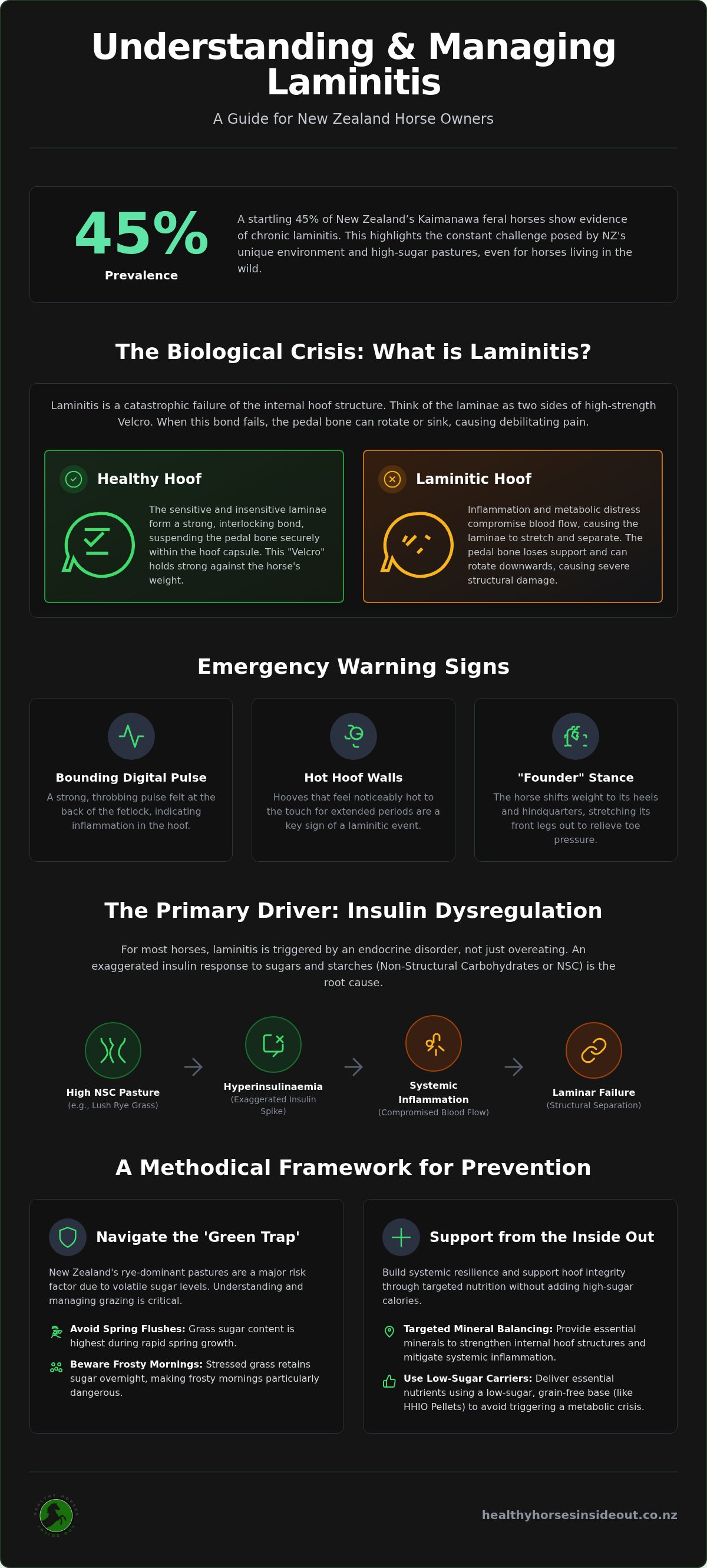
Did you know that nearly half of New Zealand’s Kaimanawa feral horses show evidence of chronic laminitis? This startling 45% prevalence suggests that New Zealand's unique environment and high-sugar pastures pose a constant challenge, even for horses living without human intervention. If you feel a surge of panic at the sight of a slightly cresty neck or find yourself second-guessing every grazing hour, you aren't alone. The fear of a catastrophic founder episode is a heavy burden, especially when conflicting advice makes every paddock move feel like a high-stakes gamble.
You deserve a strategy rooted in science rather than guesswork. In this guide, we'll demystify the internal metabolic triggers that lead to debilitating foot pain and show you how to choose the right supplements for laminitis-prone horses NZ to build systemic resilience from the inside out. We will explore the critical role of mineral balancing, explain why New Zealand rye grass is so volatile during a spring flush, and provide a methodical management plan to help you navigate high-risk periods with total confidence.
Key Takeaways
Understand the biological mechanism of laminitis, where the sensitive and insensitive laminae separate like failing Velcro, leading to structural damage within the hoof.
Learn why Insulin Dysregulation is the primary driver of metabolic episodes and how to identify the early warning signs of Equine Metabolic Syndrome in "easy-keeping" horses.
Navigate the "green trap" of New Zealand’s rye-dominant pastures by understanding how diurnal sugar fluctuations and frosty mornings impact your horse’s safety.
Discover how targeted mineral balancing and specific supplements for laminitis-prone horses NZ can strengthen the internal hoof structure and mitigate systemic inflammation.
Implement a methodical management plan using low-sugar, grain-free carriers like HHIO Pellets to provide essential nutrients without triggering a metabolic crisis.
The Biological Crisis of Laminitis: More Than Just a Sore Hoof
Laminitis is often misunderstood as a simple case of foot soreness. In reality, it represents a catastrophic failure of the internal scaffolding that holds a horse's skeletal structure within its hoof capsule. To understand why specific management and nutritional paths are necessary, we must first look at the microscopic level. A comprehensive overview of laminitis reveals that the condition is a complex biological breakdown rather than a localised injury.
Think of the laminae as two sides of a high-strength Velcro strip. One side is attached to the hoof wall, while the other is attached to the pedal bone, also known as P3. When this bond remains intact, the horse's weight is suspended comfortably. During a laminitic event, this "Velcro" begins to pull apart. As the bond fails, the pedal bone is no longer supported and can begin to rotate or sink under the horse's own weight. This is why the condition is a systemic failure. While the pain manifests in the hooves, the root cause is usually a systemic metabolic or inflammatory cascade. Choosing effective supplements for laminitis-prone horses NZ is about addressing this internal environment to support laminar integrity.
Identifying an emergency requires vigilance. You should regularly check for these clinical signs:
A bounding digital pulse felt at the back of the fetlock.
Hoof walls that feel noticeably hot to the touch for extended periods.
The classic "founder stance," where the horse shifts its weight onto its hindquarters and stretches its front legs forward to relieve pressure from the toes.
The Anatomy of a Hoof Under Pressure
The laminae support the entire weight of the horse through these delicate, interlocking leaf-like structures. Healthy attachment relies on a constant, uninterrupted supply of blood and oxygen to the tissues. The dermal laminae are the sensitive, blood-rich tissues attached to the coffin bone, while the epidermal laminae are the insensitive tissues attached to the hoof wall, and their critical interlocking function provides the structural integrity needed for weight-bearing. When blood flow is compromised by inflammation or metabolic distress, these tissues begin to die, leading to the structural separation we fear most.
Acute vs. Chronic Laminitis: Recognising the Difference
The developmental phase is particularly dangerous because it's often a silent period. Internal inflammation may be brewing for hours or even days before the horse shows obvious lameness. Acute laminitis describes the active, painful onset of the disease. Chronic laminitis refers to permanent changes to the hoof morphology, such as a dropped sole or a "seedy toe" appearance. Once the laminae weaken significantly, the risk of P3 rotation becomes a reality. Early intervention through restricted grazing and targeted supplements for laminitis-prone horses NZ is the only reliable way to prevent these life-altering structural shifts.
Metabolic Triggers: Why Some Horses Are More At Risk
While many owners still associate founder solely with a sudden gorge on the grain bin, the reality for most leisure horses in New Zealand is far more subtle. The primary driver of modern laminitis is Insulin Dysregulation (ID), often as part of Equine Metabolic Syndrome (EMS). This condition is not just about being overweight. It is a complex endocrine disorder where the horse's body produces an exaggerated insulin response to sugars and starches. Understanding these metabolic drivers is essential for the prevention of laminitis, as it allows us to address the internal cause before structural failure occurs.
The "Good Doer" label often disguises a biological predisposition toward ID. These horses and ponies evolved to survive on sparse, fibrous forage, yet they now graze on high-sugar pastures designed for dairy production. When a metabolic horse consumes excess non-structural carbohydrates (NSC), it triggers a cascade of systemic inflammation. In some cases, this involves the hindgut; an overload of starch or sugar reaches the large intestine, causing a rapid shift in the microbial population. This leads to hindgut acidosis and the release of endotoxins into the bloodstream, which can eventually compromise the hooves.
The Sugar-Insulin Connection
Modern equine diets frequently contain "invisible" sugars found in lush grass or high-glycaemic "hard feeds" that look healthy but spike blood glucose levels. Hyperinsulinaemia directly induces lamellar failure by triggering abnormal cell proliferation and weakening the structural bond between the hoof wall and the pedal bone. This hormonal trigger is far more common in New Zealand than the traditional "grain overload" model. For these horses, choosing specific supplements for laminitis-prone horses NZ that focus on mineral balance and gut health is a critical step in managing their metabolic baseline.
Identifying the At-Risk Profile
You don't always need a blood test to recognise a horse in the danger zone. Physical markers serve as early warning signs of systemic distress. Look for a thick, "cresty" neck that feels hard to the touch, or unusual fat pads over the tail head and behind the shoulder. Another subtle sign is "filled" supraorbital holes, the hollows above the eyes that should be concave but become puffy in metabolic horses. Even a horse that appears fit or "athletic" can suffer from ID if their diet is high in NSC and low in the copper and zinc required for tissue integrity. Recognising these signs early allows you to implement targeted supplements for laminitis-prone horses NZ before the first signs of lameness appear.
Australasian Pasture Realities: Sugar Spikes and Mineral Gaps
New Zealand's pastoral landscape is often described as a "Green Trap" for the metabolic horse. While our lush, emerald paddocks are the pride of the dairy industry, they are frequently unsuitable for horses prone to laminitis. These pastures are dominated by high-sugar perennial ryegrass and clover, species specifically bred to maximise milk production rather than support equine health. For a horse with insulin dysregulation, grazing this grass is akin to standing in a field of confectionery. The biological reality is that these grasses were never intended for the equine digestive system.
The timing of grazing is just as critical as the volume. Plants produce sugar through photosynthesis during daylight hours and use that energy for growth overnight. However, when we experience cold nights followed by bright, sunny days, the grass cannot grow but continues to produce sugar, leading to a dangerous accumulation of fructans. This is why frosty mornings represent a high-risk period. To manage this safely, many owners utilise grazing muzzles, track systems, or dry lots to restrict intake while maintaining movement. Integrating specific supplements for laminitis-prone horses NZ during these seasonal transitions provides a necessary nutritional buffer.
The Danger of 'Flush' Growth and Fructans
Spring and autumn flushes are notorious for triggering laminitic episodes. During these windows, non-structural carbohydrate (NSC) levels can spike well above the 10% threshold considered safe for metabolic horses. Managing the "sugar spike" requires a methodical approach to turnout. Ideally, grazing should occur when sugar levels are at their lowest, typically between 3:00 am and 10:00 am, provided there was no frost the night before. If you cannot guarantee safe grazing times, total removal from pasture is the most responsible course of action to prevent a crisis.
Mineral Balancing for Hoof Resilience
Foundational strength is built from the inside out. Research indicates that horse hoof health NZ depends on precise mineral ratios that are often missing from Australasian soils. Our pastures are frequently high in Iron and Manganese, both of which act as antagonists to Copper and Zinc absorption. Without adequate Copper and Zinc, the hoof wall becomes brittle and the laminar attachments weaken, making the horse far more susceptible to structural failure during a metabolic spike. Relying on a "grass-only" diet leaves these mineral gaps wide open. By providing targeted supplements for laminitis-prone horses NZ, you ensure your horse has the essential building blocks needed to maintain a resilient hoof capsule even when environmental pressures rise.
Methodical Management: Your Framework for Prevention and Recovery
When you suspect your horse is foundering, the first 24 hours are critical. This is the moment to move from panic into a structured, evidence-based response that prioritises structural stability and metabolic calm. Effective management requires a dual approach: immediate physical support for the hooves and a total overhaul of the horse's internal environment. By following a methodical framework, you can mitigate the severity of the episode and set the stage for long-term healing.
Step 1: Immediate Confinement. Remove the horse from pasture immediately and consult your veterinarian. They will assess the digital pulse and may use nerve blocks or radiographs to determine if the pedal bone has shifted.
Step 2: The Emergency Diet. Eliminate all grain, high-sugar hard feeds, and grass access. Your horse's system needs an immediate break from non-structural carbohydrates to lower circulating insulin levels.
Step 3: Soaking Hay. Feed only low-sugar forage. Soaking hay in fresh water for 60 minutes (or 30 minutes in hot water) can reduce water-soluble carbohydrates by up to 50%, making it safer for metabolic horses.
Step 4: Supportive Bedding. Provide a deep, soft surface such as sand or thick wood shavings. This allows the horse to dig their toes in and find a comfortable angle, providing essential solar support to the pedal bone.
Step 5: Nutritional Planning. Once the acute phase is managed, implement a long-term plan using specific supplements for laminitis-prone horses NZ to address underlying mineral deficiencies and support laminar repair.
Dietary Adjustments for Long-Term Recovery
Recovery is a marathon, not a sprint. While we must restrict sugars, starving a laminitic horse is dangerous as it can trigger hyperlipaemia, a life-threatening condition where the body mobilises fat stores too rapidly. Focus on high-fibre, low-calorie forage to keep the gut moving. You can use everyday horse supplements to provide the essential copper, zinc, and magnesium required for tissue repair without adding unnecessary calories or starch to the bucket.
Farriery and Footing: The Support Team
Working with a specialised farrier is non-negotiable. Their goal is to realign the hoof capsule with the pedal bone, often by shortening the toe and providing heel support to reduce the pull of the deep digital flexor tendon. While some cases benefit from therapeutic shoeing, many New Zealand owners find success with barefoot management and supportive boots during the rehabilitation phase. Remember that while movement is vital for circulation, it should only be encouraged once the vet confirms the laminar bond is stable. To support your horse through this journey, you can browse our range of targeted horse supplements designed for metabolic resilience.
Supporting Systemic Resilience: The 'Inside Out' Nutritional Solution
Our 'Inside Out' philosophy shifts the focus from merely reacting to symptoms toward optimising the horse's internal biological environment. True resilience is not found in a quick fix or a temporary grazing muzzle; it is built through intentional, science-led nutrition that addresses systemic inflammation at its source. For owners seeking supplements for laminitis-prone horses NZ, this means moving beyond simple calorie restriction and focusing on the metabolic foundations of health. By providing the body with the exact tools it needs to maintain structural integrity, we can reduce the risk of a catastrophic failure even when environmental pressures are high.
Targeted mineral support is the cornerstone of this approach. While we have already identified that high levels of Iron and Manganese in New Zealand pastures can block the absorption of critical nutrients, the solution lies in precise supplementation. Zinc and Copper are not just minerals; they are the essential building blocks required for keratin production and the cross-linking of proteins that give the laminae their strength. Furthermore, maintaining a healthy gut microbiome is vital for preventing the release of endotoxins that often trigger secondary flare-ups. A diet rich in prebiotics and balanced minerals creates a stable internal baseline that helps the horse navigate the seasonal "green traps" with far greater safety.
Foundation Nutrition with HHIO Pellets
Feeding a metabolic horse can be a logistical challenge, especially when you need to avoid the sugars found in traditional chaffs and grains. HHIO Pellets offer a safe, grain-free, and low-sugar nutritional base that simplifies the daily routine. These pellets act as the ideal carrier for more concentrated supplements for laminitis-prone horses NZ, ensuring that your horse receives a consistent dose of Copper and Zinc without the risk of a glucose spike. This methodical approach helps answer the question of what supplements does my horse need NZ owners ask most frequently, providing a streamlined solution that maintains nutritional density even when grazing is severely restricted.
Long-Term Resilience and Peace of Mind
Confidence in your horse's health comes from a combination of data-driven nutrition and daily vigilance. Monitoring digital pulses and checking for hoof heat should become as routine as filling the water trough. When you integrate the best horse supplements New Zealand has to offer for metabolic support, you are investing in a long-term insurance policy for your horse's vitality. As you eventually transition back to controlled grazing, do so with a cautious, methodical mindset. Use your nutritional plan as the anchor that allows for a slow, safe return to pasture, knowing that the structural bonds within the hoof are supported by a foundation of internal wellness.
Building a Resilient Future for Your Metabolic Horse
Managing a laminitis-prone horse in New Zealand's unique environment requires moving from a state of constant worry to one of methodical control. By understanding the metabolic triggers behind insulin dysregulation and the "green trap" of our rye-dominant pastures, you can make informed decisions that protect your horse’s structural integrity. True prevention relies on more than just restricting grass. It requires a foundation of intentional nutrition to bridge the mineral gaps common in our local soils.
Selecting high-specification supplements for laminitis-prone horses NZ ensures that optimal levels of Copper and Zinc are available to strengthen the laminar bond from within. This proactive approach provides the systemic resilience needed to navigate seasonal flushes with greater security. Explore the HHIO range of science-led horse supplements to support your horse from the inside out. Our products are formulated specifically for New Zealand conditions, offering expert nutritional support for metabolic health and long-term hoof integrity. You now have the framework to lead your horse toward a more comfortable, stable future with confidence.
Frequently Asked Questions
How can I tell if my horse has laminitis before they go lame?
You can often identify early warning signs such as a thick, hardened cresty neck, fat pads over the tail head, or "filled" supraorbital holes above the eyes. These markers indicate metabolic stress before clinical lameness appears. Regularly checking for a bounding digital pulse and excessive heat in the hoof wall is also essential. By noticing these subtle changes in body condition and circulation, you can intervene with targeted supplements for laminitis-prone horses NZ before structural damage occurs.
Is it safe to feed a laminitic horse any type of grass in NZ?
Most New Zealand pastures are dominated by perennial ryegrass and clover, which are frequently unsafe for laminitis-prone horses due to their high sugar content. These species were bred for dairy production and can reach dangerous fructan levels, especially during spring and autumn flushes or after frosty nights. To manage risk, you must utilise grazing muzzles or track systems to restrict intake, or move the horse to a dry lot with soaked hay until grass sugar levels stabilise.
How long should I soak hay to make it safe for a metabolic horse?
To effectively reduce water-soluble carbohydrates (WSC), you should soak hay for 60 minutes in cold water or 30 minutes in hot water. This process can lower sugar levels by up to 50%, making the forage significantly safer for horses with insulin dysregulation. Always discard the soaking water immediately, as it contains the leached sugars. Providing this low-sugar fibre ensures the hindgut remains active without triggering the insulin spikes that lead to laminar failure.
Can mineral deficiencies actually cause laminitis in horses?
While mineral deficiencies don't trigger the initial metabolic spike, they directly impact the structural strength of the hoof's internal bonds. New Zealand soils are often high in iron and manganese, which block the absorption of copper and zinc. These two minerals are critical for keratin production and laminar attachment. Without them, the hoof wall becomes brittle and far more susceptible to separation when metabolic stress occurs. This makes specific supplements for laminitis-prone horses NZ a vital part of prevention.
What is the best 'emergency diet' for a horse showing signs of founder?
An emergency diet requires the immediate removal of all grass, grain, and high-sugar hard feeds. You should provide only soaked hay to keep the gut moving while minimising sugar intake. It is also critical to provide a mineral-balanced, low-sugar carrier like HHIO Pellets to maintain essential nutrient levels during this restricted phase. This methodical approach lowers circulating insulin levels and reduces systemic inflammation, which is the primary goal during the acute phase of a founder episode.
Can a horse ever fully recover from a laminitis episode?
A horse can return to soundness and a high quality of life, though permanent structural changes like pedal bone rotation cannot be reversed. Success depends on how quickly you address the acute phase and your commitment to long-term management. By maintaining a strict low-sugar diet and using targeted nutritional support, you can support the growth of a new, well-attached hoof capsule. Many horses return to light work with the right farriery and nutritional support once the hoof is stable.
Why is my horse getting laminitis even though they aren't overweight?
Laminitis is driven by Insulin Dysregulation (ID), which can affect horses of any weight, not just those that are obese. Some horses are genetically predisposed to an exaggerated insulin response, while others may be "grass-affected" by the high sugar levels in NZ ryegrass. Even a lean horse can suffer from systemic inflammation if their diet is high in non-structural carbohydrates or if they have an underlying endocrine disorder like Cushing's disease (PPID) that remains unmanaged.
How do HHIO Pellets support a horse prone to laminitis?
HHIO Pellets provide a safe, grain-free, and low-sugar nutritional base specifically designed for New Zealand's unique pasture conditions. They act as a methodical carrier for essential minerals like copper and zinc, which are often deficient in our soils. By using these pellets, you can ensure your horse receives the high-specification mineral levels required for hoof integrity without the risk of a glucose spike. This supports systemic resilience and provides peace of mind for owners of metabolic horses.