

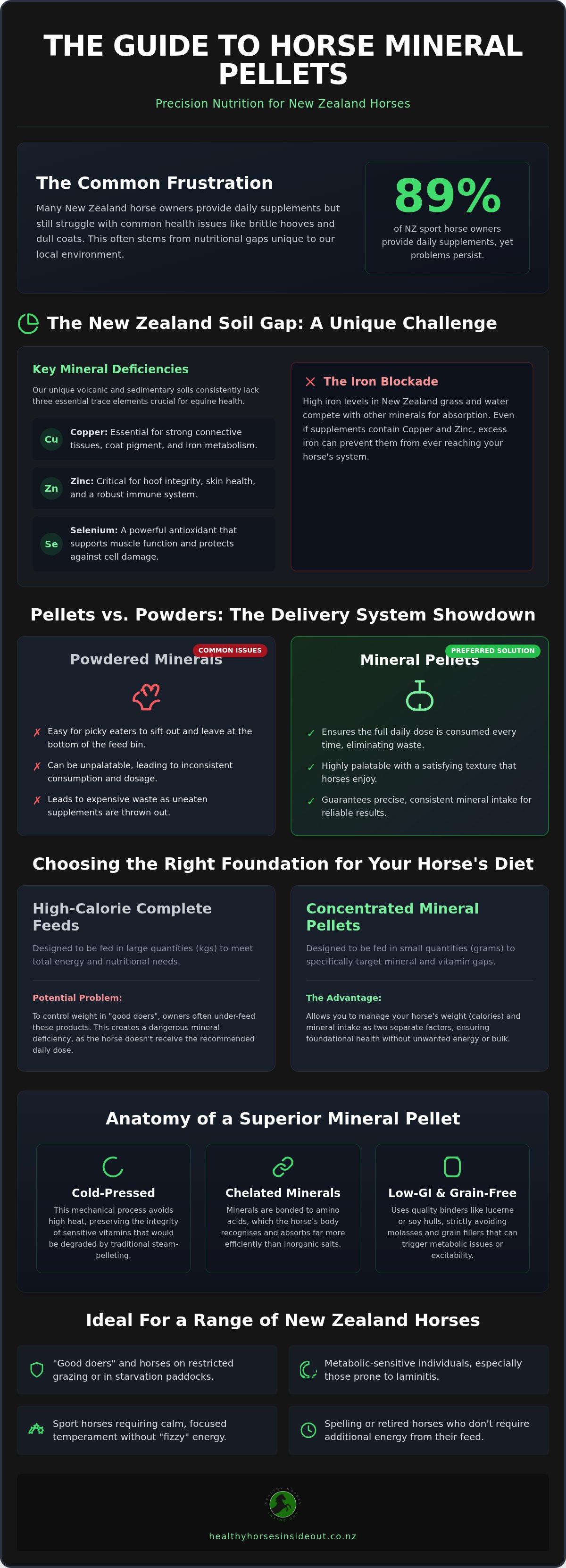
Did you know that 89% of New Zealand sport horse owners now provide daily supplements, yet many are still battling brittle hooves and dull coats? It's a common frustration to find expensive powders sifted to the bottom of the feed bin or to wonder if your pasture truly provides enough Selenium and Copper. Using horse mineral pellets represents a shift toward precision nutrition, ensuring every gram of essential trace elements actually reaches your horse's system rather than being wasted. This delivery method bridges the significant nutritional gaps found in our local soils, providing a foundation for systemic health that starts from the inside out.
You've likely felt the uncertainty of balancing a diet against New Zealand's unique volcanic soil profile, which is often high in iron but lacking in vital minerals. In this 2026 guide, you'll discover how to streamline your feeding routine and achieve that elusive coat shine and hoof integrity without the stress of excess sugar or complicated mixing. We will explore the biological mechanisms that make pelletised minerals more effective, identify the specific deficiencies common across the country, and provide a clear framework for meeting your horse's requirements with absolute peace of mind.
Key Takeaways
- Understand why New Zealand’s unique volcanic soils are often deficient in Copper, Zinc, and Selenium, making targeted supplementation a necessity for equine health.
- Discover how switching to horse mineral pellets can eliminate expensive bin waste and ensure even the pickiest eaters receive their full daily dose.
- Learn a methodical approach to assessing forage and workload to calculate a balanced mineral intake that supports metabolic stability.
- Identify the critical differences between high-calorie complete feeds and concentrated mineral balancers to better manage your horse's weight and energy.
- See how prioritising foundational internal wellness through precision nutrition translates into measurable results like improved hoof quality and a deeper coat shine.
What are Horse Mineral Pellets and Why Do They Matter?
A horse mineral pellet is a highly concentrated, cold-pressed delivery system designed to provide essential trace elements in a small, digestible format. Unlike traditional bulk feeds, these pellets are formulated specifically to bridge the nutritional void left by forage without adding unnecessary calories or bulk. In New Zealand, where pasture makes up the vast majority of an equine diet, understanding the intricacies of Equine nutrition is vital for maintaining long-term health. Most owners find that while grass provides plenty of energy and protein, it consistently fails to deliver the correct ratios of minerals like Copper, Zinc, and Selenium.
The distinction between a "complete feed" and a mineral balancer is fundamental. A complete feed is designed to be fed in large quantities, often several kilograms a day, to meet a horse's daily requirements. If you under-feed these products to keep a horse's weight down, you also under-supply their minerals. Conversely, horse mineral pellets provide a full daily dose of vitamins and minerals in a few hundred grams. This precision allows you to manage your horse's weight and mineral intake as two separate, controllable factors. Beyond the science, there is the practical benefit of palatability. Many horses are notoriously suspicious of powders, often sifting them to the bottom of the bin. Pellets offer a satisfying "crunch" that mimics the texture of grain, ensuring the full dose is consumed every time.
The Anatomy of a High-Quality Mineral Pellet
The efficacy of a pellet depends largely on its manufacturing process and the quality of its components. High-quality options prioritise low-GI binders, such as lucerne or soy hulls, and strictly avoid molasses and grain fillers that can trigger metabolic issues. Cold-pressing is another critical factor. This process uses mechanical pressure rather than high heat to form the pellet, which preserves the integrity of heat-sensitive vitamins that would otherwise degrade during traditional steam-pelleting. To ensure maximum benefit, look for chelated minerals. These are minerals bonded to amino acids, which the horse's body recognises and absorbs more efficiently than cheaper, inorganic salts.
Pellets vs. Traditional Hard Feeds
For many New Zealand owners, the "good doer" presents a unique challenge. These horses often maintain weight easily on restricted grass but still require a foundational base of minerals to support hoof quality and immune function. Traditional hard feeds often contain high levels of starch and sugar, which can lead to unwanted "fizz" or excitability. Using horse mineral pellets provides a solution by delivering high-spec nutrition without the caloric load. This makes them ideal for:
- Horses on restricted grazing or "starvation paddocks".
- Metabolic-sensitive individuals, such as those prone to laminitis.
- Sport horses that require a calm, focused temperament.
- Spelling or retired horses that don't need additional energy.
The New Zealand Gap: Addressing Local Soil Deficiencies
New Zealand's geological landscape presents a specific set of challenges for equine health. Our soils, predominantly volcanic or sedimentary, are notoriously deficient in key trace elements that horses require for foundational wellness. Research within the New Zealand sport horse industry indicates that while most owners are diligent with daily feeding, the actual mineral intake often falls short due to local environmental factors. Unlike the broad-spectrum profiles used in international "off-the-shelf" supplements, which are designed for different global soil types, a targeted approach is necessary here. Many imported products fail to account for the "Big Three" deficiencies: Copper, Zinc, and Selenium.
Another layer of complexity is the "iron blockade." High iron levels in New Zealand's water and grass can actively inhibit the absorption of other vital minerals. Iron competes for the same uptake pathways in the small intestine, meaning that even if a supplement contains copper, it may never reach the horse's bloodstream if iron levels are too high. Using horse mineral pellets formulated with specific ratios to overcome this competition is the only way to ensure nutritional efficiency. This methodical approach to supplementation moves beyond guesswork, providing a scientifically sound base for your horse's diet.
The Selenium Situation in New Zealand
Selenium is a critical component of the equine immune system and is essential for muscle recovery after exercise. However, New Zealand horse owners must manage this mineral with extreme care because the margin between a therapeutic dose and toxicity is remarkably narrow. In New Zealand, soil concentrations of selenium are frequently below 0.1 mg/kg, making accurately dosed horse mineral pellets the safest way to ensure your horse reaches optimal levels without the risk of oversupply. Precision in delivery ensures that the antioxidant pathways are fully supported, protecting your horse from oxidative stress and muscle soreness.
Copper and Zinc: The Foundation of Hoof and Coat Health
Copper and zinc are the structural architects of the equine body. When these minerals are out of balance, the first signs often appear externally. You might notice a "sun-bleached" appearance in the coat during summer, where dark hair takes on a rusty, orange hue, or a persistent struggle with brittle hoof walls. Beyond aesthetics, these minerals support the skin's natural barrier. A balanced internal mineral profile is your horse's best defence against common New Zealand issues like greasy heel and recurring skin sensitivities. For owners seeking to address these foundational needs, choosing HHIO Pellets provides a direct way to support systemic health from the inside out.
Pellets vs. Powders: Which Mineral Delivery System Wins?
It's a common frustration for owners to find a fine layer of grey dust at the bottom of the feed bin after their horse has finished eating. This "Bin Waste Factor" is more than just a nuisance; it represents a significant portion of your nutritional investment that never actually enters the horse's system. When you choose horse mineral pellets, you are opting for a delivery system that ensures every gram of supplement is consumed. This reliability is vital when providing essential minerals for horses, as even small fluctuations in daily intake can disrupt the delicate balance required for optimal metabolic function.
From a practical standpoint, pellets simplify the feeding routine. Measuring out loose powders in a windy New Zealand paddock is often a messy and imprecise task. Pellets, by contrast, are easy to handle and offer a consistent volume, allowing for precision dosing every single day. While the initial price per bag for a pelleted supplement might appear higher than a bulk powder, the lack of waste and high concentration often results in a lower cost per day. You aren't paying for minerals that blow away or get left behind.
Eliminating the "Sift and Sort" Behaviour
A horse's sense of smell is incredibly sophisticated. This often leads them to reject feeds that contain bitter or metallic-tasting mineral powders. Magnesium oxide, for instance, is notoriously unpalatable to many horses. The pelleting process effectively "masks" these flavours by encasing them within a palatable binder. The psychological benefit of the "crunch" satisfies the horse's natural desire to chew, making the supplement feel like a reward rather than a medication. If you're transitioning a picky eater, start by mixing a small handful of horse mineral pellets into their current feed, gradually increasing the amount over seven days to allow their palate to adjust.
Stability and Shelf Life
Loose powders have a high surface area, which exposes the nutrients to oxygen and moisture. This leads to rapid oxidation, particularly for vitamins and certain trace elements. Pelleted minerals have a much smaller exposed surface area, which helps maintain the potency of the internal ingredients for much longer. In New Zealand's often humid climate, this stability is a major advantage. To keep the pellets fresh and maintain that satisfying "crunch," always store them in a cool, dry place inside a sealed container. This prevents the pellets from absorbing atmospheric moisture, which can cause them to soften or lose their structural integrity over time.
Implementing Mineral Pellets into Your Feeding Routine
Integrating a new supplement requires a systematic approach to ensure your horse's digestive system remains stable while their nutritional needs are met. The first step involves a candid assessment of your horse's current body condition and the quality of their available forage. You can't manage what you don't measure. Once you've established this baseline, calculate the correct dosage based on their specific workload and life stage. A growing youngster or a sport horse in hard work will naturally require a higher concentration of minerals than a sedentary companion.
Introducing horse mineral pellets should always be done gradually over a period of seven to ten days. This slow transition allows the hindgut microflora to adapt to the new nutrient profile, preventing any minor digestive upsets. Finally, patience is essential during the monitoring phase. Because new hoof horn grows from the coronary band down, it takes approximately 12 weeks of consistent mineral supplementation to observe a visible change in the quality and strength of the emerging hoof wall. You aren't just looking for a quick fix; you're waiting for the body to physically manifest the internal health you've supported through precision nutrition.
Feeding the Grass-Fed Horse
For horses that live primarily on pasture, horse mineral pellets offer a versatile solution. They can be fed as a "dry lick" in a sturdy tub or even offered as a small, hand-fed treat for horses that don't receive a traditional hard feed. This is particularly useful during the spring flush when New Zealand's "hot" grass is high in sugars and low in magnesium. Providing a concentrated pellet during these transitions helps maintain metabolic stability and a calmer temperament without adding unnecessary grain to the diet.
Seasonal Adjustments for the NZ Paddock
Nutritional requirements aren't static. During the wet winter months, New Zealand pastures often lose their nutrient density, requiring a slight increase in mineral support to maintain immune function. For horses involved in "hard yakka" or regular competition, adjusting for sweat loss is crucial. While pellets provide the foundational base, you may need to combine them with specific gut or joint supports during periods of high stress. To begin your horse's journey toward optimal health, you can order HHIO Pellets directly to ensure they receive a fresh, high-quality batch formulated for our local conditions.
The HHIO Advantage: Precision Nutrition from the Inside Out
Healthy Horses Inside Out (HHIO) was founded on the principle that true equine vitality is not a cosmetic fix but a biological outcome. For the methodical owner, choosing horse mineral pellets from HHIO represents a departure from the "one size fits all" approach of mass-produced feeds. Our "Inside Out" philosophy prioritises internal systemic health as the primary driver for external performance. We believe that when the internal environment is balanced and the foundational nutritional requirements are met, visible markers like coat shine and hoof integrity follow naturally. This commitment to integrity means every batch is formulated with intentionality, ensuring your horse receives exactly what they need without the clutter of unnecessary ingredients.
Integrity in nutrition requires a strict avoidance of the high-sugar fillers and grain-based binders often found in traditional supplements. Many commercial options rely on molasses to improve palatability, which can be detrimental to horses with metabolic sensitivities. HHIO Pellets are built on a foundation of high-spec ingredients, ensuring that even the most sensitive "good doer" can receive full mineral support without the risk of a laminitic flare or unwanted excitability. This focus on purity provides owners with the peace of mind that they are supporting their horse’s long-term wellness through evidence-based nutrition.
The Science Behind HHIO Formulations
The efficacy of our horse mineral pellets lies in the precise calibration of Copper and Zinc ratios, specifically designed to overcome the iron-rich New Zealand environment. We exclude fillers that trigger metabolic issues, opting instead for carriers that support digestive health. This methodical approach ensures that the minerals are highly bioavailable, allowing for maximum absorption and systemic utilization. By providing this targeted support, HHIO Pellets serve as an essential component of everyday horse supplements, bridging the gap between basic forage and optimal vitality.
Simplified Nutrition for Every Horse
One of the most significant benefits of the HHIO system is its versatility across all life stages. Whether you are supporting a growing foal, a high-performance athlete, or a senior veteran, the concentrated nature of our pellets allows for easy dosage adjustments. This streamlines your feed room, replacing a shelf full of mismatched powders with a single, highly efficient delivery system. By organising your routine around a foundational mineral base, you reduce complexity and ensure consistency. To start your horse on a path toward foundational health, you can explore the HHIO Pellets range today and discover the difference that precision nutrition can make.
Bridging the Gap for Long-Term Equine Vitality
Achieving optimal health for your horse in New Zealand requires a methodical approach that accounts for our unique environmental challenges. We've explored how the specific mineral deficiencies in our volcanic soils, particularly the lack of Selenium and Copper, necessitate a targeted delivery system. Choosing horse mineral pellets over traditional powders isn't just about convenience; it's a commitment to precision nutrition that eliminates feed bin waste and ensures your horse receives their full daily requirement. By focusing on these internal biological foundations, you're setting the stage for visible improvements in hoof strength and coat condition that last.
HHIO Pellets offer a science-led solution formulated specifically for New Zealand conditions, providing the essential trace elements your horse needs without unnecessary fillers or sugars. This "Inside Out" philosophy empowers you to support your horse's systemic health with absolute peace of mind. Trusted by owners across the country for superior results, our formulations provide the foundational support every horse deserves. Optimise your horse’s health with HHIO Pellets and experience the confidence of a simplified, evidence-based feeding routine. Your horse's journey toward peak vitality starts with the right nutritional foundation today.
Frequently Asked Questions
Do I need to feed a balancer if my horse is already on a commercial hard feed?
If you feed less than the manufacturer's recommended daily intake of a commercial hard feed, your horse isn't receiving a full dose of vitamins and minerals. Most "good doers" in New Zealand require very little grain to maintain weight, which creates a nutritional gap. Adding horse mineral pellets ensures your horse gets the essential trace elements they need without the unnecessary calories or "fizz" associated with large portions of concentrate feeds.
Can horse mineral pellets cause my horse to become "fizzy" or hot?
No, high-quality mineral pellets are designed to be non-heating. Excitability or "fizz" is typically caused by high levels of starch and sugar found in grain-based concentrates. Because these pellets are grain-free and low-GI, they provide foundational support for the nervous system without the energy surge. Many owners find their horses actually become more settled once their internal mineral deficiencies, such as magnesium, are properly addressed through a balanced daily supplement.
How long does it take to see the effects of mineral pellets on my horse’s coat?
You will typically notice a deeper coat colour and improved shine within three to six weeks of consistent feeding. This change occurs as the horse's internal systems receive the copper and zinc required for melanin production and skin health. While the coat responds relatively quickly, remember that structural changes like hoof wall integrity take longer. You'll see the best results after a full shedding cycle or twelve weeks of steady supplementation.
Are mineral pellets safe for horses with laminitis or EMS?
Yes, they are an excellent choice for metabolic-sensitive horses. Managing laminitis or Equine Metabolic Syndrome (EMS) requires a diet very low in non-structural carbohydrates (NSC). HHIO Pellets are formulated without molasses or grain fillers, making them safe for horses on restricted grazing. They provide the necessary nutritional support to maintain hoof health and metabolic stability without introducing the sugars that can trigger a dangerous insulin response or laminitic episode.
What is the difference between a mineral pellet and a salt lick?
A salt lick consists almost entirely of sodium chloride and often lacks the concentrated trace minerals found in a pellet. Horses also cannot regulate their intake of trace elements like copper or selenium through a lick block effectively. In contrast, horse mineral pellets provide a scientifically balanced, daily dose of specific minerals. This ensures your horse receives a precise amount of nutrition every day, rather than relying on the inconsistent habit of licking a block.
Can I feed mineral pellets to a horse that is purely grass-fed?
Absolutely, and for many New Zealand horses, this is the most effective way to balance their diet. Grass-only diets often lack the correct ratios of copper, zinc, and selenium due to our local soil profiles. You can feed the pellets on their own as a small treat or mix them into a tiny handful of chaff. This provides the "missing link" in their nutrition without adding unwanted bulk or calories to their daily intake.
Do I need to add extra Selenium if I am already using HHIO Pellets?
You should not add extra selenium unless a blood test from your vet specifically indicates a severe deficiency. HHIO Pellets are already formulated to meet the requirements of horses grazing on New Zealand's selenium-deficient soils. Because selenium has a very narrow margin of safety, over-supplementing can lead to toxicity. Using a precisely dosed pellet provides the peace of mind that your horse's requirements are met safely without the risk of dangerous excess.
How should I store my horse pellets to keep them fresh in NZ weather?
To maintain the satisfying "crunch" and prevent spoilage, store your pellets in an airtight, rodent-proof container. New Zealand’s high humidity can cause open bags of feed to absorb moisture and soften. Keep your storage bin in a cool, dark, and well-ventilated area away from direct sunlight. This protects the heat-sensitive vitamins within the pellets and ensures the product stays fresh and palatable for your horse until the very last dose.


