

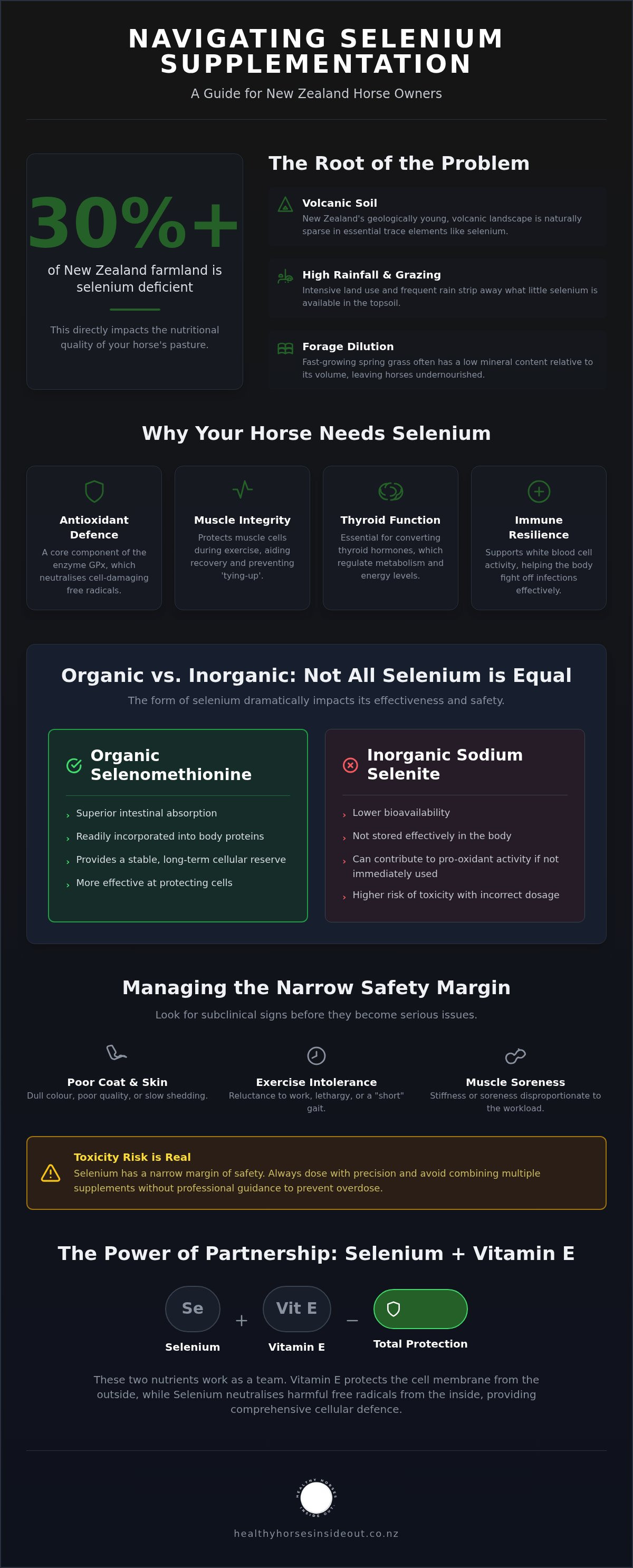
Statistics show that over 30% of New Zealand's farmland is deficient in selenium, making the selection of a reliable horse selenium supplement NZ a critical priority for responsible owners. While you might see signs like poor coat quality or a lack of exercise tolerance, the narrow safety margin of this mineral often creates a significant barrier to action. It's a common dilemma; you want to support your horse's foundational health but fear the risk of toxicity associated with incorrect dosing or confusing multi-supplement labels.
This guide provides a methodical framework to help you navigate the complexities of a horse selenium supplement NZ with clinical precision and peace of mind. We'll explore the biological mechanisms that link soil deficiencies to visible performance issues and explain why choosing a bioavailable horse selenium supplement NZ is superior to using isolated, inorganic salts. By the end of this article, you'll have the confidence to manage your horse's mineral intake through an integrated, science-led routine that prioritises long-term muscle integrity and systemic vitality.
Key Takeaways
- Understand why New Zealand’s unique volcanic soil and high rainfall naturally deplete selenium levels in your horse's pasture.
- Discover how to safely navigate the narrow safety margin of a horse selenium supplement NZ to avoid toxicity while ensuring optimal muscle integrity.
- Learn the critical difference between inorganic sodium selenite and organic selenomethionine for superior intestinal absorption and cellular protection.
- Recognise the subclinical signs of deficiency, such as poor coat colour and exercise intolerance, before they develop into serious clinical conditions.
- Explore how a balanced mineral base, like HHIO Pellets, provides a foundational approach to equine nutrition rather than relying on isolated "quick fixes".
The Reality of New Zealand Soil and Selenium Deficiency
New Zealand's geologically young landscape presents a unique challenge for equine nutrition. Volcanic activity has left much of our soil naturally sparse in essential trace elements. Unlike older, more stable continents where mineral beds have settled over millions of years, our volcanic foundations lack the deep-seated reservoirs of selenium found elsewhere. This isn't just a regional quirk; it's a national characteristic. Research indicates that over 30% of New Zealand's farmland is officially classified as deficient, which necessitates a targeted horse selenium supplement NZ strategy for responsible owners.
Environmental factors frequently worsen this baseline deficiency. High rainfall and intensive grazing practices strip away what little selenium remains in the topsoil. During the spring flush, fast-growing grass often exhibits a "dilution effect" where the mineral content cannot keep pace with the rapid increase in plant biomass. Your horse might be consuming a significant volume of lush forage, yet they remain nutritionally short-changed at a cellular level. Forage testing consistently reveals mineral profiles that fall below the threshold required for peak metabolic function, regardless of how green the paddock appears.
Why Forage Alone Is Often Insufficient
A 500kg horse typically requires between 1mg and 2mg of selenium daily to maintain basic health. Pasture alone rarely meets this metabolic demand, especially when soil acidity or moisture levels lock minerals away from plant roots. When grass is harvested and processed into hay or haylage, the drying and storage phases can further reduce the bioavailability of trace elements. In 2026, selenium deficiency in New Zealand pasture is defined as a chronic environmental shortfall where natural forage fails to provide the 1-2mg daily intake required to support essential antioxidant enzymes. Relying solely on the paddock often leaves a gap that only a high-quality horse selenium supplement NZ can bridge.
National vs Regional Deficiency Trends
While certain zones are notorious for low selenium levels, the risk is widespread across both islands. Soil acidity plays a major role; even if selenium is present in the ground, acidic conditions prevent plants from absorbing it effectively. This makes a national perspective vital for owners of travelling horses or those using agistment. You can't assume the grass is more mineral-dense just one province over. Understanding the Biological role of selenium helps us see why this gap is so critical. Because selenium acts as a primary antioxidant, a deficiency anywhere in the country puts a horse's muscle integrity and immune system at risk. A methodical approach to supplementation ensures your horse remains protected, no matter where their hooves land.
Biological Roles: Why Your Horse Needs Selenium
Selenium serves as a critical biological catalyst. Its most significant role is as a structural component of glutathione peroxidase (GPx), an enzyme that acts as a biological scavenger. GPx neutralises harmful peroxides before they can attack and damage cell membranes. Without sufficient intake from a horse selenium supplement NZ, these peroxides accumulate, leading to widespread oxidative stress. This mineral is also essential for thyroid function. It facilitates the conversion of the inactive thyroid hormone thyroxine (T4) into the active form, triiodothyronine (T3). This process is the primary driver of your horse's metabolic rate, energy production, and temperature regulation. It also underpins immune resilience by supporting white blood cell activity and ensures reproductive efficiency in breeding stock by protecting developing cells from oxidative damage.
Muscle Integrity and Exercise Recovery
Performance horses face constant oxidative pressure. During a strenuous hack or competition, muscle cells produce free radicals that can lead to exertional rhabdomyolysis, or "tying-up." Selenium provides a layer of cellular protection that assists in muscle fibre repair and reduces recovery times. Owners often overlook subclinical deficiency. It doesn't always present as a major crisis; instead, you might see a general reluctance to move, a "short" gait, or persistent muscle soreness that seems disproportionate to the day's work. These subtle signs indicate that the horse's internal protective mechanisms are overstretched and require nutritional support.
The Vital Synergy Between Selenium and Vitamin E
These two nutrients are partners in protection. While Vitamin E sits within the fatty cell membrane to block free radical entry, selenium works inside the cell fluid to neutralise peroxides. They operate as a coordinated team. Providing one without the other leaves the cell vulnerable to damage from different angles. This synergy is a cornerstone of "inside out" health, ensuring that the horse's internal environment remains stable under stress. However, because of the narrow safety margin, it's vital to be aware of Selenium toxicity risks when designing a diet. A methodical approach ensures you're providing enough for protection without crossing into dangerous territory. For those seeking a simplified way to manage these complex interactions, Everyday Horse Supplements offer a balanced solution that respects these biological requirements.
Organic vs Inorganic: Choosing the Right Horse Selenium Supplement NZ
The distinction between inorganic and organic forms is fundamental to safe supplementation. Sodium selenite, an inorganic salt, is the most common form found in mass-produced hard feeds due to its low cost. While it can raise blood selenium levels, it's absorbed through passive diffusion and is often excreted quickly. In contrast, organic selenium, specifically selenomethionine, is an amino acid analogue. The horse's body recognises this form as a building block for protein synthesis, allowing for significantly higher intestinal absorption rates and more efficient cellular utilisation.
One of the primary advantages of choosing a high-quality horse selenium supplement NZ is the ability to build a biological reserve. Organic selenium can be stored within muscle tissue by replacing the sulphur in methionine during protein production. This creates a functional pool of the mineral that the horse can draw upon during periods of high oxidative stress or increased physical demand. Inorganic salts don't offer this storage capacity; they are either used immediately or lost. This lack of storage narrows the safety margin and increases the risk of fluctuating levels that don't truly support the horse's long-term metabolic needs.
The Bioavailability Factor
Bioavailability describes the proportion of a nutrient that enters the circulation and is able to have an active effect. On a supplement label, two milligrams of inorganic selenium are not equivalent to two milligrams of organic selenium. Organic forms mimic the natural mineral structure found in forage, making them easier for the digestive system to process and utilise without triggering the body's mineral-rejection pathways. Selenomethionine is the preferred choice for long-term health because its superior bioavailability and tissue-storage capacity provide a stable, naturalistic mineral profile.
Reading Supplement Labels Like a Pro
Owners must become meticulous label readers to avoid accidental over-supplementation. Look for "sodium selenite" or "sodium selenate" in the ingredients list to identify inorganic sources. Understanding the concentration is equally vital. You need to know if the figure provided is milligrams per kilogram of the total product or milligrams per daily dose.
To manage this safely, follow these steps:
- Total the selenium from your pellets, pre-mixed hard feeds, and any liquid additives.
- Ensure the majority of the mineral comes from a chelated or organic source.
- Avoid "doubling up" by checking for hidden selenium in multi-vitamin lick blocks.
Doubling up is a common risk in New Zealand where multiple "all-in-one" products are used simultaneously. By selecting a foundational mineral base like HHIO Pellets, you can simplify this calculation and ensure your horse receives a precise, safe dose of organic selenium. This methodical approach eliminates guesswork and provides the peace of mind that comes from evidence-based nutrition.
Managing Safety: Deficiency Signs and Toxicity Risks
Managing the delicate balance of trace minerals requires a transition from guesswork to biological precision. Identifying the early indicators of a nutritional gap is a skill every owner should cultivate. Subclinical deficiency often manifests as a dull, bleached coat colour or brittle hoof walls that struggle to hold a shoe. You might notice a distinct lack of "bloom" despite a high-calorie diet. If left unaddressed, these subtle issues can escalate into clinical White Muscle Disease. This condition causes degeneration of skeletal and cardiac muscles, which is particularly devastating for foals but also impacts the performance and longevity of adult horses. Conversely, the "more is better" philosophy is exceptionally dangerous with trace minerals. Selenium toxicity, or selenosis, can occur if a horse selenium supplement NZ is administered without professional oversight. Signs of chronic toxicity include horizontal hoof cracks and the characteristic sloughing of mane and tail hair.
The Importance of Blood Testing
A blood test is the only definitive way to establish your horse's baseline. For a cost of approximately $35 to $40, you can gain a clear picture of their current status. It's important to understand the difference between whole blood selenium, which reflects recent intake, and glutathione peroxidase (GPx) levels, which indicate long-term status over several months. We recommend testing before starting any high-dose regime and re-testing every six to twelve months. This allows you to stay within the "Goldilocks" zone where the horse is protected but never at risk of toxicity. This data-driven approach provides the confidence you need to adjust your feeding programme with total certainty.
Calculating Total Daily Intake
To manage intake safely, you must audit every component of the diet. This includes pasture, hay, and any fortified hard feeds. A 500kg horse typically requires 1 to 2mg per day, but this requirement can fluctuate based on workload and life stage. If your forage testing shows significant gaps, a targeted supplement becomes necessary. If you're unsure how to balance these variables, consulting an equine nutritionist for a full diet analysis provides the highest level of security. Our Everyday Horse Supplements are designed to integrate seamlessly into this methodical approach, providing the precise levels needed for optimal health without the risk of accidental doubling up.
The Inside Out Solution: Integrated Equine Nutrition
True systemic health is rarely achieved through isolated, high-dose interventions. While a horse selenium supplement NZ is often necessary to bridge environmental gaps, it must function within a broader nutritional framework. We advocate for a foundational mineral base rather than a reactive "quick fix" approach. This is because minerals like copper, zinc, and magnesium play vital roles in supporting the metabolic pathways where selenium operates. Copper and zinc are essential for the production of superoxide dismutase, another key antioxidant enzyme that works alongside glutathione peroxidase to protect cells. Magnesium supports muscle relaxation and metabolic stability, providing the physiological environment required for trace elements to perform their roles effectively. Transitioning to a methodical, science-led routine ensures that every milligram provided contributes to a balanced, functional whole.
Simplifying the Feed Shed
HHIO Pellets were developed to simplify this complexity. By providing a precisely balanced ratio of essential minerals, they eliminate the need for a cluttered feed shed full of individual additives. This integrated approach reduces the risk of mineral antagonisms, where an excess of one element prevents the absorption of another. For busy owners, the convenience of a direct-to-consumer model ensures that fresh, potent formulations arrive at your door exactly when needed. It's a system designed to support long-term hoof integrity and coat vitality from the inside out, moving away from the high-pressure retail cycle and toward intentional wellness.
Taking the Next Step for Your Horse
The first step toward optimisation is a thorough audit of your current supplement stack. Check your labels for selenium overlaps, particularly if you're using multiple "all-in-one" products alongside fortified feeds. Performance horses with high oxidative demands or senior horses with reduced digestive efficiency may require a more tailored approach to ensure their antioxidant reserves remain robust. Once you've established your horse's baseline via blood testing, you can choose a targeted solution that provides exactly what's missing. Explore our range of horse supplement bundles NZ to find your horse’s perfect match and begin the journey toward foundational, evidence-based health.
Building a Foundational Future for Your Horse
Securing your horse's long-term vitality requires a shift from reactive supplementation to a methodical, science-led strategy. We've explored how New Zealand's unique geological profile creates a baseline deficiency that pasture alone cannot rectify. By prioritising organic selenomethionine over inorganic salts, you ensure superior absorption and the creation of vital biological reserves. This approach doesn't just prevent deficiency; it supports the internal antioxidant systems that protect your horse during every hack and competition. Moving away from the uncertainty of multi-supplement labels allows you to manage the narrow safety margin with total confidence.
Choosing a high-quality horse selenium supplement NZ owners trust means looking at the whole picture. Our approach focuses on "inside out" health, using bioavailable ingredients that respect the complex synergy between selenium, Vitamin E, and other trace minerals. You can optimise your horse’s mineral intake with HHIO Pellets, which are specifically formulated to address New Zealand mineral gaps through a trusted, evidence-based wellness programme. Investing in this foundational support provides the peace of mind that comes from knowing your horse’s internal health is as robust as their external performance. Your horse deserves the security of a balanced, intentional diet.
Frequently Asked Questions
Is selenium deficiency common in all parts of New Zealand?
Yes, selenium deficiency is widespread across the country due to the volcanic origin of our soils. While specific regions may show more severe depletion, over 30% of New Zealand farmland is officially classified as deficient. Environmental factors like high rainfall and intensive grazing further strip minerals from the topsoil. Owners should assume a baseline deficiency exists unless they have conducted specific forage or soil testing to prove otherwise.
What are the first signs that my horse might need a selenium supplement?
Early indicators are often subclinical and relate to the quality of keratinised tissues and general vitality. You might notice a dull, bleached coat colour that lacks the typical seasonal "bloom" or hoof walls that become brittle and prone to cracking. Exercise intolerance and persistent muscle soreness after light work are also common red flags that suggest the horse's internal antioxidant defences are compromised and require nutritional support.
Can I give my horse too much selenium?
Yes, selenium has a notoriously narrow safety margin, and excess intake leads to a serious condition called selenosis. Chronic toxicity often presents as horizontal cracks in the hoof wall or the loss of long hair from the mane and tail. Because the difference between a therapeutic dose and a toxic one is small, it's vital to calculate the total intake from all feed sources before adding a horse selenium supplement NZ.
What is the difference between organic and inorganic selenium for horses?
The primary difference lies in how the horse's body absorbs and stores the mineral. Inorganic sodium selenite is absorbed passively and excreted quickly, whereas organic selenomethionine is recognised as an amino acid. This allows for superior intestinal uptake and enables the horse to store the mineral in muscle tissue for later use. Using an organic horse selenium supplement NZ ensures a more stable, bioavailable, and naturalistic nutritional profile.
Do I need to test my horse’s blood before giving selenium?
Testing is highly recommended to establish a safe baseline and avoid the risks of accidental over-supplementation. A standard blood test typically costs between $35 and $40 and provides essential data on current circulating levels. This scientific approach allows you to tailor your supplementation regime with total precision, ensuring you stay within the safe zone of being neither deficient nor at risk of chronic toxicity.
Does Vitamin E help with selenium absorption?
While Vitamin E doesn't directly increase the intestinal absorption of selenium, it is an essential functional partner at the cellular level. These two nutrients work synergistically to neutralise free radicals and protect cell membranes from oxidative damage. Supplementing selenium without adequate Vitamin E support is less effective, as the body's antioxidant system requires both components to function at its peak and maintain systemic health.
How much selenium does a horse in work need daily?
A 500kg horse in medium work typically requires between 1mg and 2mg of selenium per day to maintain metabolic function. This requirement can increase slightly for horses in heavy competition or those facing high oxidative stress. It's important to audit your entire diet, including pasture, hay, and fortified feeds, to ensure you're meeting these requirements without exceeding the safe daily limit for the species.
Can selenium deficiency cause my horse to tie up?
Yes, a deficiency is a significant contributing factor to exertional rhabdomyolysis, commonly known as "tying up." Selenium is a key component of the enzyme glutathione peroxidase, which protects muscle fibres from the oxidative damage that naturally occurs during exercise. When levels are low, the muscles lack the necessary protection to repair themselves effectively, leading to the acute pain and stiffness associated with this metabolic condition.


