

That vibrant, emerald-green paddock might be the very thing making your horse unrideable. You've likely spent hours wondering why your usually steady mount is suddenly spooking at shadows or flinching when you brush their flank. It's deeply frustrating to face unpredictable behaviour under saddle or mystery lameness that doesn't respond to rest. When you're dealing with grass affected horse symptoms NZ, the issue isn't a lack of training or a bad attitude, but a systemic mineral and electrolyte imbalance caused by the "Lush Pasture Paradox."
We understand the exhaustion that comes from trialling "quick fix" calming products that simply don't work. This 2026 guide identifies the subtle physical and behavioural red flags of grass-affectedness, explaining the science behind how New Zealand's volcanic soils trigger these metabolic disruptions. You'll learn how to balance your horse's system using science-led nutritional strategies that prioritise foundational health over temporary masks. We provide a clear, effective mineral routine tailored for local conditions, ensuring you understand the "why" behind the behaviour while restoring your horse to a calm, rideable partner.
Key Takeaways
- Decode the "Lush Pasture Paradox" to understand why visually perfect paddocks often lead to unpredictable behaviour and physical sensitivity.
- Identify subtle grass affected horse symptoms NZ through a methodical checklist that separates acute staggers from chronic, low-level metabolic stress.
- Master the science of the "Mineral See-Saw" and how high potassium levels in soil inhibit the vital absorption of magnesium and sodium.
- Implement an immediate emergency protocol and learn why transitioning to plain, low-sugar hay is critical for stabilising the horse's system.
- Adopt a foundational mineral routine that addresses the biological root cause of grass-affectedness to provide long-term systemic health.
What is a Grass Affected Horse? Understanding the NZ Context
Grass-affectedness is a term used across New Zealand to describe a spectrum of metabolic and neurological disruptions triggered by pasture composition. It isn't a disease in the traditional sense, but rather a physiological state where the horse's internal systems are overwhelmed by the chemical makeup of their forage. Identifying grass affected horse symptoms NZ is often difficult because the signs can be subtle or intermittent. It's vital to recognise that these issues are a biological response to the environment; they aren't a reflection of the horse’s personality or a failure in training.
The "Lush Pasture Paradox" explains why a horse might struggle even when the paddock looks perfectly healthy. New Zealand’s temperate climate and volcanic soils produce grass that is often high in sugars and potassium but critically low in essential minerals like copper, zinc, and selenium. This creates a nutritional imbalance that disrupts the horse's internal equilibrium. When a horse is "grass-affected," their body is essentially in a state of chemical stress, which manifests as the physical and behavioural red flags we see every day.
The Role of Ryegrass and Clover in NZ Paddocks
Many New Zealand paddocks are sown with "improved" dairy-style ryegrass and clover. These species are bred for rapid growth and high milk production in cattle, making them fundamentally unsuitable for the equine metabolism. During the seasonal "flushes" of spring and autumn, these plants surge in non-structural carbohydrates. High sugar intake is a primary driver of metabolic instability and can lead to the development of Laminitis. Clover-rich paddocks exacerbate this by being high in protein and potassium, which can contribute to photosensitivity and further mineral displacement.
The Mycotoxin Factor
We must also consider the impact of mycotoxins, which are invisible fungi living within the grass sheath or as endophytes within the plant itself. New Zealand’s high humidity and the common practice of overgrazing create the perfect environment for these toxins to thrive. When horses ingest these compounds, the toxins can cross the blood-brain barrier and interfere with neurotransmitters. This chemical interference is often the "why" behind sudden neurological spookiness, skin sensitivity, and erratic behaviour. It’s a systemic issue that requires a nutritional solution rather than a disciplinary one.
The Science of Imbalance: Potassium, Sodium, and NZ Soil
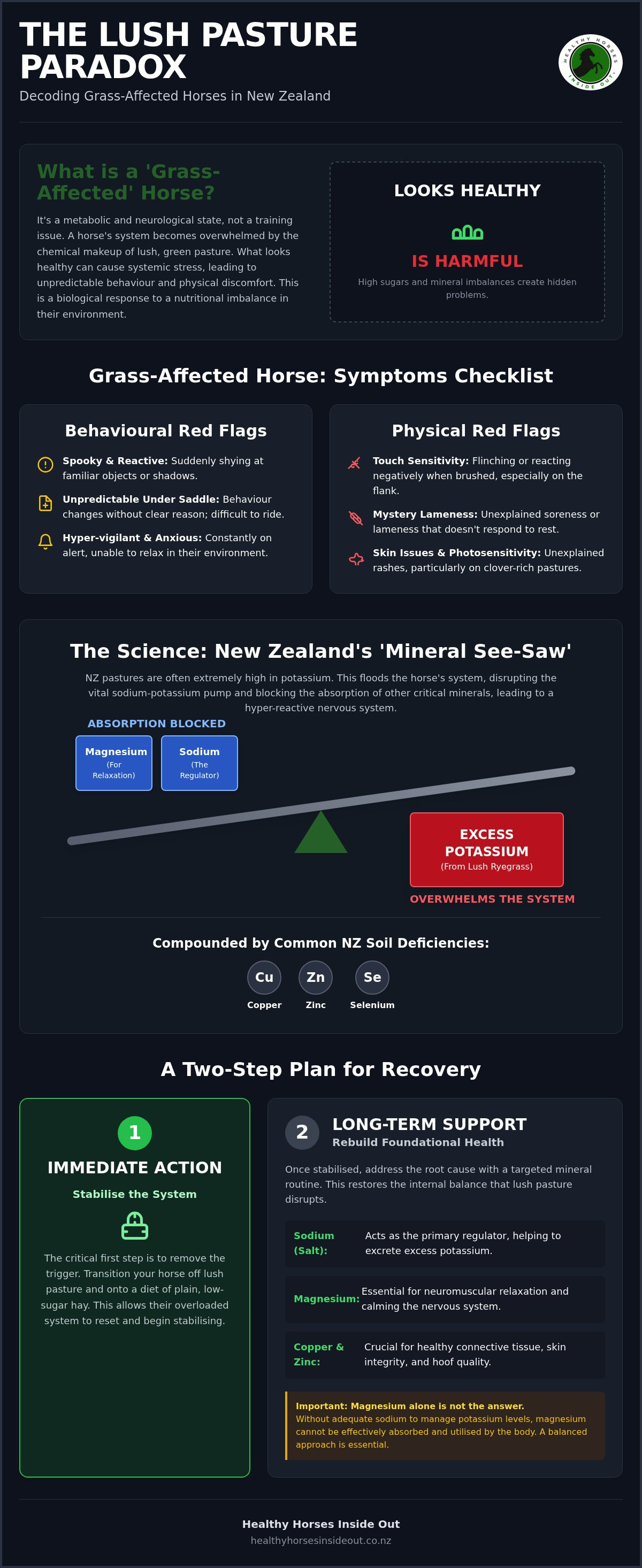
The biological reality of a grass-affected horse is rooted in a phenomenon we call the "Mineral See-Saw." In New Zealand, our pastures often contain excessive levels of potassium, which directly competes with the absorption of magnesium and sodium in the horse's small intestine. This competition creates a significant internal imbalance. When potassium levels surge, the body’s ability to maintain the sodium-potassium pump is compromised. This cellular mechanism is the engine responsible for nerve impulse transmission and muscle contraction. If this pump isn't functioning optimally, the horse's nervous system becomes hyper-reactive, leading to the erratic grass affected horse symptoms NZ riders often misinterpret as poor training.
Chronic mineral deficiency functions as a persistent physiological stressor, forcing the equine body into a state of systemic exhaustion that manifests as the primary grass affected horse symptoms NZ owners struggle to manage. Beyond the potassium surge, New Zealand’s volcanic soils are notoriously deficient in Copper, Zinc, and Selenium. These aren't just optional extras; they are the fundamental building blocks for an "inside out" approach to wellness. Copper and Zinc are essential for healthy connective tissue and skin integrity, and their absence often contributes to the mystery lameness or touch-sensitivity seen in affected horses.
Why Magnesium Alone Isn’t the Answer
It’s a common misconception that adding a scoop of magnesium will resolve all pasture-driven issues. While magnesium is critical for neuromuscular relaxation, it can't work in a vacuum. Without adequate sodium, the horse cannot effectively excrete the excess potassium that triggers the initial imbalance. Plain white salt acts as the primary regulator for the grass-affected horse, facilitating the transport of nutrients across cell membranes. A balanced mineral profile ensures that each element can be absorbed and utilised rather than being blocked by competing minerals. For those seeking to restore this equilibrium, exploring everyday horse supplements tailored for local conditions is a logical first step toward long-term stability.
Selenium: The NZ Essential
Selenium deficiency is a hallmark of New Zealand soil, yet it plays a non-negotiable role in muscle recovery and immune function. Horses lacking this trace element often exhibit poor topline, slow recovery after exercise, and a general lack of vitality. However, because the window between deficiency and toxicity is narrow, we always recommend testing your horse's blood levels before embarking on high-dose supplementation. Precision is key to safety. By focusing on targeted, science-led nutrition that accounts for these local soil gaps, you can provide the foundational support your horse needs to thrive despite a challenging pasture environment.
The Grass Affected Horse Symptoms Checklist
To accurately identify grass affected horse symptoms NZ, owners must move beyond observing surface-level "bad behaviour" and look for biological patterns. It's essential to distinguish between acute "staggers," which involves obvious loss of coordination and visible trembling, and chronic, low-level affectedness. This chronic state is often more insidious because it fluctuates based on environmental triggers. You might notice your horse is perfectly calm on a Tuesday but becomes dangerously reactive on Wednesday following a night of rain. These shifts often correlate with paddock rotations or seasonal flushes in grass growth. For those dealing with these ongoing challenges, establishing a nutritional baseline with everyday horse supplements provides the foundational support needed to stabilise the system.
Behavioural Red Flags
- Sudden separation anxiety: Becoming dangerously herd-bound or distressed when leaving other horses, even if they were previously independent.
- Extreme spookiness: Bolting or shying at familiar objects they've seen hundreds of times before.
- Aggression or avoidance: A new reluctance to be caught in the paddock or uncharacteristic aggression towards paddock mates.
- The "Looky" horse: An inability to stand still or focus on the rider, often accompanied by wide eyes and a high head carriage.
These behavioural shifts aren't choices made by the horse. They are the result of a nervous system stuck in a "fight or flight" response due to the mineral imbalances inherent in New Zealand forage. When a horse is "looky," their brain is physically unable to process environmental stimuli normally. This leads to heightened anxiety and an overwhelming perceived need for self-preservation, regardless of their previous training.
Physical Indicators
- Dermal sensitivity: Flinching when being groomed or showing sudden "girthiness" that suggests skin or muscle discomfort.
- Muscle rigidity: Tight, hard musculature, particularly along the topline and across the rump, even when at rest.
- Coat and skin changes: Itchy skin, a dull coat, or unexplained "sunburn" on pink skin, which often indicates photosensitivity from clover-rich pastures.
- Hoof integrity issues: Separation in the hoof wall, "seedy toe," or recurring abscesses that don't respond to standard farriery.
Physical symptoms often manifest as a lack of "bloom" or vitality. A grass-affected horse may have a bloated "grass belly" while simultaneously lacking topline muscle development. This happens because the body is under systemic stress, diverting energy away from muscle repair to manage the metabolic load. Recurring abscesses and hoof wall separation are also common indicators that the internal mineral balance is compromised, directly affecting the integrity of the hoof horn from the inside out.
Management Strategies for the Grass Affected Horse
When you identify acute or chronic grass affected horse symptoms NZ, the priority is to stabilise the horse's internal chemistry through immediate environmental and dietary adjustments. This isn't about training harder; it's about reducing the metabolic load. An "Emergency Protocol" for a severely affected horse involves removing them from pasture entirely for 24 to 48 hours. This allows the surge of potassium and sugar to subside while you reintroduce a controlled, high-fibre diet that supports systemic recovery. It's a methodical transition from chemical overload to nutritional equilibrium.
Plain, low-sugar hay is your most powerful tool in this process. It provides the necessary "chew time" and gut fill without the chemical spikes found in fresh forage. To manage this effectively, organise a "dry lot" or "sacrifice paddock" where the horse has no access to green grass. This restricted environment is essential for breaking the cycle of pasture-driven reactivity and allows the horse's nervous system to reset. Consistent daily salt intake is the non-negotiable foundation for maintaining electrolyte balance and facilitating the excretion of excess potassium.
Step 1: Dilute the Diet
The goal is to reduce the concentration of sugars and potassium entering the system. Short, stressed grass or lush, rapidly growing flushes are the most dangerous for a sensitive horse. Use slow-feed hay nets to extend eating time and mimic natural grazing patterns without the metabolic risk. It’s also vital to eliminate high-sugar "hard feeds" or cereal-based concentrates that only add fuel to the metabolic fire. Focus on high-quality roughage as the primary calorie source until the horse's behaviour and physical sensitivity stabilise.
Step 2: Correct the Mineral Gap
Once the diet is diluted, you must address the underlying deficiencies that allow these symptoms to occur. Introducing a targeted mineral supplement with high levels of copper and zinc is essential for repairing the "Inside Out" damage. Before choosing a product, checking your horse supplement ingredients ensures you aren't inadvertently feeding fillers or unnecessary sugars. Toxin binders also play a critical role here, as they latch onto mycotoxins in the digestive tract before they can enter the bloodstream and trigger neurological spookiness. For a comprehensive approach to pasture-driven issues, explore our range of Specific Horse Supplements tailored for New Zealand conditions.
Foundational Support: The HHIO Inside Out Solution
Transitioning from emergency protocols to long-term stability requires a strategic shift in perspective. Our "Inside Out" philosophy is built on the premise that external performance and behaviour are direct reflections of internal systemic health. HHIO Pellets provide a methodical, all-in-one base that targets the biological root cause of grass affected horse symptoms NZ rather than merely masking the outward signs. By correcting the foundational mineral gaps inherent in our soil, we allow the horse's nervous system to exit a state of constant high alert and return to its natural equilibrium.
One of the greatest hurdles in equine nutrition is palatability. Many high-specification mineral powders are rejected by the horse or lost in the bottom of the feed bin. HHIO Pellets solve this through a concentrated, easy-to-feed format that ensures your horse actually receives their daily requirement. This consistency is vital. When mineral levels fluctuate, the horse's ability to manage the "Lush Pasture Paradox" is compromised, leading to the return of physical sensitivity and erratic behaviour. Pellets ensure intake; powders often blow away or get left in the bin.
Why HHIO Pellets are Different
These pellets are formulated specifically for the unique New Zealand pasture profile, accounting for the high potassium and low trace mineral ratios discussed earlier. They contain high levels of bioavailable Copper and Zinc, which are essential for maintaining skin integrity and hoof health from the inside out. Because the formula is grain-free and low-sugar, it’s an ideal choice for metabolic-sensitive horses who cannot tolerate traditional cereal-based feeds. This targeted approach provides the precision needed for horses grazing on complex NZ pastures without adding unnecessary calories.
Getting Started with Your Grass-Fed Horse
Introducing a new mineral routine should always be done gradually to allow the digestive system to adapt. Start with a small amount of pellets, slowly increasing to the full recommended dose over seven to ten days. For horses facing more complex challenges, you can combine these pellets with specific horse supplements to address targeted issues like laminitis or acute staggers. This layering of support allows for a truly customised nutritional strategy that evolves with your horse's needs.
True peace of mind comes from the confidence that your horse is balanced from within. When the internal chemistry is stable, the need for "quick fix" calmers disappears. You’re left with a horse that is focused, comfortable in their own skin, and ready to perform. Explore the HHIO range of everyday supplements and pellets to begin your journey toward a healthier, more predictable partnership.
Restoring Balance to Your Horse’s System
Identifying grass affected horse symptoms NZ is the first step toward reclaiming a safe, predictable partnership with your mount. We've explored how the unique chemical composition of New Zealand pastures creates a "Mineral See-Saw" that disrupts vital nerve and muscle function. By moving away from reactive "quick fix" products and focusing on systemic health, you address the biological root cause of your horse's distress rather than just masking the outward behaviour. Transitioning to a high-fibre, mineral-rich diet allows the equine nervous system to reset and stabilise naturally.
Real change starts with science-backed nutritional integrity. HHIO Pellets and supplements are specifically formulated for New Zealand soil deficiencies, providing the concentrated, bioavailable minerals needed to support internal equilibrium. Trusted by performance and pleasure riders nationwide, our approach ensures your horse has the foundational support required to thrive across every season. Browse our science-led HHIO Pellets and Supplements to begin your horse's transition to long-term wellness. You don't have to navigate these pasture-driven issues alone; with a methodical nutritional strategy, a calm and rideable horse is well within reach.
Frequently Asked Questions
What are the first signs of a grass affected horse in NZ?
Heightened sensitivity, muscle tension, and subtle behavioural shifts are often the first signs owners notice. You might observe "looky" behaviour, where the horse fixates on distant objects, or a new flinching response during grooming. These are the earliest grass affected horse symptoms NZ riders typically report. It often starts with a lack of focus under saddle or a subtle change in herd dynamics, indicating that the horse's internal chemistry is starting to shift.
Can my horse be grass affected even in the winter?
Yes, horses can remain grass affected throughout the winter months despite the lack of lush growth. Winter grass often contains high levels of potassium and low sodium due to slower growth and wet soil conditions. Short, stressed winter grass can also be surprisingly high in sugars. This environmental stress maintains the internal mineral imbalance, meaning your management strategies and mineral routines must continue year-round to ensure the horse maintains systemic stability and peace of mind.
How long does it take for a horse to "level out" once removed from grass?
Most horses begin to show visible improvement within 24 to 48 hours after being moved to a dry lot with plain hay. However, full systemic recovery and the complete restoration of mineral levels can take several weeks of consistent management. The exact time frame depends on the severity of the initial imbalance and how quickly the horse's "sodium-potassium pump" returns to normal function through a methodical approach to targeted nutritional support.
Why does my horse get spookier after it rains?
Rain triggers a rapid growth spurt in pasture, causing a surge in potassium and non-structural carbohydrates. This sudden chemical shift disrupts the horse's internal mineral balance almost immediately. Additionally, damp conditions can increase mycotoxin activity within the grass sheath. This combination of high sugar and toxin ingestion directly affects the nervous system, leading to the heightened "spookiness" or reactivity that many New Zealand riders observe shortly after a significant weather event.
Is ryegrass staggers the same as being grass affected?
Ryegrass staggers is a specific, acute form of grass-affectedness caused by endophyte toxins in perennial ryegrass. While all staggers cases are "grass affected," not all grass-affected horses exhibit staggers. Many horses suffer from chronic, low-level mineral imbalances that cause behavioural issues and muscle soreness without ever showing the dramatic trembling or loss of coordination. It's vital to recognise these subtle signs before they escalate into a more severe clinical state.
Will a magnesium supplement fix my horse’s spooky behaviour?
Magnesium is a vital component for neuromuscular relaxation, but it's rarely a standalone fix for spooky behaviour. Because high potassium blocks magnesium absorption, simply adding more magnesium without addressing the sodium deficiency often fails to produce results. For long-term stability, you need a balanced approach that includes plain salt to facilitate potassium excretion and a broad spectrum of trace minerals to support the underlying principles of internal, systemic health.
What should I feed a grass affected horse instead of pasture?
The ideal diet for a grass-affected horse centres on plain, low-sugar hay and a controlled "dry lot" environment. You should provide ad-lib access to mature grass hay or soaked hay to reduce sugar content further. This should be paired with a high-specification mineral pellet and plain white salt. Avoid cereal-based hard feeds or high-sugar concentrates, as these will exacerbate the metabolic stress and prevent the horse's nervous system from returning to equilibrium.
Can clover cause my horse to be sore to the touch?
Yes, clover is a primary driver of physical sensitivity and muscle soreness in many New Zealand horses. Clover is naturally high in potassium and protein, which can lead to systemic inflammation and photosensitivity. This metabolic strain often manifests as "girthiness" or a flinching response when the horse is groomed. Identifying these grass affected horse symptoms NZ early allows you to restrict clover intake and implement a mineral routine that addresses the imbalance.


