

You can't paint structural integrity onto a hoof wall that lacks the fundamental biological building blocks to sustain itself. If you've spent months applying topical dressings only to be met with persistent cracks or another thrown shoe in the paddock, your frustration is completely understandable. Many owners feel trapped in a cycle of temporary fixes, yet the primary causes of poor hoof quality in horses usually lie far beneath the surface, rooted in systemic physiology rather than external exposure.
It's exhausting to balance conflicting advice while worrying about the looming threat of lameness or structural failure. We believe in a methodical approach that prioritises internal health over superficial remedies. This evidence-based guide helps you identify the specific internal and external drivers of weak hooves so you can restore strength from the inside out. You'll discover how systemic nutrition directly influences hoof wall synthesis and learn to establish a long-term care routine that supports optimal architecture. By understanding the link between pasture mineral balance and keratin production, you can move toward a future of genuine peace of mind and lasting equine wellness.
Key Takeaways
- Understand that hoof quality is a structural reflection of the epidermal horn matrix, growing downwards from the coronary band over several months.
- Identify how mineral imbalances in standard diets act as the primary internal causes of poor hoof quality in horses, often providing inadequate ratios of critical trace elements.
- Examine the impact of environmental stressors, such as shifting between wet and dry conditions, which can create significant mechanical strain on the hoof wall.
- Integrate professional farriery management with internal nutritional support to address incorrect hoof balance and prevent mechanical wall failure.
- Adopt a methodical strategy that evaluates the total diet rather than relying on isolated remedies to restore long-term structural integrity.
Understanding the Biological Foundations of Equine Hoof Quality
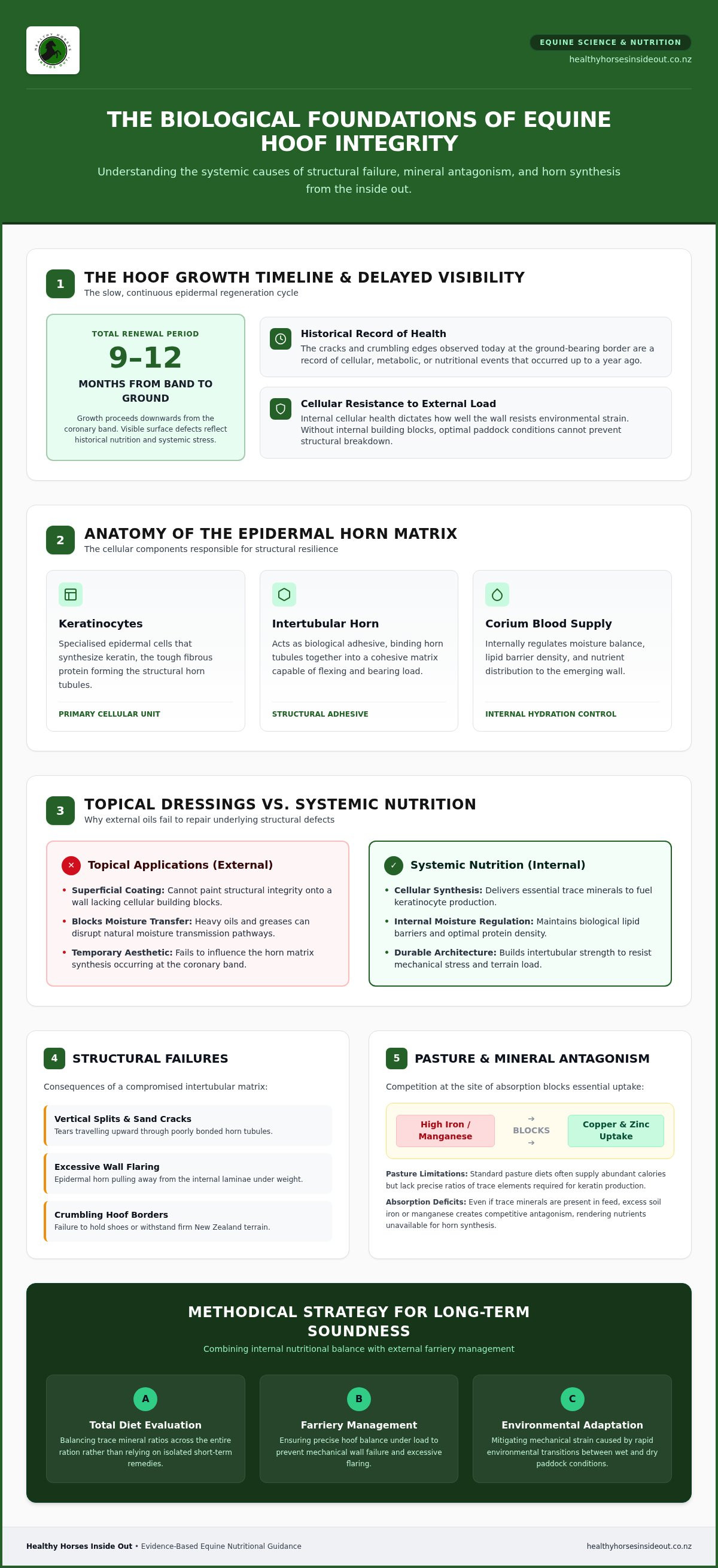
Poor hoof quality isn't just a surface-level annoyance. It is a fundamental structural failure of the epidermal horn matrix. When we investigate the causes of poor hoof quality in horses, we are looking at a biological breakdown that begins at the cellular level. The hoof wall doesn't just appear; it grows downwards from the coronary band in a slow, continuous process that typically takes between nine to twelve months to reach the ground. This timeline is crucial for owners to understand.
This slow growth rate means that the cracks or crumbling edges you see today are often a record of nutritional or metabolic events that happened nearly a year ago. If your horse experienced a period of mineral imbalance or systemic stress last season, the evidence is only just becoming visible at the weight-bearing surface. Internal cellular health is what dictates how well the hoof resists environmental stress. Without a strong biological foundation, even the best paddock conditions won't prevent structural failure.
The Anatomy of the Epidermal Horn
The hoof wall is a masterpiece of biological engineering, primarily composed of specialised cells called keratinocytes. These cells produce keratin, a tough protein that forms the horn tubules. These tubules are bound together by a cellular matrix known as intertubular horn, which acts as the adhesive for the complex structure of the equine hoof. When this matrix is compromised, the wall loses its ability to flex and support weight under load. This leads to common clinical presentations:
- Vertical splits or sand cracks that travel up the wall.
- Excessive flaring where the wall pulls away from the internal laminae.
- Crumbling edges that won't hold a shoe or withstand firm New Zealand terrain.
Why Topical Applications Offer Limited Structural Support
It's a common misconception that applying oils or greases can fix a weak hoof. In reality, the moisture balance of the hoof wall is regulated internally by the blood supply within the corium. While the external environment plays a role, the horn's ability to retain or shed water is a function of its internal lipid barriers and protein density. Causes of poor hoof quality in horses are rarely solved by a brush and a pot of oil.
Overusing greasy dressings can actually be counterproductive. These substances often block the natural moisture transmission pathways, preventing the hoof from absorbing ambient humidity or breathing naturally. To resolve chronic horn defects, we must shift our focus from temporary external coatings to a systemic approach that supports the horse's internal physiology and horn synthesis.
Nutritional Deficiencies: The Primary Internal Causes of Poor Hoof Quality
While external conditions are often blamed for cracks and chips, the primary internal causes of poor hoof quality in horses are almost always rooted in nutritional imbalances. Most horses in New Zealand rely heavily on pasture, which frequently lacks the precise ratios of trace elements required for robust horn synthesis. Standard diets often provide an abundance of calories but fail to deliver the specific building blocks needed for cellular integrity. When these biological requirements aren't met, the hoof wall becomes structurally compromised before it even emerges from the coronary band. To understand these foundational requirements, owners should familiarise themselves with the role of everyday horse supplements in balancing pasture-driven deficiencies.
Mineral antagonism is a significant hurdle in equine health. High levels of iron or manganese in the soil can actively block the uptake of essential minerals like copper and zinc. This competition at the site of absorption means that even if a mineral is present in the diet, it may not be bioavailable to the horse. Achieving structural resilience requires a methodical look at the total ration to ensure these critical nutrients are actually reaching the hoof tissues. Research into proper horse nutrition confirms that a balanced diet is the absolute foundation of long-term soundness.
The Critical Roles of Zinc and Copper in Horn Synthesis
Zinc acts as the engine for cellular division and keratinisation within the hoof wall. It's responsible for the rapid multiplication of cells that eventually form the hard outer horn. Without sufficient zinc, the rate of growth slows and the new horn produced is often of inferior quality. Copper then steps in to facilitate the enzymatic cross-linking of these proteins, which is the biological process that gives the horn its hardness and durability. A low copper-to-zinc ratio directly compromises structural strength by leaving the horn tubules soft and prone to collapse under mechanical load.
Amino Acids and Vitamin Factors
The hoof wall is approximately 93% protein, specifically keratin. Keratin cannot be manufactured without a steady supply of essential amino acids, particularly methionine and lysine. These act as the bricks in the wall. Biotin is also vital, as it supports the intercellular cementing substance that acts as the glue between those bricks. However, simple over-supplementation of biotin often fails to yield results if the broader mineral balance is ignored. The body's biological pathways require a full spectrum of nutrients to function effectively. If you're struggling with persistent hoof issues, exploring equine nutritional science can help you identify the specific gaps in your horse's current diet.
Environmental and Pasture Factors Influencing Hoof Integrity
New Zealand paddocks present a unique challenge to equine health. The environment acts as a physical stressor that quickly exposes any internal weaknesses already present in the hoof. While previous sections have detailed how nutrition builds the wall, the environment is what tests its durability. One of the most significant environmental causes of poor hoof quality in horses is the constant fluctuation between moisture levels. In many regions, horses transition daily from boggy, rain-soaked paddocks to hard-packed tracks or sun-baked earth. This constant cycle of expansion and contraction places immense mechanical strain on the horn tubules, leading to structural fatigue.
Beyond the physical surface, the pasture itself acts as a metabolic trigger. Lush, green grass is a hallmark of our agricultural landscape, but it carries a high load of soluble carbohydrates. These sugars don't just affect a horse's weight; they alter the very chemistry of the hoof. When a horse's system is overwhelmed by high-sugar forage, the resulting metabolic instability often manifests as low-grade, chronic laminitis. This isn't always the dramatic, painful episode owners fear, but rather a subtle, persistent weakening of the lamellar bond that results in the production of poor-quality, brittle horn.
The Wet-to-Dry Cycle and Microbial Invasion
Constant exposure to wet mud softens the hoof capsule, significantly increasing its permeability. This softening allows opportunistic bacteria and fungi to penetrate the outer layers of the wall and sole, leading to issues like thrush or white line disease. Once the environment dries out, the hoof undergoes rapid contraction. Because the horn has been compromised by moisture and microbial activity, it cannot withstand this sudden change in volume. The result is the appearance of superficial and deep cracks that seem to happen overnight. Managing standing areas to minimise these extreme moisture fluctuations is essential for maintaining a stable environment for the hoof to function correctly.
High-Sugar Forage and Metabolic Stress
Seasonal grass flushes in spring and autumn significantly increase the non-structural carbohydrates (NSC) in a horse's diet. When a horse consumes more sugar than it can process in the foregut, the excess passes into the hindgut. This leads to hindgut acidosis, a condition that triggers the release of endotoxins into the bloodstream. These toxins disrupt the delicate blood flow to the laminae within the hoof. You'll often see the results of this metabolic stress as distinct fever rings, persistent flaring, or a weakened white line connection that is prone to seedy toe. Recognising that lush pasture can be a primary driver of structural failure is a vital step in long-term hoof management.
Farriery Management and Mechanical Stressors
Physical management works hand-in-hand with the internal nutritional foundations we've previously discussed. While mineral balance provides the building blocks for a resilient wall, farriery dictates how those materials withstand daily use. Identifying mechanical stressors is essential, as incorrect farriery is among the leading external causes of poor hoof quality in horses. When a hoof is mechanically compromised, even the highest quality horn will eventually fail under the pressure of movement and weight-bearing loads. Maintaining open, transparent communication with your farrier or hoof care professional is vital to monitor structural changes and catch issues before they result in lameness.
A collaborative approach ensures that the farrier's work isn't undermined by poor horn synthesis, and conversely, that your nutritional efforts aren't wasted on a hoof capsule under extreme leverage. If the hoof isn't balanced, the internal structures suffer, leading to a cycle of structural decline that topical treatments simply cannot fix. To support your farrier's work from the inside out, consider how optimising your horse's mineral intake can provide the structural integrity required to hold a shoe or maintain a healthy barefoot trim.
The Impact of Improper Hoof Balance
Incorrect hoof balance creates targeted points of failure. A common issue is the long-toe, low-heel conformation, which places immense strain on the deep digital flexor tendon and the dorsal hoof wall. This creates a "lever" effect that pulls the wall away from the laminae, causing stretching and eventual flaring. Similarly, mediolateral imbalance occurs when one side of the hoof is longer than the other. This causes uneven weight distribution, which often results in vertical sand cracks as the wall shears under the lopsided pressure. Regular, precise trimming is necessary to redirect these mechanical forces, ensuring the weight is distributed evenly across the solar surface to support healthy, upright horn growth.
Trimming Intervals and Shoe Management
Timing is just as important as the trim itself. During high-growth seasons, such as a New Zealand spring, leaving a horse too long between visits increases the risk of mechanical failure. As the toe grows, the leverage on the wall increases, which can lead to chipping and wall separation. For shod horses, poorly fitted shoes or nails placed in an already compromised wall can accelerate crumbling. If your horse struggles with brittle horn, you might discuss transitioning to barefoot management or using hoof boots during work. This allows the hoof to expand and contract naturally, which can improve circulation and stimulate the growth of a thicker, more resilient wall over time.
Addressing Hoof Weakness Through Methodical Nutritional Support
Resolving structural issues requires a systemic shift in how we view equine wellness. If we only react to external symptoms, we ignore the underlying causes of poor hoof quality in horses that begin at the cellular level. A methodical, evidence-based strategy is the only way to ensure the hoof wall you see a year from now is stronger than the one you see today. You must have patience during this process. A horse's hoof grows at a rate of approximately 8 to 10 millimetres per month, meaning a completely new, healthy hoof capsule can take up to twelve months to reach the ground. This journey is about long-term health, not quick fixes.
Rather than reaching for isolated hoof remedies or "miracle" oils, you should evaluate the total diet. Isolated supplementation often fails because it doesn't account for the complex interactions between minerals. For a tailored look at your horse's specific requirements, consult our guide on what supplements does my horse need to ensure your nutritional plan is scientifically sound for New Zealand conditions.
Step 1: Conduct a Comprehensive Forage and Dietary Audit
The first step toward restoration is a thorough assessment of the base forage, hay, and hard feeds your horse consumes daily. In many New Zealand paddocks, lush grass provides hidden sugar sources that trigger metabolic stress, while certain hay types may be deficient in essential trace elements. You must also look for mineral duplications, as feeding multiple "complete" feeds or pre-mixed supplements can inadvertently skew the overall balance. Tracking daily intake prevents common nutritional imbalances. By identifying these gaps or excesses, you stop treating symptoms and start addressing the root causes of structural failure.
Step 2: Introduce Biologically Appropriate Mineral Supplementation
Once you've audited the diet, you can introduce targeted support. It's vital to select a supplement that provides balanced, bioavailable levels of copper, zinc, and essential amino acids. High-quality minerals are more easily absorbed by the horse's system, allowing them to bypass pasture antagonists like iron and manganese that often saturate our soils. This targeted approach ensures that the biological pathways for keratin synthesis have the exact resources they need to build a resilient wall. We encourage you to explore the scientifically formulated range at Healthy Horses Inside Out to establish a clean, balanced nutritional baseline. This methodical shift provides the peace of mind that comes from knowing you are supporting your horse's foundational health from the inside out.
Cultivating Long-Term Structural Soundness
Restoring a horse's hooves requires a transition from reactive topical treatments to a proactive, systemic strategy. We've explored how the primary causes of poor hoof quality in horses are frequently found in mineral imbalances and metabolic stress rather than simple environmental exposure. While New Zealand's fluctuating pasture conditions and mechanical pressures test the hoof's limits, a resilient horn matrix built on precise nutrition can withstand these challenges. It's a journey that demands patience. The cellular foundations you lay today will take months to grow into the visible wall.
Achieving this level of foundational health is possible with an intentional approach to mineral balancing. You don't have to guess which nutrients are missing from your horse's ration. Optimise your horse's hoof integrity from the inside out with Healthy Horses Inside Out. Our targeted formulas are developed using evidence-based equine nutritional science and feature high-specification trace mineral profiles designed to address common pasture imbalances. Trusted by owners nationwide for long-term structural wellness, we are your partner in evidence-based health. Your commitment to internal wellness is the most effective tool for lasting results.
Frequently Asked Questions
Can bad genetics cause poor hoof quality in horses?
Yes, genetics play a significant role in determining a horse's inherent hoof quality and structural conformation. Certain breeds or bloodlines are predisposed to thinner walls, flatter soles, or weaker lamellar connections. However, genetic potential is heavily influenced by external factors. Even a horse with poor genetic hoof quality can achieve substantial structural improvement through a methodical approach that combines precise mineral balancing with correct farriery management.
How long does it take to improve a horse's hoof quality through diet?
It takes between nine to twelve months to see the full benefits of a dietary change because the hoof wall must grow downwards from the coronary band. While you might notice a healthier, shinier band of new growth near the hairline within six to eight weeks, that resilient horn takes nearly a year to reach the weight-bearing surface where cracks and chips occur.
Does feeding biotin alone fix crumbling horse hooves?
No, feeding biotin in isolation rarely resolves chronic structural issues if the broader diet is unbalanced. Biotin supports the intercellular cementing substance, but the hoof wall requires a full spectrum of nutrients to form properly. If the diet lacks bioavailable copper, zinc, or essential amino acids like methionine and lysine, the biological pathways for keratin synthesis remain compromised despite high biotin intake.
How do seasonal pasture changes affect my horse's hoof strength?
Seasonal pasture flushes drastically increase the non-structural carbohydrates in the forage, which can trigger hindgut acidosis and metabolic instability. This systemic stress disrupts blood flow to the laminae, weakening the bond between the hoof wall and the internal structures. These metabolic shifts are primary causes of poor hoof quality in horses, leading to distinct fever rings, flaring, and brittle horn production.
Why do wet conditions cause my horse to lose shoes frequently?
Constant exposure to wet mud increases the moisture content of the sole and lower wall, which softens the horn matrix and makes it highly permeable. This structural softening allows the wood-like density of the hoof to flex excessively under load. As the hoof capsule distorts, the nail holes stretch and strip, which causes shoes to loosen and pull free far more frequently than in dry conditions.
What is the correct ratio of copper and zinc for equine hoof health?
The ideal dietary ratio of copper to zinc is generally accepted as 1:3 to 1:4 to maintain optimal cellular function and horn synthesis. However, New Zealand pastures often contain high levels of iron and manganese, which act as antagonists and block mineral absorption. To overcome these specific causes of poor hoof quality in horses, the total ration must provide highly bioavailable forms of these trace minerals to ensure proper uptake.


