

A horse can look well-fed and still have a gap in its diet. New Zealand soils are known to be low in selenium, which can affect the selenium available from pasture and hay. But a dull coat or poor hoof quality doesn’t confirm a deficiency. Common nutritional deficiencies in NZ horses are best investigated by reviewing the whole diet, not guessing from appearance alone.
If you’re unsure whether a change in your horse points to a shortfall, start with what it eats each day. Pasture, stored forage, workload and existing feeds all influence nutrient intake. Adding a supplement without checking the full ration may create an imbalance rather than solve one.
This 2026 guide explains which nutrients may warrant assessment, including selenium, copper, zinc and iodine, and how forage analysis can help clarify what’s in the ration. You’ll also learn why mineral interactions matter, which signs to record, and when to involve an equine veterinarian or qualified nutrition professional. The aim is a measured next step: identify possible gaps, seek appropriate advice and avoid unnecessary supplementation.
Key Takeaways
- Use your horse’s age, workload, health and body condition to frame what its diet needs to provide.
- Learn which common nutritional deficiencies in NZ horses may be worth investigating, without treating one visible change as proof.
- Build a clear picture of daily intake by gathering forage details, feed labels and supplement information.
- Use forage analysis and qualified advice to turn a concern into a practical next step.
- Check for overlapping nutrients across feeds and supplements before changing the ration.
Common nutritional deficiencies in NZ horses: what owners should understand first
A nutritional deficiency means a horse is receiving too little of a nutrient to meet its needs. It can’t be diagnosed from one change in appearance or behaviour. A dull coat, for example, may be associated with a dietary shortfall, but other health or management factors could also be involved.
Needs vary between horses and can change over time. Age, workload, pregnancy, health, body condition and forage all affect what a horse requires. A growing horse, a pregnant mare and an adult horse in light work shouldn’t automatically be assumed to need the same ration. As a starting point, review the whole diet, including energy, protein, fibre, vitamins and minerals, alongside water and how the horse uses its feed. For an overview, see these equine nutrition basics.
A possible nutrient shortfall is a reason to investigate, not proof of a confirmed deficiency.
Why New Zealand pasture and forage need individual assessment
Pasture and conserved forage aren’t nutritionally identical from one source or season to the next. Soil, pasture management, plant mix, weather, and the source and storage of hay can all influence what a horse eats. General information about New Zealand forage can’t establish the mineral profile of an individual horse’s diet.
New Zealand soils are recognised as low in selenium, so selenium is one nutrient worth considering in context. This doesn’t mean every horse is deficient or should receive the same supplement. For a practical overview of diet planning in local conditions, read this guide to everyday horse supplements for New Zealand conditions.
Which nutrients may warrant a closer look?
Selenium, copper, zinc and iodine are examples of minerals an owner or qualified adviser may assess as part of the total ration. Vitamin E may also merit attention. Fresh pasture provides it, while levels can decline when forage is cut and stored as hay. These are areas to investigate, not a ranking of the most common deficiencies or a reason to supplement without evidence.
Look beyond minerals, too. Review whether the forage quality and quantity, energy and protein are appropriate for the horse’s circumstances. Note what and how much the horse eats, along with any recent changes, then discuss concerns with an equine veterinarian or qualified nutrition professional. This is more useful than treating a visible sign as a diagnosis or adding products without checking for overlap.
How diet, forage, and nutrient interactions can create a shortfall
A horse’s nutrient intake comes from the whole ration, not one feed or supplement in isolation. Pasture intake can shift with season and grazing conditions, while hay, chaff, concentrates and treats add their own nutrients. Workload and life stage matter as well. A change in exercise, growth, pregnancy or health may alter what the horse needs, even if the feed routine hasn’t changed.
Because forage composition varies, an assessment of the individual diet is more useful than assuming every horse needs the same support. Common nutritional deficiencies in NZ horses should be considered in the context of the individual horse’s complete ration.
Forage quality and the whole-ration picture
Pasture alone may not show the full picture. A horse may also receive conserved forage and supplementary feeds, while grazing time, access and what’s actually eaten affect intake. Make an inventory of pasture, hay, chaff, concentrates, treats and current supplements. Record approximate amounts and how often each is fed. A veterinary nutrition reference explains why forage and the rest of the ration should be considered together.
If you’re exploring how local soil and forage factors fit into the picture, see this New Zealand soil mineral deficiency guide.
Nutrient balance matters as much as individual nutrients
Nutrients don’t always act independently. The balance of minerals in the ration can influence how they’re used, so assessing one ingredient without considering the rest may give an incomplete view. Adding several products can also make it harder to identify what the horse is already receiving. More isn’t automatically better, and there’s no universal supplement dose that suits every horse.
The amount offered may differ from what a horse consumes or can use. Forage may be left uneaten, intake can vary, and storage or processing may affect some nutrients. Health and digestion can also influence how a horse uses its diet. These are reasons not to draw firm conclusions from feed labels alone. The Merck Veterinary Manual’s nutrition guidance provides further context on equine requirements. An equine veterinarian or qualified nutrition professional can help interpret them for an individual horse.
Once you’ve reviewed the whole ration and identified a specific gap with qualified advice, you can explore everyday and specific horse supplements as targeted nutritional support, not as a substitute for assessment.
Can you recognise a nutritional deficiency from signs alone?
No single visible sign can confirm a nutrient deficiency. A dull coat, brittle or poor-quality hooves, changes in behaviour, or a dip in performance can have nutritional causes, but may also relate to health, workload, environment or management. These signs are clues to investigate, not a diagnosis. The same symptom can have several explanations.
This distinction matters when considering common nutritional deficiencies in NZ horses. A list of possible signs can help you know what to watch for, but it can’t identify the cause in an individual horse. A guide to recognising possible mineral-deficiency signs may help you organise your observations. Use it as a prompt for further assessment, not as a checklist for self-diagnosis.
What observations are useful to record?
Keep a simple timeline. Note what changed, when you first noticed it, and whether it’s improving, stable or worsening. Record the horse’s forage, feeds and supplements, along with changes in workload, turnout or general management. Photographs can help you compare coat or hoof appearance over time, while feed labels and written notes give a professional useful context. Neither photos nor notes confirm a deficiency on their own.
Seek prompt veterinary advice if signs are sudden, severe or getting worse, or if you’re concerned about your horse’s wellbeing. Don’t delay assessment while trying supplements to see whether they help. A veterinarian can advise on the appropriate next step and investigate causes beyond nutrition.
What can forage analysis and veterinary assessment tell you?
Forage analysis can describe the nutrient composition of a particular pasture or hay sample. It’s one part of the picture, not a complete diagnosis. It doesn’t establish exactly how much an individual horse eats or explain every health or performance change. Keep the results with a full feed and supplement inventory so the ration can be considered as a whole.
A veterinarian may consider the horse’s history and clinical examination, then recommend suitable tests if indicated. This assessment helps distinguish a possible dietary shortfall from other causes and decide whether further nutritional interpretation is needed. A Massey University study of New Zealand sport horse diets offers local context on feeding practices, but research about a group of horses can’t determine an individual horse’s needs.
Bring feed and supplement labels to the discussion. Reviewing ingredients and overlapping sources can help clarify what the horse is already receiving. A guide to horse supplement ingredients can help you prepare questions. The aim is a clearer assessment, not a diagnosis based on a symptom or label alone.
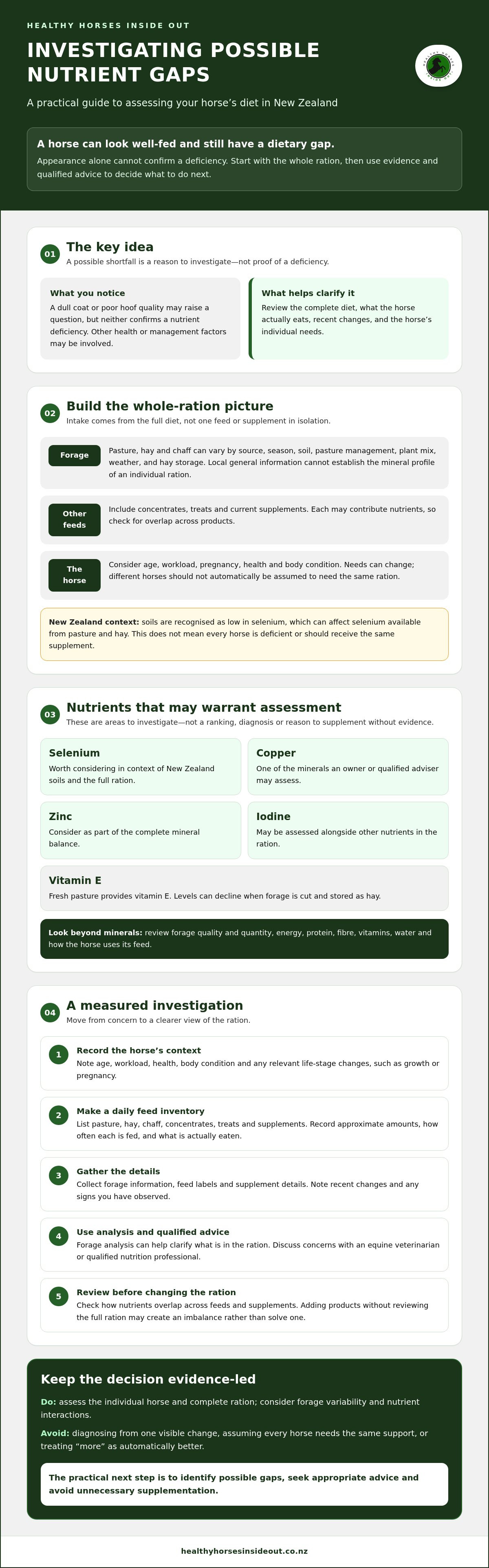
How to investigate a suspected deficiency in a New Zealand horse
A clear record can turn a vague concern into a more useful discussion with an equine professional. Before changing the ration, work through the evidence in order: document what your horse eats, assess the forage, note relevant changes, then seek qualified interpretation. This connects a concern to the horse’s actual diet rather than relying on assumptions about common nutritional deficiencies in NZ horses.
Build a complete feed and management record
Write down the forage types and approximate amounts offered, plus supplementary feeds, treats and every current supplement. Include product labels, feeding directions and how often each item is given. Note pasture access, recent seasonal or management changes, workload and relevant health history. If you’re unsure how much forage is eaten, record that too. Don’t plan a new ration from a partial list. The horse’s full circumstances matter.
Use professional advice to decide what happens next
Discuss your observations and records with an equine veterinarian or qualified nutrition professional. They can help determine whether forage analysis, a clinical examination or another test is appropriate for the specific concern. Testing choices depend on the suspected issue and professional judgement, so no single test should be assumed to suit every horse. Results need to be considered alongside the diet, history and clinical picture.
Forage analysis can clarify what a sample contains, but it won’t by itself confirm that your horse has a deficiency. Test results also need informed interpretation. Their meaning may depend on what the horse is eating, how the sample was collected and the reason for testing. Share feed labels and supplement details so the adviser can check the whole ration, including possible overlaps.
Let test results and the full diet guide supplement choices. Don’t use supplementation as a substitute for finding out what the horse needs.
Keep the process measured. If a professional identifies a specific gap, discuss a suitable way to address it and how to review the ration afterwards. If no deficiency is confirmed, avoid adding products simply because a sign seems familiar. For targeted nutritional support after considering your horse’s needs, explore horse supplements for New Zealand horses.
Choosing nutritional support without guessing or over-supplementing
The aim is a balanced total diet, not a growing pile of supplements. If a review identifies a possible gap, consider nutritional support in light of the horse’s full ration, health, workload and intended use. A product category alone doesn’t establish that it’s suitable for your horse, and supplements aren’t a substitute for veterinary assessment or a balanced feeding plan.
When might a supplement be worth discussing?
Discuss a supplement when a specific dietary need has been identified or a qualified adviser recommends considering one. Before choosing, check the label, feeding directions and nutrient content against everything else in the ration, including fortified feeds and current supplements. Overlapping ingredients can make it harder to understand total intake. Take product details to your adviser rather than relying on the front-of-pack description.
Healthy Horses Inside Out offers everyday supplements, specific supplements, supplement bundles and HHIO Pellets. These are product categories to explore after considering the horse’s needs, not a one-size-fits-all prescription. The appropriate option depends on the whole ration and the reason for adding support. No category guarantees a particular health or performance result or confirms that a deficiency has been addressed.
A steady plan for reviewing your horse’s nutrition
Keep a baseline record of the diet and the professional recommendations that informed it. Include feed labels, feeding amounts and any changes made, so you can review what the horse is receiving over time. Revisit the plan after meaningful changes, such as a new forage source, a seasonal shift in pasture or a change in workload. If health concerns emerge, seek veterinary advice rather than assuming the ration is the cause.
A methodical review can help you avoid unnecessary additions and make future discussions more focused. Common nutritional deficiencies in NZ horses are useful prompts for assessment, but individual decisions should be based on evidence about the horse in front of you.
Once you’ve considered the diet and any professional advice, you can explore Healthy Horses Inside Out’s horse nutrition range as a next step in considering targeted nutritional support.
Make your next nutrition decision with confidence
Changes in coat, hooves or performance can prompt questions, but they don’t confirm a nutrient deficiency. Common nutritional deficiencies in NZ horses are possibilities to investigate in light of the horse’s full diet, forage and individual needs.
A practical next step is to record what your horse eats and any changes you’ve noticed, then discuss concerns with an equine veterinarian or qualified nutrition professional. Their advice can help you decide whether further assessment is needed and whether nutritional support is appropriate. Check labels and feeding directions against the rest of the ration before adding products.
Healthy Horses Inside Out offers products for New Zealand horse owners, including everyday and specific supplements, bundles and HHIO Pellets. Once you’ve considered your horse’s needs and appropriate advice, explore Healthy Horses Inside Out’s horse nutrition range.
Thoughtful assessment can replace guesswork with a clearer plan, one careful step at a time.
Frequently Asked Questions
What are the most common nutritional deficiencies in NZ horses?
Nutrients worth assessing in New Zealand horses can include selenium, copper, zinc and iodine, but this isn’t a universal ranking or a diagnosis for any individual horse. New Zealand soils are known to be low in selenium, though a horse’s actual intake depends on its forage and the rest of its ration. Energy, protein and overall forage quality matter too. Consider the full diet before deciding whether a nutrient needs attention.
Can New Zealand pasture provide all the nutrients a horse needs?
Not necessarily, and pasture alone doesn’t show the whole diet. Its nutrient composition varies with soil, season, pasture management and forage source, while a horse’s needs depend on factors such as workload, age and health. Fresh pasture can provide vitamin E, but levels can decline in cut and stored hay. Review pasture alongside hay, supplementary feeds and the horse’s circumstances to understand whether the total ration is suitable.
How can I tell if my horse has a nutritional deficiency?
You can notice and record changes, but signs alone can’t confirm a deficiency. A dull coat, poor hoof quality, altered behaviour or reduced performance can have nutritional or non-nutritional causes. Note when changes began and any recent shifts in forage, feed, supplements or workload. An equine veterinarian can assess the horse’s history and clinical signs, then advise whether further nutritional review or testing is appropriate.
Should I give my horse a mineral supplement without testing?
Don’t add a mineral supplement simply because a sign seems to fit or because a nutrient is discussed as a concern in New Zealand. Start by reviewing the complete ration, including existing feeds and supplements, then ask an equine veterinarian or qualified nutrition professional whether testing or a dietary change is appropriate. Not every situation requires the same test, and adding products without checking total intake may complicate the diet.
Can a forage analysis show what nutrients my horse is missing?
Forage analysis can show the nutrient composition of the sample tested, helping you understand one part of your horse’s diet. It can’t by itself confirm a deficiency in the horse. It doesn’t establish how much forage the horse eats or account for all other feeds, health factors or individual needs. Discuss the results alongside feed labels, approximate intake and the horse’s history with a qualified adviser.
What happens if a horse gets too much of a mineral supplement?
Excess intake can be harmful, and mineral interactions mean an imbalance may affect how other nutrients are used. For example, too much zinc can interfere with copper absorption, while excessive selenium can be toxic. Check every feed and supplement for overlapping nutrients, and follow label directions. If you’re concerned your horse has received too much, contact an equine veterinarian promptly rather than trying to correct the ration yourself.
When should I speak to a veterinarian about a possible deficiency?
Speak with a veterinarian if you’re concerned about persistent changes in your horse’s coat, hooves, behaviour or performance, as these signs can have several causes. Seek prompt advice if a change is sudden, severe or worsening, or if your horse seems unwell. Bring a record of forage, feeds, supplements and recent management changes. This context can help the veterinarian assess the horse and decide whether tests or further nutritional advice are needed.


