

The most expensive joint supplement in the tack room is often the one that does the least for your senior horse's actual mobility. It's incredibly frustrating to watch your old mate struggle to move freely in the paddock while you wonder if you're simply wasting money on products packed with low-quality fillers. You deserve to feel confident that your nutritional choices are making a tangible difference to their comfort. Finding the best joint care for older horses isn't about following the loudest marketing claims regarding glucosamine or MSM; it's about understanding the biological mechanisms that drive systemic health.
We understand that you want a simplified, effective feeding routine that offers real peace of mind. This 2026 science-led guide will clarify the complex landscape of equine supplements to help your senior horse thrive in their golden years. We'll examine why a dual-action approach, combining specific joint-specific nutrients with a solid mineral foundation like HHIO Pellets, is the key to lasting results. By the end of this article, you'll have a clear roadmap to optimise your horse's internal health and restore their natural desire to move.
Key Takeaways
- Understand the biological drivers of age-related stiffness, including how synovial fluid degradation and cartilage thinning impact your horse's ability to move freely.
- Learn how to identify the best joint care for older horses by prioritising high bioavailability in key ingredients like Glucosamine and MSM over low-quality fillers.
- Gain the clinical confidence to decode supplement labels, allowing you to distinguish between effective active ingredients and marketing claims that offer little nutritional value.
- Discover why targeted joint support often fails without a foundational mineral balance of Copper, Zinc, and Manganese to support essential collagen and bone formation.
- See how integrating HHIO Pellets provides the necessary systemic support to optimise the results of your senior horse's daily feeding routine.
Understanding the "Golden Years": Why Mobility Declines in Senior Horses
Ageing isn't just a number on a passport; it's a physiological shift in how your horse's body maintains itself. While we often dismiss stiffness as an inevitable part of "getting old", the reality is far more complex. Age-related joint decline involves a specific breakdown of structural integrity within the joint capsule. This process is frequently exacerbated by systemic inflammation, which often stems from dietary imbalances or mineral deficiencies common in many paddocks. Finding the best joint care for older horses requires looking beyond the surface and addressing these internal biological triggers.
The Biological Reality of the Ageing Joint
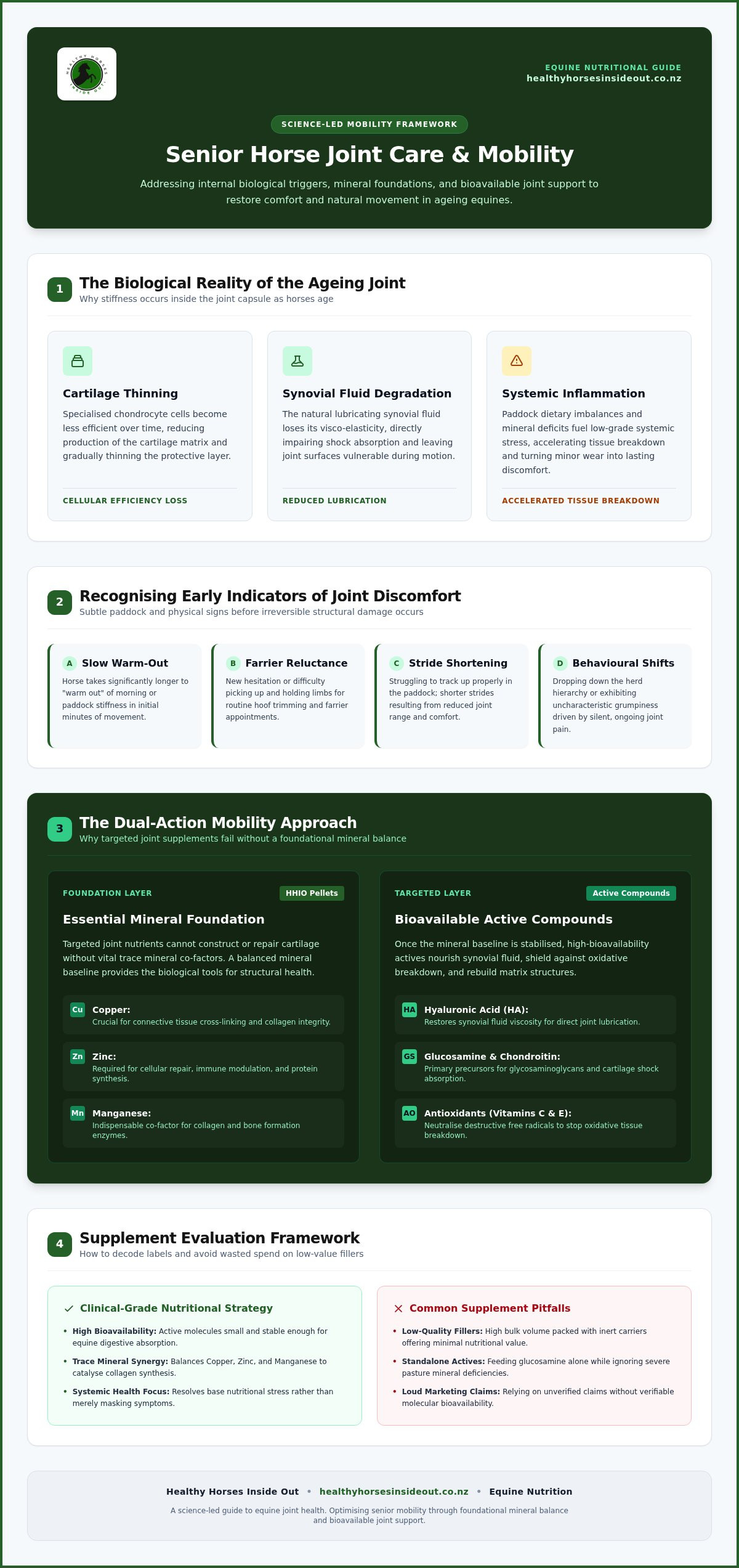
Inside the joint, specialised cells called chondrocytes are responsible for producing the cartilage matrix. As horses age, these cells become less efficient, leading to a gradual thinning of the protective cartilage. Simultaneously, the synovial fluid, which acts as a lubricant and shock absorber, loses its visco-elasticity. This degradation means the joint is less protected during movement. A deeper understanding of equine joint anatomy reveals that these structures rely on a delicate balance of nutrients to remain functional. When this balance shifts, senior horses become significantly more susceptible to paddock-based injuries because their tissues lack the resilience they once had.
Systemic inflammation acts as a silent catalyst for joint pain. When a horse's diet is high in pro-inflammatory markers or lacks essential trace minerals, the body remains in a state of low-grade stress. This internal environment accelerates the breakdown of joint tissues, making even minor wear and tear feel significant. This is why a targeted supplement often fails if the base diet isn't balanced. True mobility support starts with managing this systemic load to create a stable foundation for specific joint nutrients to work.
Signs Your Senior Horse Needs Joint Support
Early indicators of discomfort are often subtle and easily missed until they become chronic. You might notice your horse takes longer to "warm out" of stiffness during their first few minutes of movement. They may show a new reluctance to pick up their feet for the farrier, or you might see them struggling to track up properly in the paddock. Behavioural changes are also common. Discomfort can cause a senior horse to drop down the herd hierarchy or become uncharacteristically grumpy. Recognising these signs early is crucial for implementing the best joint care for older horses before irreversible damage occurs. Addressing these issues involves more than just a quick fix; it requires a foundational approach that supports the horse from the inside out.
The Science of Joint Support: Ingredients That Actually Deliver Results
Selecting the best joint care for older horses requires a discerning look at the ingredient list, prioritising bioavailability over sheer volume. While many products boast high concentrations of active ingredients, if these molecules are too large or in an unstable form, the equine digestive system cannot effectively transport them to the joint capsule. Bioavailability determines efficacy. Without it, you are simply paying for supplements that your horse cannot use. To achieve real results, we must focus on high-quality compounds that actively support the repair and maintenance of joint structures.
Hyaluronic Acid (HA) is a standout ingredient for senior horses because it provides immediate "lubrication" by restoring the viscosity of the synovial fluid. This is vital for horses whose natural production of HA has tapered off with age. Additionally, antioxidants such as Vitamin C and Vitamin E play a critical defensive role. They neutralise joint-damaging free radicals, which are unstable molecules that trigger oxidative stress and accelerate the breakdown of healthy tissue. By combining these protective elements with structural building blocks, you create a comprehensive support system for the ageing joint.
Glucosamine and Chondroitin: The Building Blocks
Glucosamine serves as a primary precursor for glycosaminoglycans, which are the essential components of the cartilage matrix. Chondroitin sulphate works in synergy with glucosamine to maintain structural integrity and shock absorption. Using the sulphate forms of these ingredients is often preferred for maximum absorption into the bloodstream. For a senior horse, the optimal ratio of Glucosamine to Chondroitin is typically 2:1 to provide the most effective structural support for ageing joints.
- Glucosamine Sulphate: Stimulates the production of new cartilage components and connective tissues.
- Chondroitin Sulphate: Helps inhibit the enzymes that break down cartilage during movement.
MSM and Omega-3s: Managing the Inflammatory Response
Methylsulfonylmethane (MSM) is a highly bioavailable source of organic sulfur, which is vital for collagen synthesis and the cross-linking of connective tissues. It also helps the body manage its natural inflammatory response without the side effects often associated with long-term medication. When considering fatty acids, marine-derived Omega-3s are superior to plant-based options like flaxseed. Marine sources provide pre-formed EPA and DHA, which the horse can utilise immediately to support joint health. Investing in Specific Horse Supplements that prioritise these science-backed ingredients can significantly reduce the need for pharmaceutical interventions as your horse ages.
Evaluating the Best Joint Care for Older Horses: A Buying Framework
Determining the best joint care for older horses requires more than a cursory glance at the packaging. It demands a methodical approach to evaluating ingredient transparency and dosage levels. Many owners find themselves overwhelmed by marketing jargon, yet the key to efficacy lies in the milligram breakdown of active components. If a manufacturer hides behind "proprietary blends" without listing specific amounts, it's impossible to know if your horse is receiving a therapeutic dose or merely a trace amount. You should always look for a clear analysis that allows you to compare the actual value of what's inside the tub.
Cost-per-day analysis is a vital tool for the savvy owner. A large, inexpensive tub often contains a high percentage of fillers like dextrose, wheat, or rice bran, which necessitates a larger daily serving to reach effective levels. In contrast, a concentrated supplement may have a higher upfront price but a significantly lower daily cost because you aren't paying for bulk. Consistency is equally paramount. Joint support is a long-term strategy, not a quick fix; skipping doses disrupts the steady-state concentration of nutrients in the bloodstream, which can stall the progress of your horse's comfort and mobility.
Intensive Support vs. Daily Maintenance
When you first introduce a supplement, a "loading dose" is typically required to saturate the tissues and provide initial support. This intensive phase usually lasts two to four weeks, depending on the severity of the horse's stiffness. Once your horse shows visible signs of improved comfort, you can transition to a maintenance dose. The requirements for an active veteran still enjoying light work will differ from those of a retired paddock ornament. An active horse may benefit from a high-potency Specific Horse Supplement year-round, whereas a retired horse might thrive on a lower maintenance level once their foundational comfort is established.
Avoiding Common Supplement Scams
Transparency is the hallmark of integrity in the equine industry. Avoid products that use vague terms instead of clinical data. High levels of sugar or grain-based fillers are common in cheap powders, and these can inadvertently trigger metabolic issues in senior horses. Ensuring your chosen product aligns with horse joint supplement NZ standards provides peace of mind that you're investing in quality. Look for brands that prioritise science over slogans to ensure your senior horse receives the optimal nutritional support they deserve without the unnecessary additives found in lower-tier products.
The Foundation of Mobility: Why Minerals Matter for Joint Health
A common mistake in senior horse management is treating joints as isolated mechanical parts rather than components of a systemic whole. Seeking the best joint care for older horses often leads owners straight to glucosamine, yet these targeted nutrients cannot function effectively without a baseline of essential trace minerals. Copper, Zinc, and Manganese are not just "nice to have" additions; they're critical co-factors for collagen synthesis and bone mineralisation. If your horse is deficient in these, the structural "scaffolding" of the joint capsule remains weak regardless of how much high-end joint supplement you provide.
New Zealand pastures are notoriously deficient in these specific trace minerals, often failing to provide the foundational support a senior horse requires for ongoing tissue repair. This deficiency doesn't just manifest as stiff joints; it frequently shows up in poor hoof quality. Brittle walls or low heels change the horse's biomechanical angles, placing unnecessary strain on the fetlocks and hocks. By addressing the mineral gap first, you provide the systemic support needed for both hoof integrity and long-term joint comfort. It's a logical progression that ensures your investment in joint-specific nutrients isn't wasted.
Systemic Health and the "Inside Out" Approach
True wellness begins with a balanced internal environment. A horse with a compromised gut or a mineral-starved system cannot effectively absorb and utilise the joint-specific molecules you add to their feed. Prioritising everyday horse supplements ensures that systemic mineral gaps are closed before you move on to targeted care. This approach reduces oxidative stress across the whole body, creating a stable platform for more intensive joint support to deliver visible results. When the internal foundation is solid, the outward signs of mobility and vitality follow naturally.
Pelleted Support for the Ageing Horse
As horses enter their senior years, dental wear or missing teeth can make it difficult for them to process traditional powder supplements or coarse grains. HHIO Pellets offer a superior delivery method, ensuring that essential minerals are consumed consistently rather than being left at the bottom of the feed bin. This consistent daily intake is vital for the longevity of both the retired veteran and the active performance horse. Establishing this foundation is the first step toward a thriving senior horse. You can browse our range of HHIO Pellets to find the right foundational support for your horse’s specific needs.
Optimising Your Senior Horse’s Routine with HHIO
Success in senior horse management relies on a methodical, tiered approach. While many owners look for a single "magic bullet", the best joint care for older horses is achieved through a synergy of foundational minerals and targeted nutrients. HHIO Pellets serve as this essential foundation, addressing the specific mineral gaps found in local pastures to ensure the skeletal and connective tissues have the raw materials required for maintenance. Establish this base first. This ensures that any additional joint-specific ingredients are working on a system that is already balanced and receptive.
Combining Everyday Horse Supplements with Specific Horse Supplements allows you to create a bespoke routine without the clutter of multiple half-empty tubs. Our Supplement Bundles streamline this process, offering a cost-effective way to manage your veteran's health holistically. Unlike standalone products that ignore the wider physiological context, these bundles address the interplay between mineral balance and joint repair. This science-led strategy provides long-term peace of mind, as you aren't just masking symptoms but actively supporting the internal mechanisms that drive external comfort.
Tailoring Your Bundle for Joint Comfort
Senior horses often face overlapping challenges, such as metabolic sensitivities or declining gut efficiency. An "Inside Out" regime recognises these links; for example, a horse with poor gut health will struggle to absorb even the highest quality joint nutrients. You can tailor your approach by combining joint support with products designed for metabolic balance or digestive integrity. If you're unsure where to start, consulting a guide on what supplements does my horse need NZ can help you identify the specific priorities for your veteran's unique profile.
Next Steps: Keeping Your Horse Moving
Nutritional support is most effective when integrated with consistent, gentle movement. Low-impact exercise helps circulate synovial fluid, which further assists the delivery of nutrients into the joint capsule. Consistency is the key. Monitor your horse's progress over the first 30 to 60 days, looking for subtle improvements in their stride length, their ease of lying down and standing up, and their general willingness to move. This period allows the loading doses to take full effect and the foundational minerals to begin their systemic work. Every horse responds at a different rate, so patience remains your most valuable tool during this transition. To begin your journey toward better mobility, explore our science-led horse supplement bundles to support your senior horse today.
Investing in Your Senior Horse's Future Vitality
Effective mobility management for your veteran mate requires a shift from reactive treatments to proactive, systemic support. We've explored how the best joint care for older horses is built upon a clinical understanding of mineral balance and high-quality, bioavailable ingredients. By addressing the mineral gaps in local pastures with HHIO Pellets and layering targeted nutrients, you create a foundation for lasting comfort. This methodical approach ensures your horse isn't just surviving their senior years but truly thriving in them.
Our formulations are deeply rooted in nutritional science and are entirely free from unnecessary fillers and sugars that can compromise metabolic health. We take pride in supporting New Zealand horses from the inside out, providing you with the peace of mind that comes from evidence-based wellness. When you choose a high-integrity routine, you're becoming a serious partner in your horse's long-term health. Shop our targeted Horse Supplement Bundles for senior mobility today to see the difference that intentional nutrition can make. Your old friend deserves the confidence and freedom that comes with moving comfortably through their golden years.
Frequently Asked Questions
How long does it take for a joint supplement to work in an older horse?
You'll typically observe subtle changes in mobility within the first two to four weeks, especially if you utilise an initial loading dose to saturate the joint tissues. However, the biological repair of connective tissue is a gradual process. Achieving the full systemic benefits of the best joint care for older horses usually requires a consistent feeding routine for 60 to 90 days. This allows the internal environment to stabilise and support the regeneration of cartilage matrix and synovial fluid.
Can I give my horse joint supplements if they are already on medication?
Most nutritional supplements can be safely integrated alongside veterinary medications, as they serve different physiological roles. While pharmaceutical interventions typically manage acute pain or block inflammatory pathways, supplements provide the foundational building blocks for tissue repair. You should always consult your veterinarian before introducing new Specific Horse Supplements if your horse is on a long-term prescription. This ensures that the combination of nutritional support and medication is optimised for your veteran's specific clinical needs.
Is it better to feed a liquid or powder joint supplement to a senior?
The choice between liquid and powder depends largely on your horse's preference and dental health. Senior horses with significant tooth wear often find liquids or HHIO Pellets easier to consume, as these delivery methods ensure the nutrients aren't left at the bottom of the feed bin. While liquids can offer high bioavailability, high-quality powders are equally effective if they are free from fillers. Consistency in daily intake is more critical for long-term mobility than the physical form of the supplement.
What is the best ingredient for a horse with severe arthritis?
There isn't a single "miracle" ingredient; rather, a synergistic combination of Glucosamine, Chondroitin, and MSM provides the most comprehensive support for severe joint issues. Glucosamine and Chondroitin act as structural precursors, while MSM provides the organic sulfur necessary for collagen cross-linking. Adding Hyaluronic Acid (HA) is also beneficial for restoring the lubrication of the synovial fluid. This multi-targeted approach addresses both the structural degradation and the inflammatory response associated with chronic joint discomfort.
Do younger horses need joint supplements, or should I wait until they are older?
Early intervention is often more effective than waiting for clinical signs of stiffness to appear. Performance horses or those with conformational challenges benefit from foundational support early in life to maintain joint longevity. Proactive management focuses on providing essential trace minerals and structural building blocks before irreversible cartilage thinning occurs. Starting a maintenance regime with Everyday Horse Supplements can help preserve joint integrity, ensuring your horse remains comfortable and mobile well into their senior years.
How do I know if my joint supplement has too many fillers?
You can identify excessive fillers by scrutinising the ingredient list for high concentrations of dextrose, sucrose, wheat, or rice bran. If these bulk agents appear at the top of the list, the product likely lacks therapeutic potency. Reputable brands provide a clear milligram breakdown of active ingredients like Glucosamine and MSM. Avoid "proprietary blends" that don't specify quantities, as these often hide a lack of active substance behind marketing jargon and inexpensive carriers.
Can mineral deficiencies cause joint pain in horses?
Mineral deficiencies are a primary driver of joint discomfort because they compromise the body's ability to repair soft tissues. In New Zealand, pastures often lack the Copper, Zinc, and Manganese required for collagen synthesis and bone mineralisation. When these foundational elements are missing, the joint capsule lacks the structural "scaffolding" needed to withstand daily movement. Addressing these gaps with HHIO Pellets is a vital step in restoring the internal health necessary for external mobility.
What happens if I stop giving my horse their joint supplement?
If you discontinue nutritional support, the concentration of active compounds in the bloodstream and joint fluid will gradually decline. Over several weeks, you may notice a return of previous stiffness or a reluctance to move freely as the inflammatory response increases. Joint care is a long-term management strategy rather than a temporary fix. Maintaining a consistent feeding routine ensures that the joint tissues have a steady supply of the nutrients required for ongoing maintenance and comfort.


