

What if the premium bucket of grain you're carefully measuring every morning is actually leaving your horse's most vital biological systems starving for foundational support? It's a common frustration for many Kiwi owners who invest heavily in top-tier brands yet still struggle with a dull coat, bleached mane, or hooves that crumble despite constant attention. You've likely felt that persistent sense of uncertainty, asking yourself "am I feeding my horse correctly NZ?" while trying to reconcile conflicting marketing claims with the reality of your horse's physical condition.
We understand that you want more than just a shiny coat; you want the peace of mind that comes from evidence-based wellness. This guide provides a clear, methodical framework to audit your horse's diet against the unique environmental challenges of New Zealand, such as the widespread selenium and copper deficiencies found in our local soils. By shifting your focus from the volume of feed to the precision of mineral balance, you can eliminate expensive fillers and ensure your horse is truly thriving from the inside out. We will examine how to identify these nutritional gaps and implement a targeted strategy that prioritises long-term health and performance.
Key Takeaways
- Understand why fibre remains the non-negotiable cornerstone of the equine diet and how to distinguish between a horse that is merely "full" and one that is truly nourished.
- Learn how to answer the question "am I feeding my horse correctly NZ" by identifying the specific soil deficiencies in Selenium, Copper, and Zinc that impact local pasture quality.
- Discover why many "complete" hard feeds may be providing unnecessary fillers while failing to meet the micronutrient requirements of New Zealand's "good doers".
- Gain a practical 5-step framework to audit your horse’s condition from the inside out, focusing on visual indicators like hoof health and coat clarity.
- Explore how targeted mineral balancing with HHIO Pellets offers a streamlined, evidence-based approach to optimising your horse's long-term vitality.
The Foundations of Equine Nutrition in New Zealand
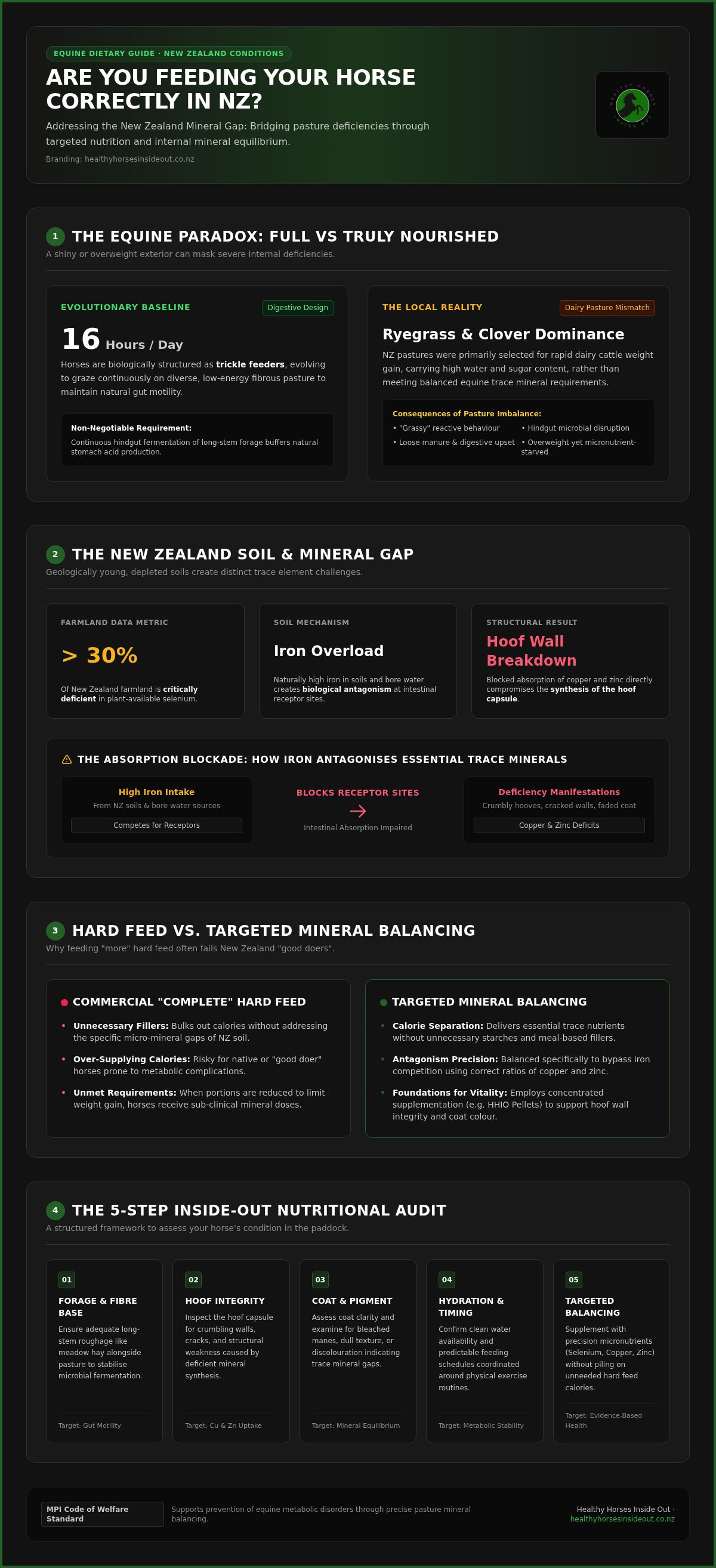
Horses are biologically designed as "trickle feeders," an evolutionary trait that dictates their entire digestive strategy. In a natural state, they spend up to 16 hours a day grazing on diverse, low-energy grasses. This constant intake of fibre is the cornerstone of their health. However, in New Zealand, our grazing environment is often dominated by high-sugar perennial ryegrass and clover, which were originally developed for the rapid weight gain of dairy cattle rather than the complex equine nutritional requirements of a performance or pleasure horse.
This discrepancy often leads to a common paradox: the horse that appears "full" or even overweight, yet remains fundamentally malnourished. A shiny, fat exterior can mask significant internal deficiencies. If you've wondered, "am I feeding my horse correctly NZ?" you must look beyond the scales. True health is driven by an "Inside Out" philosophy, where visible vitality, such as strong hooves and a resilient immune system, is the direct result of internal mineral equilibrium rather than just caloric intake.
The Role of Forage in Digestive Health
Forage is non-negotiable for maintaining gut motility. The hindgut relies on the fermentation of long-stem fibre to function; without it, the risk of digestive upset increases significantly. While NZ's lush spring grass provides plenty of volume, its high water and sugar content can disrupt the delicate microbial balance of the hindgut. This often manifests as "grassy" behaviour or loose manure. Relying on meal-based feeds without adequate roughage like meadow hay can lead to gastric issues, as the horse's stomach continues to produce acid even when empty.
Water and Routine: The Silent Nutrients
Hydration and consistency are frequently overlooked components of a balanced regime. Clean, fresh water must be available at all times, especially during variable NZ weather where dehydration can lead to impaction colic. Furthermore, horses thrive on routine. Biological systems organise themselves around predictable feeding times, which helps regulate metabolic responses and reduces stress. Consistency in portions and timing provides the stability required for optimal digestion. Finally, coordinate your feeding with exercise to prevent distress. Avoid feeding large grain-based meals immediately before or after heavy work to ensure the system isn't overloaded during peak physical exertion.
By prioritising high-quality fibre and understanding the specific demands of our local pastures, you create a stable foundation for more targeted supplementation. This methodical approach ensures your horse isn't just surviving on grass, but is supported by a diet that respects their unique physiology.
Identifying the Gaps: New Zealand Soil and Mineral Deficiencies
New Zealand's geological profile presents a unique challenge for horse owners. While our landscapes appear lush and productive, the soil is often geologically young or depleted of essential trace elements required for optimal equine health. This creates what we define as the "NZ Mineral Gap." Even when pasture is plentiful, it frequently lacks the micronutrient density needed to support complex biological functions. The MPI Code of Welfare for Horses and Donkeys emphasises the importance of providing a diet that prevents metabolic disorders, yet achieving this requires a deeper understanding of regional soil deficiencies than most commercial feed labels provide.
A significant factor in the New Zealand context is iron overload. Many of our soils and bore water sources are naturally high in iron, which acts as a biological antagonist. Excess iron competes for the same intestinal receptor sites as copper and zinc, effectively blocking their absorption. Chronic soil mineral deficiency directly compromises the structural synthesis of the hoof capsule, leading to poor wall integrity and increased susceptibility to cracking. This is why simply feeding "more" is rarely the answer to the question, "am I feeding my horse correctly NZ?" Precision is required to bypass these absorption blocks.
Selenium: The Essential NZ Trace Element
Selenium is a critical antioxidant that supports immune function and muscle recovery, particularly in performance horses. Data indicates that over 30% of New Zealand farmland is critically deficient in plant-available selenium. Without targeted supplementation, horses are at risk of muscle stiffness and impaired immunity. However, the margin between a safe requirement and toxicity is narrow. The National Research Council baseline for a 500kg horse is approximately 1.0 mg per day, with safety thresholds needing careful management. Owners must prioritise evidence-based everyday horse supplements that provide precise, safe dosages to avoid the dangers of over-supplementation while still bridging the local gap.
Copper and Zinc: The Keys to Skin and Hoof Health
Copper and zinc are fundamental to the production of keratin and collagen, the building blocks of skin, hair, and hooves. Many owners mistake "sun-bleached" or orange-tinged coats as simple UV damage, but this is often a visible sign of copper deficiency. When copper levels are low, the enzyme responsible for pigment production cannot function correctly. Similarly, zinc is vital for skin healing and hoof strength. In the NZ environment, balancing the copper-to-zinc ratio is far more important than the absolute amount fed. By elevating these minerals in a specific ratio to counteract high ambient iron, you can restore the integrity of the hoof and the natural depth of the coat colour from the inside out.
Hard Feed vs. Mineral Balancing: What Does Your Horse Actually Need?
Many owners reach for "complete" feeds, believing they provide a total solution for their horse's needs. However, these products are formulated based on a specific daily intake, often 3kg or more. For the typical New Zealand "good doer" grazing on high-energy ryegrass, this volume of grain leads to excessive weight gain. If you reduce the portion to manage their waistline, you simultaneously slash their intake of essential vitamins and minerals. This is a primary reason owners find themselves asking, "am I feeding my horse correctly NZ?" when their horse is overweight yet still exhibits poor hoof quality or a dull coat.
Understanding the difference between grains, concentrates, and ration balancers is vital for both financial and physiological efficiency. Many commercial feeds contain significant proportions of fillers like bran, pollard, or molasses, which add bulk and palatability but offer little in the way of targeted nutrition. In contrast, a high-spec mineral balancer focuses on active, bioavailable ingredients. While the price per bag may seem higher, the low daily dose rate, often as little as 20g to 70g, makes it a far more cost-effective way to bridge the NZ mineral gap without paying for unnecessary calories.
Managing the 'Poor Doer' and the 'Easy Keeper'
Weight management often complicates nutritional planning. When an "easy keeper" starts to gain too much condition, the first instinct is to cut back their feed. Unfortunately, this usually means the horse loses out on the very minerals they need to maintain a healthy metabolism. "Dieting" horses are at the highest risk for deficiencies because their intake is restricted. To solve this, use low-glycaemic carriers like plain timothy chaff or soaked beet pulp. These allow you to deliver concentrated minerals without adding the "fizz" or fat associated with traditional grain mixes, ensuring the horse is nourished even when calories are restricted.
The Hidden Cost of Sugar and Starch
New Zealand's perennial ryegrass is already a high-sugar forage source. Adding starch-heavy grains to this base can push a horse toward systemic inflammation, metabolic issues, and even laminitis. Performance horses requiring extra energy should receive it from "cool" sources like fats and digestible fibres rather than sugar-laden sweet feeds. For a deeper look at what to avoid, see our guide on Understanding horse supplement ingredients NZ. Balancing energy needs with mineral precision ensures your horse stays level-headed and physically resilient through every season.
The 5-Step Nutritional Audit for Your Paddock
Systematic evaluation is the hallmark of a methodical owner. If you are questioning, "am I feeding my horse correctly NZ?" then a structured audit is the most reliable way to find the answer. This process moves beyond guesswork, allowing you to align your horse's internal chemistry with their external environment. By following these five steps, you can identify exactly where your current regime may be falling short.
- Step 1: Visual Assessment. Conduct an "Inside Out" check. Look for consistent hoof growth without prominent rings, a deep coat colour that resists sun-bleaching, and clear, bright eyes.
- Step 2: Forage Analysis. Evaluate your pasture species and hay quality. Recognise that dairy-style ryegrass carries a different nutritional profile than a diverse meadow sward.
- Step 3: Ration Calculation. Weigh your current hard feed. Most owners overestimate the weight of a "scoop," which often means the horse isn't receiving the full mineral dose listed on the label.
- Step 4: Identifying Stressors. Account for age, workload, and the metabolic demands of New Zealand's changing seasons. Each factor shifts the baseline for mineral requirements.
- Step 5: Bridging the Gap. Select a targeted mineral base, such as HHIO Pellets, to complete the nutritional profile without adding unnecessary calories.
Recognising the Signs of Imbalance
Visual signs are the body's way of communicating internal shortfalls. A "grass-affected" horse often exhibits reactive, spooky, or unpredictable behaviour; this is frequently a neurological response to mineral imbalances in the forage rather than a training issue. Hoof health serves as a long-term record of nutritional success. Consistent, strong growth indicates that the systemic requirements are being met, while crumbling walls suggest a lack of essential trace elements. For a detailed breakdown of these indicators, read our post on 5 Signs Your Horse Has a Mineral Deficiency.
Adjusting for Seasonal Shifts
The New Zealand climate demands a flexible nutritional strategy. During the spring flush, a spike in potassium and sugar in the grass can overwhelm the system, requiring increased magnesium and mineral support to maintain stability. Conversely, winter care focuses on supporting the gut when grass growth slows and mud increases. This shift often requires moving to conserved forage and ensuring the mineral foundation remains solid despite the lack of fresh pasture. You can find more targeted advice in The Methodical Guide to Winter Horse Care Supplements in NZ.
To begin optimising your horse's diet, explore our range of everyday horse supplements designed specifically for New Zealand conditions.
Streamlining Success with HHIO: Foundations for Vitality
After conducting your nutritional audit, the next logical step is implementation. Many owners continue to wonder "am I feeding my horse correctly NZ" because they are juggling too many separate products or trying to balance multiple bags of fortified feed. HHIO Pellets streamline this process by providing a concentrated, low-dose base specifically engineered for our unique environmental conditions. This methodical approach ensures that your horse's foundational requirements are met without the need for excessive grain or complicated mixing.
Our formulations are rooted in the reality of New Zealand's soil profiles. By focusing on high-quality, bioavailable forms of essential minerals, we bypass the absorption blocks caused by high ambient iron levels discussed earlier. This ensures that every gram of supplement actually reaches the horse's systemic circulation rather than simply passing through the digestive tract as waste. This science-led strategy provides the peace of mind that your investment is translating into tangible health benefits.
Why HHIO Pellets are the NZ Base Your Horse Needs
HHIO Pellets eliminate the need for expensive fillers that often contribute to metabolic stress and unnecessary weight gain. By delivering a nutrient-dense profile in a small daily portion, typically 70g for an adult horse, you ensure that even the easiest keeper receives full micronutrient support. This nutrient density is critical for maintaining the "Inside Out" vitality we advocate for. Owners frequently report transformation stories where horses show a profound shift in hoof integrity and coat depth within a single growth cycle after switching to this targeted base.
Choosing the Right Bundle for Your Journey
Nutrition is not a static requirement; it must evolve as your horse moves through different life stages. Our horse supplement bundles are designed to remove the guesswork by pairing essential daily support with targeted solutions for specific challenges. Whether you are supporting a growing foal, an elite athlete, or a senior horse requiring joint and metabolic care, these bundles provide a structured path to wellness. Discover the best horse supplements New Zealand owners trust for daily vitality and see how a tailored approach can transform your routine.
We act as your methodical mentor, providing the scientific education required to make informed decisions. You provide the daily care and observation; we provide the foundational tools to ensure that care translates into lasting performance. This partnership prioritises long-term health over quick fixes, ensuring your horse is supported by a diet that is as principled as it is effective.
Bridging the Gap for Long-Term Vitality
Transitioning from nutritional uncertainty to confidence requires a fundamental shift in perspective. We've explored why fibre remains the non-negotiable cornerstone of the equine diet and how New Zealand's specific soil deficiencies in selenium, copper, and zinc dictate the need for targeted support. By moving away from calorie-dense fillers and focusing on nutrient-dense mineral balancers, you ensure your horse is supported at a cellular level. This methodical approach addresses the common question, "am I feeding my horse correctly NZ?" by aligning internal biological needs with the unique environmental realities of our landscape.
True health is a long-term commitment to evidence-based wellness rather than a search for quick fixes. Our science-led formulas are specifically tailored for local conditions, providing the precision needed for genuine "Inside Out" results that owners across the country trust. With concentrated HHIO Pellets, you can reduce dietary waste while significantly improving your horse's systemic health and resilience.
Take the guesswork out of feeding-shop the HHIO range of NZ-made supplements today.
You now possess the framework to transform your horse's vitality through intentional nutrition. We're here to act as your partner in this journey, ensuring your horse thrives for years to come.
Frequently Asked Questions
How do I know if my horse is getting enough minerals from NZ grass?
Visual markers like coat shine and hoof integrity provide the best daily feedback. Scientifically, over 30% of New Zealand pasture is deficient in selenium; copper and zinc are also frequently lacking due to our young volcanic soils. If you are asking "am I feeding my horse correctly NZ," remember that lush green grass provides plenty of energy but rarely supplies the full spectrum of trace elements required for long-term systemic health.
Can I feed too many supplements to my horse?
Yes, over-supplementation is a genuine concern, particularly with selenium where the margin for safety is narrow. "Supplement stacking" occurs when you combine fortified hard feeds with multiple separate additives. This can lead to borderline toxicity or mineral imbalances that block the absorption of other nutrients. A methodical approach involves selecting a single, high-spec balancer like HHIO Pellets to ensure all requirements are met without dangerous nutrient duplication.
What are the most common signs of mineral deficiency in NZ horses?
Deficiencies often manifest as visible external "Inside Out" indicators. Common signs include sun-bleached or orange-tinged coats, brittle hoof walls, and a lack of muscle definition despite adequate work. You might also notice behavioural changes; horses lacking magnesium or zinc often become hypersensitive or "grass-affected" when grazing on high-potassium NZ pastures. Addressing these gaps through targeted everyday horse supplements can restore both physical condition and mental stability.
Do I need to feed a hard feed if my horse is on good pasture?
You don't necessarily need a traditional hard feed if your horse maintains a healthy body condition on pasture alone. Most "complete" feeds are calorie-dense and require large daily volumes to provide full mineral doses. For many Kiwi "good doers," this often leads to obesity. Instead, using a concentrated mineral balancer allows you to provide essential micronutrients without adding unnecessary sugar or starch, ensuring the horse is nourished but not overfed.
Is it better to feed hay or grass for a sensitive horse in New Zealand?
For sensitive or metabolic horses, meadow hay is generally a safer foundation than fresh pasture. New Zealand's perennial ryegrass is often high in non-structural carbohydrates and potassium, which can trigger laminitis or excitability. Feeding a high-quality, low-sugar hay provides the necessary fibre to maintain hindgut motility while diluting the impact of lush grass. This strategy helps stabilise blood sugar levels and supports a more predictable temperament in reactive horses.
How long does it take to see results after changing my horse's diet?
The timeline for visible improvement depends on the biological system being supported. You will likely see a change in coat depth and skin quality within three to six weeks as internal mineral levels stabilise. Changes in hoof integrity take much longer; because a new hoof capsule takes approximately nine to twelve months to grow from the coronet band to the ground, you must maintain a consistent regime to see the full structural benefit.
What should I look for on a horse supplement label in NZ?
Look for bioavailable ingredients and specific mineral ratios tailored for the local environment. A high-quality label should list minerals in chelated forms for better absorption and avoid unnecessary "fillers" like molasses or excessive iron. Since New Zealand soils and bore water are often already high in iron, adding more can block copper and zinc uptake. Ensure the product provides a clear daily dosage rate that aligns with your horse's workload.
How does NZ soil quality affect my horse's hooves?
New Zealand's soil quality directly dictates the strength of the hoof wall through the availability of copper and zinc. These minerals are essential for the synthesis of keratin and collagen. When the soil lacks these elements, or when high iron levels block their absorption, the hoof capsule becomes weak and prone to cracks. Using targeted HHIO Pellets helps bridge these specific gaps, ensuring the internal building blocks for strong, resilient hooves are always present.


