

Did you know that despite our famous green landscapes, over 70% of New Zealand soils are classified as selenium deficient? This environmental reality creates a significant "antioxidant gap" because selenium and Vitamin E must work in tandem to protect your horse's cellular integrity. You likely take pride in your horse's grazing, yet you might still worry when their topline lacks definition or their coat loses its lustre during the lean winter months. It's completely understandable to feel uncertain when faced with conflicting advice about whether a horse vitamin E supplement NZ is a foundational necessity or merely an optional extra.
In this guide, you'll discover the biological requirements of the modern New Zealand horse and learn how to identify the most bioavailable forms of Vitamin E to support muscle recovery and neurological health. We'll examine the critical differences between natural and synthetic tocopherols, establish precise dosage protocols for 2026, and explain how to bridge the nutritional gaps left by seasonal pasture changes. By understanding these internal mechanisms, you can move forward with a nutritional regime that offers genuine peace of mind and visible results for your horse's vitality.
Key Takeaways
- Understand why Vitamin E is a non-negotiable antioxidant for protecting your horse's cell membranes from oxidative stress during daily movement and exercise.
- Learn why seasonal pasture fluctuations in New Zealand mean even horses on green grass often require a targeted horse vitamin E supplement NZ to maintain optimal levels.
- Discover the critical bioavailability difference between natural d-alpha-tocopherol and synthetic versions to ensure your nutritional investment actually reaches the horse's tissues.
- Identify subclinical signs of deficiency, such as muscle wastage or a dull coat, and learn how to address these before they progress to more serious neuromuscular issues.
- Recognise the essential synergy between Vitamin E and selenium to provide a balanced, evidence-based foundation for long-term vitality and performance.
The Essential Role of Vitamin E in Equine Physiology
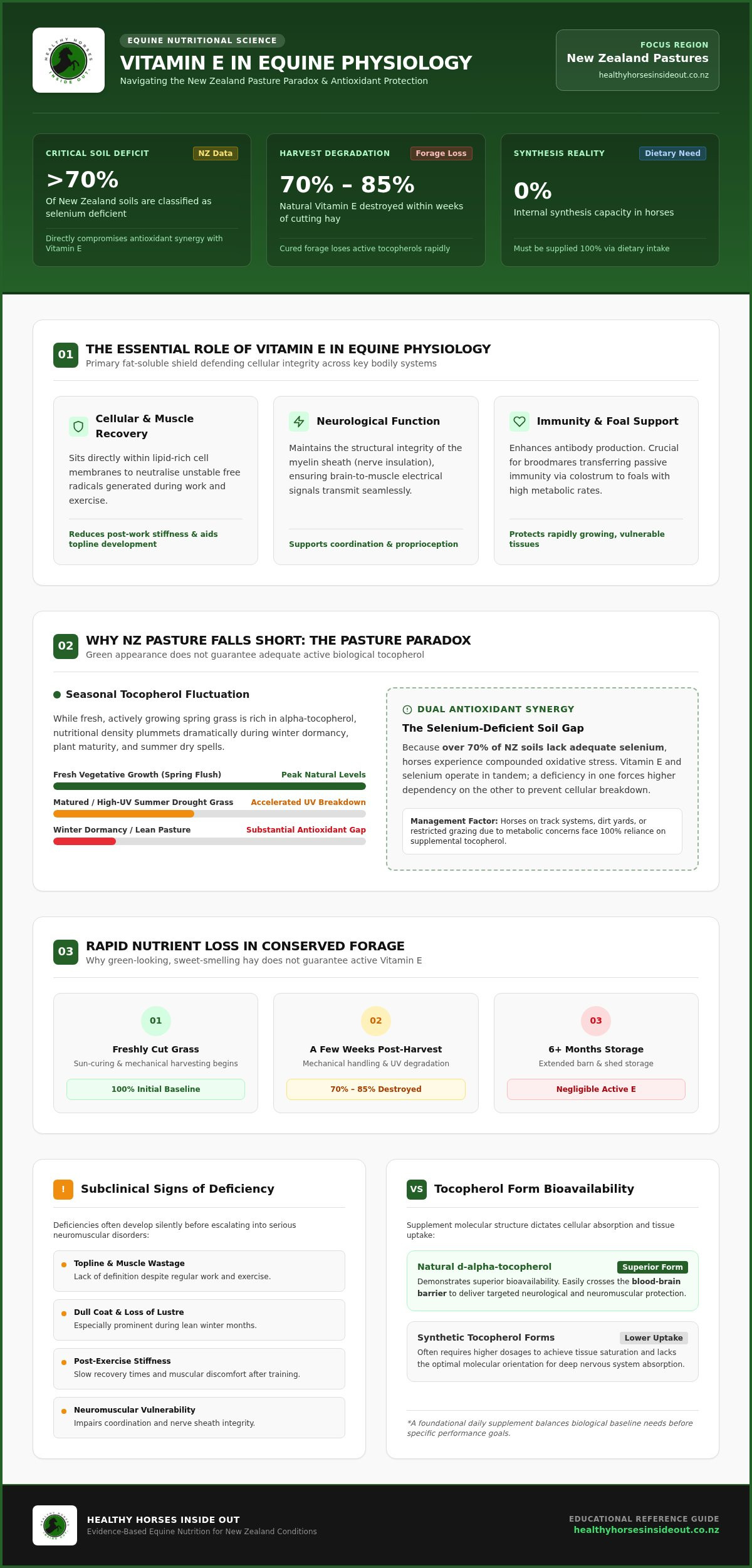
Vitamin E is a non-negotiable biological requirement for every horse. As a primary fat-soluble antioxidant, it serves as a microscopic shield for the body's cells, protecting them from the rigours of daily life. Unlike many other nutrients, horses cannot synthesise their own Vitamin E. They rely entirely on dietary intake to maintain systemic health. Without adequate levels, the delicate balance of internal repair and protection begins to falter, often leading to visible declines in performance and condition.
The Biological Antioxidant Mechanism
During normal metabolic processes, and especially during intense exercise, the horse's body produces unstable molecules called free radicals. These molecules cause oxidative stress by attacking the lipid-rich membranes of cells. The fat-soluble antioxidant properties of vitamin E allow it to sit directly within these cell membranes, neutralising free radicals before they can cause permanent structural damage. This process is vital for muscle recovery. When a horse has sufficient Vitamin E, the inflammation caused by work is managed efficiently, allowing for better muscle development and less stiffness after a hard session.
Neuromuscular and Immune Support
Beyond muscle health, Vitamin E is a critical component of the nervous system. It helps maintain the integrity of the myelin sheath, which acts as the insulation for nerve fibres. This ensures that electrical signals from the brain reach the muscles without interference, supporting coordination and proprioception. In the context of a horse vitamin E supplement NZ owners often find that natural d-alpha-tocopherol is the most effective form for crossing the blood-brain barrier to provide this specific neurological support.
The equine immune system also relies heavily on this nutrient as its first line of defence. It enhances the horse's ability to produce antibodies and respond to pathogens. This is particularly important for breeding mares, as they must pass on these protective qualities to their foals through colostrum. Growing foals have high metabolic rates and rapidly developing tissues, making them highly susceptible to oxidative damage if their foundational nutrition is lacking. Ensuring a consistent supply of this antioxidant is essential for these vulnerable stages of life.
Managing these requirements requires a methodical approach to feeding. Starting with high-quality everyday horse supplements ensures that the baseline biological needs are met before addressing more specific performance or health goals. By prioritising this internal balance, you provide your horse with the structural resilience needed for long-term vitality and peace of mind.
Why New Zealand Pasture Often Falls Short of Vitamin E Requirements
Many New Zealand horse owners operate under the "pasture paradox": the belief that year-round green paddocks provide all the nutrients a horse requires. While fresh, actively growing grass is indeed the richest natural source of alpha-tocopherol, its quality is far from consistent. In reality, New Zealand’s unique grazing conditions often mask a hidden deficiency that only becomes apparent when performance begins to dip or muscle health deteriorates. Fresh vegetative growth provides a peak flush of vitamins, but as grass matures or enters winter dormancy, these levels plummet, leaving a significant gap in the horse's antioxidant defences.
The Degradation of Vitamin E in Forage
The moment grass is cut for hay or haylage, a rapid countdown of nutrient loss begins. Mechanical harvesting and sun-curing can destroy between 70% and 85% of natural Vitamin E content within just a few weeks. By the time hay has been stored for six months, it retains negligible biologically active tocopherol. Even hay that appears bright green and smells fresh is not a reliable source of this essential antioxidant. For horses managed on restricted grazing, track systems, or dirt yards due to metabolic concerns, the reliance on conserved forage makes a horse vitamin E supplement NZ a nutritional necessity rather than a luxury. New Zealand's high UV levels further accelerate the degradation of nutrients in standing pasture during summer droughts, leaving horses vulnerable even when they seem to have plenty of "feed" in front of them.
The Selenium-Vitamin E Synergy in NZ
New Zealand’s geological history has left a legacy of selenium-deficient soils, particularly in volcanic pumice and leached coastal areas. Research indicates that approximately 70% to 80% of our soils lack sufficient selenium to support equine health. This is critical because Vitamin E and selenium work as a tag-team within the body. While Vitamin E protects the cell membrane, selenium is a vital cofactor for enzymes that neutralise free radicals within the cell itself. Supplementing one without the other is often ineffective, leaving the horse’s internal systems incomplete.
Chronic deficiency in these areas is a primary driver behind clinical signs of equine motor neuron disease, a condition that can lead to trembling, muscle wasting, and significant weakness. These issues often develop subclinically, meaning damage occurs long before symptoms become obvious to the eye. By understanding these regional limitations, you can take a more intentional approach to your horse's diet. Exploring the science-led range at Healthy Horses Inside Out can help you bridge these specific environmental gaps with confidence, ensuring your horse has the foundational support required for long-term vitality.
Identifying Vitamin E Deficiency: Signs to Monitor in Your Horse
Detecting a lack of Vitamin E requires a keen eye for subtle physiological shifts. Subclinical deficiency is particularly deceptive because it persists without overt clinical disease, slowly eroding the horse's systemic resilience. Owners often observe a gradual decline in performance or a loss of "spark" before they suspect a nutritional gap. Because Vitamin E is central to equine nutritional and forage requirements, any prolonged shortfall leads to oxidative damage that manifests in both the physical appearance and the internal health of the animal.
Visible Indicators and Physical Condition
One of the most telling signs of a deficiency is a loss of muscle mass, particularly across the topline. You might notice your horse looks "hollow" or lacks muscle definition despite receiving adequate calories and consistent work. This occurs because the body cannot repair the microscopic muscle damage that happens during exercise without sufficient antioxidant protection. Additionally, the hair coat often loses its lustre, appearing "frizzy" or brittle. In the damp conditions of a typical New Zealand winter, a lack of Vitamin E can reduce skin resilience, making horses more susceptible to persistent issues like rain scald or mud fever. For many owners, introducing a targeted horse vitamin E supplement NZ is the key to restoring that healthy, deep-seated glow and supporting the skin's natural barrier.
Performance and Behavioural Changes
Behavioural changes often serve as an early warning system for underlying discomfort. A horse that was previously willing may become "sour" or irritable when asked to move forward. This reluctance is frequently rooted in muscle soreness or a higher risk of "tying up," technically known as exertional rhabdomyolysis. When oxidative stress is not managed, the muscles cannot recover, leading to stiffness and a shortened stride. This is especially evident in senior horses. Their ageing systems are less efficient at managing free radicals, making them more reliant on dietary support to maintain mobility and comfort. Slower healing of minor wounds or a lingering cough can also signal that the immune system is struggling without its primary antioxidant defence. Recognising these signs early allows for a methodical adjustment to the diet, ensuring the horse's internal health supports their external performance.
Natural vs. Synthetic Vitamin E: Choosing the Right Supplement
Selecting a horse vitamin E supplement NZ requires a careful look at the ingredient list, as not all forms of this nutrient are created equal. The primary distinction lies between natural and synthetic sources. On a label, natural Vitamin E is identified as d-alpha-tocopherol or RRR-alpha-tocopherol, while the synthetic version is listed as dl-alpha-tocopherol. This single letter "l" represents a significant difference in how your horse's body processes the supplement. While synthetic options are often cheaper to purchase, they lack the molecular precision required for efficient absorption, often leading to wasted effort and expense.
Bioavailability and Absorption Rates
The horse's liver contains a specific transport protein that acts like a lock and key for Vitamin E molecules. This protein preferentially recognises the natural RRR-alpha-tocopherol structure, allowing it to be efficiently transported through the bloodstream to the muscles and nervous system. In contrast, synthetic Vitamin E is a mixture of eight different isomers, only one of which is identical to the natural form. Research indicates that horses must consume two to three times the amount of synthetic Vitamin E to achieve the same plasma levels as natural sources. When you calculate the cost per effective dose, natural Vitamin E is almost always the more economical choice, as it ensures the nutrient actually reaches the tissues where it is needed most.
Calculating the Correct Dosage for Your Horse
Determining the right amount of Vitamin E depends on your horse’s workload and health status. A standard maintenance dose for an average 500kg horse is typically around 1,000 IU per day, especially if they have limited access to fresh pasture. Performance horses or those in intensive training often require 2,000 to 5,000 IU daily to manage the increased oxidative stress of exercise. If your horse is recovering from illness or surgery, a temporary increase can provide vital support for the immune system. While Vitamin E has a high margin of safety, it's always best to follow an evidence-based regime rather than guessing. To find a formulation that prioritises bioavailability and clinical efficacy, you can explore the range of specific horse supplements at Healthy Horses Inside Out, where every ingredient is chosen for its systemic benefit.
Optimising Equine Vitality with Targeted HHIO Solutions
Achieving long-term health requires more than just reacting to symptoms as they appear. At Healthy Horses Inside Out, we advocate for an "Inside Out" philosophy that prioritises systemic balance over temporary fixes. By addressing the foundational requirements of the horse's physiology first, we create a resilient internal environment where specific interventions, like a targeted horse vitamin E supplement NZ, can work with maximum efficacy. This methodical approach ensures that your horse isn't just surviving on their diet, but truly thriving.
Building a Nutritional Foundation
Many owners find the task of balancing minerals against the unique profile of New Zealand pasture to be a significant challenge. Our range of everyday horse supplements is designed to bridge these regional gaps without overcomplicating your daily routine. Central to this strategy is the integration of HHIO Pellets, which provide a consistent and high-quality nutritional base. These pellets ensure that essential trace minerals and vitamins are delivered in their most bioavailable forms, avoiding the mucosal antagonism often caused by generic, filler-heavy feeds. Transitioning your horse to a science-led regime allows you to simplify your feed room while ensuring every gram of nutrition contributes to their overall vitality.
The HHIO Commitment to Quality
We believe in intentionality and integrity in everything we produce. We source only the most bioavailable ingredients, such as natural RRR-alpha-tocopherol, because we understand that cellular retention is the true measure of a supplement's value. Our formulas are meticulously crafted to avoid unnecessary fillers and hyperbolic marketing, focusing instead on evidence-based wellness that offers you peace of mind. To make this professional level of care more accessible, our horse supplement bundles NZ offer a streamlined way to manage complex nutritional requirements with total confidence. If you're unsure about how to refine your horse's current regime or need specific advice for a performance animal, you can Contact our team for personalised nutritional guidance tailored to your horse's unique needs.
Prioritising Your Horse’s Foundational Wellness
Securing your horse's health requires a methodical approach that looks beyond the surface. We have explored how Vitamin E serves as a vital microscopic shield, protecting cell membranes and supporting the complex neuromuscular pathways required for coordination and strength. Because New Zealand's unique environmental conditions often lead to seasonal nutrient gaps, providing a reliable horse vitamin E supplement NZ is an essential step in maintaining systemic balance. By choosing natural d-alpha-tocopherol over synthetic alternatives, you ensure that every dose provides the biological support your horse needs to thrive.
Our science-led formulas are specifically tailored to address the mineral and vitamin deficits found in local pasture. Trusted by performance and leisure owners nationwide, we provide the evidence-based nutrition required for true peace of mind. With national delivery across New Zealand, it's now simpler to transition to a regime that supports vitality from the inside out. Shop our range of specific horse supplements for optimal NZ health today and take the first step toward a more resilient future for your equine partner. Your commitment to their foundational health is the greatest gift you can provide for their long-term comfort and performance.
Frequently Asked Questions
How much Vitamin E does a horse need per day in NZ?
Maintenance requirements for a 500kg horse are approximately 500 IU daily, while performance horses or those in intensive training require between 2,000 and 5,000 IU. Because New Zealand pasture quality fluctuates seasonally, these requirements are rarely met by grazing alone during winter or drought. Calibrating the dose based on your horse's specific workload and forage access ensures they maintain the necessary antioxidant defences to support their internal health and external performance.
Can a horse get too much Vitamin E?
While Vitamin E has a high margin of safety, the upper intake limit is approximately 10,000 IU per day for a standard adult horse. Exceeding this level for prolonged periods can interfere with the metabolism of other fat-soluble vitamins, specifically Vitamin A and Vitamin K. This imbalance may lead to issues with bone mineralisation or blood coagulation. It's always best to follow a methodical nutritional plan rather than over-supplementing without a clear objective.
What is the difference between d-alpha and dl-alpha Vitamin E?
The "d" prefix indicates natural Vitamin E, which is the form the horse's body is biologically programmed to recognise and utilise. In contrast, "dl" indicates a synthetic version created in a laboratory. The horse's liver contains transport proteins that specifically select natural tocopherols for distribution to the muscles and nerves. Research suggests that the synthetic form is significantly less bioavailable, often requiring triple the dosage to achieve the same systemic results as natural sources.
Does my horse need Vitamin E if they are on a full-feed pellet?
Most commercial pellets rely on synthetic Vitamin E, which is poorly absorbed, or lose potency quickly during storage and processing. If your horse has restricted access to fresh green grass or is performing at a high level, the baseline levels in a pellet are often insufficient. Integrating a specific horse vitamin E supplement NZ into their regime provides peace of mind that they're receiving a concentrated, bioavailable source that isn't compromised by manufacturing.
How long does it take to see results from Vitamin E supplementation?
You can typically expect to see improvements in coat lustre and skin condition within three to four weeks of starting a consistent regime. More significant changes, such as enhanced muscle recovery and improved coordination, generally take between two and three months. This longer period is necessary for the nutrient to build up in the tissues and begin neutralising the free radicals that cause subclinical oxidative stress and muscle soreness.
Is Vitamin E necessary for horses with laminitis or EMS?
Horses managed for metabolic conditions often face a significant antioxidant gap because they're restricted from lush, green grazing. Since fresh grass is the primary source of Vitamin E, these horses must receive it through supplementation. Providing a high-quality antioxidant helps manage the systemic oxidative stress associated with metabolic dysfunction. It supports their foundational health without introducing the high sugars or starches found in the pasture they must avoid.
Can Vitamin E help with horse muscle wastage or "topline" issues?
Vitamin E is essential for muscle integrity and repair, which is a critical component of developing a strong topline. While it doesn't build muscle directly, it prevents the oxidative damage that causes muscle breakdown during exercise. By protecting the cell membranes, it allows the body to recover more efficiently from work. When paired with appropriate protein and training, it ensures the horse can maintain muscle mass rather than losing it to oxidative stress.
Should I feed Vitamin E and Selenium together?
These two nutrients work in a synergistic partnership to provide a complete antioxidant defence system. While Vitamin E protects the lipid membranes of the cells, selenium acts as a vital cofactor for enzymes that neutralise free radicals within the cell itself. Given that New Zealand soils are notoriously selenium-deficient, balancing these two nutrients together is the most effective way to ensure your horse's internal systems are fully supported and protected from damage.


