

What if your horse needs better-balanced nutrition, not simply more protein, to build a stronger topline? When hard work isn’t translating into visible muscle, it’s understandable to question whether horse muscle building supplements are worth the investment, particularly if you’re concerned about digestive upset or “hot” behaviour. A high protein percentage alone doesn’t show whether a feed supplies the amino acids your horse needs.
Muscle development depends on several factors. Protein quality, digestibility, the balance of the whole diet and suitable exercise all play a part. In New Zealand, where pasture is a major part of many horses’ diets, it’s worth checking the foundations before adding another supplement.
This guide explains how amino acids support muscle growth, why digestive health is part of the picture and what to check when comparing ingredients. You’ll also learn how to build a straightforward feeding routine, starting with a sound nutritional base such as HHIO Pellets. The aim is to support topline development and recovery without relying on guesswork.
Key Takeaways
- Choose horse muscle building supplements by assessing amino acid quality and ingredient transparency, not protein percentage alone.
- Learn how lysine, methionine and threonine contribute to muscle repair, and why a shortage of one can limit protein use.
- Compare identifiable protein sources with vague ingredient descriptions to make more informed feeding choices.
- Consider digestive health as part of muscle development, since nutrients are useful only if the horse can digest and absorb them.
- Match supplementation to your horse’s overall diet and workload, using HHIO Pellets as a nutrient-dense foundation where appropriate.
The Science of Strength: Why Muscle Development Starts with Foundational Nutrition
Horse muscle building supplements provide targeted nutritional support for protein synthesis and muscle repair. They may help address a gap in the diet, but they can’t replace a balanced ration, suitable exercise or time. For horses grazing New Zealand pasture, start by looking at what the whole diet supplies rather than adding a high-protein feed by default.
As a hindgut fermenter, a horse relies on a digestive system adapted to forage-based nutrition. This overview of foundational nutrition for horses explains why forage and digestion matter to the rest of the diet. HHIO’s Inside Out approach takes a similar view: visible condition reflects internal health, so muscle support begins with what the horse can digest and use.
The Role of Protein in Equine Physiology
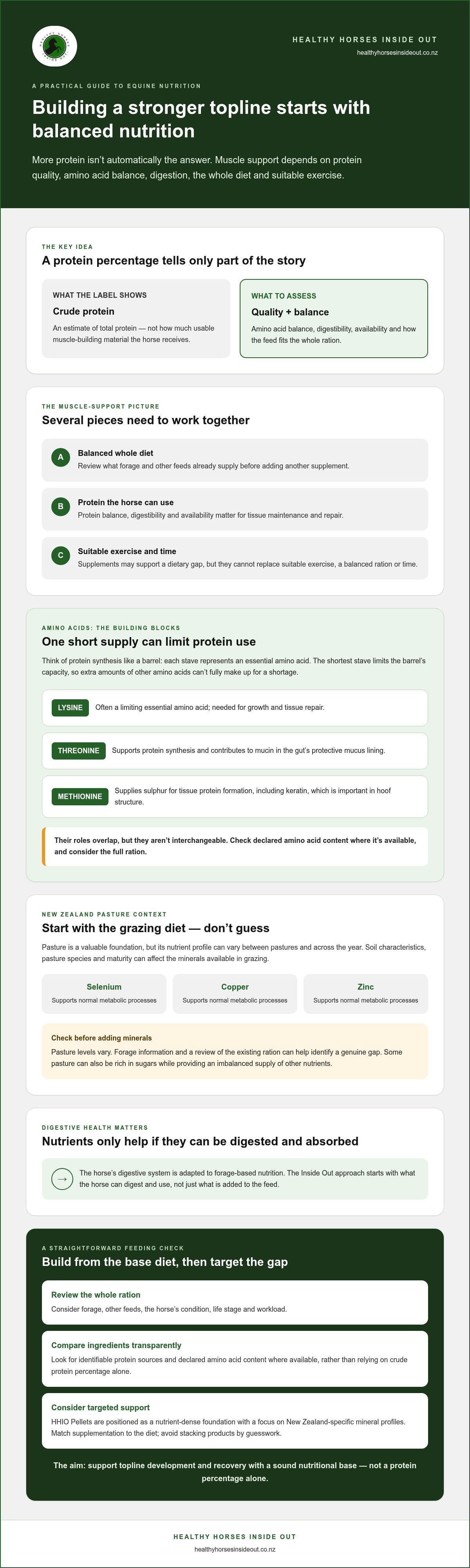
“Crude protein” on a feed label estimates total protein. It doesn’t tell you how much usable muscle-building material the horse receives. Protein is made up of amino acids, and their balance, digestibility and availability affect how the horse can use them to maintain and repair tissue. The body also needs amino acids for essential functions, including making enzymes and other body proteins, before surplus nutrients can support additional muscle development.
Needs vary with life stage and workload. A growing, older or regularly exercised horse may have different nutritional demands. Consider the full ration and the horse’s condition rather than relying on a single label percentage.
Why NZ Pasture Often Falls Short for Muscle Building
Pasture is a valuable foundation, but its nutrient profile can vary between pastures and across the year. Soil characteristics, pasture species and maturity can affect the minerals available in grazing. Selenium, copper and zinc support normal metabolic processes, but levels in pasture vary. Don’t assume a deficiency or add minerals blindly. Forage information and a review of the existing ration can help identify whether there’s a genuine gap.
Some pasture can also be rich in sugars while providing an imbalanced supply of other nutrients. That doesn’t automatically prevent muscle growth, but it is a reason to consider both energy intake and mineral balance. A horse working hard may receive adequate calories yet still lack the balanced nutritional support needed to use protein effectively.
For many pasture-based diets, everyday horse supplements can provide baseline support when the diet has identified gaps. HHIO Pellets are positioned as a nutrient-dense foundation, with a focus on NZ-specific mineral profiles. Start with the base diet, then consider targeted support rather than stacking products in the hope of improving topline.
The Amino Acid Equation: Decoding Protein Synthesis for Better Equine Toplines
Muscle repair depends on having the right amino acids available, not just a large amount of protein in the feed. Think of protein synthesis like building a barrel: each stave represents an essential amino acid, and the shortest stave limits the barrel’s capacity. If one amino acid is in short supply, extra amounts of the others can’t fully make up for it. Rutgers’ overview of essential nutrients for muscle development puts protein in the wider context of equine nutrition.
This is why comparing horse muscle building supplements by crude protein alone can be misleading. Check the amino acid profile and consider how it fits the whole ration. The aim is balanced support for tissue maintenance and recovery, not simply feeding more protein.
Lysine, Threonine and Methionine: The Big Three
Lysine is often a limiting essential amino acid in equine diets and is needed for growth and tissue repair. Threonine supports protein synthesis and contributes to mucin, a component of the protective mucus lining in the gut. Methionine supplies sulphur for processes involved in tissue protein formation, including keratin, which is important in hoof structure. Their roles overlap, but they aren’t interchangeable, so balance matters.
Check the declared amino acid content where it’s available, then consider what forage and other feeds already provide. If the ration is short of a particular building block, a targeted supplement may be more useful than increasing total protein.
BCAAs and Exercise Recovery
Leucine, isoleucine and valine are branched-chain amino acids (BCAAs). Muscle can use them as fuel during exercise, and leucine is involved in signalling pathways related to protein synthesis. BCAAs may be relevant to recovery discussions, particularly for horses in demanding training or multi-day competition, but they don’t replace adequate energy, a balanced ration or appropriate rest.
The “anabolic window” is sometimes presented as a narrow period when a horse must be fed immediately after exercise. There’s no need to treat feeding as a stopwatch: provide suitable nutrients consistently through the overall diet, and follow feeding directions for any supplement. Protein metabolism can also produce ammonia, which the body must process and excrete. Excess protein without a clear dietary need is not a shortcut to muscle.
Don’t rely on amino acids alone to prevent “tying up”. This condition has multiple potential causes and needs proper assessment; supplementation should be considered as part of a broader feeding and exercise plan. For a measured approach, explore equine nutrition support and check that any product fits your horse’s existing ration.
Ingredient Integrity: Comparing Effective Muscle Builders Against Common Fillers
A label is useful when it tells you what’s in the scoop and why it belongs in the ration. Use a simple framework: identify the nutrient, check its amount and source, consider how well your horse can use it, then compare it with existing feed. This approach to understanding horse supplement ingredients NZ can help distinguish clear nutritional information from claims that sound impressive but offer little detail.
Whey protein and soy isolate are recognisable, concentrated protein sources, but the source name alone doesn’t prove that a product is right for every horse. Compare the amino acid profile and feeding guidance, then consider the rest of the diet. By contrast, “protein meal” is a broad description. Without more information about its source and nutritional contribution, it’s harder to judge what it adds. Nutrients must be digested and absorbed before the body can use them.
What to Look for on the Supplement Label
Look beyond the headline crude protein figure. A transparent label makes it easier to assess what the product provides and how it fits alongside other feeds. Check for:
- Named amino acids with amounts: specific mg/g listings, where provided, help you compare essential amino acid content rather than guessing from total protein.
- Vitamin E and selenium: these nutrients contribute to antioxidant systems that help protect cells, including muscle cells. More isn’t automatically better, particularly with selenium, so account for all sources in the ration.
- Mineral forms: chelated minerals are bound to organic compounds and may be included to support absorption. Check the actual mineral amount and form; a label claim isn’t a substitute for assessing the whole diet.
In New Zealand, pasture mineral levels can vary, so don’t assume every horse needs the same added minerals. Choose a product with ingredient information clear enough to compare with the rest of the ration.
Common Fillers and Marketing Jargon to Avoid
“Proprietary blend” doesn’t necessarily mean a product is poor quality, but if individual ingredient weights aren’t disclosed, you can’t tell how much of each component it contains. Words such as “natural” describe an ingredient’s character, not whether it supports the claimed muscle-building effect. Look for named ingredients, clear quantities and a relevant nutritional purpose.
Palatability has a place, but check whether sugars or other flavouring ingredients feature prominently, especially if your horse already receives a high-energy ration. A higher crude protein percentage isn’t proof of better muscle support; amino acid balance, digestibility and the overall diet matter. Choose horse muscle building supplements for clear, research-informed ingredients, not the boldest front-of-bag claim.
The 'Inside Out' Philosophy: Why Digestive Health Precedes Muscle Mass
A supplement can support muscle development only if the horse can eat, digest and use the nutrients it provides. The hindgut is an important part of this system: microbes ferment fibre and produce volatile fatty acids that contribute energy, while digestive health affects how well the whole ration is tolerated. The hindgut is an engine room, but not the only site of nutrient absorption, so gut support should complement a balanced feeding plan rather than replace it.
This is the Inside Out principle in practice. Gastric ulcers or hindgut acidosis may affect comfort, appetite and digestion, making it harder for a horse to maintain condition and recover well. They don’t automatically explain a poor topline, and topline changes can have several causes. A horse with persistent signs of digestive discomfort needs appropriate assessment, not simply another scoop of horse muscle building supplements.
The Gut-Muscle Axis Explained
The gut-muscle axis describes how digestive function and nutrient availability can influence muscle maintenance, repair and athletic development. Digestive inflammation or discomfort may affect feed intake, leaving less nutritional support available for recovery. The hindgut microbiome also produces some B vitamins, which are involved in energy metabolism. This doesn’t mean a prebiotic or probiotic will directly build muscle.
Prebiotics provide substrates that can support beneficial gut microbes, but the effect depends on the ingredient, ration and individual horse. Learn more about prebiotics for horses NZ and consider them as one part of overall digestive care, not a guaranteed fix for a sore gut.
Practical Steps to Optimise Absorption
Start with the basics. A forage-first diet encourages chewing and saliva production, while fibre supports hindgut fermentation. Avoid abrupt feed changes and review the amount of concentrate and starch the horse receives, as large or poorly managed meals may upset digestive function. Keep water available and introduce any dietary change gradually.
- Look at the whole picture: note appetite, manure consistency, weight or condition changes, willingness to work and recovery after exercise.
- Review the ration: check forage quality, workload and all feeds and supplements before adding more products.
- Seek suitable advice: recurring discomfort, unexplained weight loss or ongoing poor condition warrants professional assessment. Ulcers and hindgut problems can’t be confirmed from topline appearance alone.
Specific gut support may be worth considering when the ration or a professional assessment points to a need. Pair it thoughtfully with muscle support rather than layering products without a clear purpose. Explore gut-conscious equine nutrition options to consider how a sound digestive foundation can fit into your horse’s feeding plan.
Strategic Supplementation: Structuring Your Horse's Diet for Peak Condition
A practical feeding plan starts with the horse in front of you: its forage, current condition, workload and discipline. A pleasure horse in light work has different demands from a horse preparing for eventing or endurance, so choose supplements to address identified needs rather than adding products by default. This guide to what supplements does my horse need NZ can help you organise those decisions around the whole ration.
Supplements support nutrition; they don’t create muscle on their own. Suitable progressive training, recovery time and a balanced diet need to work together. Before adding horse muscle building supplements, review what the horse already receives, including forage, feeds and other supplements. This helps avoid duplication and keeps the routine manageable.
Building the Foundation with HHIO Pellets
HHIO Pellets are designed as a nutrient-dense base and can provide a practical starting point for a feeding routine. Their focus on NZ-specific mineral profiles reflects the importance of considering local pasture and diet rather than assuming one formula suits every horse in every situation. Check the product’s feeding directions and nutrient information against your horse’s existing ration.
A balanced foundation can make targeted additions more purposeful: first understand what the base diet supplies, then consider whether specific nutrient or amino acid support is appropriate. Curated supplement bundles can also help streamline nutrition when several needs have been identified. They aren’t an automatic guarantee against gaps, so check each component and avoid doubling up with products already in the feed room.
Creating a Long-Term Nutritional Plan
Consistency is more useful than a quick-fix loading dose. Follow label directions, introduce changes thoughtfully and give your feeding and training routine time to show a pattern. Muscle development is gradual, and day-to-day impressions can be misleading.
- Track condition consistently: use a weight tape as a guide to weight trends, not a direct measure of muscle. Take topline photos from the same angles, in similar light and with the horse standing square.
- Record the context: note changes to workload, feed and exercise so you can assess progress alongside the routine rather than attributing every change to one supplement.
- Reassess before adding more: if condition isn’t progressing, review the ration, digestive comfort, workload and recovery instead of simply increasing supplements.
The methodical approach is simple: establish a sound base, make targeted choices and monitor the response. For a considered starting point, explore HHIO’s equine nutrition range and choose options that fit your horse’s feeding plan.
Build Strength with a Plan That Starts Within
A stronger topline comes from consistent care, not a quick fix. The right horse muscle building supplements can support protein synthesis, but results also depend on balanced nutrition, suitable training, recovery and a digestive system able to make use of the diet.
Start by checking the whole ration and the quality of its protein and amino acids. Look for clear, research-informed ingredients rather than relying on headline claims. A sound nutritional base matters too. HHIO Pellets are designed as a nutrient-dense foundation, with specialised NZ-centric formulas that reflect local feeding considerations.
Keep your plan simple: make thoughtful changes, follow feeding directions and track condition over time. Explore the Healthy Horses Inside Out range of horse supplements and HHIO Pellets to find options that fit your horse’s feeding plan and take a considered next step towards supporting its strength and wellbeing.
Frequently Asked Questions
Do horse muscle building supplements actually work?
They can help when they address a genuine nutritional gap, but they won’t build muscle by themselves. Results depend on the whole ration, digestibility, suitable exercise and recovery. A supplement supplying useful amino acids may support muscle repair if the diet is short of them; adding one to an already balanced ration may make little visible difference. Check the ingredient amounts and feeding directions, and assess the horse’s diet before choosing a product.
How long does it take to see results from a muscle supplement?
There’s no set timeframe, as progress depends on the horse’s starting condition, diet, workload, health and consistency of care. Muscle development is gradual, so look for trends over time rather than expecting an overnight change. Take photos from consistent angles and use a weight tape to monitor weight, recognising that it doesn’t measure muscle directly. If condition isn’t improving, review the full feeding and exercise plan instead of simply increasing the dose.
Can I feed muscle builders to a horse with laminitis or EMS?
Don’t add a muscle-building supplement to a horse with laminitis or equine metabolic syndrome (EMS) without first checking its suitability with your veterinarian or an appropriately qualified equine nutrition professional. Products can differ in sugar, starch, energy and mineral content, and the horse’s whole ration needs careful consideration. Share the full feed and supplement labels when seeking advice. Avoid making changes based only on the product’s “muscle” claims.
Will a muscle building supplement make my horse hot or fizzy?
Not necessarily. A supplement’s effect on behaviour depends on its ingredients and how it changes the overall ration; protein alone isn’t automatically a cause of fizzy behaviour. Check the label for energy-dense ingredients, added sugars and other active components, then consider what else your horse eats. If behaviour changes after introducing a product, review the timing and feeding plan, and seek professional advice if the change persists or concerns you.
Is it better to feed more protein or specific amino acids?
More protein isn’t automatically better. The horse needs an appropriate supply of essential amino acids, and an imbalance can limit how effectively dietary protein supports tissue maintenance and repair. Review the ration’s overall protein and, where the label provides it, the amounts of amino acids such as lysine. A targeted addition may be more appropriate than increasing total protein, but the right choice depends on what the existing diet already supplies.
Can muscle supplements replace correct training and lunging?
No. Supplements provide nutritional support, while progressive, suitable exercise gives muscles the stimulus to adapt. A horse also needs adequate recovery and a balanced diet; adding a product can’t compensate for unsuitable training or insufficient rest. Work with a trainer or equine professional to ensure the programme matches your horse’s fitness and discipline. If the horse is uncomfortable or struggling with exercise, investigate the cause before increasing workload.
What are the signs that my horse is lacking essential amino acids?
There isn’t one reliable outward sign that confirms an amino acid deficiency. Poor topline, slow recovery or difficulty maintaining condition can have several causes, including workload, total feed intake, dental or digestive issues, and other health concerns. Review the full diet and the protein and amino acid information on feed labels. If the horse’s condition remains poor, seek appropriate assessment rather than diagnosing a deficiency from appearance alone.
How does New Zealand soil quality affect my horse’s ability to build muscle?
Soil characteristics influence which minerals are available to pasture, but levels can vary, so you can’t assume every horse grazing New Zealand pasture has the same needs. Minerals contribute to normal metabolic and muscle function, yet adding them without checking the ration can create unnecessary overlap. Consider pasture and forage information alongside all feeds and supplements, and seek qualified advice if you suspect a gap. Choose products with clear ingredient and mineral information.


