

The most effective way to calm a reactive horse isn't to sedate their mind, but to balance their biology. Many riders spend hundreds of dollars on various powders and potions only to find their horse still spooking at the arena corner or dancing on the float. Finding the best calming supplement for horses isn't about reaching for the strongest sedative; it's about identifying the specific nutritional gaps that trigger a chronic flight-or-fight response.
We know how exhausting it is to feel like you're managing a ticking time bomb instead of enjoying your ride. It's frustrating to navigate conflicting advice about magnesium chelates or thiamine while worrying about your safety during competitions or out on the trail. This 2026 guide will help you identify the biological root of your horse’s anxiety and choose a science-backed solution that works from the inside out. We'll examine the latest 2026 USEF regulation updates and explain how foundational mineral balance can transform a flighty animal into a focused, rideable partner; giving you the peace of mind you deserve.
Key Takeaways
- Distinguish between learned behaviours and genuine biological reactivity by understanding the role of cortisol and adrenaline in your horse's nervous system.
- Identify why high-potassium pastures can displace vital magnesium, leading to the "grass-affected" behaviour common in New Zealand and Australian grazing conditions.
- Evaluate the science behind ingredients to find the best calming supplement for horses, focusing on the superior bioavailability of magnesium chelates compared to standard oxides.
- Implement a methodical two-step framework to audit your horse's foundational diet and categorise their stress as either acute or chronic for more targeted support.
- Learn why addressing gut health and internal mineral chemistry provides a more sustainable, long-term solution for calm than simply medicating the symptoms.
Understanding Equine Anxiety: Why Your Horse Isn’t Just "Being Naughty"
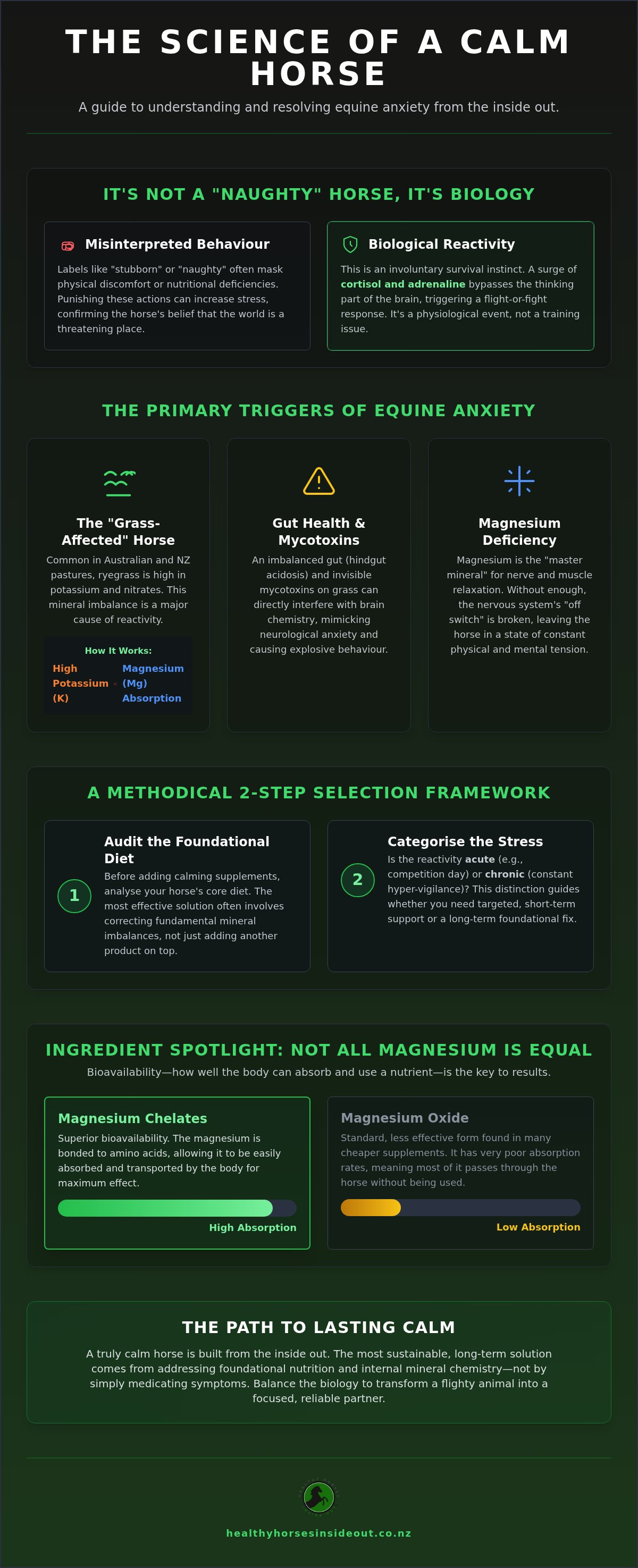
Labels like "naughty" or "stubborn" are common in the equestrian world, but they often mask a deeper physiological reality. To truly help a reactive horse, we must develop a nuanced Understanding Equine Anxiety by looking at the biological triggers behind their actions. Biological reactivity is an involuntary process driven by the endocrine system. When a horse is startled, their body releases a surge of cortisol and adrenaline, preparing them to flee from a perceived predator. This isn't a lapse in training; it's a survival instinct that bypasses the "thinking" part of the brain.
Chronic nutritional gaps often trap horses in this state of hyper-vigilance. When a horse lacks the essential minerals required to regulate their nervous system, they lose their ability to "switch off" after a stressful event. This constant state of high alert makes them appear spooky or unpredictable. Consequently, the search for the best calming supplement for horses is frequently a search for the missing nutritional components that allow the nervous system to return to a baseline of calm. Choosing the best calming supplement for horses involves more than just masking symptoms; it requires a methodical look at why the horse is reacting in the first place. Punishing a horse during these episodes only adds more pressure to an already overloaded system, confirming their suspicion that the world is a threatening place.
The Biological Cost of Stress
Anxiety is a metabolically expensive state that places immense strain on the entire body. High cortisol levels act as an immunosuppressant, which can lead to a higher frequency of skin conditions, respiratory issues, or slow-healing wounds. For horses stuck in this cycle, an equine immune support supplement NZ may be necessary to rebuild their natural defences alongside a calming regimen. You can often see this internal struggle reflected externally in a coat that lacks its usual bloom or hooves that struggle with quality despite good farriery.
Distinguishing Pain from Personality
It's vital to recognise that what looks like a "bad attitude" is often a desperate attempt to communicate physical discomfort. Issues such as gastric ulcers, hoof sensitivity, or muscular tension can make even the simplest task feel unbearable for a horse. Behavioural pain is a clinical symptom that reflects an underlying physical pathology rather than a character flaw in the horse. By addressing these internal imbalances and pain points, we move away from "fixing" the horse and towards supporting their total wellness. This methodical approach ensures we aren't just suppressing a symptom, but actually resolving the cause of the distress.
The Root Causes: Magnesium, Gut Health, and the "Grass-Affected" Horse
The "New Zealand Problem" is a well-documented phenomenon where lush, ryegrass-dominant pastures actively work against a horse's temperament. These pastures are often excessively high in potassium and nitrates, which compete with and displace magnesium in the horse's system. Magnesium serves as the "master mineral" for nerve and muscle relaxation; it's the biological "off switch" for the nervous system. When potassium levels spike, magnesium absorption is inhibited, leaving the horse in a state of involuntary physical tension. This physiological reality is why the best calming supplement for horses must address the specific mineral imbalances found in local grazing conditions.
Beyond mineral displacement, mycotoxins—invisible fungi that grow on certain grasses—can mimic neurological anxiety. These toxins interfere with the horse's brain chemistry, causing sudden, explosive spooking or uncharacteristic aggression. When you combine this with hindgut acidosis, where the pH balance of the digestive tract becomes too acidic, you get a horse that is systemically irritable. They aren't choosing to be difficult; their internal environment is making it impossible for them to feel safe. Identifying these triggers allows you to choose the best calming supplement for horses based on science rather than guesswork.
Magnesium Deficiency: The Invisible Trigger
Signs of deficiency are often subtle before they become dangerous. You might notice skin hypersensitivity, where the horse flinches at a light touch, or fine muscle tremors after exercise. In New Zealand and parts of Australia, soil testing frequently reveals that while magnesium is present, it's often unavailable to the plant or the horse due to high levels of competing minerals. Achieving true equilibrium requires a horse zinc supplement NZ to support mineral synergy, as these elements work together to maintain a stable nervous system.
The Gut-Brain Axis in Horses
The equine microbiome is a complex ecosystem that dictates everything from immunity to emotional stability. An unbalanced gut leads to systemic inflammation, which manifests as reactivity and "hot" behaviour. When Comparing Calming Ingredients, it's essential to look for solutions that support the gut lining alongside nerve health. If a horse is struggling with digestive pain, a horse ulcer support supplement NZ may be the most effective "calmer" you can provide. Establishing a foundational mineral balance through Everyday Horse Supplements ensures you're treating the cause rather than just masking the symptoms.
Comparing Calming Ingredients: What Does the Science Actually Say?
Selecting the best calming supplement for horses requires a discerning eye for ingredient quality rather than just a high price tag. While many products claim to settle a reactive horse, the chemical form of the ingredients determines whether the supplement actually reaches the target tissues or simply passes through the digestive tract. PetMD discusses common calming ingredients such as magnesium and tryptophan, but the nuance lies in their bioavailability and specific application. For instance, magnesium oxide is a staple in the industry due to its high elemental magnesium content, yet its absorption rate can be lower compared to magnesium chelates. In a chelated form, the mineral is bound to an amino acid, allowing it to bypass some of the mineral competition in the gut. This makes it particularly effective for horses on "hot" pastures where potassium levels are high.
Herbal alternatives like chamomile and ashwagandha offer a different pathway by supporting the adrenal system and helping the horse manage the physical effects of stress. However, riders must be cautious with valerian. While effective, it is often a prohibited substance in competitive disciplines under 2026 guidelines. When you are looking for the best calming supplement for horses, the goal should be to support the horse's natural ability to regulate their own nervous system rather than sedating them into submission. This methodical approach ensures the horse remains safe to ride while staying mentally present and capable of learning.
The Truth About Magnesium
It is a common misconception that more is always better. Over-supplementing magnesium can lead to loose manure and can even interfere with the absorption of other vital minerals like calcium. A high-quality source is identified by its solubility and the transparency of the manufacturer regarding its elemental weight. For horses with underlying insulin issues, there is a significant synergy between magnesium and a horse metabolic support supplement NZ, as both work to stabilise blood sugar and reduce systemic inflammation, which in turn settles the mind.
B-Vitamins and Amino Acids
Vitamin B1, or thiamine, plays a critical role in nerve transmission and energy metabolism. Thiamine deficiency is rare in grass-fed horses but common in those with gut issues or those maintained on high-grain diets. For performance horses under intense pressure, thiamine can help maintain focus without a loss of power. L-Tryptophan acts as a precursor to serotonin, the "feel-good" hormone. To be effective, it must be administered at a dosage and timing that allows it to cross the blood-brain barrier, often requiring a "serotonin gap" where it isn't competing with other large amino acids in the diet.
How to Choose the Right Calmer: A Methodical Selection Framework
Choosing the best calming supplement for horses shouldn't be a game of trial and error. It requires a structured audit of the horse's lifestyle and internal chemistry. First, audit the base diet to ensure foundational mineral requirements are met. If the baseline is skewed, no amount of specific "calmer" will provide a lasting result. Next, identify the stress type. Is the horse chronically reactive in the paddock, or is this an acute response to travelling or competition? Chronic issues usually point to a nutritional deficiency or gut irritation, while acute stress may require a targeted, short-acting solution.
Ruling out physical pain is the third, non-negotiable step in this framework. Discomfort from gastric ulcers, sub-clinical laminitis, or musculoskeletal tightness will always override a calming supplement. Finally, assess the environment. High starch intake, lack of social interaction, or restricted turnout can all elevate cortisol levels. Only once these external factors are optimised should you select a supplement based on the specific deficiency identified. This methodical approach ensures you aren't just throwing money at a symptom, but actually resolving the cause.
Matching Symptoms to Solutions
Different behaviours require different nutritional interventions to achieve a calm state. For the "Spooky and Sensitive" horse, focus on magnesium and high-quality toxin binders to manage pasture-related reactivity. The "Anxious and Tense" horse, who carries physical tightness in their muscles, typically responds better to B-vitamins and targeted gut support. If you're dealing with an "Acute Stress" horse, a high-dose oral paste administered before a specific event can help maintain focus during high-pressure moments without compromising performance.
Addressing the Laminitis Connection
Metabolic instability is a frequent, yet often overlooked, driver of "fizzy" or unpredictable behaviour. When a horse is struggling with insulin regulation, high-sugar grass acts as a stimulant, creating a cycle of systemic inflammation and mental agitation. Integrating supplements for laminitis prone horses NZ into your calming regime can help stabilise these blood sugar spikes. This dual approach addresses the metabolic root of the anxiety while providing the minerals needed for nerve health. To start building a more resilient, focused partner, browse our range of Everyday Horse Supplements to find the foundational support your horse needs.
The HHIO Approach: Foundational Nutrition for Lasting Calm
True serenity isn't found in a bottle of sedative; it's built through a methodical correction of a horse's internal chemistry. At Healthy Horses Inside Out, we believe that the best calming supplement for horses is actually a balanced diet that addresses the specific challenges of our local pastures. Our "Inside Out" philosophy prioritises systemic health as the primary driver of external performance. By providing a high-concentration mineral base, we empower the horse's nervous system to function as nature intended, rather than simply masking the symptoms of a deficiency. We don't believe in quick fixes. We believe in foundational integrity.
Our targeted Horse Supplement Bundles are designed to simplify these complex nutritional requirements by grouping synergistic ingredients together. We've seen real-world results from owners who once considered their horses "unrideable" due to extreme reactivity. By shifting the focus from training harder to nourishing better, these riders have found the focused, reliable partners they always knew their horses could be. When the internal chemistry is right, the behaviour follows naturally. This is why the best calming supplement for horses must be built on a foundation of mineral integrity.
Why HHIO Pellets Change the Game
HHIO Pellets serve as the essential mineral foundation for every horse grazing on high-potassium pastures. Unlike many retail products that use cheap fillers, our pellets focus on high-quality ingredient concentrations to ensure maximum bioavailability. A key part of this is providing the correct copper-to-zinc ratios, which are vital for supporting neurological health and skin integrity. Our everyday horse supplements remove the guesswork by supplying exactly what is missing from a grass-based diet. This foundational approach often resolves the "spookiness" that owners previously attributed to personality flaws, as it treats the root cause of the irritability. Our no-filler approach ensures your horse receives only the nutrients they need for optimal vitality.
Taking the Next Step Toward Serenity
Transitioning your horse to a mineral-balanced diet is a straightforward process that yields visible results. In the first 30 days of foundational supplementation, many owners report a significant shift in their horse's ability to focus and process new information. You'll likely notice a deeper bloom in the coat and a more relaxed topline as the muscles finally lose their involuntary tension. For those with complex cases, our Horse Supplement Bundles combine these foundational minerals with Specific Horse Supplements for gut health or toxin binding. If you're ready to move beyond quick fixes and invest in your horse's long-term wellness, Organise a consultation or browse the HHIO Calming range today.
Cultivating a Focused and Reliable Partnership
Achieving a calm, rideable horse starts with looking beneath the surface of their behaviour. We've explored how identifying the biological root of anxiety, from magnesium displacement on lush pastures to the complexities of the gut-brain axis, is the only way to find a lasting solution. By moving away from quick-fix sedatives and focusing on foundational mineral integrity, you provide your horse with the internal stability they need to process stress effectively. This methodical approach ensures that your horse remains mentally present and physically relaxed, regardless of the environment.
The search for the best calming supplement for horses ultimately leads back to the quality and bioavailability of the nutrients provided. Our "Inside Out" approach is specifically formulated for the unique challenges of New Zealand soil and pasture conditions, ensuring your horse receives the precise support required for neurological health. Trusted by top riders for performance and focus, our system simplifies complex nutritional needs into a clear, science-led path toward serenity. You don't have to manage the stress alone.
Ready to transform your horse's focus? Browse the HHIO range of science-led calming supplements to start your journey toward a more peaceful partnership. We're here to help you support your horse's wellness from the inside out.
Frequently Asked Questions
How long does it take for a horse calming supplement to work?
Foundational mineral supplements typically require 7 to 14 days to show visible changes in behaviour, as the horse's systemic chemistry needs time to stabilise. In contrast, acute oral pastes are designed for rapid absorption and usually take effect within 1 to 2 hours. For horses with chronic reactivity, we recommend a consistent 30-day loading period to fully assess the impact on their nervous system.
Can I give my horse too much magnesium?
Yes, it is possible to over-supplement magnesium, which can lead to physiological imbalances. While horses generally excrete surplus magnesium through their urine, an acute excess often results in loose manure or diarrhoea. Furthermore, excessively high magnesium levels can interfere with the absorption of other vital minerals, particularly calcium, which is why a balanced ratio is essential for long-term health.
Are calming supplements legal for FEI or pony club competitions?
Most mineral-based supplements are legal, but many herbal ingredients are strictly prohibited under 2026 USEF and FEI guidelines. Ingredients like Valerian or certain concentrated herbal extracts can result in a positive drug test and disqualification. It is your responsibility to check the 2026 Equine Drugs and Medications Guidelines before competing to ensure your chosen product contains no prohibited substances.
Why is my horse still spooky even though he is on a calmer?
Spookiness often persists because the chosen supplement isn't addressing the specific biological trigger, such as mycotoxins in the grass or gastric pain. Even the best calming supplement for horses will fail if the horse is suffering from hindgut acidosis or a significant potassium-magnesium imbalance. A methodical audit of the horse's total diet and environment is usually required to find the missing piece of the puzzle.
What is the best calming supplement for a horse with ulcers?
For horses with gastric or colonic ulcers, the most effective approach is a supplement that supports gut-lining integrity alongside mineral balance. Nutritional support that addresses digestive discomfort often has a more profound "calming" effect than magnesium alone. By resolving the physical pain associated with ulcers, you allow the horse's nervous system to shift out of a chronic flight-or-fight state.
Is there a difference between a "calmer" and a "sedative"?
There is a significant clinical difference between these two categories. Sedatives are pharmacological agents that depress the central nervous system to induce a state of drowsiness or lack of awareness. Nutritional calmers, however, provide the vitamins and minerals necessary for the horse's body to regulate its own stress response; they support focus and relaxation without compromising the horse's ability to react to their environment.
Can thiamine (Vitamin B1) make a horse more excited?
Thiamine itself is not a stimulant, but it plays a critical role in carbohydrate metabolism and energy production. If a horse has a thiamine deficiency and is also on a high-sugar diet, correcting that deficiency might make them feel more energetic as their body becomes more efficient at processing fuel. However, thiamine is far more likely to support a stable nervous system than to cause unwanted "fizz."
How does New Zealand grass affect my horse’s behaviour?
New Zealand pastures are frequently high in potassium and nitrates, which actively compete with magnesium for absorption in the horse's gut. This antagonism often leaves the horse in a "grass-affected" state, characterised by muscle tension, skin hypersensitivity, and unpredictable reactivity. Addressing this specific regional challenge requires a targeted mineral approach that restores the correct magnesium-to-potassium ratio in the horse's system.


