

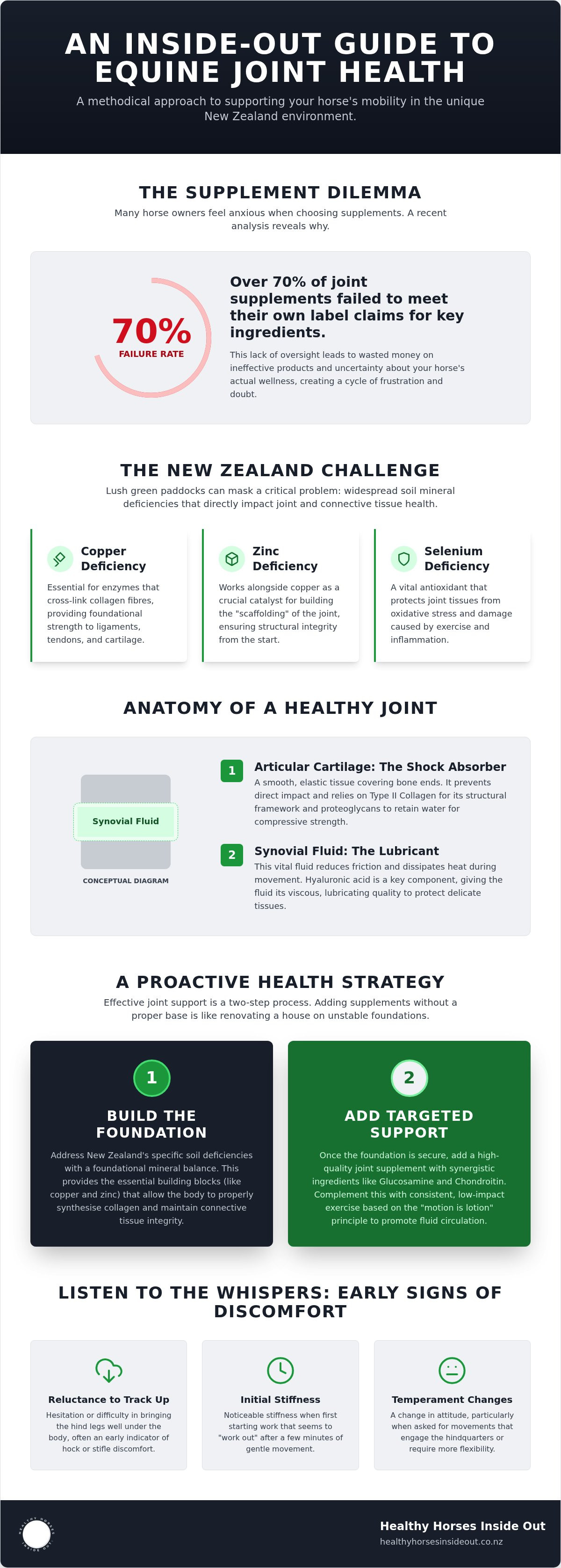
Did you know that a recent analysis of six common joint supplements revealed that over 70% failed to meet their own label specifications for key ingredients like glucosamine? This startling lack of industry oversight explains why so many New Zealand horse owners feel a deep sense of anxiety when scanning the shelves for a horse joint supplement NZ. You want to see your horse moving with fluid grace and comfort, yet the fear of wasting money on ineffective fillers or watching a promising career cut short by stiffness is a constant weight. It's frustrating to invest in your horse's health only to feel uncertain about the actual biological impact of your choices.
We believe that peace of mind comes from evidence-based wellness rather than marketing jargon. This guide offers a methodical exploration of equine joint physiology, helping you transition from confusion to scientific confidence. You'll discover how to identify high-quality nutraceuticals and why a foundation of mineral-rich nutrition is essential for structural integrity in our unique local environment. By the end of this article, you'll have a simplified, long-term health strategy that prioritises internal systemic health to drive external performance. We'll examine the specific roles of ingredients like hyaluronic acid and green-lipped mussel while explaining how to ensure your horse's diet supports their mobility from the inside out.
Key Takeaways
- Learn how New Zealand's unique soil deficiencies impact musculoskeletal integrity and why year-round pasture access requires a targeted nutritional strategy.
- Understand the biological mechanisms of the joint capsule, including how healthy cartilage and synovial fluid function together as a natural shock absorber.
- Discover how to evaluate the efficacy of a horse joint supplement NZ by identifying synergistic ingredients like glucosamine and chondroitin sulphate.
- Implement the "motion is lotion" principle to complement nutritional support with consistent, low-impact movement for optimal fluid circulation.
- Identify the importance of a mineral-rich foundation to ensure that specific joint support can work effectively for long-term mobility and performance.
Understanding Equine Joint Health in the New Zealand Environment
New Zealand's lush, green paddocks often mask a significant nutritional deficit. While our horses enjoy high levels of turnout compared to many overseas counterparts, the soil underneath that grass is frequently deficient in essential trace minerals. This environmental reality makes choosing a horse joint supplement NZ a complex task. It isn't just about adding a single ingredient; it's about addressing a systemic shortfall that begins in the soil and ends in the joint capsule.
Whether a horse is navigating the rigours of high-level eventing or enjoying weekend hacking, the mechanical stress on their musculoskeletal system is constant. Wear and tear isn't reserved for the elite athlete. It's a cumulative process where the body attempts to repair micro-damage to cartilage and bone. When the nutritional building blocks are missing, this repair process falters. This is why joint issues are rarely isolated incidents. They are often the visible symptom of a long-term, systemic lack of foundational support. Transitioning from reactive treatments to a proactive, methodical strategy ensures your horse has the internal resources to maintain mobility for years to come.
The Impact of New Zealand Soil on Connective Tissue
The structural integrity of a horse's joints relies heavily on collagen production and the health of connective tissues. In New Zealand, widespread copper and zinc deficiencies directly impact these processes. These minerals are essential catalysts for the enzymes that cross-link collagen fibres, providing strength to ligaments and tendons. Without them, the "scaffolding" of the joint is compromised from the start. Additionally, selenium plays a critical role in protecting joint tissues from oxidative stress during exercise. A foundational mineral balance, such as that provided by HHIO Pellets, is necessary to ensure the horse joint supplement NZ you choose can actually do its job effectively. Without this base, you're essentially trying to renovate a house built on unstable sand.
Identifying Early Signs of Joint Discomfort
Recognising the subtle whispers of discomfort allows for intervention before clinical lameness occurs. An Equine Lameness Overview often highlights the obvious, but as a methodical mentor, we encourage you to look deeper. Subtle indicators include a reluctance to track up, stiffness when first starting work, or a slight change in temperament when asked to engage the hindquarters. These behavioural shifts are often the horse’s way of communicating physical strain in the hocks or knees. By adopting an "inside out" assessment, you can evaluate whether the horse’s foundational nutrition is meeting their physical demands, allowing you to adjust their strategy before their performance suffers.
The Biological Foundation: How Nutrients Support Cartilage and Synovial Fluid
The equine joint is a marvel of biological engineering. It consists of an intricate partnership between the articular cartilage, the synovial fluid, and the subchondral bone. Each component must function in perfect harmony to allow for fluid, pain-free movement. Cartilage acts as the primary shock absorber. It is a smooth, elastic tissue that covers the ends of bones, preventing direct impact during high-stress activities. Chondroprotection is the nutritional strategy to prevent cartilage breakdown.
Healthy cartilage maintains its elastic properties through a constant cycle of repair and renewal. However, this system relies on the availability of specific nutrients to keep the "shock absorber" functional. Synovial fluid serves as the essential lubricant within this system. It reduces friction and dissipates the heat generated during movement, protecting the delicate tissues from thermal damage. When these biological factors are supported, the joint can withstand the repetitive pressures of training and competition.
The Cartilage Matrix and Collagen
Type II collagen forms the essential scaffold of the joint. It provides the framework that holds all other structural components in place. Within this fibrous framework, molecules called proteoglycans act like tiny, highly efficient sponges. They trap water to provide compressive strength, which allows the joint to rebound after every stride. This daily repair cycle is incredibly demanding. It requires a steady supply of specific amino acids and minerals to maintain structural integrity. If these precursors are missing from the diet, the cartilage can thin over time, leaving the subchondral bone vulnerable to stress and injury.
Synovial Fluid: The Equine Joint Lubricant
Synovial fluid is the "oil" in the machine. Its primary role is to ensure that the joint surfaces glide over one another with minimal resistance. Hyaluronic acid is the key molecule responsible for this action. It maintains the fluid's viscosity, ensuring it stays thick enough to cushion the joint surfaces effectively. According to these Equine Joint Health Facts, maintaining this fluid balance is critical for preventing long-term degenerative changes. When inflammation occurs, the joint fluid thins out and loses its protective quality. This leads to "bone on bone" friction, which significantly accelerates wear and tear.
When selecting a horse joint supplement NZ, it's vital to look for ingredients that support these internal pathways. High-quality nutritional support targets both the cartilage matrix and the synovial fluid quality. This dual-action approach is what separates a professional-grade strategy from a generic fix. If you're looking to optimise your horse's internal environment, exploring Specific Horse Supplements can provide the targeted support needed for long-term mobility and comfort.
Evaluating Ingredients: What Truly Makes an Effective Joint Supplement?
Selecting an effective horse joint supplement NZ often feels like a test of patience due to the sheer volume of options and the complexity of their ingredient lists. However, by understanding the clinical reality of these compounds, you can separate marketing "window dressing" from genuine nutritional support. Effective joint care isn't about how many ingredients you can fit on a label. It's about including the right ingredients at concentrations that actually produce a biological effect. Many products include a long list of additives in tiny, sub-therapeutic amounts to look impressive on the shelf, but these often fail to deliver results.
Glucosamine serves as the primary building block for glycosaminoglycans (GAGs), which are essential for the synthesis of new cartilage. While it's a staple in most formulas, its effectiveness depends heavily on purity and the horse's ability to absorb it. Chondroitin sulphate works synergistically with glucosamine, acting as a "shield" by inhibiting the enzymes that break down the cartilage matrix. When these two are combined with MSM (Methylsulfonylmethane), which provides bioavailable sulphur for connective tissue repair, you create a robust foundation for long-term mobility. This combination targets both the structure of the joint and the health of the surrounding soft tissues.
The Power Trio: Glucosamine, Chondroitin, and MSM
These three ingredients remain the gold standard in equine joint care because their mechanisms of action are so well-documented. Purity and molecular weight are the two most critical factors here. Low-quality chondroitin, for example, has a high molecular weight that is difficult for the horse's gut to absorb efficiently. When reading a label, look for transparent declarations of active weights rather than proprietary blends that hide the actual dosage. You want to ensure you are paying for therapeutic levels of active ingredients, not inexpensive fillers that offer no physiological benefit to your horse.
Modern Additions: Hyaluronic Acid and Antioxidants
Recent nutritional advancements have shifted the focus towards oral Hyaluronic Acid (HA) for direct synovial support. While HA was traditionally an injectable treatment, high-molecular-weight oral versions now help maintain the viscosity of the joint fluid, ensuring the joint remains well-lubricated. Additionally, antioxidants like Vitamin C and Vitamin E play a vital role in neutralising the free radicals that accumulate during intense exercise. These free radicals can damage the joint capsule if left unchecked, leading to premature wear. For a deeper dive into these components, refer to our Horse Supplement Ingredients NZ: Guide for Savvy Owners. This resource provides a comprehensive framework for those who value transparency and scientific integrity in their nutritional choices.
A Holistic Approach: Beyond the Supplement Bucket
Even the most scientifically advanced horse joint supplement NZ cannot compensate for fundamental management failures. Joint health is a dynamic state, influenced by every hour of the horse’s day, not just the minutes spent at the feed bucket. We must view nutritional support as one pillar of a broader strategy that includes weight management, precise farriery, and appropriate exercise. If the mechanical or environmental conditions are poor, the biological benefits of your supplement will be significantly undermined.
Excess body weight is perhaps the most overlooked threat to equine joint longevity. Every additional kilogram increases the mechanical load on the articular cartilage and subchondral bone, accelerating the wear and tear cycle. Similarly, the work of a skilled farrier is indispensable. Correct hoof alignment and a functional breakover point ensure that the forces of impact are distributed evenly across the joint surfaces, preventing the uneven loading that leads to chronic inflammation and premature degeneration.
Movement and Exercise Management
The "Motion is Lotion" principle is a clinical reality. Constant, low-impact movement is the primary driver for circulating synovial fluid within the joint capsule, ensuring that nutrients reach the cartilage and waste products are removed. Unlike humans, horses have evolved for 24/7 turnout, and prolonged stabling can lead to fluid stagnation and increased joint stiffness. When training, a methodical warm-up and cool-down programme is essential to protect the synovial membrane from sudden stress. For the performance horse, balancing work intensity with adequate recovery periods allows the biological repair mechanisms to function effectively before the next bout of exertion.
Dietary Foundations for Structural Health
Before introducing targeted nutraceuticals, it's vital to ensure the foundational mineral base is secure. A horse lacking in basic trace minerals will struggle to utilise even the highest quality joint additives. Our Ultimate Guide to Everyday Horse Supplements explains how addressing these core deficiencies creates the internal environment necessary for success. Utilising a horse joint supplement NZ becomes much more effective when the underlying mineral profile is balanced and the horse's systemic health is optimised.
We also recognise that gut health and the microbiome influence systemic inflammation levels. A healthy digestive system helps regulate the body’s inflammatory response, which can reduce the baseline stress on your horse’s joints. To ensure your horse has the foundational minerals required to support these management strategies, consider starting with our HHIO Pellets for a balanced, science-led approach to long-term mobility.
Targeted Solutions for Long-Term Equine Vitality
Selecting the appropriate horse joint supplement NZ involves more than just picking a tub off the shelf. It requires an intentional choice between foundational maintenance and high-intensity, targeted support. Our approach prioritises internal systemic health as the primary driver of external performance. We believe that joint care is a marathon, not a sprint. Consistency in your nutritional strategy is essential because the body requires a steady supply of precursors to maintain the delicate balance of the joint capsule. Results are rarely immediate; they are the cumulative reward of a methodical, long-term commitment to your horse's internal wellness.
Integrating Specific Horse Supplements into a daily routine should be done with precision and patience. When you provide the body with the correct biological tools, you aren't just treating a symptom. You are optimizing a complex system of repair and protection. This strategy allows for a more sustainable health outcome, reducing the need for reactive, high-pressure interventions later in the horse's life. By aligning your feeding programme with the horse's physiological needs, you create a foundation for lasting comfort and vitality.
Foundational Support with HHIO Pellets
HHIO Pellets are the cornerstone of this methodical strategy. By providing essential levels of copper, zinc, and magnesium, these pellets address the unique soil deficiencies found across New Zealand. This foundational mineral base ensures that the biological "scaffolding" of the horse is secure, which in turn makes any joint-specific additives significantly more effective. A horse with a balanced mineral profile is better equipped to synthesise collagen and maintain the integrity of their connective tissues. You can streamline this process by exploring Horse Supplement Bundles NZ, which are designed to provide a comprehensive nutritional profile in a simplified, easy-to-manage format.
Specific Support for the Compromised Horse
There are times when a horse requires more than just foundational support. For the senior horse, transitioning to Specific Horse Supplements can be the difference between a retirement spent in stiff discomfort and one defined by dignity and ease of movement. As horses age, their natural ability to produce hyaluronic acid and repair cartilage diminishes, making targeted nutraceuticals a vital part of their care. Similarly, the performance horse facing the rigours of competition stress often requires higher concentrations of active ingredients to protect their joints from the oxidative damage associated with intense exercise. Customising your approach based on your horse's life stage and workload allows you to provide the precise level of care they need to thrive, ensuring they remain comfortable regardless of their age or discipline.
Secure Your Horse's Future Mobility
Achieving long-term soundness requires moving beyond the "quick fix" mentality and embracing a strategy rooted in nutritional science. We've explored how New Zealand's unique soil profile necessitates a mineral-rich foundation before any targeted nutraceutical can truly excel. By prioritising high-purity ingredients like glucosamine and chondroitin at therapeutic levels, you ensure your investment translates into visible comfort and performance. It's important to remember that even the most advanced horse joint supplement NZ works best when paired with meticulous weight management and consistent, low-impact movement.
This methodical approach offers you more than just a supplement; it provides the peace of mind that comes from evidence-based care. When you address health from the inside out, you're investing in your horse's dignity during their golden years and their resilience during competition. Our science-led formulas are specifically designed to bridge the gaps in local pastures, providing high-integrity support that NZ owners have trusted for years. You don't have to settle for guesswork when it comes to your horse's comfort.
Optimise Your Horse’s Mobility with HHIO Specific Supplements
Take the next step in your horse's wellness journey with confidence. Your commitment to their structural health today is the greatest gift you can give their future self.
Frequently Asked Questions
How long does it take for a horse joint supplement to start working?
You should typically expect to see a visible improvement in your horse's mobility within three to six weeks of starting a horse joint supplement NZ. This timeframe allows the active ingredients to reach therapeutic levels within the synovial fluid and begin the slow process of cartilage repair. Because joint tissues have a limited blood supply, the biological turnover is gradual. Consistency during this initial phase is vital to ensure the internal environment stabilises effectively.
Can I give my horse joint supplements as a preventative measure?
Implementing a joint supplement as a preventative measure is a highly effective strategy for protecting long-term soundness. By providing chondroprotective nutrients before clinical signs appear, you help maintain the integrity of the cartilage matrix against the daily wear and tear of training. This proactive approach is particularly beneficial for young performance horses or those grazing on New Zealand’s mineral-deficient soils, as it ensures the shock absorber mechanism remains resilient under pressure.
What is the best joint supplement for a senior horse in NZ?
The best joint supplement for a senior horse in NZ is one that combines high-molecular-weight hyaluronic acid with potent antioxidants and foundational minerals. Older horses often struggle with reduced natural production of joint lubricants and increased oxidative stress. We recommend a tiered approach: starting with HHIO Pellets to address systemic deficiencies, then adding Specific Horse Supplements to target age-related stiffness. This combination supports both the structural framework and the comfort of the ageing equine.
Do joint supplements actually help horses with existing arthritis?
While joint supplements cannot reverse the structural changes of established arthritis, they are instrumental in managing discomfort and slowing further degeneration. These nutraceuticals work by improving the viscosity of the synovial fluid and inhibiting the inflammatory enzymes that degrade cartilage. By enhancing the internal lubrication of the joint, you can significantly improve your horse's quality of life, allowing them to remain comfortable and mobile despite the presence of chronic changes.
Is Glucosamine or MSM better for horse joints?
Neither is better in isolation because they perform distinct, complementary roles within the joint capsule. Glucosamine provides the essential building blocks for cartilage repair and structural integrity. In contrast, MSM is a bioavailable source of sulphur that supports connective tissues and helps manage the body's natural inflammatory response. For a truly methodical approach, we suggest using them together. This synergy ensures that both the hard cartilage and the surrounding soft tissues receive comprehensive support.
Can I feed joint supplements alongside my horse’s daily minerals?
You can certainly feed joint supplements alongside daily minerals, and doing so is actually the most effective way to support your horse. Foundational minerals like copper and zinc are necessary for collagen synthesis; without them, the joint supplement lacks the metabolic support it needs to work. Using HHIO Pellets as your base ensures that the horse joint supplement NZ you select has a stable, mineral-balanced environment to deliver its maximum biological benefit.
What happens if I stop giving my horse joint supplements?
If you stop the supplementation, the concentration of active nutrients in the joint capsule will gradually decrease over several weeks. Most owners notice a return to the horse's original baseline of stiffness or reduced stride length as the protective effects on the synovial fluid and cartilage matrix diminish. Joint support is a long-term commitment to systemic health. Stopping the routine essentially removes the nutritional buffer that helps the horse manage daily mechanical stress.
Are there any side effects to long-term joint supplementation in horses?
Long-term joint supplementation is generally considered very safe when using high-quality, science-led formulas. The primary risk involves using products with unverified ingredients or excessive fillers that can disrupt digestive balance. By choosing supplements with transparent labels and clinical dosages, you avoid the metabolic strain associated with low-grade additives. Always ensure your horse has a balanced mineral foundation, as this supports the body's ability to process and utilise targeted nutraceuticals without adverse systemic effects.


