

What if your horse’s “spooky” behaviour or dull coat isn’t simply a gut problem, but a sign that their whole diet needs a closer look? It’s frustrating when good pasture and adequate forage don’t seem to explain poor hoof quality, a sour temperament or a coat that lacks shine. Reaching straight for a probiotic may seem logical, but horse gut health supplements NZ owners consider should be part of a wider approach that accounts for forage, digestion and New Zealand’s mineral profile, including potential selenium and zinc gaps.
This guide explains how digestive function connects with whole-horse wellbeing and how to build a feeding routine with greater confidence. We’ll look at the different roles of the foregut and hindgut, why fibre and balanced nutrition matter, and how to choose targeted support rather than guess. You’ll also learn how to think about foundational nutrition and the role HHIO Pellets and supplement bundles can play in a feeding routine. The aim is a more considered approach to supporting your horse from the inside out.
Key Takeaways
- Learn why New Zealand pasture conditions make digestive support a whole-diet question, not simply a search for probiotics.
- Understand how the foregut and hindgut work differently, and why that matters when considering horse gut health supplements NZ.
- Use a practical checklist to assess mineral support, including the roles of zinc and copper in maintaining gut-lining integrity.
- Build a forage-first routine and consider how HHIO Pellets can simplify foundational nutritional support.
- Explore how targeted supplements and coordinated bundles can complement a foundation-led approach to digestive wellness.
What is Equine Gut Health and Why Does it Matter in NZ?
Equine gut health is more than the absence of diarrhoea or ulcers. It depends on a balanced community of microorganisms, or microbiome, and an intestinal lining that can perform its protective and absorptive roles. Together, these support digestion, nutrient uptake and broader wellbeing. The Equine digestive anatomy overview shows how the stomach, small intestine and large intestine each contribute to this connected system.
New Zealand’s abundant pasture can look like a complete diet, but green feed alone doesn’t guarantee balanced nutrition. Pasture composition varies, and some grasses can be high in sugars. If a horse consumes more rapidly fermentable carbohydrate than its digestive system can comfortably manage, the hindgut’s microbial balance may be disrupted. Consider the whole ration and the horse’s condition rather than treating one visible sign as proof of a particular nutritional problem.
The NZ Pasture Paradox: Plenty of Green, Not Enough Minerals
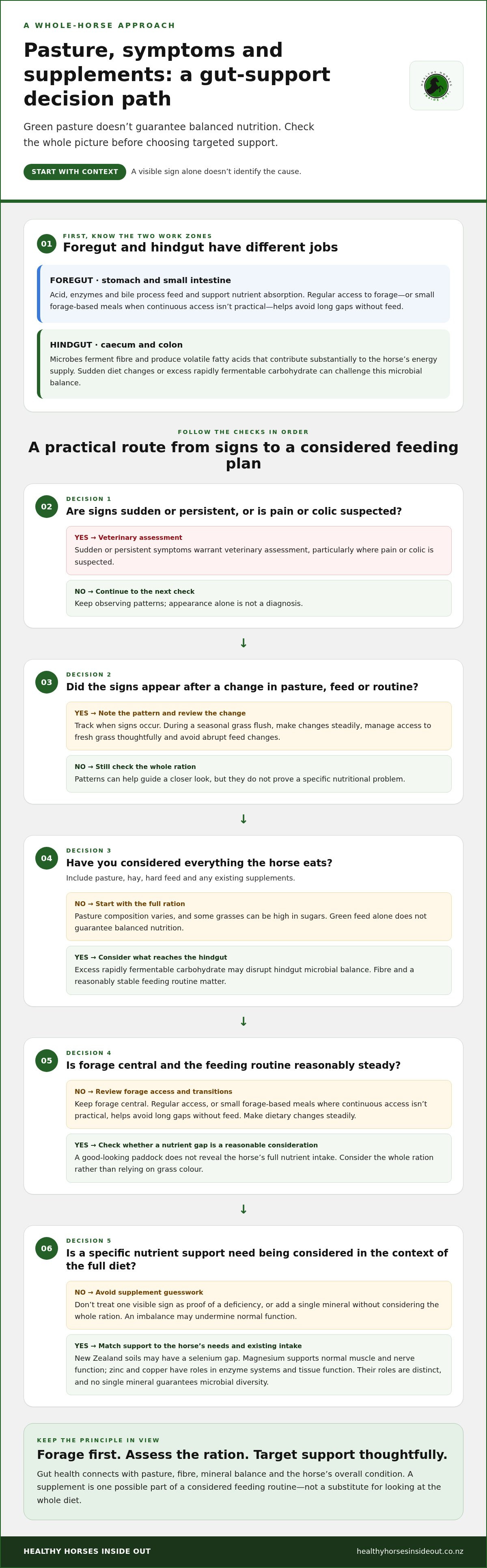
Fibre is fermented by microbes in the hindgut, so abrupt changes in pasture access or intake can unsettle this delicate ecosystem. In susceptible horses, excess fermentable sugars may contribute to hindgut acidosis, where acidity rises and normal microbial activity is affected. “Grass-affected” signs such as irritability or reduced focus can have several possible causes, so they aren’t proof of acidosis on their own.
Mineral balance also matters. Selenium is recognised as a potential gap in New Zealand soils, while magnesium supports normal muscle and nerve function. Their roles are distinct, and neither should be treated as a stand-alone cure for digestive problems. Good-looking grass can still leave nutritional gaps, so consider the whole ration, including hay and any hard feed, before adding supplements.
Visible Signs Your Horse’s Gut Needs Support
Some clues appear well beyond the belly. Hooves that are poor in quality, a dull coat or difficulty maintaining topline may prompt a closer look at overall nutrient intake and absorption, although these signs can have other causes too. Gut health is one part of the picture, not a diagnosis made from appearance alone.
Pay attention to patterns such as girthiness, “sourness” or a lack of focus under saddle, alongside bloating, loose manure or changes in body condition. Note when signs occur and whether they follow a change in pasture, feed or routine. Sudden or persistent symptoms warrant veterinary assessment, particularly where pain or colic is suspected.
A thoughtful approach to horse gut health supplements NZ begins with these connections: pasture, minerals, microbial balance and the horse’s overall condition. That context helps distinguish foundational nutritional support from guesswork.
The Science of Digestion: Foregut vs. Hindgut Support
A horse’s digestive system has two connected work zones. In the foregut, the stomach and small intestine use acid, enzymes and bile to process feed and absorb nutrients. In the hindgut, microbes ferment fibre in the caecum and colon, producing volatile fatty acids that contribute substantially to the horse’s energy supply. The equine hindgut microbiome is sensitive to what reaches it, so sudden dietary changes can alter fermentation and disturb the balance of the microbial community.
That’s why a considered feeding plan looks beyond a fashionable ingredient. Minerals support many normal bodily processes, including enzyme activity, but their value depends on the overall ration and the horse’s needs. A deficiency or imbalance may undermine normal function; adding a single mineral or supplement without considering the whole diet can create further imbalance. When comparing horse gut health supplements NZ owners may choose, ask how each product fits with the horse’s forage, hard feed and wider nutritional picture.
Supporting the Foregut: Nutrient Absorption
Horses are adapted to trickle-feed. Regular access to forage, or small forage-based meals where continuous access isn’t practical, helps avoid long gaps without feed and supports normal stomach function. Performance horses may face added gastric-sensitivity risks through intensive work, travel, stress or feeding routines that include long periods without forage. Minerals such as zinc and copper have roles in enzyme systems and tissue function, but they aren’t digestive enzymes themselves. Balanced nutrition matters more than chasing a single “catalyst”.
The Hindgut: The Horse’s Engine Room
Fibre-fermenting microbes make the hindgut a major source of usable energy. Their activity relies on a reasonably stable environment, including pH; excessive rapidly fermentable carbohydrate can increase acid production and challenge that balance. New Zealand pasture and soil nutrient profiles vary, so mineral intake may not be reliably inferred from how green the paddock looks. Adequate, balanced nutrition supports the horse’s system, but no single mineral can guarantee microbial diversity.
During a seasonal grass flush, make changes steadily rather than turning a horse suddenly onto abundant lush pasture. Keep forage central, manage access to fresh grass thoughtfully, and avoid abrupt feed changes. These practical steps support digestive stability more reliably than relying on a fad ingredient to counter a change in diet. HHIO’s equine nutrition range includes everyday and targeted supplements, HHIO Pellets and bundles to help owners build a considered feeding routine.
Choosing the Best Horse Gut Health Supplements in NZ
A useful supplement choice starts with the whole ration, not the longest ingredient list. Check what your horse already receives from pasture, hay, hard feed and other supplements, then identify a specific nutritional gap or support goal. In New Zealand, pasture and soil mineral profiles can vary, so a green paddock alone doesn’t tell you whether a horse’s diet is balanced.
Understand what each ingredient is intended to do. Prebiotics provide substrates that beneficial microbes can use; probiotics supply live microorganisms. Foundational mineral support has a different role, helping address nutritional needs across the diet rather than acting as a direct substitute for either. Penn State University Extension explains the distinctions between pre, pro, and postbiotics. Choose horse gut health supplements NZ owners can use for a clear purpose, rather than simply because a label combines many fashionable ingredients.
Zinc and copper are essential nutrients involved in normal tissue maintenance, including the skin and other epithelial tissues. That makes them relevant to gut-lining integrity, but “non-negotiable” means ensuring the total diet meets requirements, not automatically adding more. A kitchen-sink formula can overlap with other feeds or supplements, pushing some nutrients higher than intended while still failing to address a real gap. Review the full ingredient panel and serving directions as part of the ration.
Bioavailability: Why the Form of the Mineral Matters
Minerals may be supplied in inorganic forms, such as oxides or sulphates, or bound to organic molecules in chelated forms. These forms differ in structure, and absorption can depend on the mineral, its compound and what else is in the diet; chelated doesn’t automatically mean better in every situation. Look for clear ingredient and feeding information, and favour a balanced formula with a defined purpose over extra ingredients without a clear nutritional role.
NZ-Specific Ingredients to Look For
Selenium deserves particular care in New Zealand because some soils are recognised as low in this trace mineral. Both too little and excessive intake matter, so account for all dietary sources rather than supplementing by guesswork. Magnesium is essential for normal muscle and nerve function, but it shouldn’t be presented as a guaranteed way to calm behaviour or the gut-brain axis. Amino acids are the building blocks of protein, which the body uses to maintain and renew tissues, including the intestinal lining.
A practical “less is more” approach is to match support to the ration: establish foundational mineral coverage, then consider a targeted prebiotic or probiotic when there’s a clear reason. This makes it easier to avoid unnecessary duplication and gives each supplement a defined place in the feeding routine.
Practical Diet Management: Creating a Foundation for Success
Start with forage. Pasture and suitable hay provide the fibre that supports normal hindgut fermentation, so they form the base of a horse’s feeding plan. A supplement can’t compensate for an unsuitable ration or abrupt feed changes. Consider what your horse eats across the day, including hard feed, and note seasonal shifts in pasture access, hay supply and workload.
As spring growth brings a flush of fresh grass, adjust access gradually rather than making a sudden switch from sparse grazing to lush pasture. In winter, keep an eye on forage availability and condition, particularly when wet or muddy paddocks change grazing patterns. Consistency helps: avoid sudden changes to forage, concentrate feeds or supplements, and observe appetite, manure and behaviour as the routine shifts.
Simplifying the Feed Shed with HHIO Pellets
For owners juggling several loose supplements, HHIO Pellets provide a pelletised option that can help streamline a feeding routine. They can make daily feeding more straightforward, while specific supplements may still have a role where there’s a clear reason. Measure each horse’s feed individually and check that it’s eaten, especially if a horse tends to sort through a ration. For more guidance on building a simple routine, read The Ultimate Guide to Everyday Horse Supplements.
Managing Grass-Affected Horses Methodically
Don’t assume that behaviour changes on pasture are caused by one mineral or by grass alone. Pasture composition, total feed intake and individual sensitivity all matter. Keep salt and magnesium in perspective: salt supplies sodium and chloride, while magnesium supports normal body functions, but neither is a universal fix for digestive or behavioural signs. Assess total dietary intake before adding more, and use targeted supplement bundles for a defined support goal rather than as treatment for acute illness.
Introduce changes with care. Add one new supplement at a time, follow its feeding directions and watch for changes in appetite, manure and demeanour. This makes it easier to identify how your horse responds and reduces unnecessary overlap between products. If digestive signs are sudden, persistent or severe, seek veterinary advice rather than relying on a feeding change alone.
A considered routine brings together forage, measured foundational support and targeted additions only where they’re appropriate. Explore HHIO Pellets and targeted supplement bundles as part of your horse’s feeding routine.
The HHIO Solution: Targeted Support from the Inside Out
A simpler supplement routine starts with a clear foundation. HHIO Pellets offer a pelletised nutritional option for horse owners, while specific horse supplements can be added to address an identified need. HHIO also offers supplement bundles that bring complementary support together, helping simplify choices for owners managing several products.
This Inside Out approach focuses on nutritional foundations that support whole-horse wellbeing, rather than treating coat shine or behaviour as isolated problems. It can help owners make more deliberate feeding choices and avoid overlapping supplements, but it can’t guarantee savings on veterinary bills or replace veterinary care. Persistent digestive signs need proper assessment; supplements are nutritional support, not treatment for illness.
Supplement Bundles for Every Life Stage
A horse’s nutritional needs can change with growth, workload, reproductive status, age and the rest of its diet. Foals, working adults and senior horses shouldn’t automatically receive the same combination of support. Begin with everyday nutritional coverage, then consider specific supplements or a bundle when there’s a clear goal. For help assessing priorities, read What Supplements Does My Horse Need in NZ?
Evidence of Success: Visible Results
There’s no reliable timetable that promises a visible change by day 30, 60 or 90. Use those points as practical check-ins instead. Before changing the ration, record your horse’s appetite, manure consistency, body condition, coat and behaviour, along with the feeds and supplements provided. Revisit the notes regularly, keeping other routine changes in mind so you can judge whether the approach remains appropriate.
- At 30 days: Check that the horse is eating the ration consistently and note any changes in manure or demeanour.
- At 60 days: Review the feeding routine and compare observations with your starting notes.
- At 90 days: Decide whether the nutritional plan still fits the horse’s condition, workload and current diet.
These are review points, not promised outcomes. A steady, considered routine offers something more useful than a quick fix: a clear understanding of what your horse receives and why. That can bring peace of mind while helping you make measured adjustments over time. For horse gut health supplements NZ owners can explore, browse HHIO’s equine supplements.
Build a Steadier Foundation for Your Horse
Digestive wellness is shaped by the whole feeding routine: consistent forage, attention to New Zealand pasture and mineral considerations, and supplements chosen for a clear nutritional purpose. A balanced approach supports the horse from the inside out, rather than relying on a quick fix for visible signs such as a dull coat or unsettled behaviour.
Choosing horse gut health supplements NZ owners can use with confidence starts with understanding what your horse already eats and where targeted support may fit. Healthy Horses Inside Out offers everyday and specific supplements, HHIO Pellets and bundles for New Zealand horse owners. These options can help make it easier to build a more methodical feeding routine.
Small, consistent steps can make a feeding routine easier to understand and maintain. Shop HHIO’s equine supplements and bundles to find nutritional support for your horse.
Frequently Asked Questions
Do all NZ horses need gut health supplements?
No, not every horse needs a gut-specific supplement. Start by reviewing the whole ration, including pasture, hay, hard feed and any existing supplements, then consider whether there’s a genuine nutritional gap or support need. A forage-based diet and consistent feeding routine are foundational. Supplements should complement that foundation, not be added automatically or used to compensate for an unbalanced ration.
How do I know if my horse has hindgut acidosis?
You can’t confirm hindgut acidosis from behaviour or manure changes alone. Signs such as loose manure, discomfort, reduced appetite or changes in demeanour can have several causes, so they aren’t a reliable diagnosis. Note when symptoms occur and whether they follow a pasture or feed change. If signs persist, worsen or include pain, seek veterinary advice rather than trying to diagnose or manage acidosis with supplements alone.
Can I feed gut supplements alongside my current hard feed?
Often, a supplement can be fed alongside hard feed, but check the feeding directions and consider the full ration first. Hard feeds may already provide vitamins or minerals, so adding another product can duplicate nutrients. Introduce changes gradually, one at a time, and monitor appetite and manure. If your horse has a health condition or a restricted diet, discuss the feeding plan with your veterinarian.
What is the difference between HHIO Pellets and a standard multi-vitamin?
HHIO Pellets are a pelletised nutritional option from Healthy Horses Inside Out, while a standard multi-vitamin may provide general vitamin and mineral coverage. The key is to assess the formulation and intended role against the horse’s whole diet, rather than assuming all products are interchangeable. Consider a specific supplement only when it has a clear purpose alongside that foundation.
How long does it take to see results from a gut health supplement?
There’s no set timeframe or guaranteed visible result. Response depends on the horse, the underlying issue, the total diet and whether the supplement addresses a genuine need. Keep a simple record of appetite, manure, body condition and behaviour before making a change, then review it regularly. If symptoms continue or worsen, don’t wait for a supplement to work; seek veterinary assessment.
Are HHIO supplements safe for horses with metabolic issues like laminitis?
Suitability depends on the horse’s condition, overall ration and the specific supplement, so no product should be assumed safe for every horse with laminitis or another metabolic issue. Review the product’s feeding directions and nutritional information as part of the complete diet, and follow your veterinarian’s guidance. Supplements don’t replace veterinary care or the dietary management plan recommended for an individual horse.
Why is Selenium so important for NZ horses specifically?
Selenium is an essential trace mineral, and some New Zealand soils are recognised as low in selenium, which can affect the mineral content of pasture and hay. The amount a horse receives still depends on its full diet, including any hard feed and supplements. Both inadequate and excessive intake can be harmful, so avoid adding selenium without considering all dietary sources and the horse’s needs.
Can gut health supplements help with my horse’s spooky behaviour?
They may support overall nutrition where a genuine dietary gap exists, but gut supplements can’t be relied on to resolve spooky behaviour. Changes in focus or temperament can relate to many factors, including discomfort, workload, environment or feeding routine. Keep a record of when the behaviour occurs and review the horse’s whole diet. If it’s sudden, persistent or accompanied by signs of pain, seek veterinary advice.


