

A vitamin E supplement isn’t automatically the safer choice. The right decision depends on what your horse already gets from forage and feed. If you’re asking, “does my horse need a vitamin E supplement?”, start by reviewing the pasture and conserved forage in the ration, rather than reaching for another tub. Fresh, green pasture is a valuable natural source, while vitamin E levels can fall substantially when grass is cut, dried and stored as hay.
It’s understandable to feel unsure. A horse on pasture may have a different intake from one relying mainly on stored forage, and workload and health can also affect its needs. Muscle or neurological signs can have causes beyond vitamin E status, so symptoms alone aren’t a reliable reason to supplement.
This guide will help you assess your horse’s likely intake, understand what can influence its requirements and gather useful diet and health details before deciding. You’ll also learn what to discuss with your veterinarian or equine nutrition professional, including how to consider the whole ration and supplement ingredients. The aim is a measured plan based on your horse, not supplementation by habit.
Key Takeaways
- To answer “does my horse need a vitamin E supplement?”, consider the whole ration, forage access, workload and individual health context.
- Compare fresh pasture and conserved forage with the rest of your horse’s diet before deciding whether supplementation may be appropriate.
- Record daily feed and supplement amounts, pasture access and current label information to build a clearer picture of intake.
- Possible muscle or neurological signs need professional assessment; they don’t confirm that vitamin E is the cause.
- Before adding a supplement, compare its ingredients and feeding directions with existing feeds to help avoid unnecessary overlap.
Does my horse need a vitamin E supplement? Start with the diet
It depends on the whole ration, including forage type and access, other feeds, workload and your horse’s individual health circumstances. A supplement isn’t automatically necessary for every horse. One with regular access to fresh, green pasture may receive more vitamin E from its diet than a horse relying mainly on stored forage. Start by recording what your horse actually eats, rather than supplementing by habit.
Vitamin E is a fat-soluble nutrient, and alpha-tocopherol is a form the body can use. Tocopherols are a class of compounds with vitamin E activity. Alpha-tocopherol helps meet a horse’s nutritional needs and supports normal cell function.
Dietary adequacy means the complete ration appears to provide an appropriate amount for the horse’s circumstances. Confirmed deficiency is a health assessment, not a conclusion based on forage type or symptoms alone. If deficiency is a concern, discuss assessment and appropriate testing with your veterinarian.
What does vitamin E do in a horse’s body?
Vitamin E acts as an antioxidant, helping protect cells from oxidative stress that can occur during normal metabolism and physical activity. This role is relevant to normal muscle and nervous system function, but it doesn’t mean supplementation will diagnose, prevent or treat a particular condition. If you notice changes in movement, strength or coordination, seek veterinary advice rather than relying on a supplement as an explanation or remedy.
Why does forage type matter for vitamin E intake?
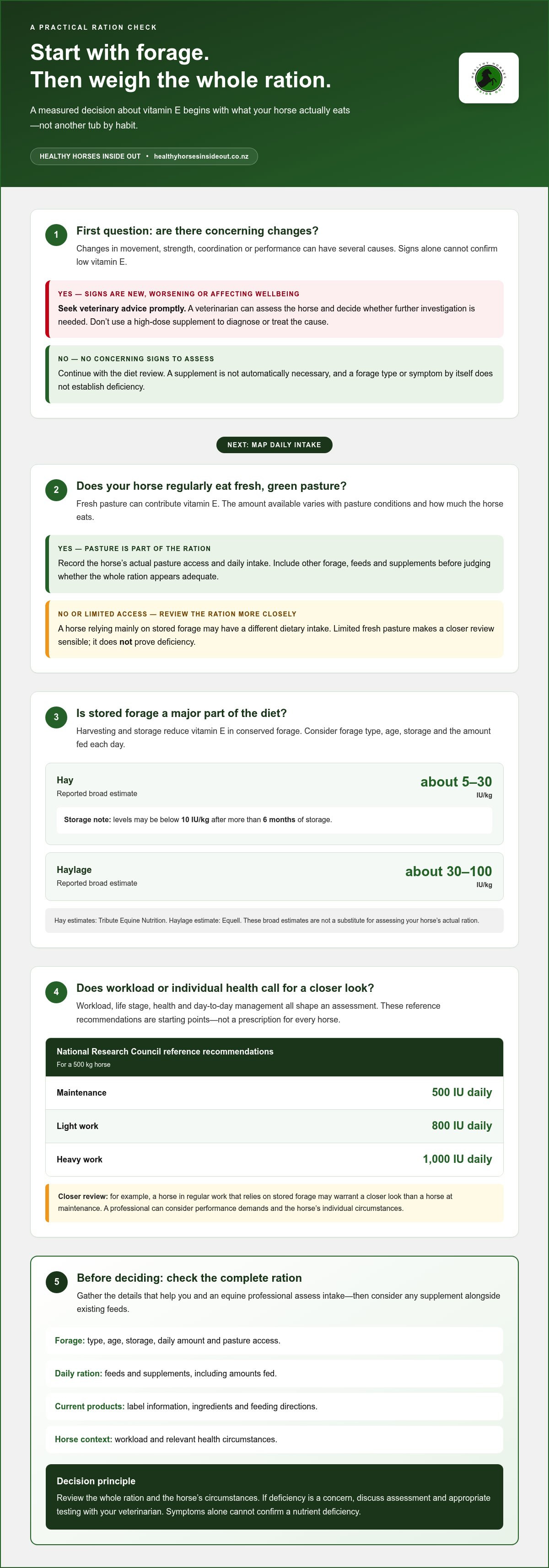
Fresh green pasture can contribute vitamin E, but the amount available varies with pasture conditions and how much your horse eats. Harvesting and storage reduce vitamin E in conserved forage. Tribute Equine Nutrition reports hay at about 5-30 IU/kg, with levels potentially below 10 IU/kg after more than six months of storage. Haylage is reported at about 30-100 IU/kg (Equell). These are broad estimates, not a substitute for assessing your horse’s actual ration.
Consider the forage type, age, storage and daily amount alongside pasture access and other feed. For more context on feeding in local conditions, read our guide to New Zealand pasture and mineral support. A complete ration assessment is a more useful starting point for deciding whether a targeted supplement warrants discussion with an equine professional.
How vitamin E supports equine health, and what can change a horse’s needs
Vitamin E’s antioxidant activity helps protect cells from oxidative stress and supports normal muscle function as part of a horse’s overall nutrition. The amount a horse needs from its ration isn’t fixed. Forage supply, workload, life stage, health and day-to-day management all shape the assessment. For example, a horse in regular work may warrant a closer look at its intake than a horse at maintenance, particularly if both rely on stored forage.
What factors can influence a horse’s vitamin E status?
Start with the whole ration, not one ingredient in isolation. Consider how much fresh pasture the horse eats, what proportion of forage is hay or haylage, and what nutrients come from complete feeds and existing supplements. Pasture access can change with season and management, while conserved forage may provide a different amount of vitamin E. Base the feeding plan on what the horse actually consumes each day.
Workload and individual circumstances matter, too. The National Research Council’s reference recommendations for a 500 kg horse are 500 IU daily at maintenance, 800 IU in light work and 1,000 IU in heavy work. These are starting points, not a prescription for every horse. Performance demands, life stage and health context can affect how a professional assesses the ration. Limited access to fresh pasture, for example, makes a closer review sensible, but doesn’t establish that the horse is deficient.
Are muscle or neurological signs proof of low vitamin E?
No. Weakness, muscle problems, reduced performance or changes in coordination can have several possible causes. Vitamin E status may be relevant, but signs alone can’t identify the cause or confirm a deficiency. A veterinarian can assess concerning symptoms and determine whether further investigation is needed.
Symptoms alone cannot confirm a nutrient deficiency; diagnosis requires professional assessment. Seek veterinary advice promptly if signs are new, worsening or affecting your horse’s movement or wellbeing. Don’t try to diagnose the problem by starting a high-dose supplement. This may complicate assessment and won’t address other possible causes.
Once you’ve considered the horse’s diet and circumstances, review any potential supplement alongside existing feed ingredients and directions. Explore equine supplements from Healthy Horses Inside Out as one part of a considered ration plan, rather than adding nutrients by habit.
Vitamin E supplement or forage-based intake: how to weigh the options
To answer “does my horse need a vitamin E supplement?”, compare the likely contribution from forage with the rest of the ration and your horse’s circumstances. Fresh pasture, conserved forage and a targeted supplement each have a place, but none can be assessed in isolation. A simple comparison can show what you know, what remains uncertain and when professional input could help.
| Approach | Potential advantage | What to consider |
|---|---|---|
| Fresh pasture | Can contribute vitamin E as part of the horse’s forage intake. | Access doesn’t show how much the horse actually eats or the nutrient contribution across changing pasture conditions. |
| Conserved forage | Can provide a consistent forage base when pasture is limited. | Vitamin E content can be lower after harvesting and storage; forage type, age and amount all matter. |
| Targeted supplement | May help address an identified gap in the overall ration. | Check its ingredients and feeding directions against all existing feeds and supplements. Seek professional advice if health concerns affect the decision. |
Can pasture alone provide enough vitamin E?
Pasture may contribute substantially, but access isn’t the same as confirmed intake. Grazing time, the amount actually consumed, seasonal growth and pasture condition can differ between horses and properties. In New Zealand, conditions vary, so don’t assume a particular season or a green paddock guarantees adequate vitamin E. Consider pasture alongside conserved forage, feeds and supplements to understand the complete ration.
When might a targeted vitamin E supplement be considered?
A closer assessment may be useful if fresh forage is limited, the horse relies mainly on stored forage, or the overall ration raises a reasonable concern. Workload and individual health context can also shape the discussion. These factors suggest a reason to review intake, not an automatic need for supplementation or a diagnosis of deficiency.
Before choosing a supplement, record what the horse eats and compare ingredient information and feeding directions across the ration. This helps avoid unnecessary overlap and makes it easier to discuss a targeted plan with an equine nutrition professional or veterinarian. For a practical guide to reading labels, see understanding horse supplement ingredients.
How to assess your horse’s vitamin E intake before supplementing
A written ration review is more reliable than estimating from memory. It can show where vitamin E may be coming from, reveal overlapping ingredients and give a veterinarian or qualified equine nutrition professional useful context. Work through these steps before adding a supplement.
- Record forage. Note whether your horse eats pasture, hay or haylage, along with the forage source, approximate age or storage period and estimated daily amount.
- Describe pasture access. Record how often and for how long your horse grazes, and whether access or grazing conditions change through the year. Access alone doesn’t establish how much forage is consumed.
- List every feed and supplement. Use current labels to record product ingredients, feeding directions and the amount actually fed each day. Include balancers, fortified feeds and products given by other handlers.
- Add horse-specific context. Note workload, life stage, relevant health history and any current clinical signs. Include when changes began and whether they’re worsening.
- Review the whole picture. Share your record with a veterinarian or qualified equine nutrition professional if the ration suggests a possible gap or health factors make the decision less straightforward.
Be precise where you can. “One scoop” can vary by product, so use the label’s recommended measure or weigh the amount if practical. If forage intake is an estimate, mark it as one. A clear estimate is more useful than a number that looks exact but isn’t.
When should testing or veterinary advice be considered?
Discuss testing with your veterinarian if there are concerning signs, relevant health risks or unresolved questions about your horse’s vitamin E status. A result needs clinical context. It should be interpreted alongside the horse’s history, diet and examination, rather than used on its own to diagnose a deficiency or set a supplement dose. Seek veterinary advice promptly for new or worsening muscle, weakness or coordination concerns.
There’s no universal dose that replaces an assessment of the individual horse, its complete ration and health context. If you’re still weighing up the bigger feeding picture, read what supplements your horse may need in New Zealand.
Once you’ve reviewed the ration, explore equine supplement options as part of a considered plan, checking ingredients and feeding directions against what your horse already receives.
Choosing a considered vitamin E plan with Healthy Horses Inside Out
A thoughtful plan starts with your horse, not a product. Use your ration record to consider forage, feeds, existing supplements, workload and health context together. If the horse is well and the diet appears consistent, monitoring intake as circumstances change may be appropriate. If there are concerning signs or uncertainty about health risks, discuss the next step with your veterinarian before changing the ration.
How can you avoid overlapping supplements?
Lay out the current feed labels and supplement directions together. Check ingredient lists for repeated nutrients, note the amount fed each day and follow each product’s directions. Looking at one supplement alone can miss nutrients already supplied by a fortified feed or another product, so the total intake matters more than any single label.
Review the plan when pasture access, forage type, workload or health circumstances change. A ration that suited your horse in one situation may need reassessing after a shift to stored forage or a change in activity. Keep labels current and record feeding amounts so you and your equine professional can make decisions from the same clear information.
What is a sensible next step for your horse?
If you don’t have a specific concern, keep track of the diet and revisit it when feeding or management changes. If muscle or coordination signs appear, worsen or accompany other health concerns, seek veterinary advice rather than assuming vitamin E is the cause. A veterinarian or qualified equine nutrition professional can interpret the full context and advise whether further assessment is warranted.
Before selecting a product, read its ingredients and feeding information and compare them with the current ration. Healthy Horses Inside Out offers everyday and specific horse supplements, supplement bundles and HHIO Pellets for considered nutrition planning. Check current product ingredients and feeding directions against your horse’s needs. Don’t assume a product provides vitamin E without verifying its label.
Once you’ve identified a suitable nutritional goal, explore equine nutrition products as one part of a measured plan, alongside appropriate professional advice.
Make your next feeding decision with confidence
So, does my horse need a vitamin E supplement? The answer comes from the complete picture: forage and pasture access, all feeds and supplements, workload and individual health context. A written ration review can reveal where intake may be uncertain, while muscle or coordination changes call for veterinary assessment rather than guesswork.
Keep the plan practical. Check current labels and feeding directions together, avoid adding nutrients without understanding what the ration already provides, and revisit the assessment when forage, workload or health circumstances change. If supplementation seems appropriate, discuss your horse’s needs with an equine professional and choose based on a clear nutritional goal.
Healthy Horses Inside Out offers a New Zealand-wide online range of equine supplements, bundles and HHIO Pellets for considered nutrition planning. Explore the options and compare product information with your horse’s complete ration: explore considered equine nutrition options. A measured approach can support better-informed care and greater peace of mind.
Frequently Asked Questions
Does every horse need a vitamin E supplement?
No, not every horse needs a separate vitamin E supplement. Whether the diet provides enough depends on the whole ration, especially access to fresh pasture versus stored forage, as well as workload and individual health circumstances. A horse eating plenty of fresh forage may have different needs from one relying mainly on hay. Review feeds and existing supplements together before adding more, and seek professional advice if health concerns affect the decision.
Can a horse get enough vitamin E from pasture?
Fresh green pasture can provide vitamin E, but pasture access alone can’t confirm how much a horse consumes or whether the full ration meets its needs. The amount available varies with pasture conditions and intake. Conserved forage generally supplies less. Tribute Equine Nutrition reports hay at about 5-30 IU/kg, with levels potentially below 10 IU/kg after more than six months of storage. Assess the actual ration rather than assuming pasture is sufficient.
What are the signs of vitamin E deficiency in horses?
Low vitamin E status may be associated with muscle or neurological problems, but signs such as weakness, muscle changes or poor coordination can have many causes. They don’t confirm a deficiency. A veterinarian can assess the horse, consider its diet and health history, and decide whether testing is appropriate. Arrange prompt veterinary assessment for new, worsening or concerning signs rather than trying to diagnose the cause or treat it with a supplement alone.
How do I know if my horse needs more vitamin E?
If you’re asking, “does my horse need a vitamin E supplement?”, start by documenting pasture access, forage type and amount, all feeds, and every current supplement. Check the labels and daily feeding amounts, then consider workload and health context. A horse mainly eating stored forage may warrant closer dietary assessment than one with regular access to fresh pasture. A veterinarian or qualified equine nutrition professional can help interpret concerns and decide whether testing or dietary changes are warranted.
How much vitamin E should I give my horse?
There isn’t one dose suitable for every horse. The National Research Council’s recommendations for a mature 500 kg horse are 500 IU daily at maintenance, 800 IU in light work and 1,000 IU in heavy work. These are reference amounts, not personalised supplement instructions; vitamin E from the entire ration matters. Before adding a product, compare feed labels and directions, then discuss an appropriate amount with a veterinarian or qualified equine nutrition professional.
Is natural vitamin E better than synthetic vitamin E for horses?
Natural vitamin E is generally more bioavailable and better retained by the horse than synthetic vitamin E. On labels, natural forms are commonly listed as d-alpha-tocopherol or d-alpha-tocopheryl acetate, while synthetic forms use “dl-alpha”. Check the form and stated amount on the product label, along with serving directions and the rest of the ration. The form alone doesn’t determine whether supplementation is needed; first assess the horse’s total dietary intake.
Can I give my horse vitamin E and selenium together?
They may be given together when an appropriate plan calls for both, but check every feed and supplement for selenium before adding another source. Total intake matters, and excess selenium can be harmful. Don’t assume a combined product is suitable simply because it contains vitamin E. Ask your veterinarian or qualified equine nutrition professional to assess the complete ration and advise whether either nutrient is needed and what feeding directions are appropriate for your horse.


