

A digestive supplement can contain useful ingredients and still be the wrong fit for your horse. Choosing horse digestive supplements NZ owners can feel confident about starts with the whole feeding picture: what your horse eats, what support you’re seeking and whether the signs point to a veterinary concern rather than a nutritional gap.
It’s understandable to find the options confusing. Pre- and post-biotic yeasts, toxin binders and other ingredients have different roles, and a supplement isn’t a treatment for illness. This guide explains how to compare formulas by their ingredients, intended use and fit with your horse’s existing diet. It also covers what everyday nutritional support can and can’t do, using HHIO product information as a practical example. The aim is a considered next step based on your horse’s overall feed and wellbeing, not a quick fix.
Key Takeaways
- Start with your horse’s forage and existing ration to identify whether additional digestive support has a clear place.
- Compare horse digestive supplements NZ by their listed ingredients and intended use, not broad category labels alone.
- Check product directions and safety notes against your horse’s needs and feeding routine before adding a supplement.
- HHIO Performance lists pre- and post-biotic yeasts, while HHIO Restore lists a toxin binder. These are nutritional options, not veterinary treatments.
NZ Horse Digestive Supplements: What They Can and Can't Do
Digestive supplements are nutritional products intended to add particular ingredients to a horse’s ration. They don’t diagnose or treat the cause of digestive signs. The role of any formula depends on its listed ingredients and how they fit the horse’s existing feed, forage and individual circumstances.
That context matters. Forage is central to a horse’s diet, while age, workload, routine and changes in feed can all be relevant when reviewing the ration. A supplement shouldn’t be chosen in isolation or treated as a shortcut around checking the basics. For background on the horse’s digestive system and forage-led feeding, the equine nutrition guidelines provide a broader starting point. You can also explore this equine gut and digestive health guide for more context.
For owners comparing horse digestive supplements NZ, a useful first step is to write down what the horse eats and note any changes in appetite, manure or body condition. Include forage, feeds and other supplements, along with recent changes to the horse’s routine. This record can help clarify whether you’re considering routine nutritional support or responding to a change that needs professional attention. Marketing language alone can’t tell you what’s causing a symptom.
When does a digestive concern need more than a supplement?
Seek veterinary assessment for persistent or marked changes in appetite, manure, comfort or condition, particularly if they appear suddenly or worsen. Don’t rely on a supplement to explain or resolve an unexplained change. A veterinarian can assess the horse and advise whether further investigation or treatment is needed. Nutritional support can be considered separately, in line with that advice.
A practical approach is to look at the whole picture: the horse’s usual ration, recent feed or management changes, and the concern you’re trying to address. Supplements may have a place in everyday nutritional planning, but they don’t replace veterinary care when a horse appears unwell.
How do digestive supplement ingredients fit into a horse’s feeding picture?
Ingredients make more sense when viewed alongside the whole ration. Start with the forage the horse receives, then consider existing feeds, supplements and any recent changes. This helps you see what a proposed product would add, rather than treating it as a stand-alone solution. The Merck Veterinary Manual’s equine nutritional requirements offer useful background for assessing the diet as a whole.
For example, HHIO Performance lists pre- and post-biotic yeasts among its ingredients, alongside minerals, vitamins and amino acids. It is an all-in-one supplement for hard-working horses, with a stated dose of 40 g for horses over 13.1 hh and 20 g for horses under 13.1 hh. These product details describe the formula and its directions, not proof that it treats a diagnosed digestive condition or will produce a particular result for every horse. Keep that distinction clear when comparing horse digestive supplements NZ: a label tells you what a product contains and how it is intended to be used, while a veterinarian assesses clinical signs and diagnoses illness.
For a closer explanation of prebiotics and their place in equine nutrition, the prebiotics for horses guide provides focused background. Use that information to understand ingredient terminology, then return to the horse’s actual ration and needs before deciding whether a supplement is relevant.
What should horse owners look for on a digestive supplement label?
Read beyond the broad category name. Check which ingredients are named, the product’s stated intended use and the feeding directions. Then consider how those details fit the forage and other feeds already in the bucket. For example, HHIO Restore lists MSM, L-arginine, a toxin binder and other ingredients. Its product directions include specific loading and maintenance amounts, and its safety notes state that horses with EHV should avoid supplementation with L-arginine. A label can support an informed comparison, but it can’t identify the cause of symptoms or establish treatment for a diagnosed condition. For more detail on interpreting ingredient lists, Healthy Horses Inside Out’s horse supplement ingredients guide offers a practical companion.
A measured next step is to write down the current ration and the question you want a supplement to address, then compare that need with the product’s stated ingredients, directions and safety notes. You can explore HHIO digestive-support supplements with those criteria in mind.
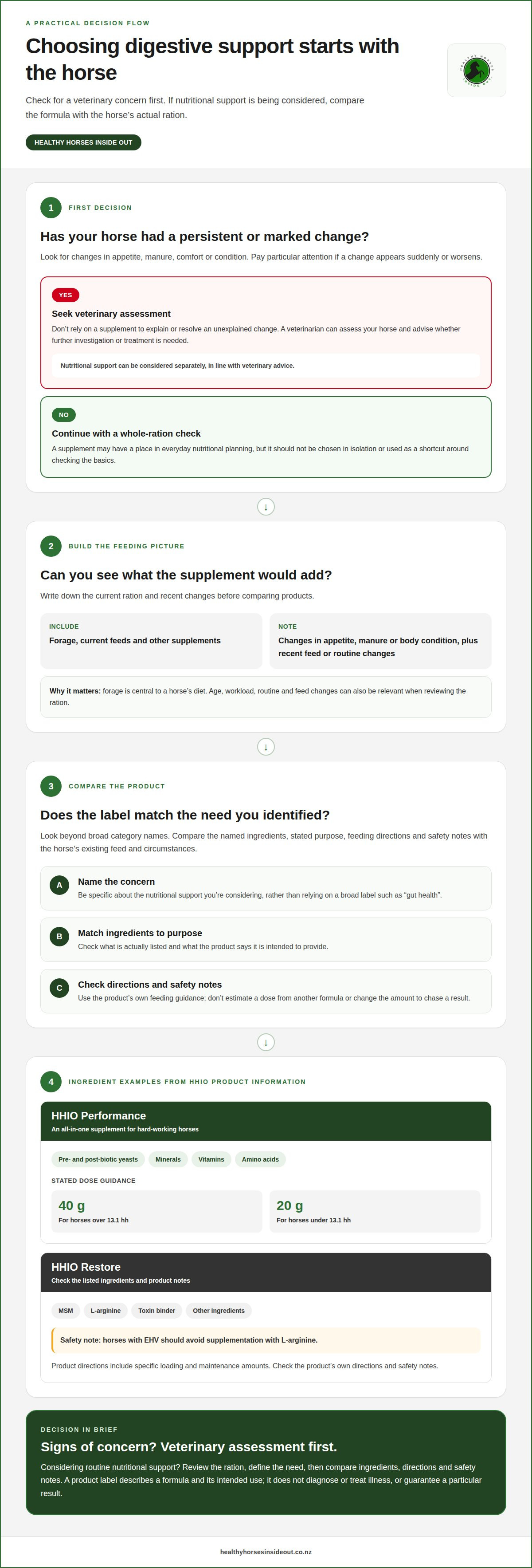
How to compare horse digestive supplements in NZ
A clear comparison starts with the horse, not the product category. Use this sequence to narrow the options and keep the decision grounded in the feeding plan:
- Define the concern. Be specific about the nutritional support you’re considering, rather than relying on a broad label such as “gut health”.
- Review the ration. Note forage, current feeds and other supplements so you can see what the horse already receives.
- Compare ingredients. Match the product’s named ingredients and stated purpose to the need you’ve identified.
- Check directions and safety notes. Follow the product’s own feeding guidance and consider whether it fits the horse’s circumstances.
This method helps distinguish a product’s intended nutritional role from a promise of a particular result. Supplements provide nutritional support; they aren’t guaranteed treatments for illness or diagnosed conditions. Choosing horse digestive supplements NZ is less about finding the broadest claims and more about deciding whether a formula has a relevant place in the individual horse’s ration.
How should owners assess dose guidance and safety notes?
Use the product’s own directions rather than estimating a dose from another formula or changing the amount to chase a particular result. HHIO Performance’s stated dose guidance is 40 g for horses over 13.1 hh and 20 g for horses under 13.1 hh. Its ingredients include pre- and post-biotic yeasts, but the ingredient list doesn’t establish that it will treat a diagnosed condition.
For HHIO Restore, follow the recommended loading and maintenance directions: during the initial 7-day loading period, horses over 350 kg receive 80 g and horses under 350 kg receive 40 g. For maintenance, horses over 350 kg receive 40 g and horses under 350 kg receive 20 g. Do not dose higher than the recommended ranges, as higher levels of MSM can impact absorption of copper and selenium. Horses with EHV should avoid supplementation with L-arginine.
When should you review the whole feeding plan?
Review forage, current feeds and other supplements together, particularly if the horse’s workload, routine or ration has changed. One formula won’t necessarily suit every horse, so consider whether the product’s purpose matches the specific need rather than adding it automatically. Plain salt is recommended separately where relevant, and no mineral block provides sufficient minerals for a horse.
Use these criteria to compare HHIO horse supplements with your horse’s feeding plan and the relevant product directions.
Which HHIO digestive-support options may fit your horse?
For horse digestive supplements NZ owners are comparing, the useful distinction is what a product actually lists, not a broad promise of “gut support”. HHIO Performance includes pre- and post-biotic yeasts. HHIO Restore includes a toxin binder, MSM and L-arginine, among other ingredients. These details describe the formulas; they don’t establish that either product treats a diagnosed condition or will produce a particular result.
Both products are NZ-made using high-quality, locally sourced ingredients and are manufactured by the leading NZ animal-supplement maker. Their product information gives you a practical basis for comparing stated ingredients and directions with your horse’s existing feeding plan.
What is confirmed about HHIO Performance and Restore?
HHIO Performance is an all-in-one supplement for hard-working horses, with a 40 g dose of minerals, vitamins, amino acids and digestive support, including pre- and post-biotic yeasts. Its stated dose is 40 g for horses over 13.1 hh and 20 g for horses under 13.1 hh.
HHIO Restore is a joint, pain, top-line, circulation, digestive and toxin-relief formula. Its new 2.4 kg bag provides 60 doses of 40 g each, and other sizes are also available. Follow the product’s loading and maintenance directions, and don’t exceed the recommended ranges because higher levels of MSM can impact absorption of copper and selenium. Restore contains L-arginine, so horses with EHV should avoid supplementation with this product.
What is a sensible next step before adding a supplement?
Set the product information beside the horse’s forage, current feeds and other supplements. Then consider whether the listed ingredients and intended use align with the nutritional question you’re addressing. If the horse has persistent or concerning changes, a supplement label can’t diagnose the cause; veterinary assessment may be needed.
A measured comparison helps keep expectations realistic and the feeding plan in view. Explore Healthy Horses Inside Out supplements and review the product information alongside your horse’s existing ration.
Make your next feeding decision with confidence
Keep a simple record of your horse’s current ration and any changes you’re considering. Include forage, feeds, supplements and the directions you’re following. That gives you a clearer basis for reviewing options and noticing whether the feeding plan needs a broader review. The best choice among horse digestive supplements NZ isn’t necessarily the product with the longest ingredient list; it’s the one whose stated purpose and directions fit your horse’s circumstances.
Healthy Horses Inside Out has a customer-tested 5-star rating from 360+ reviewers. Use that as one part of your research, alongside the product information and your horse’s overall needs. A thoughtful, steady approach can help you make a more informed choice for your horse’s ongoing care.
Browse Healthy Horses Inside Out supplements and compare the product information with your horse’s feeding plan.
Frequently Asked Questions
Can horse digestive supplements help with loose manure?
They may provide nutritional support, but loose manure has multiple possible causes and a supplement can’t identify or treat the underlying issue. Note when the change began and whether it followed a feed, forage or routine change. If it’s persistent, marked or accompanied by other changes in your horse’s condition, seek veterinary assessment rather than relying on a product claim.
What ingredients should I look for in a horse digestive supplement?
Look for clearly named ingredients that match the nutritional support you’re considering, alongside a stated intended use and practical feeding directions. For example, HHIO Performance lists pre- and post-biotic yeasts. That tells you what the formula contains, not that it treats a diagnosed problem. Be cautious of broad claims that don’t explain the ingredients or their place in the ration.
Are horse digestive supplements safe for laminitic or metabolic horses?
Suitability depends on the specific formula and the horse’s full diet. HHIO’s product information states: “Includes no fillers, preservatives, sugar or ingredients high in iron.” This information can help owners assess the products, but it doesn’t replace individual advice. If your horse has laminitis or a metabolic condition, consider the whole ration and seek veterinary guidance before making significant feed changes.
Can I feed a digestive supplement alongside my horse’s other supplements?
Possibly, but review the ingredient lists and directions together first. Two products may contribute similar nutrients, so adding them without considering the combined ration could be inappropriate. Write down each feed and supplement, including how much you give, then compare the labels. If your horse is on a veterinary-directed feeding plan or medication, discuss additions with your veterinarian.
How do I choose a digestive supplement for my horse in New Zealand?
Start with the specific support you’re considering, then compare a product’s named ingredients, stated purpose and feeding directions against your horse’s forage and current ration. Look for information that makes the formula’s role clear, rather than choosing by a broad “digestive” label. For horse digestive supplements NZ owners are assessing, a careful label-and-ration comparison is a practical first step; seek veterinary advice for ongoing signs.


