
A low-starch choice isn’t automatically a balanced one. For horses with metabolic conditions, hard feed alternatives for horses may include fibre-based options such as beet pulp, chaff, hay cubes or pellets, and complete feeds. Added fat can provide energy without relying on grain-heavy starch.
It’s understandable to focus on reducing starch, but the whole ration matters. Choose an option that fits your horse’s forage intake and energy needs while supplying an appropriate balance of vitamins and minerals. Soak beet pulp thoroughly before feeding to help reduce the risk of choke.
This guide explains how low-starch feeds, grain mixes and fibre sources differ, and why vitamin and mineral balance matters when choosing an alternative. You’ll learn what to consider so you can make informed feed choices while keeping your horse’s overall diet in view.
Key Takeaways
- Keep hard-feed meals below 0.5% of your horse’s bodyweight and divide daily feed across several meals.
- Compare grain mixes by their starch and sugar content, not just their feed format or energy claims.
- Pellets may help reduce feed sorting and dust, while textured mixes can be more prone to spoilage in humid conditions.
- When comparing feed costs in New Zealand, consider the type of forage, how it fits the ration and how much your horse needs.
Low-starch and low-sugar feeds for metabolic conditions
For a metabolic horse, choose feed according to forage, energy needs and nutrient balance, not grain alone. Low-starch options can help you build a more considered ration.
High-fat feeds for extra energy
High-fat feeds provide concentrated energy without the starch associated with grain-heavy feeds. They may help when a horse needs extra calories, but high-starch concentrates shouldn’t be the default for weight gain. Vegetable oil is one way to increase energy if needed. Match added energy to the horse’s workload and body condition rather than automatically feeding more grain.
Complete feeds as hay replacements
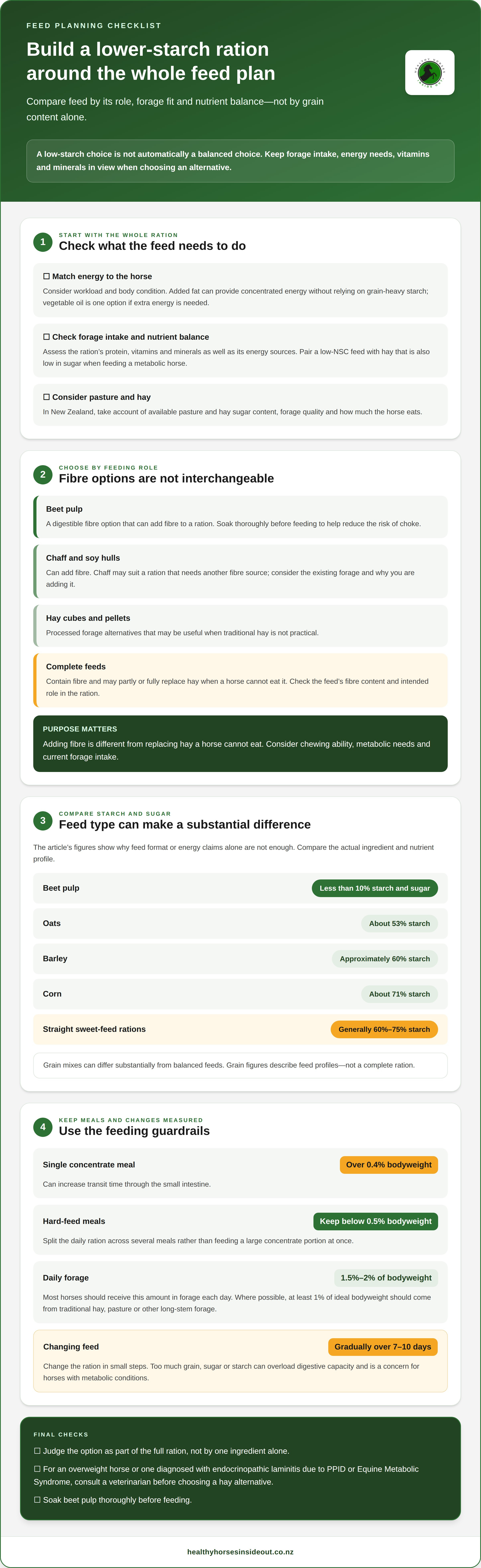
Complete feeds contain fibre and can partly or fully replace hay when a horse can’t eat it. This may suit a senior horse with chewing difficulties, but the feed’s fibre content and feeding role still matter. Most horses should receive forage each day equal to 1.5% to 2% of bodyweight; at least 1% of ideal bodyweight should come from traditional hay, pasture or other long-stem forage where possible.
Choose low-starch feeds with the whole ration in mind
Beet pulp is described as containing less than 10% starch and sugar, while straight sweet-feed rations generally contain 60% to 75% starch. Oats contain about 53% starch, corn about 71%, and barley approximately 60%. Grain mixes can therefore differ substantially from balanced feeds. For metabolic horses, pair a low-NSC feed with hay that is also low in sugar. Check the ration’s protein, vitamins and minerals as well as its energy sources.
Change feed gradually and consider pasture
Reduce or replace hard feed gradually over at least 7-10 days, changing the ration in small steps. Too much grain, sugar or starch can overload digestive capacity and is a concern for horses with metabolic conditions. In New Zealand, consider the sugar content of available pasture and hay, alongside forage quality and intake. Consult a veterinarian before selecting a hay alternative for an overweight horse or one diagnosed with endocrinopathic laminitis due to PPID or Equine Metabolic Syndrome.
Grain concentrates and commercial mixes
Grain concentrates provide dense energy, but the size of each meal matters. A single concentrate meal exceeding 0.4% of a horse’s bodyweight can increase transit time through the small intestine. Keep hard-feed meals below 0.5% of bodyweight and split the daily ration across several meals. This supports a steadier feeding pattern rather than delivering a large concentrate portion at once.
Grain type also affects equine nutrition. Oats contain 12% protein and 5% fat, while corn contains 8% protein, 4% fat and 2% fibre. Barley contains 11.5% protein and 2% fat. These figures describe different feed profiles, not a complete ration. Rolled barley has about 21% pre-caecal starch digestibility, while about 83% of oat starch is digested and absorbed in the small intestine after a meal no larger than 0.4% of bodyweight.
Commercial mixes vary by form and processing. Pelleted feeds are less dusty than loose grains and can reduce sorting, which helps horses consume a more consistent mix. Textured feeds may contain 4% to 12% molasses, and can be more prone to spoilage in humid conditions. Extruded feeds are cooked under high temperatures and pressure to improve digestibility. Compare the ingredient and nutrient profile, not just the feed’s appearance.
For a horse with metabolic concerns, a grain mix may be less suitable than a balanced feed with a lower starch profile. Oats can raise blood glucose for about four hours, so workload, body condition and the rest of the ration matter when assessing grain. A concentrate is highly digestible, but that doesn’t make it an automatic choice for every horse. Consider everyday horse supplements as part of a wider approach to filling nutritional gaps, rather than as a substitute for forage or a balanced feed.
How do beet pulp, chaff, hay cubes, and complete feeds compare for horses?
Fibre-based feeds serve different purposes, so compare their roles before choosing one. Beet pulp is a byproduct of sugar beet processing, yet is described as low in sugar and highly digestible. Soak it thoroughly before feeding to help prevent choke. It can add fibre to a ration, but that alone doesn’t show whether the whole diet meets your horse’s needs.
Chaff, beet pulp and soy hulls can all add fibre. Chaff may suit a ration needing another fibre source, while beet pulp offers a digestible option. They aren’t interchangeable in every feeding plan: consider your horse’s existing forage and why you’re adding feed. Adding fibre, for example, is different from replacing hay your horse can’t eat.
Hay cubes and pellets are other forage alternatives. They provide forage in processed form, which may be useful when traditional hay isn’t practical. Complete feeds also contain fibre and may replace some or all hay for horses unable to eat it. The key difference is their intended role: cubes or pellets provide a forage alternative, while a complete feed may be formulated as a broader ration.
Choose according to your horse’s chewing ability, metabolic needs and current forage intake. A senior horse with chewing difficulties may need a different approach from one that simply needs extra fibre. If your horse is overweight or has endocrinopathic laminitis due to PPID or Equine Metabolic Syndrome, consult a veterinarian before choosing a hay alternative. Make feed changes gradually, and assess each option as part of the full ration, not by one ingredient alone.
What are typical prices in New Zealand for horse hay, chaff, beet pulp, and other feed alternatives?
There’s no single useful New Zealand price for hay, chaff or beet pulp without knowing the product size, location and delivery arrangement. A bale price and a bag price aren’t directly comparable because they represent different quantities. Compare the listed weight and format first, then calculate the cost for the amount your horse actually eats.
When comparing hay, consider the forage type and quality, bale size and any delivery charge. A low bale price may not mean better value if the forage is dusty, mouldy or unsuitable for your horse. Chaff prices also depend on pack size and contents. Compare like with like rather than choosing by the label alone.
Beet pulp and hay cubes or pellets are processed feeds, so compare package weight with the quantity needed for the ration. Beet pulp may require preparation before feeding, so include that in your practical comparison. Complete feeds serve a different purpose: they contain fibre and may replace some or all hay when a horse can’t eat it. Their value depends on how they fit the overall feeding plan, not simply the bag price.
A practical comparison is to calculate the cost of each option over the same feeding period. Use your horse’s actual ration, include delivery, and account for waste or preparation. For example, compare the hay discarded with the amount actually used, rather than counting the whole bale as consumed feed. Keep nutritional suitability central: the cheapest option isn’t useful if it doesn’t meet your horse’s needs.
Feed cost is only one part of a balanced ration. If you’re considering nutritional support alongside forage, explore horse supplement options to help address specific dietary needs.
Healthy Horses Inside Out
Healthy Horses Inside Out offers nutritional support to help you consider how supplements fit alongside your horse’s forage and hard-feed choices. Everyday Horse Supplements, Specific Horse Supplements, Horse Supplement Bundles and HHIO Pellets provide options for different supplementation needs, rather than replacing the need to assess the whole ration.
When considering a feed change, look at which nutrients your horse gets from forage and hard feed, and where supplementation may fit. A balanced approach focuses on your horse’s needs, not simply adding another product to the feed bucket. For metabolic conditions or diagnosed laminitis, veterinary advice remains important when planning dietary changes.
For help exploring the available nutritional support, contact Healthy Horses Inside Out.
Make your next feed decision with confidence
Choosing hard feed alternatives for horses is an opportunity to review the whole ration. Consider what your horse needs from forage, where additional energy should come from, and whether the feed supports the nutritional balance you’re aiming for. A change is most useful when it serves a clear purpose, rather than simply replacing one scoop with another.
Keep your horse’s condition, daily routine and response to dietary changes in view as you refine the feeding plan. For metabolic concerns or diagnosed laminitis, involve your veterinarian in feed and forage decisions. Thoughtful adjustments guided by your horse’s needs can help you make clearer choices.
Discuss nutritional support with Healthy Horses Inside Out and take a considered next step for your horse.
Frequently Asked Questions
What are the best alternatives to hard feed for horses?
The best option depends on what the current hard feed provides: extra calories, fibre, protein or a way to deliver supplements. A horse maintaining condition on forage, for example, may need a different plan from one losing weight during work. Identify the feed’s purpose first, then assess forage or fibre options against your horse’s condition and full ration.
Can horses get enough energy and nutrients from pasture and hay alone?
Yes, some horses can meet their energy needs from pasture and hay, but this depends on forage quality, intake, workload and condition. Energy supply and nutrient balance aren’t the same thing. A horse may maintain weight but still need attention to protein, vitamins or minerals. Review body condition, topline and workload together when assessing whether forage alone meets your horse’s needs.
What are suitable hard-feed alternatives for horses with laminitis or insulin resistance?
Consider starch and sugar intake across the whole diet, including forage, treats and added feed. A low-starch product alone won’t make the ration suitable if the forage is high in sugar. If your horse is overweight or has endocrinopathic laminitis linked to PPID or Equine Metabolic Syndrome, consult a veterinarian before choosing a hay alternative or changing the feeding plan.
What feeds are suitable for senior horses or horses with poor teeth?
Soft, fibre-containing feeds may help horses that struggle to chew long-stem forage. A complete feed can replace some or all hay when a horse can’t eat it, while soaked fibre feeds may offer another texture to consider. Suitability depends on chewing and swallowing ability, body condition and the overall ration. A dental assessment can help clarify why chewing has become difficult.
What does hard feed mean for horses in New Zealand?
Hard feed refers to concentrates and commercial feeds, such as grain mixes, pellets, textured feeds and complete feeds, rather than forage such as hay or pasture.


