

The safest diet for a horse prone to tying up depends on why the muscles are affected, not on one “right” feed. Choosing a diet for horse with tying up can feel daunting when advice about starch, fat, forage and supplements seems to point in different directions. A change made without understanding the diagnosis may not meet your horse’s needs.
If your horse shows signs such as painful or stiff muscles, sweating or reluctance to move, contact your veterinarian promptly. Feeding changes aren’t a substitute for assessment. Ongoing management should be based on the specific cause of the problem.
This guide explains how diagnosis, forage, energy intake and workload shape a practical feeding plan, and why approaches may differ for conditions such as PSSM and RER. You’ll find what to discuss with your veterinarian or an equine nutrition professional, how to review the whole ration and why gradual, informed adjustments can help you make decisions with greater confidence.
Key Takeaways
- Start with veterinary assessment: tying up describes muscle damage, not one diagnosis. Severe pain, heavy sweating or dark urine needs urgent veterinary contact.
- The right diet for horse with tying up depends on the cause. Don’t assume every horse needs the same starch, fat or energy adjustments.
- Use forage and the whole ration as your starting point. Consider workload, body condition and forage quality before changing feeds.
- Make changes gradually with professional guidance, and keep records of feed amounts, exercise, body condition and recurring signs.
- Check a supplement’s label, ingredients and intended use with your veterinarian or an equine nutrition professional. Supplements can’t replace diagnosis or a balanced ration.
Diet for a horse with tying up: what to address first
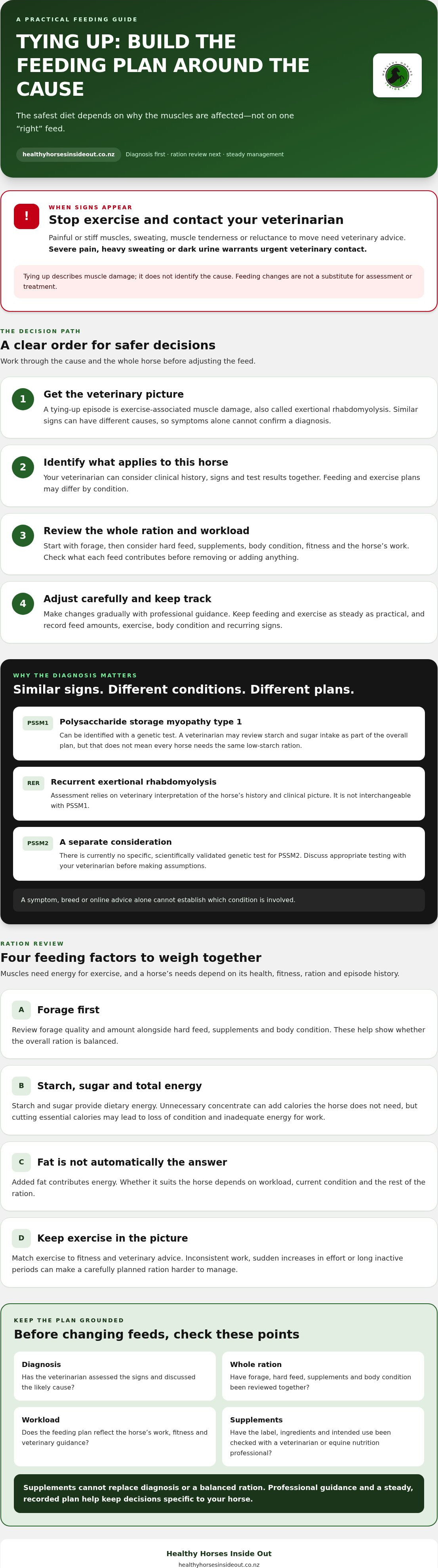
Before changing your horse’s feed, establish what’s happening and involve your veterinarian. “Tying up” describes an episode of exercise-associated muscle damage. It isn’t a diagnosis or proof that a particular nutrient is missing. A suitable diet for horse with tying up depends on the underlying cause, so feeding changes should support a veterinary plan, not replace assessment or treatment.
What does tying up mean in horses?
Veterinarians often use exertional rhabdomyolysis to describe muscle-cell damage associated with exercise. In plain language, affected muscle fibres break down and may become painful. The term describes the muscle event, but doesn’t identify why it happened. The overview of Equine exertional rhabdomyolysis outlines how episodes can occur in different forms.
A horse may become stiff, reluctant to move, sweaty or tender through the muscles. These signs can have more than one cause, so they can’t confirm tying up or distinguish one condition from another. Stop exercise and contact your veterinarian for advice if you notice them. Severe pain, heavy sweating or dark urine warrants urgent veterinary contact. Dark urine can signal serious muscle injury, but only a veterinarian can assess its cause.
Why the diagnosis changes the feeding plan
Recurring episodes may be associated with conditions such as recurrent exertional rhabdomyolysis (RER) or polysaccharide storage myopathy type 1 (PSSM1). These aren’t interchangeable diagnoses. Similar outward signs can arise from different processes, so feeding and exercise adjustments may differ too.
Your veterinarian can consider the horse’s clinical history, signs and test results together. PSSM1 can be identified with a genetic test, while RER assessment relies on veterinary interpretation of the horse’s history and clinical picture. PSSM2 is different again: there’s currently no specific, scientifically validated genetic test for it. Discuss which testing is appropriate before making assumptions based on a symptom, breed or online advice.
Once the cause is clearer, you and your veterinarian or an equine nutrition professional can review the whole ration, workload and body condition before deciding whether changes are warranted. Adjusting starch, fat or supplements without understanding the diagnosis may not meet your horse’s needs. During an acute episode, prioritise veterinary guidance. Ration planning comes next.
How diet, muscle energy and workload can affect tying up
Muscles need energy to contract during exercise. One source is glycogen, a stored form of glucose that muscles can draw on as work demands increase. How a horse uses and stores energy varies with its health, fitness, ration and the cause of previous episodes. No single feeding rule suits every horse.
For some horses, a veterinarian may review starch and sugar intake as part of the overall plan. This can be relevant when considering conditions such as PSSM1, but it doesn’t mean every horse should be put on the same low-starch ration. A diet for horse with tying up needs to reflect the diagnosis and the horse’s energy requirements. Don’t remove feeds without checking what they contribute to the ration.
Starch, sugar and muscle energy
Starch and sugar provide dietary energy, but unnecessary concentrate can add calories a horse doesn’t need. A professional can assess whether the ration can be adjusted while still meeting nutritional needs. That’s different from cutting essential calories: an underfed horse may lose condition and lack adequate energy for its work. The Rutgers University fact sheet discusses balanced nutrition and lower non-structural carbohydrate intake in tying-up management, but the right approach remains individual.
Forage, fat and a consistent exercise routine
Suitable forage is a sensible starting point for reviewing the ration. Its quality and amount, alongside hard feed, supplements and the horse’s body condition, help determine whether the overall diet is balanced. Added fat isn’t automatically beneficial. It contributes energy, so its suitability depends on the horse’s workload, current condition and the rest of the ration. Ask a veterinarian or equine nutrition professional to review the full picture before making substantial changes.
Feeding is only one part of management. Match the exercise plan to the horse’s fitness and veterinary advice. Inconsistent work, sudden increases in effort or long inactive periods may make a carefully planned ration harder to manage. Keep feeding and workload as steady as practical, and agree any changes with the professionals involved in your horse’s care.
Consistent feeding and suitable exercise are most useful when tailored to the horse’s diagnosis, condition and work. If you’re reviewing nutritional options, you can explore horse supplements and pellets, then check product ingredients and suitability with your veterinarian or equine nutrition professional.
Comparing feeding approaches for a horse prone to tying up
There isn’t one standard ration for every horse with a history of tying up. A forage-led plan can be a useful starting point. Lower-starch or energy-adjusted changes may be considered for particular horses after their diagnosis and whole ration have been reviewed. In New Zealand, pasture composition can vary with season, pasture species and growing conditions, so don’t assume grazing provides a consistent nutrient profile.
Use this comparison to frame questions for your veterinarian or an equine nutrition professional, not as a prescription. The best fit depends on diagnosis, workload, body condition and forage analysis, alongside veterinary advice.
| Feeding approach | When it may be considered | Points to check |
|---|---|---|
| Forage-led | As a foundation for reviewing the horse’s daily intake and overall ration. | Assess forage quality and quantity, and consider pasture variability. If concentrates are reduced, preserve adequate fibre and overall nutritional balance. |
| Lower-starch | When the diagnosis and professional assessment indicate that starch and sugar intake should be reviewed, including in some horses with PSSM1. | Don’t apply a universal starch limit or assume the same approach suits recurrent exertional rhabdomyolysis and other causes. Check that energy and nutrient needs are still met. |
| Energy-adjusted | When workload, body condition or the current ration suggests total energy intake needs attention. | Assess the whole ration before adding concentrated calories or fat. Extra energy may not suit a horse if it doesn’t match its work and condition. |
When a forage-led, lower-starch ration may be considered
A professional can review available forage, pasture and concentrates together, then advise whether adjustments suit the horse’s diagnosis. Forage analysis may help clarify what a hay or pasture sample contributes, but a sample won’t make all grazing uniform. If changes are recommended, make them gradually and maintain suitable fibre intake. Don’t simply remove feeds without replacing their nutritional contribution.
When energy adjustments or supplements need review
Before adding oil, a higher-energy feed or a supplement, consider the horse’s workload, body condition and existing sources of calories and nutrients. Combining products can duplicate ingredients or provide nutrients the horse already receives. Check the label, full ingredients and intended use, and discuss suitability with the horse’s care team. For practical help interpreting labels, see understanding horse supplement ingredients.
The right diet for horse with tying up fits the confirmed diagnosis and the horse’s actual ration and workload. Use the table to frame a professional discussion, then make agreed changes steadily and monitor your horse’s response.
How to build and monitor a tying-up feeding plan
A clear record helps your veterinarian or an equine nutrition professional see how feed, pasture and workload fit together. Use this process to build a plan around your horse’s diagnosis rather than making several changes at once.
- Arrange a veterinary review. Discuss the horse’s history, recurring signs, clinical findings and whether further assessment or testing is needed. Ask which changes are appropriate now and which should wait.
- Inventory the whole ration. List forage, pasture access, concentrates, supplements and treats, including approximate amounts and feeding frequency. Bring product labels or clear photos so ingredients and possible overlap can be reviewed.
- Assess forage and pasture. Note the type and amount of forage, grazing access and any recent changes. New Zealand pasture can vary, so don’t assume its nutrient contribution is constant. If forage analysis is appropriate, ask a qualified professional to interpret the results in context.
- Agree on gradual adjustments. Make planned changes with veterinary guidance, using transition periods suited to the horse and the feeds involved. Keep the rest of the routine as consistent as practical so you can better understand the response.
- Monitor and review. Keep a diary and share it at follow-up. If signs recur or your horse’s condition changes, seek veterinary advice promptly.
Audit the current ration before changing it
Include seasonal or paddock changes in your notes, along with any changes to hay or supplementary feed. Check labels for ingredients repeated across products, and don’t stack supplements without advice. This guide to everyday horse supplements can help with general ration awareness, but it isn’t a tying-up treatment plan.
Change gradually and track the response
Note the date and details of each agreed change. A simple diary can include:
- Feed and forage amounts, pasture access and supplements
- Exercise type, duration, intensity and any change in routine
- Body condition and noticeable changes over time
- Stiffness, muscle tenderness, reluctance to move or other recurring signs
This information helps your care team assess whether the diet for horse with tying up remains appropriate as workload, pasture or condition changes. For general nutritional options, review horse supplements and pellets, then check current labels and suitability with your veterinarian or equine nutrition professional.
Choosing ongoing nutritional support without relying on a quick fix
Supplements may have a place in a horse’s ration, but they can’t diagnose or treat the cause of tying up. They also can’t replace a balanced diet or suitable workload management. Before choosing targeted support, confirm what your horse needs with the veterinarian or equine nutrition professional overseeing its care. Product choices belong within an individual plan, not in place of one.
What to check before adding a horse supplement
Start with an identified nutritional need, not the symptom alone. Review the horse’s full ration, including forage, pasture, concentrates, treats and existing supplements. This helps the care team consider whether a proposed product adds something useful or duplicates nutrients already being supplied.
Before introducing a product, check its current label for:
- Intended use: Does it match the need identified by the horse’s care team?
- Full ingredients: What nutrients and other ingredients does it provide? Could they overlap with existing feeds or supplements?
- Feeding directions: Are the directions suitable for your horse’s size, ration and circumstances?
Take the label or a clear photo to your veterinarian or equine nutrition professional and ask them to assess the product within the whole ration. Don’t assume a product is appropriate for tying up because it contains a particular nutrient or uses broad muscle-health language.
A considered next step for owners in New Zealand
Before seeking further feeding advice, bring together the diagnosis or current veterinary findings, a record of everything your horse eats, details of pasture access, and a summary of its workload and body condition. Write down your questions too, especially what the plan is intended to address and how you’ll monitor agreed changes. This gives the care team a clearer basis for discussing whether additional nutritional support is warranted.
Healthy Horses Inside Out offers everyday and specific horse supplements, supplement bundles and HHIO Pellets to New Zealand customers. Check current product ingredients and suitability with your horse’s care team before adding anything to the ration. After that discussion, you can explore HHIO horse nutrition products as options to review, not as a quick fix.
The safest next step is a considered one: keep the veterinary and nutritional plan at the centre, then choose products only if they fit your horse’s identified needs. A diet for horse with tying up should be guided by the individual horse, not a supplement label alone.
Build a steadier plan for your horse
The safest diet for horse with tying up starts with understanding the diagnosis, then matching forage, energy intake and workload to that individual horse. There’s no universal ration. Changes should be guided by your veterinarian or an equine nutrition professional, introduced thoughtfully and monitored over time.
Keep a clear record of what your horse eats, its exercise routine and any changes in condition or recurring signs. This gives your care team useful context when reviewing the plan, including whether a supplement is appropriate. Supplements can support an identified nutritional need, but they can’t replace diagnosis, a balanced ration or suitable workload management.
Healthy Horses Inside Out is a New Zealand business focused on equine nutrition products, including everyday and specific supplements, bundles and HHIO Pellets. After checking product ingredients and suitability with your horse’s care team, you can explore horse nutrition products from Healthy Horses Inside Out.
Take changes one considered step at a time. With professional guidance and consistent monitoring, you can make informed choices to support your horse’s ongoing care.
Frequently Asked Questions
What should I feed a horse that has tied up?
There isn’t one ration that suits every horse after tying up. The right diet for horse with tying up depends on the diagnosed cause, workload, body condition and current ration. Ask your veterinarian whether a nutrition review or testing is needed, then assess forage, pasture, concentrates and supplements together. Don’t make major changes or add targeted products based on symptoms alone. During an active episode, follow veterinary advice first.
Should a horse prone to tying up have a low-starch diet?
Not automatically. A veterinarian or equine nutrition professional may recommend reviewing starch and sugar for some diagnoses, including PSSM1, but a universal restriction isn’t appropriate for every horse. The whole ration matters: reducing unnecessary concentrate is different from cutting calories or nutrients the horse needs. Consider forage, workload and body condition before changing feeds, and agree on adjustments with the professionals guiding your horse’s care.
Can pasture cause a horse to tie up?
Pasture alone can’t be assumed to cause tying up, but its nutritional contribution may be relevant when assessing the overall ration. Pasture composition can vary with growing conditions, species and season, including in New Zealand, so grazing shouldn’t be treated as nutritionally uniform. Tell your veterinarian about pasture access and recent changes. If forage or pasture analysis is considered useful, ask a qualified professional to interpret the results in context.
Is tying up the same as PSSM1?
No. Tying up describes an episode of muscle damage, while PSSM1 is one possible underlying condition associated with muscle signs. Other causes, including recurrent exertional rhabdomyolysis, can require different management. A horse’s symptoms alone can’t confirm PSSM1. Your veterinarian can consider clinical history and appropriate testing; PSSM1 can be identified with a genetic test. Diagnosis helps guide feeding and exercise decisions rather than relying on guesswork.
Can supplements prevent tying up in horses?
No supplement should be relied on to prevent tying up. Supplements can’t replace veterinary diagnosis, a balanced ration or suitable workload management, and the right choice depends on an identified nutritional need. Review the full ingredient list and intended use alongside the horse’s existing feed and supplements to check for overlap. Ask your veterinarian or an equine nutrition professional to assess suitability before adding a product to the ration.
How should I change feed after a tying-up episode?
Ask your veterinarian before changing the ration, because the appropriate plan depends on the suspected or confirmed cause and the horse’s condition. Once you have guidance, make agreed changes gradually and avoid altering several parts of the ration at once. Record feed amounts, pasture access, exercise and any recurring signs. If the horse’s condition changes or signs return, contact your veterinarian promptly rather than trying another feed adjustment on your own.
What are the signs of tying up in a horse?
Possible signs include stiffness, reluctance to move, sweating and tenderness in the muscles, often around exercise. These signs don’t confirm tying up or reveal its cause, so contact your veterinarian for assessment rather than diagnosing from symptoms. Stop exercise and seek urgent veterinary advice if your horse has severe pain, is sweating heavily or passes dark urine. Prompt professional guidance matters, particularly during an active episode.


