

The cost of feeding a horse per week in NZ depends on the horse’s actual ration, not one standard figure. Pasture, forage needs, workload and individual condition can all affect what goes into the budget, so a single estimate may not reflect what your horse needs.
It can be difficult to compare feed costs. Hay may be sold by the bale, hard feed and supplements by the bag, and each product may have different feeding directions. The shelf price alone won’t tell you what a feed costs per day or per week.
This practical 2026 guide explains what to include, how to turn current New Zealand prices into a weekly estimate, and how to account for the quantities your horse actually eats. It also covers how pasture, forage quality, workload and individual needs can affect the total.
The aim is a clearer budget, not a reason to cut essential nutrition. You’ll find considered ways to manage spending, such as checking for waste and reviewing whether each part of the ration is appropriate. Seek professional advice if you’re unsure about your horse’s needs.
Key Takeaways
- The cost of feeding a horse per week NZ depends on the horse’s actual ration and current prices, not one standard figure.
- Build your budget around the forage, hard feed and supplements your horse actually receives. Pasture may reduce purchased forage needs, but don’t assume it meets every requirement.
- Compare feeds like for like. Check pack size, current price and feeding directions, then calculate the cost of the quantity used each week.
- Before changing a feed or reducing quantities, review the ration and what your horse is actually eating. The lowest pack price isn’t automatically the best value.
- Record the ration, weekly quantities, current prices and review date. Keep your horse’s individual nutritional needs at the centre of decisions.
Weekly horse feeding costs in NZ: why prices vary
There isn’t one reliable weekly figure for every horse. The cost of feeding a horse per week NZ depends on the ration the individual horse actually receives and the prices available from suppliers. A horse grazing suitable pasture may need less purchased forage than one relying on hay. Workload, body condition and seasonal changes can also affect what needs to be provided.
For budgeting, count the recurring cost of the horse’s actual feed and forage. This shows what the ration costs without combining it with every expense of horse ownership. Forage matters for more than the budget. Understanding the role of the horse's digestive system helps explain why feed choices should be guided by nutritional needs, not price alone.
What counts as the weekly cost of feeding a horse?
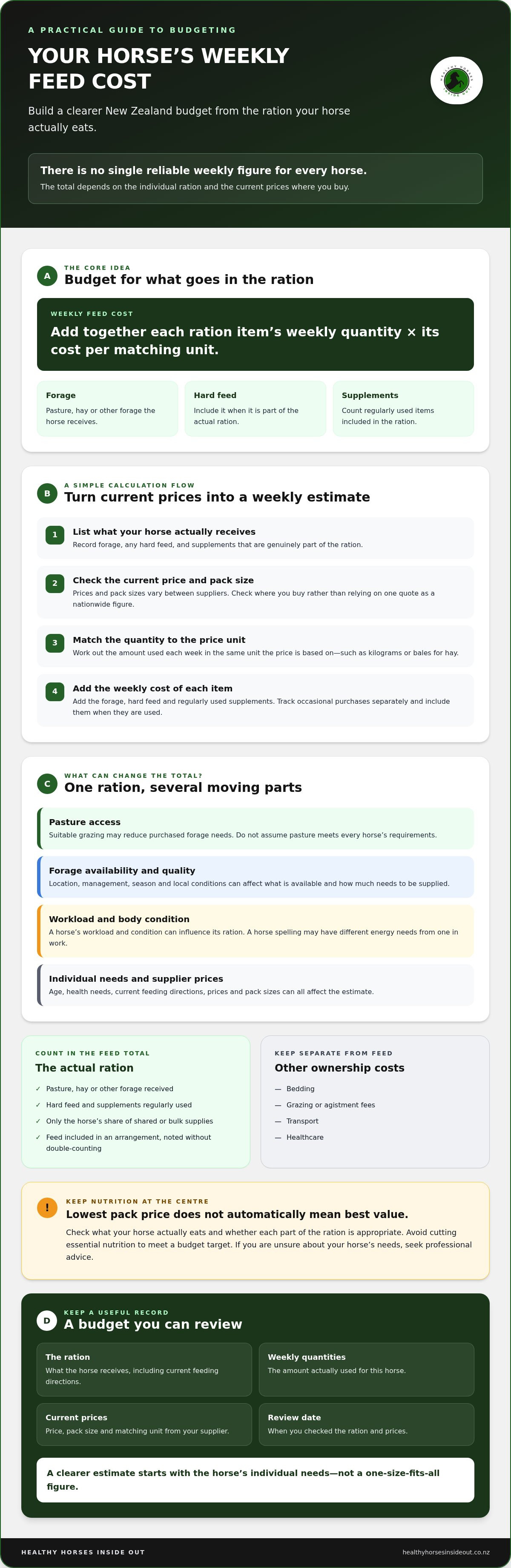
Include pasture, hay or other forage the horse receives, plus any purchased hard feed and regularly used supplements that form part of the ration. Record whether you pay separately for pasture or forage, or whether the cost is bundled with another arrangement. Keep bedding, grazing or agistment fees, transport and healthcare outside the feed total. If a fee includes feed, separate that portion where possible. Otherwise, note that feed is included rather than counting the full fee as feed.
Why does the cost vary between New Zealand horses?
Pasture access is a major variable. A horse with suitable grazing may need less bought forage, while one with limited access or greater forage requirements may rely more on hay or other forage. Availability and quality can shift with the season and local conditions, changing how much owners need to supply. Supplier prices and pack sizes also vary, so check current prices where you buy rather than treating one quote as a nationwide figure.
Ration needs differ, too. Age, workload, body condition and individual health needs can influence whether a horse requires hard feed or other nutritional support. A horse spelling may have different energy needs from one in work, but changes should reflect the horse’s condition and full ration, not a budget target in isolation. Check what the horse actually eats and what you pay for it, then use those details to build a realistic weekly estimate.
What makes up a horse’s weekly feeding budget in New Zealand?
A practical budget follows the ration, not the shopping list. Group regular feed into three parts: forage, any hard feed, and supplements that are actually included. This makes it easier to see which items drive the total and avoids treating every product on the shelf as a necessary expense.
Weekly feed cost is the sum of each ration item’s weekly quantity multiplied by its cost per matching unit. Calculate hay in kilograms or bales using the unit that matches the price, then add the weekly cost of any regularly fed hard feed and supplements. Track occasional purchases separately and add them when they’re used, rather than making one week appear more expensive than the usual ration.
Forage and pasture: start with the foundation
Record how forage is supplied and paid for. A horse may graze pasture, receive purchased hay or other forage, or have a combination of both. Pasture access can reduce the amount of forage bought separately, but don’t assume it meets every horse’s requirements. Availability and quality vary with location, management and season across New Zealand. If feed is included in an agistment arrangement, note that rather than counting the same supply twice.
Hard feed and supplements: include only what the ration uses
List each hard feed and supplement the horse regularly receives, along with its actual quantity and the current label directions. Don’t budget for products that aren’t part of the ration, and don’t assume supplements are essential for every horse or can replace a balanced diet. For more context when considering supplements, see this guide to everyday horse supplements. Seek appropriate professional advice if you’re unsure what your horse needs.
Keep shared or bulk supplies clear in your records. If a bag is used for more than one horse, allocate only the portion your horse consumes. For a bulk forage delivery, calculate the cost of the amount used for this horse over the week, rather than charging the full delivery to one ration.
Keep feed separate from the wider cost of horse ownership. A Massey University report estimates an average total annual spend per horse of NZ$12,500, but that figure covers broader ownership costs, not a weekly feed budget. Keep the categories distinct so the feeding estimate remains meaningful. Healthy Horses Inside Out sells everyday and specific supplements, bundles and HHIO Pellets, which can be reviewed as part of a ration assessment through its online range of horse supplements and pellets.
How to calculate your horse’s weekly feeding cost using current NZ prices
To estimate the cost of feeding a horse per week NZ, work from what your horse actually eats, not the full price of every bag or bale you buy. For each ration item, find the current New Zealand price and pack size, calculate the amount used in a week, then apply this formula:
Weekly amount used ÷ pack quantity × current pack price = weekly cost.
For a product priced by weight, keep both quantities in the same unit. If the pack is measured in kilograms and your weekly use is recorded in grams, convert one measurement before calculating. For products sold by volume or by the bale, use the same unit for pack size and weekly use. This avoids misleading comparisons between different pack formats.
Use a worksheet for each ration item
Check the supplier’s current NZD price, pack size and availability. Then record the amount your horse uses over a week. If a supply is shared, enter only the portion used for your horse. Leave occasional purchases out of the regular weekly total, or track them separately so they don’t distort the usual ration estimate.
| Ration item | Quantity used per week | Pack size | Current price (NZ$) | Weekly amount (NZ$) |
|---|---|---|---|---|
| Total |
Base the estimate on the actual ration
List forage, hard feed and regularly used supplements on separate rows before adding the weekly amounts. Use the quantity your horse is fed, check directions on the current product label and seek appropriate advice if you’re uncertain about the ration. For further nutritional context, read the guide to everyday horse supplements. Include a supplement in the calculation only if it’s part of your horse’s considered ration.
Prices and feeding arrangements can change. Recalculate when a supplier price, pack size, ration quantity or forage arrangement changes, and note the date you checked the figures. Your weekly estimate will then reflect current information rather than outdated prices or assumptions.
How to manage horse-feeding costs without cutting nutritional corners
A useful way to manage the cost of feeding a horse per week NZ is to review what the horse is actually eating before changing the ration. Check each item’s purpose, the amount fed and whether it’s being used as directed. This may reveal practical issues, such as feed being wasted or a supply arrangement changing, without assuming that reducing a portion is automatically appropriate.
Review the ration before changing what you buy
Look at the whole ration, not one product in isolation. Has pasture access or forage availability changed with the season? Is each hard feed or supplement still included for a clear reason? Check current labels and note any changes in workload, body condition or health that may affect nutritional needs. If you have individual dietary concerns, ask an equine nutrition professional or veterinarian before removing forage, changing quantities or switching products. A budget review should support appropriate feeding, not set a target that overrides it.
Reducing avoidable waste may be worth reviewing. Observe what’s left uneaten and whether forage is being lost during feeding or storage, then consider whether a practical management adjustment could help. Don’t cut forage solely to lower spending. Consider its role alongside the horse’s needs and overall diet.
Compare feed and supplement options carefully
A lower pack price doesn’t necessarily mean better value. Compare products in consistent units, check the amount fed according to the label, and consider the product’s intended role in the ration. A different pack size or feeding direction can change how long a product lasts. A product that doesn’t suit the horse’s needs may not be an appropriate substitute just because it costs less upfront.
Apply the same care to supplement bundles and pellets. Assess them against the horse’s existing ration and needs, rather than assuming a bundle will save money or that pellets are required. Healthy Horses Inside Out offers everyday and specific horse supplements, supplement bundles and HHIO Pellets. These are options to assess, not automatic additions to every horse’s diet.
Before making a change, write down what you’re considering and why. Check current product information, feeding directions and the rest of the ration, then seek appropriate advice if the nutritional implications aren’t clear. The horse supplements and HHIO Pellets range can be reviewed alongside your horse’s existing ration.
Make a considered weekly feeding plan for your horse
A useful weekly plan shows what your horse eats and what those items cost, while keeping nutritional needs ahead of a spending target. The cost of feeding a horse per week NZ is most meaningful when it reflects the horse’s actual ration, current prices and the way feed is supplied.
A simple checklist for reviewing the weekly budget
Keep a record for each horse and update it when the ration or circumstances change. Your checklist can include:
- Ration: list forage, purchased feed and any regularly used supplements separately.
- Quantities: record how much your horse actually receives each week, using consistent units.
- Current prices: note the supplier, pack size and current NZD price for each purchased item.
- Supply arrangements: record what’s covered by pasture or another arrangement, so shared or included feed isn’t counted twice.
- Review date: set a time to check again, especially after a price change, seasonal shift or change in your horse’s workload, condition or health.
This record makes comparisons more useful over time. If the weekly total changes, you can identify whether the cause is a new price, a different quantity or a change in what the horse needs, rather than making an unsupported feed adjustment.
When to explore horse supplements or pellets
Product choices should fit the horse’s diet and individual circumstances. A supplement or pellet isn’t automatically needed, and a new product should be assessed as part of the whole ration. Check its current label and feeding directions. If you’re unsure whether a change is appropriate, seek advice from an equine nutrition professional or veterinarian before altering the ration.
Healthy Horses Inside Out is a New Zealand online retailer offering everyday and specific horse supplements, supplement bundles and HHIO Pellets. Consider these product categories only where they suit the horse’s needs. Don’t assume that adding one will reduce the overall budget or replace another part of the ration.
Keep the plan practical and revisit it as your horse’s needs and current prices change.
Build a feeding budget you can review with confidence
The cost of feeding a horse per week NZ is best understood as a current estimate of the horse’s actual ration, not a fixed figure for every horse. Record forage, hard feed and supplements separately, then use the quantities your horse receives and up-to-date New Zealand prices to calculate the weekly total.
Review the estimate when prices, seasons, supply arrangements or your horse’s needs change. If the budget feels difficult to manage, assess the whole ration before changing quantities or products. Nutrition and individual requirements should lead. The lowest pack price or a spending target shouldn’t decide what your horse is fed.
Healthy Horses Inside Out offers everyday and specific supplements, supplement bundles and HHIO Pellets for horse owners across New Zealand. These products are options to consider only when they fit your horse’s ration and needs. Explore the Healthy Horses Inside Out range of horse supplements, bundles and HHIO Pellets, and check product information or seek appropriate advice before making feeding changes.
Frequently Asked Questions
How much does it cost to feed a horse per week in New Zealand?
There isn’t one weekly figure that applies to every horse. The cost of feeding a horse per week NZ depends on its ration, how much pasture it can use, the forage it needs to be supplied and current prices. Work out the cost from the quantities your horse actually eats, including any regularly fed hard feed or supplements. Keep agistment and other ownership costs separate from the feed total.
What should I include when calculating a horse’s weekly feeding cost?
Include the forage your horse receives, any purchased hard feed and supplements that are regularly part of its ration. Record the quantity used each week and the current cost for that amount. If pasture or feed is included in an arrangement, note that clearly and avoid counting it again as a separate purchase. Keep bedding, transport, grazing fees and healthcare outside the weekly feed calculation.
Does pasture reduce the cost of feeding a horse?
Pasture can reduce the amount of forage you need to buy, but the effect depends on access, availability and quality. These can vary with season and management, so don’t assume grazing meets every horse’s needs. Consider what your horse actually receives and whether additional forage is required. If you’re unsure whether the overall ration is appropriate, seek advice from an equine nutrition professional or veterinarian.
How do I work out the weekly cost of a bag of horse feed?
Divide the amount your horse uses in a week by the pack quantity, then multiply by the current pack price. If you record use in kilograms, make sure the pack size is also in kilograms. Convert grams first if needed. For feed sold by volume or by the bale, use matching units. Check current NZD prices, pack sizes and label feeding directions before calculating.
Can I reduce my horse’s feed costs without changing its nutrition?
Start by checking what’s being fed and whether any feed is wasted, rather than immediately cutting quantities or removing an item. Reviewing storage, measuring portions consistently and reducing avoidable forage waste may help you manage spending. Compare products by unit cost, feeding directions and intended role, not pack price alone. Don’t reduce forage or change the ration solely to meet a budget. Seek appropriate advice first.
Do supplements need to be included in a horse-feeding budget?
Include supplements if your horse regularly receives them as part of its ration, and calculate the cost from the amount actually fed. Don’t assume every horse needs a supplement or add one solely because it appears in a budget guide. Check the current label and consider the product alongside the whole diet. If you’re uncertain whether a supplement is appropriate, ask an equine nutrition professional or veterinarian.
How often should I review my horse’s weekly feeding costs?
Review the estimate when supplier prices, pack sizes, feeding quantities or supply arrangements change. It’s also sensible to revisit it when seasonal forage availability shifts, or when your horse’s workload, condition or health changes. Record the date of each review so you know which prices the estimate reflects. Recalculate the ration cost, but don’t change feed quantities or products without considering your horse’s nutritional needs.


