

What if the lush green paddocks of New Zealand aren't just a source of forage, but are actually the primary driver of your horse's metabolic distress? Many owners find that even with restricted grazing, they still struggle to find the right supplements for laminitis prone horses NZ that actually address the underlying mineral imbalances found in our unique soil. You're likely all too familiar with the anxiety that comes with every seasonal flush; you find yourself constantly checking for a digital pulse while worrying about the rising costs of emergency veterinary care.
It's a frustrating cycle of confusion, yet you can move beyond the fear of "grass founder" by understanding how targeted nutritional foundations and metabolic support can stabilise insulin levels and encourage healthy hoof growth. This guide explains the science behind New Zealand's pasture challenges and provides a methodical approach to creating a simple, effective feeding routine. By addressing the internal biological mechanisms that influence external health, you can finally achieve the peace of mind you deserve during the spring and autumn flushes.
What You Will Learn:
- How New Zealand's unique pasture conditions, characterized by high non-structural carbohydrates, contribute to systemic metabolic emergencies.
- The critical importance of magnesium and precise mineral ratios in optimising insulin sensitivity and counteracting soil imbalances.
- Strategies for establishing a "safe" nutritional baseline using low-sugar forage and appropriate mineral carriers that avoid insulin spikes.
- Key ingredients to look for in supplements for laminitis prone horses NZ to support glucose metabolism and structural hoof repair.
- How the "Inside Out" philosophy and HHIO Pellets provide a simplified, science-led foundation for long-term metabolic health and peace of mind.
Understanding the Laminitis Challenge in New Zealand
Laminitis is far more than a hoof condition; it's a complex systemic metabolic emergency that begins long before the first signs of lameness appear. While the pain is localised in the feet, the root cause often resides in the horse's internal chemistry and digestive tract. This "Inside Out" approach recognises that the gut and metabolism serve as the primary lines of defence against the inflammatory cascades that lead to lamellar failure. For many owners, finding effective supplements for laminitis prone horses NZ requires shifting focus from the hoof wall to the endocrine system. For those seeking a comprehensive overview of laminitis, it's clear that systemic inflammation is the true driver of the disease.
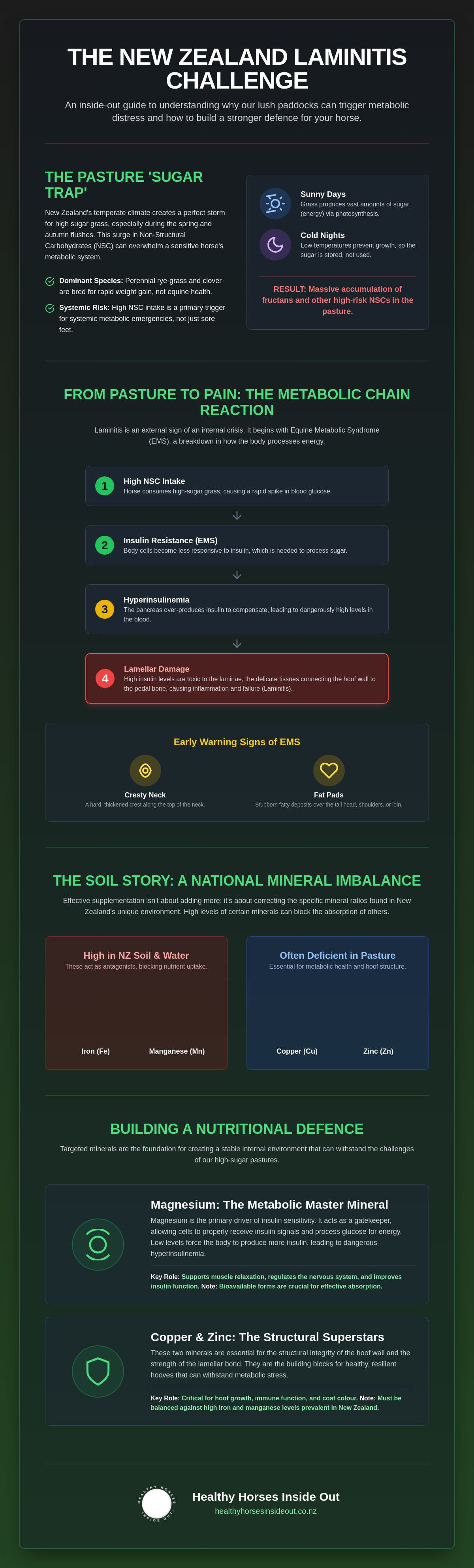
In New Zealand, we face specific environmental triggers that make management particularly difficult. Our temperate climate creates seasonal "danger zones" during the spring and autumn flushes. During these periods, rapid pasture growth leads to a surge in Non-Structural Carbohydrates (NSC), which can overwhelm a sensitive horse's system. Managing this risk isn't just about restriction; it's about providing the nutritional foundations that allow the horse's body to process these sugars without triggering a crisis.
The Link Between EMS and Laminitis
Equine Metabolic Syndrome (EMS) is essentially a breakdown in how a horse processes energy, often described as a form of insulin dysregulation. When a horse consumes sugars, the body releases insulin to manage blood glucose levels. In an EMS horse, the body’s cells become less responsive, forcing the pancreas to pump out even higher levels of insulin. These elevated levels are directly toxic to the laminae, the delicate tissues that bond the hoof wall to the pedal bone. You can often identify early warning signs by looking for "fat pads" over the tail head or shoulders and a "cresty neck" that feels hard to the touch. These aren't just cosmetic issues; they're visible markers of a metabolic system under extreme stress.
Why NZ Grass is Different
New Zealand's paddocks are unique because they're often dominated by perennial rye-grass and clover. These species were historically bred for the dairy and meat industries to ensure rapid weight gain in livestock, not for the slow, fibre-based digestion of the horse. Our "sugar traps" occur when sunny days are followed by cold nights. The grass produces energy via photosynthesis during the day but cannot use that energy for growth because the temperature is too low, leading to a massive accumulation of fructans and other NSCs. This high-sugar environment, combined with the often high iron and manganese levels in our soil, creates a perfect storm for the laminitis-prone horse.
Essential Minerals for Metabolic Support
Precision over volume is the guiding principle of nutritional science. For owners searching for supplements for laminitis prone horses NZ, the goal isn't simply to add more ingredients, but to correct the specific imbalances found in our local environment. New Zealand’s soil and water often contain high levels of iron and manganese. These minerals act as antagonists, effectively blocking the uptake of essential nutrients like copper and zinc. When this happens, even a well-fed horse can suffer from sub-clinical deficiencies that undermine their metabolic resilience. Balancing these ratios is a critical step in creating a stable internal environment that can withstand the challenges of our high-sugar pastures.
Magnesium: The Metabolic Master Mineral
Magnesium is the primary driver of insulin sensitivity at a cellular level. It acts as a gatekeeper, allowing the insulin signal to be received so glucose can enter the cells for energy. When magnesium levels are low, the body must produce more insulin to achieve the same result, leading to the dangerous hyperinsulinemia discussed in the previous section. This mineral also supports muscle relaxation and helps regulate the nervous system. Common signs of deficiency in the laminitis-prone horse include heightened anxiety, persistent muscle tension, and the development of stubborn fat pads. To ensure effectiveness, it's vital to select highly bioavailable forms that the horse can actually utilise, rather than low-grade oxides that often pass straight through the system. This focus on internal balance is a major part of preventing laminitis and maintaining long-term soundness.
The Copper and Zinc Ratio
Copper and zinc are essential for the structural integrity of the hoof wall and the strength of the lamellar bond. In New Zealand, these minerals are frequently deficient in the pasture, yet they are critical for keratin production and antioxidant defence. Many "shotgun" mineral mixes fail because they include unnecessary iron, which only exacerbates the existing imbalances in our soil. Successful management relies on high-spec levels of copper and zinc to override the high-iron environment. Our HHIO Pellets are formulated specifically to target these NZ-specific ratios, providing a concentrated mineral base without the fillers that can trigger insulin spikes. By focusing on these foundations, you create a metabolic safety net that supports the horse from the inside out. This methodical approach ensures your horse has the building blocks required for healthy hoof growth and systemic health.
Dietary Management: More Than Just a Grazing Muzzle
Successful management of the metabolic horse requires a shift from reactive restriction to proactive dietary architecture. While physical barriers like grazing muzzles have their place, they're only one component of a broader "whole-horse" framework. Creating a safe baseline starts with forage, which should form the vast majority of your horse's intake. For many New Zealand owners, this means moving away from 24/7 pasture access and toward a controlled environment where the sugar content of every mouthful is known. As UC Davis explains laminitis, the condition often stems from complex dietary and metabolic triggers that require meticulous oversight and a structured feeding plan.
Track systems and grazing muzzles are excellent tools for encouraging movement while limiting intake. In New Zealand's lush conditions, a track system allows a horse to traverse several kilometres a day over varied terrain, which is far better for their metabolism than standing still in a small "starvation paddock." When these physical strategies are combined with the right supplements for laminitis prone horses NZ, you create a robust defence against metabolic flare-ups. Don't overlook the role of plain white salt; it's essential for hydration and cellular function, yet it's frequently the most neglected component of a balanced equine diet.
Forage First: Selecting Safe Hay
Soaking hay is a highly effective, albeit labour-intensive, method for reducing water-soluble carbohydrates in forage. By submerging hay in fresh water for 30 to 60 minutes, you can leach out significant amounts of sugar, making it safer for acute cases. Straw can also serve as a valuable low-calorie filler to keep the digestive tract moving without adding a glucose load. It's a common misconception that "unimproved" or "rough" paddocks are naturally safe. In reality, overgrazed or stressed grass often contains higher concentrations of sugar as the plant enters survival mode, making these areas potential minefields for sensitive "good doers."
Structuring the Daily Feed
A consistent routine is vital for maintaining metabolic stability. When delivering supplements for laminitis prone horses NZ, the choice of carrier is just as important as the minerals themselves. Many commercial premixed feeds contain hidden sugars in the form of molasses or grain by-products, which can cause the very insulin spikes you're trying to avoid. Using a concentrated, grain-free option like HHIO Pellets ensures your horse receives their essential nutrients without unnecessary caloric baggage. Small, frequent meals are preferable to one large feed, as they help maintain steady blood glucose levels throughout the day and support a healthy digestive rhythm.
What to Look for in Supplements for Laminitis Prone Horses NZ
Selecting the right supplements for laminitis prone horses NZ involves looking beyond marketing claims and examining the specific biological pathways each ingredient supports. True "metabolic support" is a targeted nutritional strategy designed to optimise glucose metabolism and insulin sensitivity, rather than just masking symptoms. While previous sections highlighted the baseline minerals needed for New Zealand conditions, advanced support requires a focus on structural repair and antioxidant protection. Ingredients like Biotin and Methionine are foundational for this process; they provide the essential sulphur-containing amino acids required to rebuild the damaged lamellar bond and support resilient hoof wall growth.
Chromium is another vital component that is gaining recognition for its role in equine insulin function. It works as a cofactor, enhancing the action of insulin and helping to stabilise blood sugar levels in horses prone to metabolic spikes. During a laminitic bout, the body also faces significant oxidative stress, which can cause further tissue damage. This is where antioxidants like Vitamin E and Selenium become indispensable. They act as a cellular defence system, neutralising free radicals and protecting the sensitive internal structures of the hoof from ongoing inflammatory damage.
Identifying High-Quality Ingredients
Bioavailability should be your primary concern when evaluating different formulations. Chelated minerals, which are bonded to amino acids, are far more easily absorbed by the horse’s digestive tract than cheaper inorganic salts like oxides or sulphates. You must also remain vigilant about "hidden" triggers; fillers such as molasses, cereal by-products, or high-starch grains are dangerous for laminitic horses because they provoke the very insulin response we are trying to manage. To ensure safety, always check the label for the NSC (Non-Structural Carbohydrate) content, ensuring the product does not contribute significant sugar or starch to the daily ration. For a comprehensive solution that avoids these risks, consider our Horse Supplement Bundles, which are designed without unnecessary fillers.
The Importance of Selenium in NZ
New Zealand’s volcanic soils are famously deficient in selenium, a trace element that is vital for immune health and muscle function. In the context of laminitis, selenium works alongside Vitamin E to maintain the integrity of cell membranes. However, because selenium has a narrow safety margin, it must be balanced with extreme care to avoid toxicity. We ensure that our formulations provide safe, effective levels that account for the unique deficiencies of New Zealand pasture without the risk of over-supplementation. This methodical approach gives you the confidence that you are supporting your horse’s immune system without compromising their safety.
The HHIO Approach: Foundational Support for Long-Term Health
At Healthy Horses Inside Out, we believe that external vitality is always a direct reflection of internal balance. This "Inside Out" philosophy prioritises the correction of systemic deficiencies to prevent the metabolic crises discussed throughout this guide. By fixing the nutritional foundation, you allow the horse's body to manage the challenges of New Zealand pasture more effectively. Our range of supplements for laminitis prone horses NZ is developed with this meticulous attention to detail, ensuring that every ingredient serves a physiological purpose. Choosing to work with a specialist NZ business means you receive advice and products tailored specifically to our local soil conditions, water quality, and pasture species.
Our Supplement Bundles are specifically designed to simplify the management of the metabolic horse. They combine the essential minerals and metabolic supports discussed earlier into a logical, easy-to-feed system. This removes the confusion often caused by inconsistent advice from general feed stores and ensures your horse isn't receiving overlapping or conflicting nutrients. By centralising your nutritional strategy with a science-led provider, you can be certain that the ratios of copper to zinc and magnesium are optimised for the high-iron environment of New Zealand.
HHIO Pellets: The Grain-Free Foundation
HHIO Pellets provide a concentrated, grain-free mineral carrier that eliminates the "fluff" and fillers found in many commercial feeds. These pellets are designed to support exceptional hoof quality and coat shine while strictly managing metabolic risk. Because they are so concentrated, they are incredibly easy to use for horses on agistment or those living in large herds where individual feeding can be a challenge. They act as a reliable safety net, ensuring your horse receives high-spec copper, zinc, and magnesium even when pasture conditions are less than ideal. This simplified approach allows for better compliance and more consistent results over the long term.
Peace of Mind for NZ Horse Owners
Investing in science-led nutrition provides the long-term benefits of stability and resilience. Taking a proactive approach to metabolic health allows you to move away from the constant cycle of crisis management and toward a place of confidence. When you prioritise foundational health and integrate high-spec supplements for laminitis prone horses NZ into a daily routine, you gain the security of knowing your horse is nutritionally equipped for every season. This methodical mentor approach ensures that you aren't just treating symptoms, but are building a healthier horse from the inside out. Explore the HHIO range of metabolic support supplements to find the right foundation for your horse's needs.
Securing Your Horse’s Metabolic Future
Managing a laminitis-prone horse in New Zealand doesn't have to be a constant state of emergency. By shifting your focus toward the "Inside Out" philosophy, you're addressing the underlying biological foundations that drive metabolic stability. We've explored how high-sugar rye-grass and specific mineral imbalances in our local soil create a unique challenge that requires more than just a grazing muzzle. Successful long-term health relies on correcting these systemic deficiencies with precise, science-led nutrition that supports insulin sensitivity and hoof integrity.
Choosing the right supplements for laminitis prone horses NZ means selecting formulas designed specifically for our local environmental triggers. HHIO provides clinical authority in equine nutrition, offering specialised solutions that counteract the high-iron and high-manganese levels found in many Kiwi paddocks. When you prioritise these internal mechanisms, you replace seasonal anxiety with the quiet confidence of evidence-based wellness. This proactive approach is the most effective way to ensure your horse remains comfortable and resilient throughout the year.
Optimise your horse’s metabolic health with HHIO’s targeted supplements. Our formulas are trusted by owners nationwide to provide the foundational support your horse needs to thrive. It’s time to take a purposeful step toward lasting peace of mind and a healthier, more vibrant horse.
Frequently Asked Questions
What are the best supplements for a horse with laminitis in New Zealand?
The most effective supplements for laminitis prone horses NZ are those that provide high-spec copper, zinc, and magnesium to balance our iron-heavy pastures. These minerals support insulin sensitivity and the structural integrity of the hoof laminae. You should look for formulations that avoid fillers like molasses or grain by-products, as these can trigger dangerous insulin spikes in sensitive horses.
Can magnesium help prevent laminitis in horses on high-sugar grass?
Magnesium plays a vital role in helping cells respond to insulin, which is essential for managing horses on high-sugar New Zealand grass. While it isn't a "cure" that allows unrestricted grazing, it helps the body process glucose more efficiently. This internal support reduces the risk of hyperinsulinemia, which is a primary driver of lamellar failure during seasonal pasture flushes.
How much copper and zinc does my laminitis-prone horse actually need?
Your horse needs specific ratios of copper and zinc to override the high levels of iron and manganese found in local soil. Rather than a generic dose, the focus should be on providing enough to compete for absorption at the cellular level. This typically requires much higher levels than those found in standard retail mixes to ensure the hoof wall remains resilient.
Is it safe to feed pellets to a horse with Equine Metabolic Syndrome?
It is safe to feed pellets provided they are formulated as a low-NSC, grain-free mineral carrier. HHIO Pellets are specifically designed for metabolic horses, offering a concentrated dose of essential minerals without the sugars found in traditional hard feeds. This makes them an ideal solution for delivering supplements for laminitis prone horses NZ without compromising their metabolic stability.
How do I reduce the sugar in my horse’s diet while still providing minerals?
You can reduce sugar by soaking hay for 60 minutes to leach out water-soluble carbohydrates and using a track system to limit grass intake. To ensure they still receive vital minerals, use a concentrated, low-calorie carrier like a grain-free pellet or a small amount of unmolassed chaff. This approach maintains the digestive rhythm while providing the nutritional foundation for metabolic health.
Why is my horse getting fat pads despite being on a restricted diet?
Fat pads on the neck or tail head are often a sign of insulin dysregulation rather than simple overeating. Even on a restricted diet, a horse with Equine Metabolic Syndrome may struggle to process energy correctly if their mineral balance is poor. Addressing deficiencies in magnesium and chromium can help optimise their metabolism, allowing these stubborn deposits to gradually dissipate over time.
Can I use human supplements for my horse’s laminitis?
While human-grade ingredients are often high quality, equine supplements are specifically balanced for a horse's unique physiology and mineral requirements. Interestingly, the focus on endocrine health is a shared priority in modern wellness; for example, Helio Peptide provides physician-supervised metabolic and hormonal therapies for humans, demonstrating how vital insulin management and hormonal balance are for health across different species.
How long does it take to see results from metabolic supplements?
You may notice improvements in muscle tension and behaviour within two to four weeks as magnesium levels stabilise. However, structural changes to the hoof wall take much longer, usually following the six to nine months it takes for a completely new hoof capsule to grow. Consistency is the key to seeing the long-term benefits of science-led nutritional support.


