
A gleaming coat isn’t built by brushing alone. If you’re wondering how to get a shiny horse coat fast, daily currying and a thorough brush can spread natural oils across the hair, while adding 1/8 to 1/4 cup of oil may help when the diet is low in essential fats. Grooming can bring out a quicker polish; lasting coat condition depends on balanced nutrition.
It’s understandable to want a visible difference soon, especially when your horse’s coat looks dull. But adding oil isn’t a one-size-fits-all fix. Start by reviewing the whole diet, including fibre, protein, fats, vitamins and minerals, alongside what your horse already eats.
This guide explains how oils and essential fatty acids can support coat shine, how balanced nutrition contributes, and how regular brushing lifts dirt and distributes natural oils. A healthy-looking coat is best supported by consistent care, not a quick fix.
Key Takeaways
- Consider whether your horse’s current diet supplies enough essential fatty acids before adding oil, and choose an approach that suits its existing feed.
- Build coat condition on balanced nutrition, with supplements used to address dietary gaps rather than as a quick fix.
- Use a curry comb and brushes regularly to loosen dirt, spread natural oils and spot changes in your horse’s skin or coat.
- A dull or rough coat can have nutritional causes, so look beyond grooming and consider whether the overall diet supports healthy skin and hair.
1. Adding oils and essential fatty acids
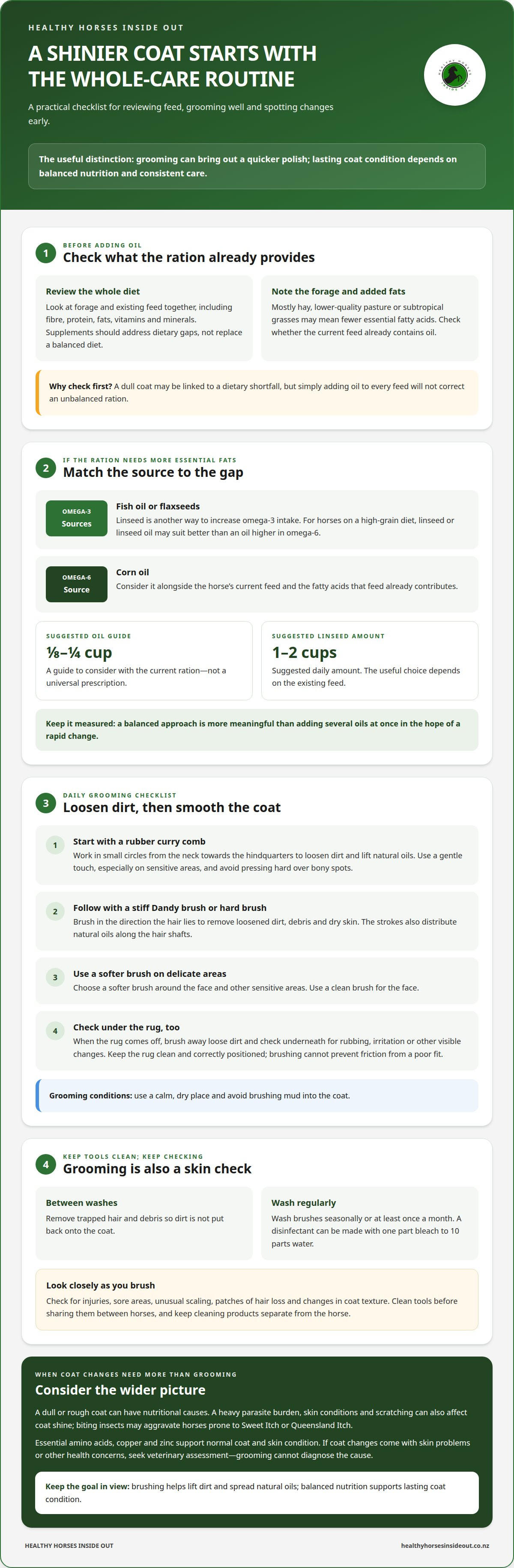
A dietary shortfall in oils, particularly omega-3 and omega-6 fatty acids, may contribute to a dull coat. Fish oil and flaxseeds provide omega-3 fatty acids, while corn oil supplies omega-6. These fats are part of the nutritional picture, not a surface treatment. Adding oil may support coat shine when the existing ration is low in essential fatty acids, but simply pouring it over every horse’s feed won’t address an unbalanced diet.
A suggested amount for adding oil is 1/8 to 1/4 cup. Treat this as a guide to consider alongside the horse’s current feed, not a universal prescription. A horse already receiving oils in its feed has a different starting point from one eating mostly hay. Reviewing the whole ration helps prevent adding an ingredient without understanding what the diet already provides.
Linseed is another way to increase omega-3 intake. A suggested daily amount is 1-2 cups of linseed. For horses on a high-grain diet, linseed or linseed oil may be more beneficial than an oil higher in omega-6, because linseed is richer in omega-3. The useful choice depends on the existing feed and the fatty acids it contributes.
Pasture also matters. Horses eating lower-quality pasture, subtropical grasses or mostly hay may benefit from added oil because these diets can lack essential fatty acids. Before changing the ration, note the horse’s main forage and any oil already present in its feed. This makes it easier to identify whether an omega-3 source such as fish oil or flaxseed, or an omega-6 source such as corn oil, fits the gap. A balanced approach is more meaningful than adding several oils at once in the hope of a rapid change in coat appearance.
2. Balancing the diet for coat health
A glossy coat starts with a ration that provides energy, protein, fat, minerals, vitamins and fibre. Review forage and existing feed together, as an imbalance or shortfall can affect health and coat condition. Supplements are intended to address vitamin and mineral deficits, not replace a balanced diet. Horses get vitamin D from food, and sunlight also provides it.
Molasses may affect coat colour, and its suitability depends on the horse’s dietary needs. For a 500 kg horse, the suggested maximum is ¼ cup per day to encourage a darker coat. It can make palominos look darker or smutty, while chestnuts with the relevant genetics may develop a deeper liver colour. Don’t feed molasses to horses whose diets need to be low in starch and sugars.
Are horse coat supplements permitted under New Zealand equestrian competition rules? Don’t assume a supplement is allowed just because it’s sold for horses. Check its ingredients against the rules for your event. Suitability depends on both the formula and the competition requirements.
What do horse coat supplements and grooming products cost in New Zealand? Prices vary, so there isn’t one cost for every supplement or grooming item. Choose according to your horse’s dietary needs and the task, rather than coat-shine claims alone.
A dull coat can signal a nutritional deficiency, while a heavy parasite burden can quickly reduce shine. Skin conditions and scratching can also affect the coat; biting insects may aggravate horses prone to Sweet Itch or Queensland Itch. Seek veterinary assessment if coat changes occur alongside skin problems or other health concerns. Grooming can’t diagnose the cause.
Daily grooming also creates a practical health check. As you brush, look for injuries, skin changes and other concerns, and note any change in coat texture. If a diet review points to a nutritional gap, Everyday Horse Supplements may be a relevant option to consider alongside the horse’s existing ration.
3. Using curry combs and brushes
Daily grooming lifts dirt and natural oils to the surface and helps you notice changes in your horse’s skin. Start with a rubber curry comb, working in small circles from the neck towards the hindquarters. This loosens dirt and lifts it through the coat. Use a gentle touch, particularly on sensitive areas, and avoid pressing hard over bony spots.
Next, use a stiff Dandy brush or hard brush. Brush in the direction the hair lies to remove loosened dirt, debris and dry skin. The strokes also distribute natural oils along the hair shafts, helping the coat lie flatter and look more polished. Use a softer brush around the face and other delicate areas.
A light rug can cover parts of the coat, so include those areas in your grooming routine when you remove it. Brush away loose dirt and check the skin underneath for rubbing, irritation or other visible changes. Keep the rug clean and correctly positioned: brushing can’t prevent pressure or friction from a poor fit. Groom in a calm, dry place, and avoid brushing mud into the coat.
Brush cleanliness matters. Dirty grooming tools can put dirt, bacteria and fungus back onto the coat, undermining the care you’ve just completed. Wash brushes seasonally or at least once a month, and remove trapped hair and debris between washes. A disinfectant can be made with one part bleach to 10 parts water. Keep cleaning products separate from the horse, and use clean brushes once they’re ready to groom again.
Regular brushing also gives you a chance to check the skin. As you curry and brush, look for injuries, sore areas, unusual scaling or patches of hair loss. Use a clean brush for the face, and clean tools before sharing them between horses. Consistent strokes and clean equipment make grooming more effective, while close contact helps you spot coat or skin changes early.
4. Nutrition for a shiny coat
Coat quality reflects more than fat intake. Essential amino acids, copper and zinc support normal coat and skin condition. Deficiencies can contribute to dull, rough hair, skin issues and poor hoof quality. If you’re wondering how to get a shiny horse coat fast, start by reviewing the whole ration. A rough coat alongside hoof changes may call for a broader dietary review, not just one added nutrient.
Start with the forage and feed already offered. Fresh forage provides vitamin E, so consider its place in the horse’s diet. Copper and zinc also help maintain normal coat colour. Assess these nutrients as part of the whole ration: supplements are intended to address dietary deficits, not to add nutrients without a clear reason.
Prepare linseed carefully. Grind it immediately before feeding so the seeds don’t pass through undigested. Feed it straight away, as the oil can go rancid quickly when exposed to air. This keeps linseed’s use aligned with a considered nutrition plan.
A darker coat and a healthier, shinier coat aren’t the same goal. Ingredients used to influence colour don’t replace correcting a nutritional gap. For instance, dull hair alongside poor hoof quality may prompt a closer look at amino acids, copper and zinc. Any change should suit the complete ration, not just appearance. The practical answer to how to get a shiny horse coat fast is to identify what the diet needs before changing it.
For a practical review, note the forage, current feed and supplements, then consider where essential nutrients come from. This can help reveal possible gaps or duplication before you add another product. If you’re refining the diet, explore nutrition support for horses as a next step.
Healthy Horses Inside Out
Healthy Horses Inside Out offers Everyday Horse Supplements, Specific Horse Supplements, Horse Supplement Bundles and HHIO Pellets to support equine dietary needs. If coat concerns prompt a closer look at nutrition, consider these options in the context of your horse’s existing feed, rather than treating a dull coat as an isolated cosmetic issue. Start by understanding what the current ration supplies and where it may need support.
If you’re considering a supplement as part of your horse’s coat-care routine, explore options that suit its nutritional needs. For a conversation about your horse’s dietary support, contact Healthy Horses Inside Out.
Make your next change a considered one
Start with a clear picture of your horse’s routine. Note its current feed, grooming habits and coat condition, then record any changes you make. Adjusting one thing at a time makes it easier to see what supports your horse and what may need reconsideration. Coat appearance can guide your attention, but it’s only one part of overall wellbeing.
Understanding how to get a shiny horse coat fast means looking beyond a quick cosmetic fix. Keep your approach steady, and let the horse’s overall condition inform your next decision. If you’d like to discuss nutritional support for your horse, contact Healthy Horses Inside Out.
Thoughtful care builds confidence over time. Keep learning what suits your horse, and take the next step with patience and care.
Frequently Asked Questions
What diet helps a horse develop a shiny coat?
A balanced ration providing energy, protein, fat, vitamins, minerals and fibre supports coat condition. Consider the complete daily feed, including forage, concentrates and supplements, instead of adding a coat-focused ingredient in isolation. If your horse’s forage changes, for example, review the rest of its ration too. Supplements are most appropriate when they address a nutritional gap in the overall diet.
How much protein, fat, and omega-3 should horses get for coat health?
There isn’t one daily amount that suits every horse; requirements depend on its size, workload, forage and existing feed. Assess protein and fat across the whole ration before adding another source. For omega-3, consider whether the current diet includes a source such as flaxseed or fish oil. The aim is to balance the ration, not to increase one nutrient without considering the others.
Which horse coat supplements work, and how quickly do they show results?
Choose a supplement for the nutritional need it addresses, not its coat-shine claims. A formula designed to correct a dietary deficit serves a different purpose from adding nutrients already supplied by feed. Visible changes depend on the horse’s starting diet and coat condition, so a supplement isn’t an instant polish. Keep the full ration in view when deciding what’s appropriate.
How often should you groom a horse for a shiny coat?
Daily grooming is a practical way to remove surface dirt and monitor coat and skin condition. After a muddy turnout, give dirty areas extra attention once the horse is dry. Before riding, focus on areas beneath the tack so grit doesn’t rub against the skin. Adjust the pressure and time to your horse’s comfort and coat condition.
What grooming tools and techniques make a horse's coat shine?
A rubber curry comb helps lift dirt from the body, while a Dandy brush moves loosened debris and natural oils through the hair. Work in small circles with the curry comb, then brush in the direction the coat lies. Use gentler tools and pressure on sensitive areas, such as the face. Clean brushes help stop dirt transferring back onto freshly groomed hair.
Can bathing a horse too often damage its coat?
Frequent bathing can strip natural oils from the skin, so use brushing to remove everyday dirt. Shampoo can help when mud remains after currying; dilute it in warm water rather than applying it directly to the body. Rinse thoroughly and wash only when needed. For infected skin, use a very mild soap, such as baby shampoo.


