

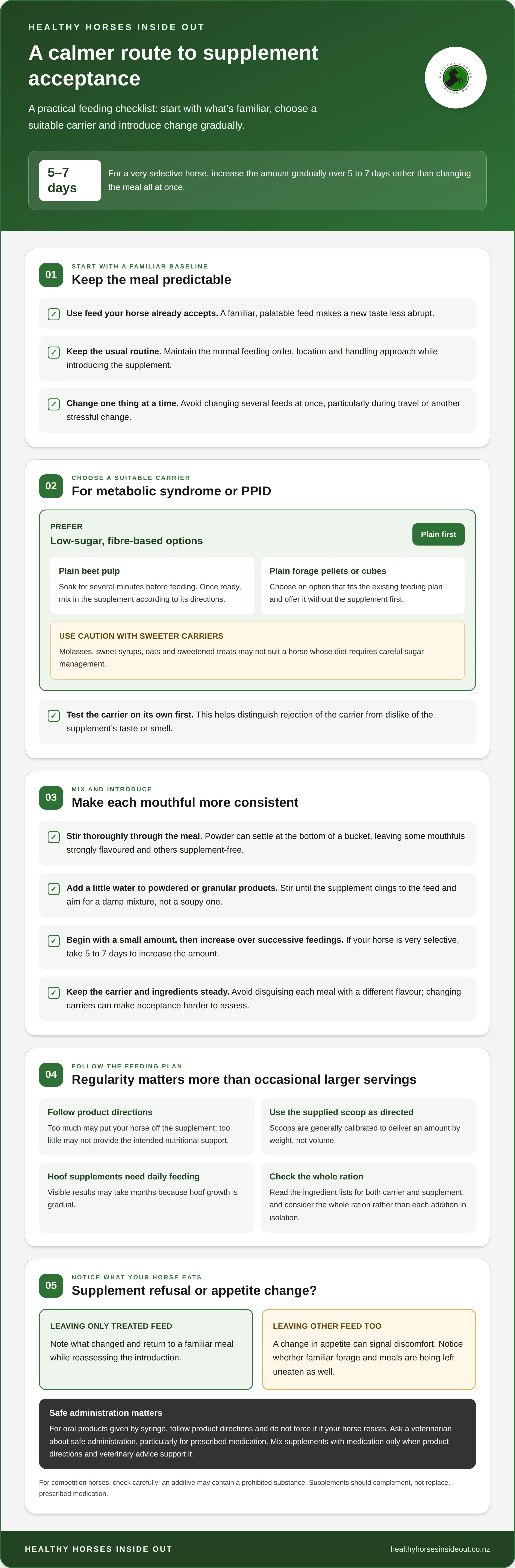
The tastiest fix may not be the best first step: getting a horse to eat supplements often starts with familiar feed, a steady routine and a gradual introduction. For a very selective horse, increase the amount over 5 to 7 days rather than changing the meal all at once. If your horse has a metabolic disorder, a low-sugar, fibre-based carrier is a more suitable starting point than sweet options.
A refused supplement can be frustrating, especially when you’re trying to support your horse’s health. But refusal isn’t always fussiness: a change in appetite can signal discomfort, so notice whether your horse is leaving other feed uneaten too.
This guide explains why horses may reject supplements and how consistent feeding, thorough mixing and a suitable carrier can make a new addition easier to accept. You’ll also learn when an appetite change needs closer attention, helping you make feeding decisions with more confidence.
Key Takeaways
- Use a little water to help powdered supplements cling to feed and reduce sifting.
- Introduce new supplements gradually and keep feeding and handling routines consistent.
- For horses with metabolic disorders, consider low-sugar, fibre-based carriers such as plain beet pulp or forage pellets.
- If your horse starts leaving feed uneaten, consider whether discomfort or another change in appetite may be involved.
1. Why Do Horses Sometimes Refuse Supplements?
Getting a horse to eat supplements can be challenging when a product’s flavour, smell or texture differs from familiar feed. Powder can also settle at the bottom of a bucket, making some mouthfuls strongly flavoured and others supplement-free. Stir it thoroughly through the meal for a more even mix and consistent mouthfuls.
For powdered or granular supplements, add a little water and stir until the product clings to the feed. This can reduce sifting and make it less likely that your horse leaves loose powder behind. With dry grain, aim for a damp mixture, not a soupy one. If you top-dress the feed, mix the supplement through the portion your horse is expected to eat.
Soaking feed can also help a supplement adhere. A familiar, palatable feed makes a new addition less abrupt, and a different product form may suit an individual horse better. When getting a horse to eat supplements, introduce the new taste with a small amount of accepted feed, then see whether your horse finishes the meal. Sudden feed or supplement changes can disrupt intestinal bacterial balance.
In New Zealand, supplement costs depend on ingredients, form, pack size and the labelled daily serving. Compare the cost per serving to understand how pack size relates to ongoing use.
For a powdered product intended for oral use, follow its directions if administering it by syringe, and don’t force it if your horse resists. Ask a veterinarian about safe administration, particularly for prescribed medication.
Mix supplements with each other or with medication only when product directions and veterinary advice support doing so. This matters especially for competition horses, as an additive may contain a prohibited substance. Supplements should complement, not replace, prescribed medication.
2. Consistent feeding and handling routines
A steady feeding routine helps your horse know what to expect at mealtimes. Keep the usual feeding order, location and handling approach while introducing a supplement, rather than changing several things at once. Serve the new addition alongside familiar feed and see whether your horse finishes the meal. A consistent routine also makes appetite changes easier to spot.
Introduce a new supplement gradually, starting with a small amount and increasing it over successive feedings. This gives your horse time to adjust to a different taste or texture. Avoid disguising each meal with a different carrier, such as molasses one day and another flavour the next. That makes it harder to tell what your horse accepts. If it leaves the feed, note what changed and return to a familiar meal while reassessing the introduction.
Follow the product’s feeding directions. Too much may put your horse off the supplement, while too little may not provide the intended nutritional support. Use the supplied scoop as directed: scoops are generally calibrated to deliver an amount by weight, not volume. Hoof supplements need daily feeding, and visible results may take months because hoof growth is gradual. Regularity matters more than occasional larger servings.
Stress can affect feeding and digestion. A horse’s intestinal bacterial balance may be disrupted by stress, antibiotics, new feeds, travel or competition. During a change such as travelling to an event, avoid changing several feeds at once. Keep the usual routine where practical and introduce new feed separately. Long-term feeding of unfortified wheat or rice bran can also upset the calcium-to-phosphorus ratio, leading to nutritional secondary hyperparathyroidism, also called Big Head Disease or Bran Disease.
For a consistent feeding plan, explore horse supplement options.
3. Choosing low-sugar carriers for horses with metabolic disorders
For horses with metabolic syndrome or PPID, choose a carrier that delivers the supplement without unnecessary sugar. Low-sugar, fibre-based options are preferable to molasses, sweet syrups, oats and sweetened treats. Sweeter choices may tempt picky eaters, but they may not suit a horse whose diet requires careful sugar management. The carrier matters as much as the supplement’s form.
Start with a familiar feed your horse already eats reliably. Offer the carrier plain a few times before adding a supplement, so you can see whether your horse accepts it on its own. This helps distinguish rejection of the carrier from dislike of the supplement’s taste or smell. Keep the usual ingredients unchanged as you introduce the supplement, making acceptance easier to assess.
Plain beet pulp is one possible fibre-based carrier. It needs soaking for several minutes before feeding, so allow time to prepare it rather than adding dry pulp at the last moment. Once ready, mix in the supplement according to its directions. If your horse leaves the meal, note whether it ate plain beet pulp first. That can help identify where acceptance faltered.
Forage pellets or cubes can also carry a supplement. Choose a plain option that fits your horse’s existing feeding plan, and offer it without the supplement before combining them. A familiar carrier can help maintain eating habits, while a sudden change in taste or texture may make a meal less appealing. If sugar intake is a concern, avoid switching between sweet carriers to disguise the flavour.
For a horse with metabolic syndrome or PPID, take a deliberate approach: choose a low-sugar, fibre-based carrier, offer it plain first, then add the supplement gradually. Read the ingredient lists for both the carrier and supplement, and consider the whole ration rather than each addition in isolation. If you’re changing several feeds, make one adjustment at a time so your horse’s response is clear.
4. Reasons horses refuse supplements
A horse refusing one supplement is different from a horse refusing its whole meal. Note whether it leaves only the treated feed or also turns away from familiar forage and meals. A full bucket can point to a broader appetite change, not simply dislike of a supplement. This distinction helps you consider whether the issue is the product or your horse’s wellbeing.
Stomach discomfort deserves attention. A horse that stops cleaning its feed bucket may have stomach pain; gastric ulcers can adversely affect appetite and body condition. If your horse’s appetite has changed or it leaves meals uneaten, speak with a veterinarian about the change instead of masking it with more flavourings.
Dental discomfort is another reason to consider a health assessment when eating patterns change. A horse should have a dental examination at least once a year, and senior horses should have one twice a year. Difficulty eating usual feed alongside supplement refusal makes dental health especially relevant to discuss.
Medication can also affect appetite. Pergolide administration can cause loss of appetite in some horses with PPID, so a horse taking it may start leaving food it previously ate. Record when the appetite change began and what feed or medication changed. Those details can help a veterinarian assess the pattern. Don’t stop prescribed medication or replace it with a supplement.
If your horse still refuses the supplement, remove uneaten feed and avoid repeatedly increasing sweeteners or adding extra supplement. Note whether your horse eats its usual meals, and discuss persistent refusal or a broader appetite change with a veterinarian. For competition horses, discuss new supplement additives with a veterinarian, as a product may contain a prohibited substance.
Explore horse supplement options when you’re looking for a suitable nutritional addition to your horse’s diet.
Healthy Horses Inside Out: Horse Supplement Bundles
Healthy Horses Inside Out offers Horse Supplement Bundles for horse owners looking to organise nutritional support around their horse’s needs. If you’ve identified a suitable supplement and are working out how it fits into a feeding routine, bundles provide a practical next step to explore. The range also includes Everyday Horse Supplements, Specific Horse Supplements and HHIO Pellets, giving you different options to consider alongside your horse’s existing diet. Follow each product’s feeding directions, and keep veterinary advice central when appetite changes or a health concern is involved. Supplement choices should complement a balanced diet and prescribed medication, not replace them.
For help exploring the available options, contact Healthy Horses Inside Out.
Build a clearer picture at the next feed
Make the next feeding change small and easy to observe. Keep a simple note of the feed offered, the supplement form, what your horse ate, and any change in appetite or behaviour. Over time, this can help distinguish a preference for a different texture from a broader appetite change worth discussing with a veterinarian. It also gives you a clearer starting point for reviewing your horse’s nutritional plan.
Getting a horse to eat supplements is only one part of a suitable feeding plan. The supplement also needs to suit your horse’s needs and be offered consistently. Healthy Horses Inside Out offers everyday and targeted supplements, including HHIO Pellets and supplement bundles, to support you in choosing nutritional support for your horse.
Contact Healthy Horses Inside Out to take a thoughtful next step for your horse’s feeding routine.
Frequently Asked Questions
Why Do Horses Sometimes Refuse Supplements?
Horses may reject a supplement because its taste, smell or texture differs from their usual feed. Refusal can also reflect a change in appetite rather than dislike of the product. Notice whether your horse eats the same feed without the supplement and whether it is leaving other meals too. This pattern can help distinguish a feeding preference from a broader health concern.
Why might a horse refuse supplements in its feed?
A supplement may be unevenly distributed, making some mouthfuls taste stronger than others. Your horse may also dislike a new texture or the carrier used to disguise the flavour. Check whether it eats the carrier on its own, and note whether the supplement settles at the bottom of the bucket. These observations can help identify what changed without altering several ingredients at once.
What foods can be used to hide supplements for horses?
Familiar feed, plain beet pulp, or forage pellets and cubes can be considered as carriers. For horses with metabolic syndrome or PPID, choose low-sugar, fibre-based options rather than molasses, sweet syrups, oats or sweetened treats. Offer a potential carrier plain first, and consider how it fits your horse’s overall diet before combining it with a supplement.
Can horse supplements be mixed with soaked feed or chaff?
Supplements can often be mixed into feed, including soaked feed or chaff, if the product directions allow it. Stir thoroughly so the dose is evenly distributed, and prepare the feed in a clean container. If using beet pulp, allow several minutes for soaking before feeding. Introduce a new combination alongside familiar feed and watch whether your horse accepts the meal.
How to give a horse supplements by syringe safely
Follow the product’s directions, and don’t force the supplement if your horse resists. Ask a veterinarian about safe syringe administration, especially for prescribed medication.


