

A good doer horse diet plan isn’t simply about cutting feed. Forage, including grass, should not be restricted below 1.5% of bodyweight a day unless the horse is under veterinary supervision, so managing weight means balancing intake with the horse’s condition and needs.
It makes sense to be cautious: even when weight loss is needed, a horse still needs fibre and regular opportunities to forage. Extra hard feed can add calories without meeting a specific nutritional need.
This guide explains how to monitor body condition and weight, manage pasture and forage, and decide whether a small, fibre-focused bucket feed or vitamin-mineral balancer belongs in the ration. You’ll learn how to make gradual, considered changes that support a healthy weight without starvation or guesswork.
Key Takeaways
- Use regular body-condition scoring alongside weigh-tape readings to notice changes early and adjust the plan based on trends.
- Manage forage quantity and feeding intervals without starving your horse; fibre and opportunities to forage remain important.
- Control grass access thoughtfully, and introduce a grazing muzzle gradually if it’s part of your pasture-management approach.
- Keep hard feed purposeful and fibre-focused; a vitamin-mineral balancer may help meet nutritional needs without adding unnecessary calories.
Body condition scoring and weight monitoring
Body condition scoring and weight tracking show whether a good doer is gaining, losing or maintaining condition. Use both to guide diet changes, particularly as pasture growth changes in spring.
Monitoring body condition
Body condition scoring estimates the fat cover over key areas, rather than relying on appearance alone. On the 0-9 scale, easy keepers are generally maintained at a score of 4-5. Assess the neck, ribs and hindquarters by looking and feeling, then record the score so you can compare changes over time.
Cresty neck scoring adds another useful observation: it uses a 0-5 scale, and horses or ponies with a laminitis history are more likely to have a score of 3 or greater. Keep this separate from the overall body condition score. A firm, repeatable assessment helps reveal gradual fat gain that can be missed when you see the horse daily. Note changes in exercise, turnout and feed amount alongside each assessment, so a shift has context.
Tracking weight changes
Weight monitoring tracks changes in body mass, while body condition scoring shows where fat is carried. Use a weigh-tape about every fortnight and record each reading under similar conditions. A tape provides an estimate, so consider the trend alongside your horse’s shape and condition rather than treating it as a verdict on its own.
During weight loss, record both bodyweight and body condition every 2-4 weeks. This interval helps show whether adjustments are producing steady progress or whether the plan needs reassessment. Keep notes on pasture access, forage, hard feed and exercise, because each can influence the amount of energy consumed or used.
If your horse loses a significant amount of weight unexpectedly, seek veterinary assessment before changing its diet. For a good doer, consistent records help distinguish seasonal variation, such as a change in condition during spring, from a sustained trend that needs attention.
How can you keep your good-doer horse at a healthy weight?
Balance forage, grazing and calories instead of removing food abruptly. Good doers still need fibre and regular opportunities to forage.
Managing forage amounts and intervals
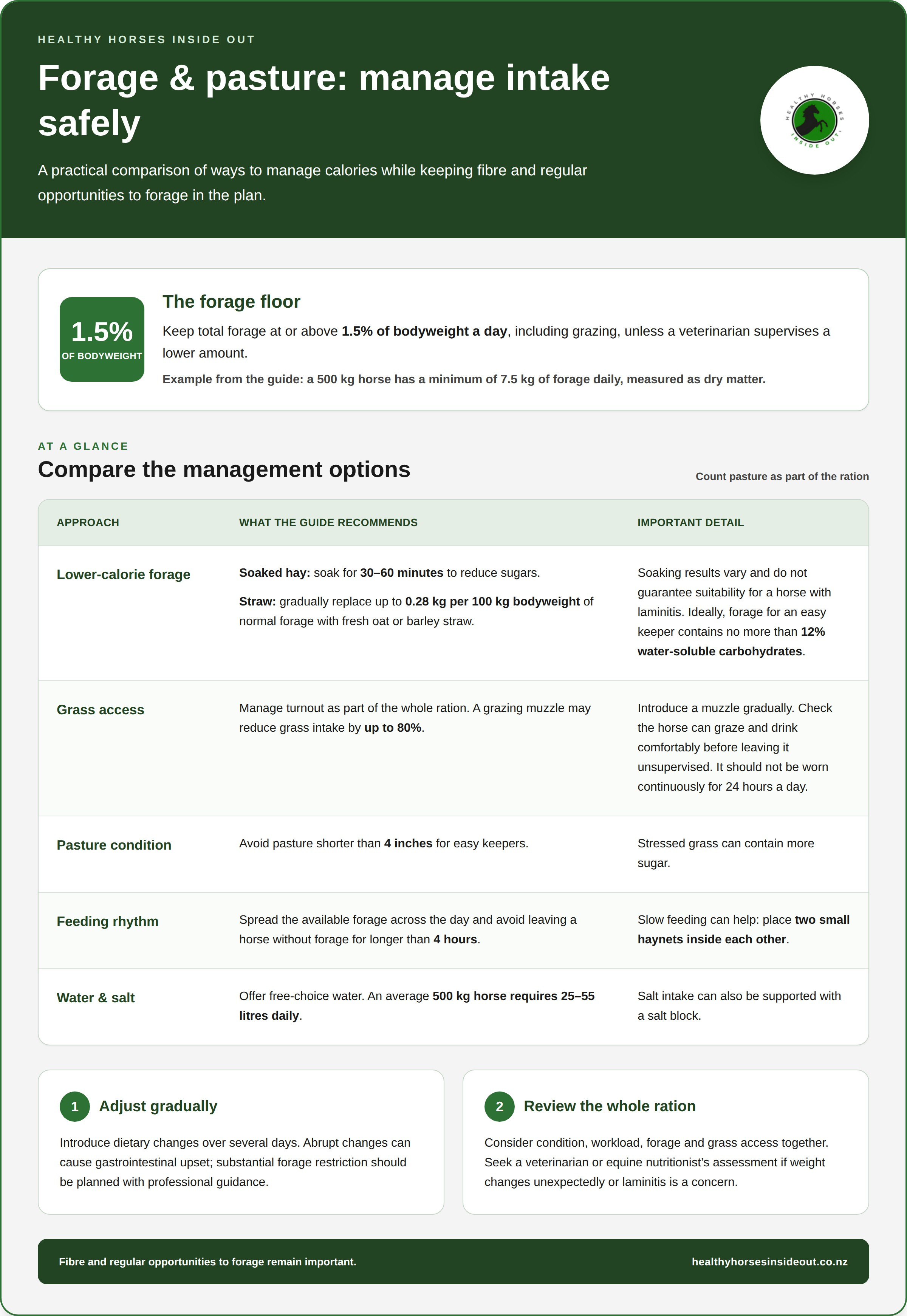
Forage management balances daily intake with feeding intervals, helping limit excess calories without leaving the horse hungry for long periods. Count pasture as part of the ration, not an addition to measured hay. Horses should avoid going without forage for longer than 4 hours, so spreading the available amount across the day can support more consistent feeding.
Grass intake can change with turnout, while a grazing muzzle may help manage access. It shouldn’t be worn continuously for 24 hours a day. Consider the horse’s condition, workload and overall dietary intake together, rather than reducing forage alone to address weight gain.
Calculating a daily ration by body weight
Calculate the daily forage allowance by multiplying bodyweight by 1.5%, including grazing in the total. For example, a 500 kg horse’s minimum is 7.5 kg of forage daily. This is a dry-matter measure, so weigh forage consistently and account for its moisture content when planning the amount offered.
This is a starting point for managing calories, not a fixed recipe for every horse. Bodyweight, condition, forage type and access to grass all affect the ration. Use a weigh-tape to track changes and record forage amounts to see whether the feeding plan matches your horse’s needs.
Restricting feed safely
Safe restriction means adjusting forage carefully, not starving an overweight horse. Abrupt dietary changes can cause gastrointestinal upset, while substantial forage restriction should be planned with professional guidance. If equine metabolic syndrome or laminitis is a concern, seek an individual assessment rather than relying on a sudden feed cut to manage weight.
Keep the total forage intake at or above 1.5% of bodyweight unless a veterinarian supervises a lower amount. Introduce dietary changes gradually over several days. If a grazing muzzle is used, make sure it doesn’t become a way to remove access to forage for long periods.
Seeking diet assessment
Ask a veterinarian or equine nutritionist to assess the diet if weight changes unexpectedly, your horse has a history of laminitis, or you’re considering substantial forage restriction. Significant unexplained weight loss also warrants veterinary assessment before changing the diet, as an underlying condition may need attention.
For a horse with suspected metabolic concerns, laminitis or persistent excess condition, assessment can help align forage, grazing, calories and exercise. Equine nutrition support options may also help you consider targeted dietary support as part of a broader feeding plan.
Managing pasture and grass intake
Pasture can contribute substantial calories, so manage turnout as part of the whole ration. Grass access, forage choice and water availability all affect daily intake.
For lower-calorie forage, use soaked hay or gradually replace up to 0.28 kg of normal forage per 100 kg bodyweight with fresh oat or barley straw. Soak hay for 30-60 minutes to reduce sugars; results vary, so soaking doesn’t guarantee suitability for a horse with laminitis. Slow feeding can help: place two small haynets inside each other.
Reduce excess calories by managing grass access and avoiding extra feed for a horse already in good or overweight condition. Avoid pasture shorter than 4 inches for easy keepers, as stressed grass can contain more sugar. A grazing muzzle can reduce grass intake by up to 80%, but introduce it gradually and ensure the horse can graze and drink comfortably before leaving it unsupervised.
Offer free-choice water. An average 500 kg horse requires 25-55 litres daily, while salt intake can also be supported with a salt block.
Choosing low-calorie forage
Low-calorie forage options include soaked hay and a gradual partial replacement with fresh oat or barley straw. Forage for an easy keeper should ideally contain no more than 12% water-soluble carbohydrates.
Soaking hay can reduce its sugar content, but the effect varies with the hay. Use clean water, and remember that soaked hay isn’t automatically suitable for a horse with laminitis. Weigh forage consistently so the ration accounts for both the amount offered and your horse’s grass intake.
Reducing calorie intake
Control calories by managing access, not by removing forage abruptly. Restrict turnout during early-to-mid morning and mid-to-late afternoon, when grass fructan production can peak, and avoid very short, stressed pasture.
Use a grazing muzzle only as part of a considered turnout plan. Introduce it gradually and make sure your horse can drink and graze comfortably. Match the ration to workload, body condition and pasture access instead of adding feed to boost energy when your horse is already in good or overweight condition.
Balancers and nutrient intake
A balancer can provide vitamins, minerals and quality protein for a horse maintaining weight on forage alone, with negligible calories when fed at its recommended ration. This can help address nutritional needs without adding a larger bucket feed.
Choose nutritional support to suit your horse’s forage, workload and dietary needs. Keep water freely available and provide access to a salt block. Hydration and salt intake matter alongside pasture and forage management.
Hard feed and vitamin-mineral balancers
For a good doer, hard feed should meet a nutritional need, not add unnecessary calories. Keep the bucket feed small, fibre-focused and suited to forage intake, grazing and workload.
A restricted diet still needs to provide essential vitamins and minerals. The nutrients needed depend on the forage, the rest of the ration and your horse’s individual requirements, so there’s no universal supplement list. A vitamin-mineral balancer can provide vitamins, minerals and quality protein with negligible calories when fed at its recommended ration.
For a horse in light work, an example balancer rate is 100 g per 100 kg bodyweight. Follow the product’s recommended feeding rate, and weigh the ration rather than estimating by scoop. This helps keep intake consistent as body condition and grazing levels change.
Choose bucket feed for a clear purpose. Low-calorie chaff, fibre compounds or cubes, soaked unmolassed sugar beet and targeted supplements can provide a fibre-focused base. Avoid adding high-energy feed just to boost energy when your horse is already in good or overweight condition.
Meal size matters, too. A 500 kg horse should receive no more than 2 kg per meal. Weigh feed in its dry state to follow feeding rates and keep each meal appropriate. Introduce dietary changes gradually over several days, then monitor body condition regularly alongside forage intake and workload.
For a horse on a restricted ration, a balancer may provide vitamins and minerals without requiring a larger feed portion. It doesn’t replace fibre or make every ration complete, so choose one that reflects what the existing forage and feed provide. Match supplementation to a nutritional gap instead of adding several products without a defined purpose.
Explore targeted horse supplements when you’re considering nutritional support alongside a carefully managed ration.
There’s no fixed list of required nutrients: needs depend on the forage, the rest of the ration and the individual horse. Choose supplements to address identified gaps.
Healthy Horses Inside Out
Healthy Horses Inside Out offers nutritional products to complement a considered feeding plan for a good doer. If you’re managing forage, grazing and hard feed and want to address specific nutritional needs, explore its Everyday Horse Supplements, Specific Horse Supplements, Horse Supplement Bundles and HHIO Pellets.
Choose nutritional support with the whole ration in mind: forage intake, body condition, workload and existing supplements all matter. The aim is to meet a nutritional need without adding feed simply to increase calories. These products can complement a well-managed diet, but they don’t replace veterinary assessment for concerns such as laminitis or unexplained weight changes.
For help choosing nutritional support for your horse, contact Healthy Horses Inside Out.
Make your next feeding decision with confidence
A good doer horse diet plan works best when it reflects your horse’s changing needs rather than becoming a fixed set of rules. Use your records to identify one area to review, such as pasture access, the purpose of bucket feed or whether existing nutritional support still suits the ration.
Before making another change, consider what has shifted in your horse’s routine and what outcome you’re aiming for. Being clear about your reasoning helps you make deliberate choices and recognise when a dietary question needs professional input. Nutritional support should complement the overall feeding approach, not replace veterinary care when health concerns arise.
For help exploring suitable equine nutrition options, contact Healthy Horses Inside Out. A thoughtful next step can make your horse’s feeding routine easier to manage with care and confidence.
Frequently Asked Questions
What is a Good Doer?
A good doer is a horse that maintains condition or gains weight readily on a relatively modest intake. A good doer horse diet plan should account for this tendency without assuming every horse needs the same ration. Good doers still need a balanced diet, and their requirements depend on factors such as workload, forage and health. Two horses with similar builds may need different feeding approaches.
What is a good doer horse and how can you tell if a horse is overweight?
A good doer maintains or gains weight readily. To assess whether your horse is overweight, consider overall body condition, fat distribution and whether its weight is trending upwards rather than relying on appearance alone. Seasonal coat changes can disguise body shape. If you’re unsure, a veterinarian can assess your horse and help distinguish excess fat from other changes in condition.
How many calories and how much forage should a good doer horse eat daily?
There isn’t one calorie allowance for every good doer: energy needs depend on bodyweight, condition, forage, workload, health and metabolism. A good doer horse diet plan can use a forage minimum of 1.5% of bodyweight daily, including grazing, unless the horse is under veterinary supervision. Count pasture as part of the ration, and consider forage type and activity when assessing the whole diet.
What vitamins and minerals does a good doer need on a restricted diet?
A restricted diet still needs to provide essential vitamins and minerals. A vitamin-mineral balancer can supply these, along with quality protein, with negligible calories when fed at the recommended rate.
How much exercise helps a good doer horse lose weight safely?
At least 30 minutes of exercise daily or nearly daily can help, provided the horse is not suffering from laminitis. Build the workload gradually over several weeks.


